

Podcast
Discipline That Builds Freedom: A Father’s 60-Year Journey of Leadership and Faith With John Warner
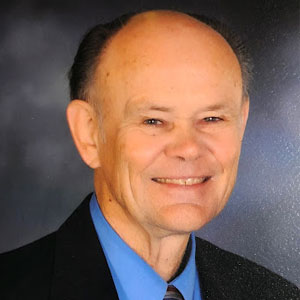
John Warner is a seasoned attorney and community leader based in Pampa, Texas, where he spent over six decades practicing law and advocating for justice. Over his long and distinguished career, John was recognized for his impressive legacy: winning 80-90% of his legal cases, serving as a municipal judge, teaching Sunday school for over 54 years, coaching youth baseball for 50 years, and founding a children’s holiday charity that has run for over 60 years and served thousands of families. With a passion for mentorship and service, John published his first book, a four-volume series of Bible study lessons, and donated over $14,000 in proceeds to his lifelong church.



Here’s a glimpse of what you’ll learn:
[1:03] Melanie Warner highlights John Warner’s six decades as a trial lawyer, longtime baseball coach, and Sunday school teacher
[2:53] Childhood discipline and family influence, lessons from a strict father and early responsibility
[5:07] How door-to-door Bible sales taught John resilience and business skills
[9:48] Find out what kept John going after 20 courtroom losses
[14:19] The defining near-death moment that sparked John’s new purpose
[18:13] Survival and gratitude after being lost in the wilderness
[31:50] Why reading self-help books can become a life-changing punishment
[38:41] The dangers of overprotecting versus empowering children
[45:50] Creative lessons from a judge who changed young lives forever
[1:18:43] The Children’s Shopping Tour: decades of community service helping kids buy Christmas gifts for their families
[1:34:06] How John wrote his first book in his 80s, turning years of Bible study lessons into published volumes
[1:41:21] Longevity and purpose: Why staying active, serving others, and continuing meaningful work keeps the mind sharp
About the episode
What shapes a life of purpose, resilience, and service? Is it discipline in childhood, failure early in a career, or the mentors who guide us along the way? Sometimes the most powerful lessons come from decades of experience and a lifetime spent serving others. What wisdom can we learn from someone who has dedicated his life to justice, faith, family, and community?
John Warner’s answer comes from more than 60 years of practicing law, mentoring young people, and serving his community. As a veteran trial lawyer and longtime youth coach, he explains how discipline builds freedom and why perseverance matters more than success. Early in his career, he lost 20 of his first 21 cases, yet those losses forced him to learn his craft and seek mentorship. John also shares lessons on parenting, emphasizing growth over punishment, like assigning books that teach leadership and responsibility. Through coaching baseball, teaching Sunday school, and leading community programs for children, he demonstrates how belief in others builds confidence and character. Ultimately, his perspective shows that resilience, service, and strong values shape both personal success and creating a lasting impact.
In this episode of Defining Moments, Melanie Warner chats with John Warner, veteran attorney and community leader based in Pampa, Texas, to discuss discipline, leadership, and a lifetime of service. They explore losing early legal cases and learning resilience, creative ways to teach teenagers responsibility, and John’s impact through the decades-long Children’s Shopping Tour, which helps kids give gifts to their families.
About the episode
What shapes a life of purpose, resilience, and service? Is it discipline in childhood, failure early in a career, or the mentors who guide us along the way? Sometimes the most powerful lessons come from decades of experience and a lifetime spent serving others. What wisdom can we learn from someone who has dedicated his life to justice, faith, family, and community?
John Warner’s answer comes from more than 60 years of practicing law, mentoring young people, and serving his community. As a veteran trial lawyer and longtime youth coach, he explains how discipline builds freedom and why perseverance matters more than success. Early in his career, he lost 20 of his first 21 cases, yet those losses forced him to learn his craft and seek mentorship. John also shares lessons on parenting, emphasizing growth over punishment, like assigning books that teach leadership and responsibility. Through coaching baseball, teaching Sunday school, and leading community programs for children, he demonstrates how belief in others builds confidence and character. Ultimately, his perspective shows that resilience, service, and strong values shape both personal success and creating a lasting impact.
In this episode of Defining Moments, Melanie Warner chats with John Warner, veteran attorney and community leader based in Pampa, Texas, to discuss discipline, leadership, and a lifetime of service. They explore losing early legal cases and learning resilience, creative ways to teach teenagers responsibility, and John’s impact through the decades-long Children’s Shopping Tour, which helps kids give gifts to their families.
Resources mentioned in this episode:
Quotable Moments:
“I always tell the truth, even if it hurts. Tell the truth.”
“Only in America would people care enough about a lost kid from Texas to take time out of their busy lives to go on a search party and find him.”
“People who want it the most are the ones who are going to put forth the effort that's required to be successful.”
“If you cut it open for him to make it easier for him to get out, he'll never learn to fly.”
“I pray that as long as the Lord lets me live on this earth, that I will be of value to other people.”
Action Steps:
Teach discipline through learning, not punishment: Guiding young people toward books, mentorship, and reflection helps build lasting character and decision-making skills.
Develop resilience through failure: Experiencing setbacks early teaches perseverance and helps individuals refine their skills and confidence over time.
Encourage resourcefulness instead of providing constant resources: Allowing people to solve problems independently builds creativity, responsibility, and long-term self-reliance.
Invest time in mentoring and coaching young people: Consistent guidance from adults helps children develop confidence, a work ethic, and a belief in their own potential.
Commit to serving others in your community: Long-term service creates meaningful impact, strengthens communities, and provides a deeper sense of purpose in life.
Sponsor for this episode...
This episode is brought to you by Defining Moments Press, Inc.
We are a US-based publishing company helping aspiring authors around the world to write, publish, and promote a nonfiction book to elevate their brands, create a meaningful impact, and generate profit in eight weeks or less.
An example of how we help our clients is with Eric Alikpala. He went from earning $100K per year as a coach in his first quarter to doubling his income in Q2, and increasing his income tenfold by Q3 — growing him into a seven-figure author, speaker, coach, and consultant.
Do you have a message that could become a best-selling book and business asset? Defining Moments Press provides the strategy, structure, and coaching to help you get it done quickly and profitably.
Visit mydefiningmoments.com to schedule a strategy call and turn your expertise into a published book and a powerful platform.
If you want to leverage your expertise with a book, check out the 7-Figure Book MethodTM.
Powered by Rise25 Podcast Production Company
Transcript
John Warner: 00:01
Well, when I first started practicing law, I lost 20 out of 21 of my first cases in the. The other one wound up in a hung jury when I was representing my mother in a worker's compensation case.
Melanie Warner: 00:15
I think that's interesting because I think a lot of people, especially today, would be very discouraged.
John Warner: 00:20
Oh yeah. I wondered if I was doing the right thing. My father wanted me to join him in the janitor supply business, and he was very disappointed when I said no. I wanted to be a lawyer. And by trying those cases, I learned how to try a case.
With the help from the Texas Trial lawyers and the Association of Trial Lawyers of America. I learned my craft.
Intro: 00:46
Welcome to the Defining Moments podcast, where leaders, innovators and everyday heroes share the moments that changed everything. These are the stories behind resilience, purpose, and legacy. Now let's dive into today's defining moment.
Melanie Warner: 01:03
Hi everyone. It's Melanie Warner with Defining Moments. Welcome to today's episode. So today is a very personal interview for me. My guest has spent over six decades in the courtroom.
He's been a husband for 64 years, a baseball coach for 50 years, a Sunday school teacher for five decades. And he published his first book when he was in his 80s. But long before I understood leadership, business, or resilience, he was the man who believed that discipline builds freedom. When I was a teenager and wanted to be anywhere but home, he actually grounded me as a punishment by making me read a self-help book. And I didn't realize then that he wasn't punishing me.
He was actually preparing me for life. So today I get to welcome a very special guest, my father, John Warner, and I want to ask him questions that I wish more fathers were asked. So, dad, welcome to the show.
John Warner: 02:05
Well, I'm looking forward to it, Melanie.
Melanie Warner: 02:07
Oh me too. Thank you so much for being here. I know how busy you are. It's funny. Some people, they retire and they say they're busier than ever.
But you're still working. You're actually in your office right now working as an attorney. Something that I know is very near and dear to your heart. Fighting for justice for people, making sure they have fair representation. And I love that you have been doing this for so long.
So thank you for being here. I can't wait to dive in. So I want to talk for a second about a few questions. Just kind of really kind of giving the audience some framework about your life and growing up. Who taught you discipline and how did they teach it?
John Warner: 02:53
Well, growing up, My dad was a disciplinarian in our family, and if I got out of line, I got spanked. And so I didn't want to get a spanking. So I stayed in line most of the time.
Melanie Warner: 03:10
So back then, your parents were fans of what we call corporal punishment. They were okay with like, did they spank you, like with their hand or did they have like a paddle or because I know I've seen different variations of that over the years.
John Warner: 03:24
He spanked me with his hand.
Melanie Warner: 03:26
Yeah. So that was kind of enough to scare you into saying, okay, I'm going to respect my parents. Right? What did you believe about responsibility at 25 that you think most young people don't understand today?
John Warner: 03:48
Well, at 25, I was in law school and I was putting myself through by selling Bibles in the summer. The cost of college today is so much more than it was then that I don't see how any kid can work his way through. Except in maybe unusual circumstances, but I think it would be a great deal more difficult for kids to work their way through college. Then the way I did.
Melanie Warner: 04:33
So you went door to door selling Bibles?
John Warner: 04:35
Yes.
Melanie Warner: 04:37
Wow. That's amazing. I mean, and at a time where you had to sell and those were physical Bibles, you know, because this was many years ago before we had online platforms and things like that, obviously. What did you learn from that experience? Going door to door, selling Bibles?
Did you have any experiences of people that just weren't very receptive?
John Warner: 05:07
Selling Bibles. I did three summers. It taught me how to ask people for money, which was very helpful as a lawyer. And I was on a pure commission basis. I didn't sell anything today.
I didn't make anything that day. So. I was in business for myself and I made the profit from my labor. So I guess you would say that those are some of the things that I learned from selling Bibles for the Southwestern Company many, many years ago.
Melanie Warner: 05:46
I remember hearing you talk about those stories of the early days of selling Bibles to put yourself through college to help fund that experience. And I think about, you know, just being a young person, going door to door, having these conversations with people, you've always had a strong faith, right? And, and I, I remember hearing how as you grew up in a family that was faith based, right? I would assume it was your parents that instilled the faith in you. But I think what's interesting that a lot of people may not know about you is when you were two years old, you started going to this church that you still go to.
And as a young adult, your parents decided to go to a different church and you literally walked across town as a young adult to the church to continue to go to that church. And you're at that same church today where you sing in the choir. You've been teaching Sunday School for, what, over 54 years now, I think. But you know. So tell us a little bit about that journey.
Like, how did who instilled faith in you and what does it mean to you?
John Warner: 07:02
I'm not sure who instills faith in me because I think the old expression is that it takes a village. I was blessed by having good Sunday school teachers. In junior high and high school. And then when I went to college, well, I continued. Through the activities of the Wesley Foundation when I was at Texas A&M and.
And then again through the Wesley Foundation when I was at the University of Texas in law school. And it was, it was a process. I'll give you this example. During my first two years at Texas A&M, I didn't have a car. So if I wanted to go to a football game out of town, I had to hitchhike.
And with my Aggie uniform, I could usually get picked up pretty quickly. And one particular time, this gentleman who picked me up said, are you a Christian? And I said, no, I'm a Methodist. And he said, that's not what I mean. And I said, that is what I mean, because I was a Methodist, but I felt like my faith was shallow.
I literally didn't know where I was going. But I believe that particularly in the last four years where I've taught an adult Sunday school class and as I have studied and prepared each. Each class. That I have learned more about my faith from my class members. And it's deepened my faith.
And so I'm going to give credit to my Sunday school class for that.
Melanie Warner: 09:13
I love that, like the more you teach others, the better it becomes instilled in you. You're serving and receiving equally.
John Warner: 09:21
I learn more about it than they possibly can from me. I learned more from them than they learned from me.
Melanie Warner: 09:30
Was there ever a moment that you wanted to stop being an attorney? That you just wanted to quit doing law? Like you just got frustrated with the system or the process, the injustice of it all. Is there ever a moment where you just said, I don't want to do this anymore.
John Warner: 09:48
Well, when I first started practicing law, I lost 20 out of 21 of my first cases in the. The other one wound up in a hung jury when I was representing my mother in a worker's compensation case.
Melanie Warner: 10:04
Well, I didn't know that because all these years I remember hearing that you had so many cases and you won 80 to 90% of them. So I didn't know when you first started that you literally lost 20 out of the 21 first cases. I think that's interesting because I think a lot of people, especially today, would be very discouraged. They spend all this money in school and law school and all this investment and selling Bibles to put themselves through. I mean, what made you say, I'm going to stick with this?
I mean, what made you. Did you ever doubt yourself in those moments?
John Warner: 10:37
Oh, yeah. I wondered if I was doing the right thing. My father wanted me to join him in the janitor supply business, and he was very disappointed when I said no. I wanted to be a lawyer. And by trying those cases, I learned how to try a case.
With the help from the Texas Trial lawyers and the Association of Trial Lawyers of America, I learned my craft. And I'm very grateful to those organizations and the great lawyers that spoke at those seminars that I went to. Who helped me learn. How to be a lawyer. In Pampa, a town of 17,000.
I got to hear some of the best people in the world. that if I had stayed home, I wouldn't have. I never would have had that influence. So. But you may remember that a lot of times when we would go on vacation, it was for continuing legal education for me.
So dad would go to school during the day and. And then at night we'd have supper together and we'd do something together. But for the first many years of your life, our vacations revolved around my continuing legal education as we went.
Melanie Warner: 12:19
I remember, and I.
John Warner: 12:20
Remember the United States to, to, to hear the great lawyers that I was able to be schooled by.
Melanie Warner: 12:28
Those are some of my fondest memories that I really have. They say that traveling is hereditary. So I think about when we were growing up, to me, the. The most fun I had was traveling on our plane because we had a family plane. You ended up getting your pilot's license.
Specifically, I think that you could take us with you, and then you didn't have to feel like you were leaving your family behind. You could actually take us with you to these events. So you would go to your meetings during the day, and we would hang out with mom and with our siblings and go on all these adventures. And my favorite thing was getting to a hotel and exploring. It was just so fun and adventurous because we were going to all these different places.
And as a kid, I imagined that you were in these meetings all day and it sounded super boring to me. But we always had so much fun, and that instilled so much in me about how you can work and have a family balance. And so I was able to do that this summer as a single mom with kids, even a few adult kids. I did an event called books at the beach, and we brought people to the beach, and our clients were there during the day, and the kids came and hung out with me at night, and it just reminded me of all those special memories I have of our family growing up, and how special that was that you included us in that and and that we got to go with you and experience the world that way. So thank you for that.
John Warner: 13:52
Well, it was good for you and good for me.
Melanie Warner: 13:56
Yeah. I have a lot of memories in that plane. That was so fun. So tell me, is there a defining moment in your life that shaped who you became as a man? Is there a story or a space where you can go back to and realize this was a turning point for you?
That could have changed everything.
John Warner: 14:19
Well, I grew up as a Cub Scout, a Boy Scout and explorer. Scout got my eagle, but. Our scoutmaster worked at a gasoline plant called Car Gray, which is west of Pampa, about, oh, maybe 15 miles. And our scout troop would go out there on a Friday night. And he, of course, would supervise us, and then he would work on Saturday.
But during breaks he would come and check on us. Well, we were somehow, and it seems really idiotic now, we decided to cut steps in a cliff so that we could go from the top of the cliff to the bottom of the cliff. Well, after we had cut a few steps, we realized that wasn't going to work. And so we made a kind of a circle, a semi-circle.
I was trying it out. And as I was trying to make that semi-circle. I slipped and I started to fall. But my foot caught on a ragged edge. And I was able to regain my balance and, and get on back up to the top of that cliff.
But the next time we were there, that place that had caught my foot had crumbled away from the mountain and was laying on the floor of the creek bottom below. And. That caused me to realize that there was no way that would hold my weight. So I figured the Lord had something for me to do, and I had. I still needed to live a few more years in order to accomplish it, but I think that was a defining moment in my life.
Melanie Warner: 17:07
So that was where you felt an encounter with God that gave you purpose and made you realize that you were meant to be here, that you had some things that you needed to do in your life. I love that story. And I remember too, hearing the story of how you got lost in the woods. And so I would say that defining moment for me was a story growing up, you know, being out in the wilderness and being alone. And as they often say, when you want to feel closer to God, go in the middle of nowhere because there's no humans around and it's just you and, and God in those moments.
So to the Formulative years, there were the most impression, like the most impressionistic on you is when you develop your faith, it sounds like and stuck with that. So when I remember when you went to, I remember hearing a story of when you went on a camping trip, I think it was in Colorado. Yes. And got lost in the woods. Tell us about that.
John Warner: 18:13
I was a member of troop 80, which was sponsored by my church, the First Methodist Church. And every year our troop would work at the rodeo by selling Cokes and hamburgers so that we could have a week. In Colorado. It was near Bear Lake and Blue Lake. I remember that.
And one of the things that we did when I was 15 and a junior assistant scoutmaster as we climbed the West Spanish Peak. I don't remember how high it was, but it was something like 14,000ft above sea level, something along that line. And before we left, I had six small boxes of raisins. They are tied onto my canteen and put around my waist. And when we climbed West Spanish, I was the oldest scout on the trip at that time, and so I was the first one up on top of the mountain.
And when we were getting ready , I shared my raisins with everybody, and when we were getting ready to leave, I was trying to fix my canteen so it would rest on my hip. And so when I went over the edge of the mountain, I didn't see anybody. I said, where is everybody? Everybody, everybody, everybody. And somebody said, over here, over here, over here, over here.
And I wondered, why are they over there to my left? Because that's not the way we'd come up. But I started down the trail to my left, and when I got to the Timberline, I realized this wasn't how we had come up. So I went back to the right to try to find my way, and I didn't find my way. I wound up spending the night on the mountain.
And the next day. I was trying to find my way back to civilization. And I found a road. And as I was walking down that road, I saw a lady on horseback. And at first I was tempted to hide because I was so embarrassed.
But finally she came around the bend and we met face to face. And I said, ma'am, can you tell me if there's a, a, a paved road up there or something to that effect? And she said, there sure is. I've been looking for you. And she.
Her name was Diane Tessitore and she was the wife of the postmaster, I think, of La Veta, Colorado. And, she explained that there were about 200 people. Search party looking for me. They didn't even know me. But they did this on a weekly basis where people would pull the same dumb stunt I did and get lost.
Not intentionally. But. When I got back to civilization, they came and got me. And my scoutmaster was very disappointed with me. And he sent me home.
And I got home, as I remember, late on a Saturday night, and my parents and my sisters were somewhere else. My parents were playing bridge and my sisters were with them, and so they didn't know that I had been lost. But this. The Sunday paper came up.
Melanie Warner: 22:31
So wait, you just.
John Warner: 22:32
Went home early Saturday morning. What?
Melanie Warner: 22:35
So you got home Saturday night and you just went to bed and they weren't home. And then they came home. Didn't know you were home and they went to bed.
John Warner: 22:43
No, you were right. The first part, that is, when I got home, there wasn't anybody home. And so I went to bed. And when my parents came home, they picked up the newspaper. And here on the front page was my picture lost in Colorado.
And my sister Kaan came into my bedroom and said, he's not lost. He's in bed. So they woke me up and demanded to know what in the world was going on.
Melanie Warner: 23:15
Oh, that's classic. And because then, you know, newspapers, they had printed the story. Obviously when you were lost and by the time it got printed and delivered to your front porch in Texas, there's a front page story about you as a young kid being lost for, you know, in Colorado, that must have been really scary.
John Warner: 23:35
They were just getting ready to call my parents when the news came that I was found. And so they decided not to call my parents.
Melanie Warner: 23:44
I can't believe they wouldn't call your parents if my kids were lost in the woods and there were 200 people watching for me. I would want them to call me because my kids have gone to camp and other places like that. And I always think, are they having fun? Are they safe? And like, I would want to know if they were lost for that extended period of time. I would want them to tell me I just but I love the story of how you came home and you were in bed and then the newspaper arrives on the front porch early Sunday morning as they're coming home late Saturday night and they see it and they immediately start to panic.
And then there you are in bed. I love that story. So why did that bring up emotion for you? Like, why was that emotional for you to think about people you didn't know looking for you?
John Warner: 24:38
My dad summed it up. He said, Only in America. Would that happen only in America? Would people care enough about a lost kid from Texas to take time out of their busy lives to go on a search party and find him? And I believe that now.
I had a defining moment there. At that point in my life, I was trying to decide whether I was going to be a minister or whether I was going to do something else with my life. And so I said out loud, okay, God, I understand. I'll be a minister. And that's the biggest drop I've ever had.
It's as though God said, do you really think if I wanted you to minister. I would scare you into doing it? And so I knew right then that he didn't want me to be a minister, that he wanted me to be something else. And so I had to search for it. And I didn't find out what I was going to do until I had graduated from Texas A&M and was driving a soda pop truck for $10 a day.
And then I decided to go to law school.
Melanie Warner: 26:13
So you were an Aggie who graduated from Texas A&M. I think it's multiple generations now. Your dad went there, right? Yeah.
John Warner: 26:22
My father, Gurley Warner, was in the class of 27. I was in the class of 58. And my son Mike, if you add those two together, was in the class of 85.
Melanie Warner: 26:33
Oh wow. That's so neat. And then Shelby, my sister's daughter, also went there. So it's literally four generations in our family attending Texas A and M, so we have a lot of Aggie jokes, y'all in our house, let me tell you. So how did you determine, okay, I don't want to be a minister or God doesn't want me to be a minister.
But how did you decide to be an attorney? Was there something that inspired you or someone besides driving a soda truck for $10 a day? You're like, I'm not going to make a living. I can't support a family this way. Like, what was it that made you go from maybe other thoughts that you had when you were younger to knowing for emphatically you wanted to become an attorney?
John Warner: 27:16
Well, I had a degree in journalism, and so I was trying to decide, did I want to get a master's in journalism or did I want to go to law school? I don't remember why I was thinking about law school, but law school went out the first semester of law school. I fell in love with law, and it's been my mistress ever since.
Melanie Warner: 27:46
Oh, I love that. Well, and now here's the thing. And we'll get into your career in just a little bit. But I want to jump for a second going back to. So I see the formation of your childhood and the people that influenced the man that you became.
And I appreciate you sharing that. So I want to talk about when I was a teenager, I was definitely not the easiest kid. I was very stubborn, still am, and I didn't like people telling me what to do and I still don't. And when I, I remember taking this leadership course about two years ago, and this bratty teenager side of me came out and it was so deeply embedded. And I'm like, why is this resistance to learning this, this like, why am I like, where is this coming from?
And I remember going back to my childhood and being, you know, a young adult. And, you know, I was always an adrenaline junkie. I was so bored. Right? Like, I didn't get into drugs.
I didn't, you know, do all these things that a lot of kids did as teenagers. I didn't get pregnant in high school. You know, I was a good kid, but I was bored. It was a small town, so I was always trying to do adrenaline things. And I remember when I first got my driver's license, the power of being able to drive these, this, you know, this heap of metal that could just represent freedom and wheels, right?
And I remember that feeling of power that I felt. And back then you had, you know, you had to get your starter's permit where you're not supposed to drive without an adult. So I got in trouble one day because I took the family car out to just practice my independence and I shouldn't have done it. And you know what's funny? I didn't go joyriding.
I didn't go do anything crazy. I went to my sister's house, Sandy, and did laundry. I don't know if you know that. And, then I wanted to feel like an adult. And that was the most adult thing I could think of was to go do laundry.
And so when I came home, you and mom were already home and I was like, oh, I'm so busted. And I was acting like I came in and I acted like, oh, the car. I've been here the whole time. I didn't go anywhere. What?
You know, the car's been in the driveway, and I remember you were so mad at me because, you know, you have a reputation in town. You're an attorney. It wouldn't look good for me to get pulled over without a license. You know, I didn't. I had my permit.
I think I was 15, but I didn't have my actual driver's license yet. So my punishment, instead of getting grounded. I remember you came to me and you said, I want you to read this book. And instead of being grounded, you have to read this book and you have to report to me. You got to read every chapter.
And there was this mantra in the book. At the end of each chapter, you have to memorize the mantra, and you've got to come back and report to me what you learned from each chapter. And until you read this book, you are grounded. You are not leaving this house. And the book was called Dale Carnegie How to Win Friends and Influence People.
And I was so mad. I'm like, I got friends. I don't need to read this stupid book. And I was so angry at you. I was so stubborn that it took me months.
Instead of being grounded for a few days or a week, I stretched it on for months because I was so determined to not do this unless I wanted to go to the mall and play video games with my friends, or I wanted to go to a football game or something social. I just refused to do it until I absolutely had to. And it was funny because so much resistance went into this process. And yet I look back now at the irony of that you were that person for me, that influenced me the most as a teenager and, and got me into reading self-help books. So I'm just curious, why was it more important to you that I read that book than me hanging out with my friends?
Like what? What made you think of that as a punishment?
John Warner: 31:50
I don't remember for sure, but I. Rather than punish you, I wanted you to learn a lesson from. From what your conduct had been. And. I taught the little Carnegie course for 17 years, and it.
Melanie Warner: 32:14
Yeah. You were teaching Dale Carnegie when I was born. That's why I feel like you were destined to be my dad.
John Warner: 32:22
Yeah, but. I'm. I was desperate. I wanted you to learn and to grow up. To be the person that you are.
A responsible adult, independent. Self-motivated. ET cetera. ET cetera. And I guess I thought if you'd read that book, that it would help.
And since you've given credit to that book a lot. Well, I think probably that it did help.
Melanie Warner: 33:05
Oh, it absolutely helped. It was probably the most. The best thing you could have ever done. At the time I was angry. I didn't see it.
But now, you know, looking back, connecting the dots, I mean, I know we publish books like that. I have an entire, you know, multi-million dollar business that I built over the years of self-help between self-help books, courses, you know, helping people get through tough things in life. And I, I think it's interesting because to me, that foundational element was when I was the most impressionable, when I needed it the most, but was so resistant to accepting that. And I think a lot of parents want to influence their kids when they're teenagers, but they don't know how to get their kids to actually do something. And I remember John Maxwell talking about this years ago, and he's a famous author and speaker who has a big leadership company.
And he said that when his kids were younger, he used to pay them to read books. So he said, unless he said, I'm going to pay you for skills, but I'm not going to pay you to be part of the family. So if they had chores to do. He wouldn't pay them an allowance either. He said, unless you aspire to be a garbage collector or a maid.
I'm not going to pay you to do those things, but I will pay you to learn and to get skills. So he used to pay them to read books, and that always inspired me when I got older. And so I did that with my kids as well. But I will tell you it, you know, that was the door that opened for me self-help at a young age. And it instilled this foundation of not just faith, but just feeling like mentorship.
Having people that had already walked the path could give me this advice. And, you know, my best friends became Napoleon Hill, Think and Grow Rich. I have this book right here, Norman Vincent Peale, Dale Carnegie, like all these people that became these, these mentors in my life, even though they had passed away and they weren't alive at that time, they felt very alive to me because their advice and their wisdom was so profound. And they had written these books, you know, decades ago. And, you know, here we are almost 100 years later.
And Dale Carnegie people still don't know how to win friends and influence people. People still need to understand leadership. People still need to think and grow rich. And so these books became not just important to me, but to millions of people. And so from that was just such a profound experience as a teenager.
Looking back, you know, your goal was to ground me as a parent, but you grounded me as an adult, and I'm just so grateful. I never thought I would say thank you because I was so mad when you did that. And now, I mean, I wanted to run away. I was so angry. I just wanted to spend time with my friends.
And, you know, now I understand my own teenagers better because I can go back to how I felt instantly in that moment. The other thing is, I've been keeping journals since I was 15 years old, and I can go back and look at my inner dialogue during those times and look at how my attitude affected my outcome in life. And you taught me to have a positive attitude no matter what was happening. And that again, served me very well as an adult. You know, growing into, you know, having a great childhood, amazing childhood.
I'm very grateful and I thank you for that. But after becoming an adult, I had a lot of challenges. I went through a lot of trauma, a lot of tragedy, a lot of heartache. And I want you to know that. Those foundations.
!no name provided!: 36:34
Save me. He saved me because I always had something to come back to. I always knew that I had a soft landing. So thank you for that. Thank you.
So you grounded me and made me read self-help books.
Melanie Warner: 36:56
What did you see in me that I couldn't see yet, and that in those teenage years.
John Warner: 37:12
I saw a determination on your part. To do things your way. Even when they weren't the best way. Sometimes. I think that's the determination.
I think the answer to that question is in one word.
Melanie Warner: 37:50
Definitely. Most people I know would say I'm very determined. And still very stubborn. So I think I got that from you. Did you ever worry that I would resent you for being strict?
Did you ever feel like you were being strict? Like. Because in my mind, I felt like you were very strict. But it was more from respect and protection. But I felt very safe and protected as a kid.
But like, did you ever feel that as a parent, that your kids would be angry at you for being so strict?
John Warner: 38:22
I don't think I ever felt that way.
Melanie Warner: 38:25
What's the danger of raising comfortable children? Because you're okay with having uncomfortable conversations and talking about deeper issues than a lot of people do with their kids. But what would you say is the danger of raising comfortable children?
John Warner: 38:41
Well, there's a fine line. If you over protect your children, they're not going to develop fully. For example, a butterfly has to work his way out of the cocoon. And if you cut it open for him to make it easier for him to get out, he'll never learn to fly.
Melanie Warner: 39:07
That is profound. That is beautiful. I feel that.
John Warner: 39:10
So the fine line is you. You want to give your children enough time to grow enough. Enough room to grow. You want to try to channel it if you can. And set the best example you possibly can.
But I found that they were more influenced by friends than by parents in a lot of cases. And I saw that a lot when I was being judged. And so I tried to take that into account. Being the parent of three girls and a boy. And we're proud of all four of you.
Melanie Warner: 40:06
Thank you. If you were raising a teenager today, what would you insist they learn now that you have experience raising a few?
John Warner: 40:15
Well, I tell my clients, always tell the truth, even if it hurts. Tell the truth.
Melanie Warner: 40:25
Yeah. You always told me that the truth hurts, but it doesn't harm.
John Warner: 40:31
So I would, I would say if children can learn that one fact about life and develop it. They're going to wind up being okay.
Melanie Warner: 40:47
So I think I know the answer to this question, but I always like to ask this to every parent. If you could give. Only give your kids one of two things. Would it be resources or resourcefulness? Which one would you choose?
John Warner: 41:01
I don't understand the question. What do you mean by this?
Melanie Warner: 41:04
If you could only give your kids resources or resourcefulness? Which one would you choose?
John Warner: 41:10
I don't understand the question. A resource would be like giving them a car or providing books for them to read, things like that.
Melanie Warner: 41:22
Or would you teach them how to be resourceful? Like in other words, would you like some parents to give their kids money, but they never learn to be resourceful? So would you give them resources or would you rather them be resourceful?
John Warner: 41:36
I would hope they would learn how to be resourceful.
Melanie Warner: 41:39
Yeah. That's good. Most parents will say that. Yet when you think about how parenting is done today and I'm guilty of this as well, we tend to feel guilty about working too much or I feel like I'm a single mom. I always feel like, okay, I'll take him to Disneyland.
You know, like I I've, I've compensated by buying things for my kids, which I admit. You know, when you, when you give them those comforts, they don't become resourceful. Because the only way to become resourceful is to not have something that you want or need. And what you don't have forced you to get more creative. Therefore you become resourceful.
So as a parent, what are you and you guys doing this year? You and mom were so great, I got. I gotta give my mom credit here too. You could literally see me like a Kewpie doll going 100 miles an hour into a brick wall. And I don't know how you held back and didn't.
And just let me hit the wall. Like you, I learned so many lessons the hard way. And to me, that's the hardest thing as a parent is stepping back, knowing your kids are going to, they're going to get hurt, but they're going to learn a valuable lesson instead of doing it for them. You know, like they call the helicopter parent or now there's the lawnmower parent. Where?
Where you do everything for them. You know, that is so hard as a parent, how in the world did you do that? How did you allow us to make the mistakes, knowing that we were going to learn valuable lessons without worrying about us suffering in the process or getting hurt?
John Warner: 43:15
That was one of the painful things for a parent. Realizing that it was. That I couldn't pass my experience onto you. That is, I advised people on a daily basis how to handle certain situations. And yet.
Well, for example, our son Mike. For the first 25 years of his life, he didn't think I knew anything. And then after he graduated from law school and we worked together for ten years, he would ask my advice almost every day that that was a defining moment in my life. I loved that. But
That I think is a very difficult thing because parents have experiences and they want to avoid those experiences for their kids. But yet sometimes those are the experiences they need in order to mature as a person. You, you got to learn to take hard knocks and, and come up swinging.
Melanie Warner: 44:38
I appreciate that. I always felt like you led by example. You were not a hypocrite. And I mean, I know a lot of people have jokes about attorneys and all that, but for me, my experience with you growing up is that everything you asked us to do, you were honoring yourself. You didn't ask us to do something that you weren't living.
So you set a great example and you lived by that example. And that to me is character and integrity. That's what you taught me. And I, we and as a kid, we used to joke, like with my friends that you were like Abe Lincoln. You were honest, Abe.
Like you were always so honest, even if it was brutal. It was honest. And you were this tall guy that was like Abe Lincoln that told the truth all the time. So as we were kids, we always referred to you as Abraham Lincoln. Like, not in a bad way, but like the kids all looked up to you and respected you like Abraham Lincoln.
So I thought that was kind of cool. I just remembered that, in fact, you were a judge for a short period of time early on in your career, and I found out recently that you didn't just punish me creatively. There were other kids that came through your court system that you made them do creative things as punishment. Tell me about that.
John Warner: 45:50
Well, I was a municipal judge in our community for five and a half years. And I would hold a teenage traffic court every Saturday morning. And I would insist that the kids come to court with one or both parents. And then if they pleaded guilty to running a stop sign or running a red light or speeding or whatever it was, I would give them the opportunity of paying the same fine an adult would pay. Or they could write a thousand word theme on traffic safety.
Now, I didn't see how a kid would benefit if he committed a traffic violation and his father paid the fine, but if he wrote the theme. Then that was a constructive punishment. That is something that he could learn from. And after they wrote the theme, then they had to come back on another Saturday morning and after court was over, we would sit down with a group that had written themes the week before or the two weeks before. I gave them two weeks to write the theme and they had to use footnotes.
And I mean. I told them I'd be tougher on them than any teacher they ever had, and I was. I said, I've got a college degree in journalism, and I'm going to be tougher on you than any teacher you've ever had. And so if they flunked it, then they had to write a 1200 word theme in place of it. And if they flunked that, then they had to still pay the fine, but bye bye.
They're doing the research and then coming back and talking about it and hearing the other kids talk about their experience and the research that they had done. The percentage of teenagers involved in accidents dropped 20% while I was being judged. Wow. And that cost our city thousands of dollars. But I never heard a peep out of any member of the city commission.
Not a single one of them said, hey, you're not raising enough money as a judge. You need to do this or you need to do that. They supported me in, in that type of, of, I don't know whether you would call it punishment. But I felt like by their doing, by their writing the theme that they would benefit more from it than their daddy paying a fine.
Melanie Warner: 48:39
That's interesting. Well, and you also had a jury of peers, you had teenagers that would come in and do like a mock jury. Right. And then you kind of practice with them to teach them about what, what the cases look like. I mean, I thought that was an interesting angle as well.
What exactly was that?
John Warner: 48:57
Well, sometimes we would maybe I don't remember how often, maybe once a month, we would have a teenage jury. And if a defendant pleaded guilty, he could have the option of having the teenage jury hear his case and then make recommendations to me. And they knew these kids much better than I did. And they were harder on their peers than what I would have been in most cases. But
They learned to take responsibility. They learned a lot from that. If a kid had been involved in an accident, I sometimes sentenced him to spend so many Saturday nights. At the police department, and when an accident call came out, he would have to go to the scene of the accident and stay out of the way and watch what happened. And seeing those accidents, seeing the result of those accidents, made an impact on how they would drive because they didn't want to wind up that way.
Melanie Warner: 50:22
Wow, that's so powerful. Because I mean, and I think most kids I know, I felt, you know, I was in gymnastics, I, I just felt indestructible, like I nothing bad would happen to me. I'm not going to get hurt, like bad things happen to other people. You know what I mean? And as a kid, I think we feel a little naive to that, especially teenagers.
So to see people that, you know, are distracted while they're driving or not paying attention or drinking and driving, like all of that I could see would have a really big impact on children, on young adults, especially. And it's interesting to note, you mentioned to me before we started recording this, that some of those kids when you actually ran for it, was it county attorney? Yes, district attorney. And some of these kids came and campaigned for you, the ones that you had had, right. These, you know, the ones that you were kind of punishing in court, even respected you after that process and came back and helped you campaign.
What did that feel like?
John Warner: 51:20
Well, I was honored. I had parents tell me, well, I don't know anything about you, but my kid tells me that I ought to vote for you. And so I'm going to. I really think they made the difference in those elections. But I had a contested primary and I had a contested general election, and I want them both.
But with the help of kids who had been in my court.
Melanie Warner: 51:48
That's amazing. I love that full circle. That's so cool. And they got to feel empowered by understanding politics at a micro level. I think that there's so many young kids that just, they don't seem to get involved in politics.
And even if they have the right to vote at a certain age in different states, they don't always jump into it like adults do. They don't always think about how those decisions in their local economy or their local community will actually impact their local economy and their personal lives. So I think that was really interesting to give them to, to help them see that they could either be part of the problem or they could be part of the solution or both. So what do you think destroys lives, more bad decisions or bad character?
John Warner: 52:32
Bad characters.
Melanie Warner: 52:35
After 60 years in law. What's the one trait that determines who wins in life?
John Warner: 52:39
Well, when I was coaching baseball, I found that the teams that won quite often won because the kids who played for them wanted it the most. And so I would, I would say probably that holds true in life. The people who want it the most are the ones who are going to put forth the effort that's required to be successful.
Melanie Warner: 53:09
What have you seen repeatedly in court that people could have avoided?
John Warner: 53:13
I'm not sure I understand the question.
Melanie Warner: 53:16
Well, you see people in court sometimes they come in, people come in and it's like the majority of people are coming in for the same thing. Is there something that could have been avoided? Maybe if they had different parents or society, like what do you feel like all the people that came through court as an attorney or even as a judge. Is there something that you saw repeatedly that could have been avoided?
John Warner: 53:39
Let me give you this example. Graham is a town about 20 miles from Pampa, and I had this kid that just. I mean, he was in front of me almost every week. And he would either he or his father would pay the fines and and keep going, and I, I plead with him, I said, look, this is this is going to come back to haunt you. You're a good guy.
You need to be a respectable citizen. And. A couple of years later. When he had graduated from school, he came back and he said, Mr. Warner, I just wanted you to know you were right, he said. When they look at my record, nobody will hire me.
He said, you tried to tell me and I wouldn't listen. And so that was a young man I failed, that is. But with his parents paying the price every time. He didn't ever learn anything. Yeah.
Melanie Warner: 54:59
Yeah.
John Warner: 55:01
So. To use the old expression. I tried to make the punishment fit the crime. That is, I tried to make it in terms of how we can make this a positive experience and how. How can.
Can this student learn from his first experience and in the court procedure? And because for virtually all of them, it was the first time they'd ever been in court. And I knew that their impression of what they got in my court would affect them and how they viewed the court system. For the rest of their lives, perhaps. But I felt it was important.
We do something constructive that would benefit the violator, rather than just have his parents pay a fine.
Melanie Warner: 56:17
Have you ever defended somebody that you morally disagreed with? And if so, how did you reconcile that?
John Warner: 56:24
I had a client tell me one time he owed me money and he forfeited his right to live. And so he had murdered this person and I was appointed to defend him. But as a defense lawyer. It was my job to see that he got a fair trial. And it was my job to make sure that the government dot the I's and cross the T's.
But it was not my job to judge him. And so. Every criminal defendant I've ever represented, that's the mantra I try to follow. If the government can't prove it, that's their problem, not mine.
Melanie Warner: 57:22
Yeah, but you always said everyone deserves a fair trial. I think that's what fueled you to make sure people were being treated fairly. Even if there were some people that we didn't do that , we feel like they're guilty. We don't have all the facts yet, you know, and you still have to make sure they get a fair trial. I would say out of all of you, you know, I remember when my daughter was little and I was trying to explain to her, you know, all the jobs that you had.
She was probably 5 or 6. And I, I remember saying, you know, you know, granddad is amazing. You know, he flew planes. He was a pilot. He's an attorney.
He teaches Sunday school. He's been a Little League baseball coach. And she went, oh, like Barbie. And I said, yeah, but just not as many cool outfits. And so I didn't. It was funny to me that my daughter identified that type of success with Barbie, you know?
So for me, growing up, I didn't have a female role model of a woman that was working like you did in that space. And so it wasn't until I saw the Barbie movie later as an adult that I realized that that influence for me was Barbie. Like, you could do this empowerment of young girls like you could do anything. And then having that support of my parents, who you literally made me feel like I could fly, like I could do anything. And I'm so grateful for that.
I still feel that from you guys. And I think that's what's given me those wings to go do some of these amazing things that I've been able to do in my life, and I'm grateful for those opportunities and that foundation. And I've always looked at you as a leader. And I remember we talked once years ago, I think it was when your book came out and we were talking about leadership and speaking, because you're also a great public speaker and you've been teaching Dale Carnegie, you know, since, you know, since I was born, you've been instilling that in people. And there was this one speech that really inspired you by Winston Churchill, And I remember you sharing that story with me years ago.
Can you share that with the audience today and how that inspired you?
John Warner: 59:30
During World War Two? Just at the most inopportune moment, at a time when England was suffering from German bombings virtually every day. At a moment when Hitler was threatening to cross the channel and invade England. Just at this moment, Winston Churchill received notice that the miners were going to go on strike. And so he went to see the president of the miners and asked to be able to talk to them.
And the president of the union said, it's no use. He said. We're unnoticed or unappreciated, and we're under a pet and we're underpaid. But he agreed to let Churchill talk to the miners. So that night, the union hall was packed with angry miners.
And there was an aisle down the middle of the room. And as Churchill walked down that aisle, he could hear the angry mutterings behind him. And he got up to the podium and he looked across the room. And he said, gentlemen, in that magnificent voice of his. There will come a time tomorrow, perhaps when the battle will be over and the victory won.
And he said, And on that day every soldier will have to walk past a reviewing stand. Stop. Face that reviewing stand. And on that reviewing stand will be the people of England.
And he'll be asked this question. Where were you when your country needed you? And the soldier will answer, where was I when my country needed me? I was in the trenches. And the sailor will answer, where was I when my country needed me?
I was on the ships. And the minor are the minor. Williams. Where was I when my country needed me? Unnoticed, unappreciated and underpaid.
I was in the pits. When my country needed me. I was where I could serve her best.
Melanie Warner: 1:02:37
Powerful speech.
John Warner: 1:02:40
He was a powerful man.
Melanie Warner: 1:02:42
Yeah. It's amazing what we can do with words. And you've always been a great storyteller. I can picture you in court. Swaying a jury, you know, because you have such compassion and your.
You have the conviction. And I it's I, I have had the pleasure of seeing you in court a few times over my lifetime. Not that many. But I always felt sorry for the other team, the other people on the other side, because you. You just have this way of Influencing people like Dale Carnegie.
You learned literally how to win friends and influence people. I would say most of the people that know you that I've met personally, professionally, I mean, gosh, even if I was, I got pulled over, I'd get pulled over and get a ticket and the police officer would love you. Like that doesn't happen with attorneys very often. Like they would say, oh, your dad's amazing. I love your dad.
And so I think it's always like you can see somebody's character and integrity based on how other people revere them. And, and I want to segue into your relationship because you've been married for 64 years to my mom, Judy. So when you, how did when you guys first met, you met at a Methodist dance, right? It was in Austin, Texas. She was in college at UT and you were going to law school.
You had decided to become a lawyer, so you were in law school. Tell us about that time you guys met and how did you know that mom was going to be the one that would be this partner for you in life? How did you choose each other?
John Warner: 1:04:21
Well. At the Wesley Foundation, after church on Sunday nights, we would have dances. And I looked across the dance floor and I saw this cute girl in a sweater and pageboy haircut. And I went over and introduced myself and asked her to dance. And I said, well, I'm John Warner.
And she said, I'm Judy. And I said, Judy, who I had never heard of the name before. And that's how we met. Then later I decided that she was getting too serious. So I quit asking her out.
And we had a friend of Oriental ancestry who's a mutual friend named Alexander Hsu. And she would go to Alexander and say, Alexander, how come? How come John doesn't call me anymore? And so Alexander would come to me and say, John, how come you call, you know, call Judy anymore? And she would have been horrified if she knew, if she had known at that time that he was recording the conversations.
So I had this friend, we worked together in the girls dorm to earn our meals and Littlefield dormitory. And he wanted to borrow my car for a date, and I didn't want to loan it to him. So I agreed to go on a double date with him. And I called every girl I knew and they were all busy or didn't want to go or something. And so finally, in desperation, I called Judy Mumma and the movie was The Guns of Navarone, and she had seen it the night before, but she said yes, and she went with me.
Melanie Warner: 1:06:19
I love it. And so out of desperation, you called every other girl, and then you finally called her because you were nervous that she was getting too scared. What's funny is I remember her telling me that story and she said, yeah, I was on a date the night before with somebody else at that movie, but I didn't tell him that. Oh, it's so funny. What?
And that. And that movie solidified the deal. And so what is it? So first you said she wanted to become too serious, and that scared you, so you backed away. But then she said yes.
And then what happened after the movie where you finally were like, okay, this is I want, I want.
John Warner: 1:07:02
After that, I never dated another girl in my life.
Melanie Warner: 1:07:05
Wow, that must have been some movie.
John Warner: 1:07:09
The movie had nothing to do with it, but.
Melanie Warner: 1:07:12
Well, I say, you both made excellent choices. You, you both chose our parents. And I appreciate that because you chose well. And she's been a loving, supportive partner through helping with your business. And she was, you know, a stay at home mom and was always there for us as kids.
And I am just so grateful for her stability as well. You're both very, very stable parents. And I thought everybody's parents were like that. And I was very naive when I grew up in the real world and got out and started hearing from other adults their stories of horror, stories of what it was like to grow up in unstable households that were abusive and toxic. And you just realize how that's more common now than having really stable, two stable parents who are still married and respect each other and still love each other.
So. What does commitment actually mean to you?
John Warner: 1:08:10
We decided, for better or for worse. And sometimes it was better. And sometimes it was worse. That we were going to stick together and raise a family. And that's what we did.
Melanie Warner: 1:08:23
And what advice would you give couples who are struggling today?
John Warner: 1:08:28
I think counseling helps a lot. I have told many clients that divorce is a step forward, not a step backward, and that if it's not a step forward, then they should reconsider and not not do it.
Melanie Warner: 1:08:47
I remember Billy Graham's wife. Someone asked him, you know, he was obviously a big preacher in America. Someone asked his wife, Ruth Stafford Peale, I think that was her name, her middle name, her maiden name. They said, did you ever consider divorce? And she said, murder?
Yes. Divorce? Never. I think there's some women who can relate to that. What is something about marriage that you think young people misunderstand these days?
John Warner: 1:09:19
It's a commitment. It's a give and take. You sometimes compromise things that you would like to do. Things you don't like to do.
But it's a partnership. And. In a partnership. No one ruled. That is.
It's. It's something where you. You work it out together and we don't. Judy and I don't agree on everything, but we're not disagreeable about it. And sometimes, most of the time, it occurs to me we do it our way.
And I've learned how to say yes, ma'am. Some of the times we do it my way. But. I've always admired her insight into people and her empathy. And so I yield to her on a lot of things because I think she's better at those things than I am.
And I think she makes me a better person.
Melanie Warner: 1:10:51
I love that. I love that for both of you, because you're very well balanced. And I can see that over the years, even some people that have kids that grow up and they grow apart. But you guys have always had this partnership and good communication. And kind of like an unspoken contract of what the relationship is for both of you.
And I appreciate that. And I have that as an example. So I think that that makes it easier going into relationships or marriage when you have that role model and somebody that's living that example. So thank you for that. So I want to shift for a second to Little League and baseball.
So you were a coach of youth baseball at the Optimist Club for over 50 years.
John Warner: 1:11:41
I know just 50 years.
Melanie Warner: 1:11:43
Just only 50. Okay. Well, yeah, because Covid happened, but you couldn't coach during that time. So that was upsetting. So why coach Little League for 50 years or baseball for 50 years?
And because I know you coached when my brother Mike, my older brother was in, you know, was a kid. But then you were still a coach. When I became of age to be in baseball. And I chose to play baseball. I didn't want to play softball.
I was like, that's a sissy sport. I want to play baseball. I want to play hardball. I want to play with the boys. And I really wanted to be on your team because I wanted you to coach me.
And that was a really fun experience for me. Like, I don't know if it was fun for you, but it was having a girl on your team. But it was fun. And so I'm curious, why did you continue to coach Little League for 50 years, even after your kids grew out of it?
John Warner: 1:12:37
Well, your mother has the best explanation. She said they grew up and I didn't. I wanted to. I've always felt like I wanted to work with kids, and baseball was the opportunity. We used baseball as a tool to build better boys.
Build better boys through baseball was the motto, and. I saw an opportunity where I felt like I could influence in a positive way a number of boys each year, and I enjoyed it. I had good kids. I had good parents. I had good coaches.
And it was a good ride. But after 50 years, I got to where? I couldn't pitch batting practice anymore. I just physically wasn't able to. I fell several times and I didn't want my kids worrying about me.
Yeah, I wanted them to just enjoy the great game of baseball.
Melanie Warner: 1:14:01
So I know that was hard for you.
John Warner: 1:14:03
I quit.
Melanie Warner: 1:14:04
Yeah, I know that was really hard for you because you don't quit anything. You'll just keep on going as if you can. And I know how much you love those kids. And I know how much they love you. And the generations of parents and children and even grandparents that now played, you know, played for you.
Like, it's amazing to think of how many people you influenced through the Optimist Club. What does sports teach boys and girls that school doesn't or that parents don't?
John Warner: 1:14:31
I told our kids we work harder than any other team in the league, but we have more fun. And I tried to teach a good work ethic, and I told them the things they would learn in baseball. Would help them later on in life, and I think the confidence that they developed in baseball helped them. Stick their neck out. Help them.
Realize that they could. They could do something and could do it well if they would work at it. So I think probably the greatest thing that baseball can teach young kids is a good work ethic.
Melanie Warner: 1:15:19
I would agree with that. I mean, just having to practice every day and get better and better because so much of winning in any sport isn't just showing up on the court or showing up on the field. It's showing up for your team and it's who you are off of the game. Outside of the game, like 80% of it is won. It's a mind game and it's your mentality and your, your, you know, mental acuity of developing not just muscles and repetitive, you know, swinging the bat or tossing the football or playing basketball.
Like you have to do these repetitive things over and over again, which I think is hard for younger people because they don't like routine, but they need it for developing brains. But I feel like if I were to look at every aspect of your life, I would say that you influence young people more than anybody else in our community, like in so many ways, because you also taught Sunday school. You know, you've taught Sunday school for 54 years. And the majority of those years were young kids and teenagers. So you were influencing them in court as an attorney.
You were influencing them in baseball, teaching Sunday school, you know, and, and just being part of that community that is investing in kids so many years, I think that you've done a remarkable job of influencing and impacting children in that community that grew up to do other things because of that influence. What do you feel makes a child confident?
John Warner: 1:17:00
He needs to develop a belief in himself and I don't. I can't tell you how many times I would take a boy aside and say to him, Lily, when you believe in you as much as I believe in you, you're going to be a great baseball player.
Melanie Warner: 1:17:22
I love that. What breaks a child's spirit?
John Warner: 1:17:29
Criticism. I tried to make it. Most of my. Here's what I told the kids. I don't ever fuss at a bad ball player because it doesn't do any good.
So if I fuss at you, that means I think you're a good ball player, but I tried to make an overwhelming majority of my coaching suggestions. What I tried to teach in a positive manner rather than in a negative manner.
Melanie Warner: 1:18:10
What's your best coaching advice to parents who coach their kids teams?
John Warner: 1:18:15
Treat your own kid just like you treat everybody else.
Melanie Warner: 1:18:19
Same standards. And one of the things you did that I know you're very proud of, that we haven't really talked about was related to the Optimist Club, I believe. It was a children's shopping tour. This is one of my favorite things to participate with you. That was created, what, over 50 years ago now.
Tell us about that, that project and what made you want to get involved in that?
John Warner: 1:18:43
In 1963, Bert and Linda Quinn moved from liberal Kansas to Pampa. She was a schoolteacher, and I don't remember what Burt did.
Melanie Warner: 1:18:56
I remember her, I didn't. She was a teacher. Yeah, she was one of our teachers, but I don't remember. I didn't know she was involved in that. So that's interesting.
John Warner: 1:19:05
But her husband joined the Optimist Club, and in October or November, he just said casually at one of our meetings, we would go and have a meal on Monday nights in a meeting. And he said, do you guys do the children's shopping tour? And I said, what's that? He said, well, in Liberal, he said, we would take kids between the age of five and ten, Christmas shopping, and they didn't buy presents for themselves. They bought, they bought presents for their family, and the purpose was to teach them that Christmas was about giving.
And I thought, wow, what a great idea. And so I wound up the first chairman of that project. My budget was $60. We had six kids. They had $10 each to buy presents for everybody in their family.
And then we took them shopping and they came back to my office for a wrapping party, and they would wrap their packages and take them home. And that was the first children's shopping tour. I wound up being the general chair maybe a dozen times. And for the last 40 odd years I've been the perennial treasurer. But we've done that 63 times.
Melanie Warner: 1:20:50
Wow. 63 years of keeping that commitment to kids. So this last one you just did in December. How many kids did you help and how has it evolved over the years?
John Warner: 1:21:02
Well, it's important to give you an example of how far it's evolved. We started with six kids. In about 2007, your mother and your aunt, Carrie Horton were the co-general chairs for the shopping tour, and our budget was $12,000.
Melanie Warner: 1:21:33
Wow.
John Warner: 1:21:34
And on the, the, the Tuesday before the Saturday that we were going to do the tour, I was feeling really good because we had raised $12,000. We were going to help 300 family members, and at $40 a piece, that was $12,000. And. The lieutenant from the Salvation Army and the representative of Health and Human Services says, well, we've got a problem. What's the problem?
Well. We've got the same number of kids. We've. We've got about 125 kids, but they've got a lot bigger families. Some of them have really big families this year.
I said, well, what are we talking about? Well, instead of 300, we were talking about 415. So my budget went from 12,000 to 18,000 in a period of a few seconds. And we oversubscribed. Now, that Saturday was probably the worst Saturday in the.
I've been back in Tampa for over 60 years. All school activities were canceled. The highway was patrolled. Was saying, don't get out. Only an idiot would get out in this kind of weather.
And my wife and my sister went on the radio. Cppd. Okay. G o and they begged people to come. We wound up with 250 volunteers that year, the most in the history of the project.
!no name provided!: 1:23:36
Wow.
John Warner: 1:23:40
We had 40 different organizations that worked with us that year, and we served 415 family members, including the 125 children on the tour itself. And then in July of the next year, Judy and I went to Florida to accept an award from Optimist International, saying that the children's shopping tour was the outstanding community project in the nation.
!no name provided!: 1:24:11
Wow.
Melanie Warner: 1:24:12
That's amazing.
John Warner: 1:24:13
And then Carrick went to Indianapolis in August of that year for the. The Convention of Altrusa and Altrusa named it the Outstanding community Service project in the world.
!no name provided!: 1:24:31
Wow.
Melanie Warner: 1:24:32
In the world. And now. And now you have Walmart involved as a sponsor to help out, which is smart because they're giving a little bit of money back to the community, and then you end up shopping, taking the kids there. So it kind of is nice because it comes back to them, but they help support this event as well.
John Warner: 1:24:52
They've been wonderful.
Melanie Warner: 1:24:54
That's great.
John Warner: 1:24:54
For many years. They gave us a 10% discount this past year. They donated $2,000 and they set up a kind of a table where they served drinks and snacks to the kids. But they were just incredible this year.
Melanie Warner: 1:25:16
That's amazing. You know, I would love to see this, this program just exploded. I would love to see this all over the world, all over the US, you know, I mean, just every city adopting this program. I think it's so special. And, and it's encouraging to see how you don't have to have this big organization and all these sponsors, like just one person with an idea, hey, let's take a few kids and do this.
And then what it has evolved into. I just think it is so incredible. And I know that there are people that served as kids that grew up and came back to be volunteers as well. And, and even some that served on the board, if I remember, like they just wanted to give back because it meant so much to them. What was a memorable moment or story?
Like, what was it when you realized like this was bigger than you thought? And it was, and it really hit home for you?
John Warner: 1:26:14
I remember one year my Judy and I took a ten year old Hispanic boy shopping. And as we walked out of the Optimist Club, arms full of packages. He had never, ever. Unable to give his brother a Christmas present. But with his arms loaded with packages, he looked up at me and said, Mr. Warner, this is the happiest day of my life.
!no name provided!: 1:26:50
Oh.
!no name provided!: 1:26:52
You're getting me every time.
John Warner: 1:26:57
He didn't know at that time that he was going to get a present, too. He thought all he was doing was buying presents. But of course we don't want the kid left out. But when when the after the wrapping party and after the Christmas stories and after the reason for the season talk. And the kids go home and they're on the porch.
The chaperones hand them packages and say, this is from us. Merry Christmas.
!no name provided!: 1:27:32
Oh, I love that.
John Warner: 1:27:33
The first time the kids know that they're getting something.
Melanie Warner: 1:27:36
I love that because they just love to give to their families, and they always are surprised when they have no idea that they're going to get a gift. And like, that's always my favorite part is not only them getting to bring gifts and seeing how their family's face lights up, but when they get their gift, it's just like, oh, I just, I cry every time. It's just, it's one of the most special things to be involved with. So I would encourage anyone that's watching this, if you, if you live in that area or if you're inspired by this message to reach out because, you know, we've got this entire business model of how this has worked for, you know, 60 years. So I just, I love how committed you are.
Dad. Like when I think about if there was one word I would have to describe you, it would definitely be committed and dedicated. So two words, because you, you just, you start something, even though you start small and you just stay with it and you're just steady and strong all the way through and you just never give up and you never quit. And you just keep going. And somehow you just have this amazing capacity to expand, to keep including people.
I don't know how you find the time to do all this stuff. I struggle with that. But you've been so good at serving your family, your wife, your community, and yet you balance it all. If you're good at all of them. I don't know how you do it.
It's amazing to me to watch you and you have more energy than anybody I know. Speaking of energy, one of the other things I think that I'm proud of for you.
John Warner: 1:29:07
And before we go on to something else.
!no name provided!: 1:29:09
Yeah, yeah.
John Warner: 1:29:10
Let me make your listeners an offer that I made to the Optimist Clubs of America.
!no name provided!: 1:29:17
Okay.
John Warner: 1:29:18
I said, if any of you are interested in starting a children's shopping tour in your community, if you will let me know, I will come at my own expense and help you set it up.
Melanie Warner: 1:29:31
Wow. That's incredible.
John Warner: 1:29:33
I'll make that offer to any any group that you're associated with who thinks they might like to have a shopping tour, because I think, I think but but I but I warn you. It's, it's it's very contagious. And and and once you're infected, you'll probably do it for 60 odd years because.
Melanie Warner: 1:30:01
Yeah, if you want to live to be 89 like you, this is your secret. This is this, this is the secret sauce is give and give and love people. Well, I'm going to extend that offer and help and say, and by the way, you guys can see in the chat below, I'm going to put a link with how to contact my dad if you want to email him and have that conversation. But I will also support that and say that if we get a lot of people that want to do it, I will help facilitate that as well, and help bring additional people and resources to help if you need that. So I love that.
I think that would be so fun if we could create that from this little, you know, podcast episode, if we could inspire the world to just want to help kids at Christmas time and it just started that that movement would be so incredible. That would be so fun. So thank you for that. I hope that you guys take him up on that. That would be a huge thing.
I could see you being Santa Claus. You're gonna have to go to every city in one day to do this now. So be careful what you wish for. And, and by the way, you could do this anywhere in the world that you want to celebrate the spirit of giving. So that's incredible.
Thank you for that. Oh, I'm so excited. I can just picture it now. I'm so excited and we want to hear from you. So if you do decide to take action on that, please reach out to us at our company and let us know.
And you can, you can reach out to us at my definingmoments.com and you'll see the links below for all of that. And I want to thank Defining Moments for being the sponsor of the podcast and the show and everything that we're doing. And take a second to just acknowledge the team at Defining Moments and all the things that they do. And one of the things that we help people do is publish a book. And so I think the irony now is thinking about how my dad punished me when I was a teenager by making me making me read a Dale Carnegie book.
And then the full circle moment for me, the joy was all these years later, knowing my dad, as long as I've known you, you know, you've always loved reading and you wanted to write a book as long as I, you know, from I was little, I remember you talking about wanting to write a book. And you're an excellent writer. You're a you know, you have your degree in journalism, but you never really got to publish a book. And so we talked about that. And I said, well, if you were going to write a book, what would you want to be known for?
Because you could have written a book. One thing we haven't even talked about is the financial lessons that I've learned from you about owning real estate. And you taught me once that like you made good investments even when you started late in your 50s, right? And you started investing in different things later in life, but you've made more money from your investments than even being an attorney. And I think that's commendable.
You could have written a book about being an attorney. You could have written a book about being a baseball coach. You could have written a book about having a successful marriage. About running non-profits and being a strong leader in your community. You could have written a book about a lot of different things, and I said, what do you want to be known for?
And I remember you said to me that there was a book that you read that someone had passed away about 30 years ago, and you had read this book, and it was about faith and, and, and, you know, Christianity. And you were just like, I want to be known for that. So you took the Sunday school lessons that you've developed over the years and you turn them into a book. So tell us about that experience. In fact, here you wrote four books.
Here's volume one is going to blast this one here. It became a number one best selling author on Amazon in your 80s, your first book you've been threatening to write your whole life and you finally got your book done. And now you actually, I have all four of them. You have four different volumes here. So this is like a year, a year's worth of Bible study lessons.
So tell us, what was that journey like for you and how did you decide that that would be the thing you wanted to write about?
John Warner: 1:34:06
Well, it's a little background during Covid. Our church didn't have Sunday school. They had church, but not Sunday school. So I developed some lessons that I could put out in a. I don't know what you call it, a podcast or a Zoom.
And. And so we would have a Zoom Sunday school class. And then when time came for the Sunday school classes to resume, three of the adult classes decided to consolidate together, and they asked if I would be interested in teaching it. And of course, I jumped at the chance and I've been teaching it ever since. But that was four years ago.
And so every lesson. I research it, I research the scriptures. And then on the Saturday night before, I call different class members and assign them to read some of the scriptures for the next day. Now that has two aspects. First, they have to look the scripture up, and when they read that scripture, invariably they will read around it as well.
And then they have to read the scripture in class. So they're taking ownership of presenting the lesson along with me. And. So I spend probably an average of 5 to 10 hours a week preparing those lessons. And I have now prepared more than 200 of them.
And I've got 50, 52 of the best ones in those four books. And
Melanie Warner: 1:36:27
So it was a whole year of prepared Bible study lessons that you have spent years researching. You know, like when you had to do one lesson, how much time did it take you every week on average to research, to do the biblical reference, to put together the thought provoking ideas that questions that would engage your class. Like how much time did you spend per week with each lesson?
John Warner: 1:36:52
Well, I'm going to say it's going to average 5 to 10 hours. Wow. For example, my lesson on the Shroud of Turin. I've studied that for 30 years. So that lesson, some of the other lessons I gave to my Sunday school classes in either junior high or high school, because they're still appropriate.
But on the average, 5 to 10 hours each.
Melanie Warner: 1:37:25
So somebody gets your book. Then they have the ability to save that much time, but trust that it's already been biblically researched and referenced with Bible verses and even stories that are relevant today that they could use as discussion points. So I would say, I would think that's the value for people who get the book just because whether they're doing an independent Bible study by themselves. I've seen, you know, couples do it. I've seen people have small Bible study group in their house.
I've seen churches buy them. And what's so cool about this is for those of you that want to be authors too, is having this volume of four people may buy the first one, and then they'll buy the second, third and fourth, or they might buy the whole set. Because usually if people are buying prepared Bible study lessons and they're going through them together as a group, they're going to continue to buy them. So it was really good to see, like you have so much content, you could literally produce so many of these if you really wanted to. And even one for teenagers, teenage Bible study, which I think would be interesting, but you just have so much great content.
And I just want to thank you for putting that together for people. And, and then you did something else really unique. Now, most self-published authors, this was self-published, most self-published authors. Well, let me back up. First of all, 88% of people in the world say they want to write a book.
It was an article in The New York Times about that. I picked that up and researched it, and then I wrote an article in Forbes that talked about it even more extensively. And that means almost eight out of ten people that want to write a book, but only 1% actually ever do. And from that 1%, when people that are self-publishing, they out, they only sell an average of about 100 books, right? Because it's 10% writing and 90% marketing, which people don't realize until after they write their book.
And so the key is you've got to write the book people want to read. And so this book solves a big pain point for people that are preparing weekly Bible study lessons and that want the research already done and have something that they can feel good about that provokes discussion with their group. So that was kind of, you know, the audience for this book, but you also decided that you wanted to donate all of your royalties, all the money you make from the books back to your church, which people love that when I share that story with them, and this is the same church, keep in mind that you've been going to since you were two years old. Like that to me, just blows my mind. So how has that been?
How has that benefited your church and how has how many, like, how many books have you sold? And like, how has that been going?
John Warner: 1:40:07
Well, so far, I've sold a little over 700 books and raised a little more than $14,000 for my church.
Melanie Warner: 1:40:17
That's incredible. And this is all.
John Warner: 1:40:20
Very proud to be able to do that.
Melanie Warner: 1:40:22
And I know you get so pumped, like you get so excited when people send you emails and they read your book and they reach out to you and they tell you how much they love it and it just, you just light up. So I know you made the right choice. When I think about some of you out there want to write a book and you're like, what book should I write about? Or, you know, what story should I tell? And, and like, you wanted this to be your legacy.
And the beauty of this is that anybody that writes a book, that book becomes their legacy. Our books will outlive all of us. So I believe this is what you're going to be known for. And I can see the impact that you're making still on so many people with this book. So I'm glad you got it done.
And a lot of people talk about doing this and you were in your 80s, so it's not too late. So what do you think keeps you mentally sharp at 89?
John Warner: 1:41:21
Staying active. I think too many people retire and then they die.
Melanie Warner: 1:41:26
Yeah. There's a study that shows that the average person dies four years after retirement. That's shocking to me. And I think people lose their sense of purpose. And I think the funny thing is you've never retired officially.
Like you're still working. In fact, we joke in our family internally that you're going to live long enough to do your own probate. I don't know if you know that, but. And so the beauty is, I see you doing what you love and you still have this passion and this purpose. And it doesn't feel like work because you love it.
But would you consider yourself to be a workaholic?
John Warner: 1:42:05
In some respects, yes.
Melanie Warner: 1:42:07
Do you value who you are by what you do?
John Warner: 1:42:12
That's part of who I am.
Melanie Warner: 1:42:15
What do you think purpose does for longevity? Like if they're for the people that are struggling, maybe they're retired or maybe they're, you know, thinking of retiring or, you know, they, they don't, maybe they don't like what they do. You know, how, how important do you think purpose is for longevity for people?
John Warner: 1:42:33
Well, I, I pray that as long as, as the Lord lets me live on this earth, that I will be of value to other people.
Melanie Warner: 1:42:47
Yeah. Use me till I'm used up. That's what I say. When you think about all these different things that you have created, right? All of these legacies, events.
The coaching methods, you know, like all of these things that you've created in your lifetime, What are you still learning?
John Warner: 1:43:11
It's amazing how much I don't know. I, I learned things still on a regular basis. Practicing law that I, I didn't know. I talked to a lady yesterday from my son's office and said, you know, I want to thank you for the research that you did on this case because you taught me something I didn't know.
Melanie Warner: 1:43:36
Wow.
John Warner: 1:43:37
She seemed surprised by that. But she saved us from making a mistake in a case. And. We followed her research and came to a successful conclusion in it.
Melanie Warner: 1:43:51
So shifting to legacy and perspective. When you start to sum up your life, you know, I remember when I was younger, I remember you were turning 60 and you said 12 more years and in your head, you really believed that you were only going to live to be 72 because your dad and his dad and maybe, maybe your great grandfather, I don't know, like they all lived to be 72, right? That was kind of like the magic number for them.
John Warner: 1:44:22
Yeah, I think one died at 70 and the other two at 72. I really never expected to live beyond 72.
Melanie Warner: 1:44:29
I remember when you were 60 years old, your 60th birthday, and you said, well, 12 more years. And I was so surprised to hear you say that, dad, because, I mean, growing up, you were always the influence of like, positive thinking. And and I bought you a book. Do you remember I bought you a book that said your body believes every word you say. And I bought you a.
And when you turned 65, I bought you a laptop tray for your bed, because I thought that's probably the closest to retiring you'll ever do is work from your bed, and I'm the same way. And so I, I, I inherited that that illness from you, I guess, I don't know. But I love what I do and I feel very, you know, grateful that I was able to find my purpose. And I want that for my kids so much. I just I think it's a fate worse than death to see wasted talent or people, you know, suffering to not find their purpose.
So I think you were lucky that you found your purpose and you love what you do. I feel the same. I was able to find something different. And it's funny because when I was younger, everybody used to tell me, you should be an attorney, you should be an attorney. And like everybody in our family, it's an attorney, you know?
And I'm like, I don't want to do that much paperwork. And then I became a magazine publisher and a book publisher, which is all about paperwork, you know, and it's like doing a magazine every month. I mean, I have lots of issues, let me tell you lots of issues, like in my garage physically. And it's like you, you're telling a story. It's like you're writing a book every single month and you have this hard deadline and you can't miss it.
And a lot of people are relying on you. And I just found my gift through storytelling and really developing platforms that helped other people tell their story. So this is such a joy to me to have this platform and be able to share you with the world. And so many other people that we have lined up for this amazing podcast series, because I think there's just so much wisdom that you have to share. And a lot of people in our country, especially, we, we often dismiss people that are older or retired and we forget how much wisdom they have.
So I'm just, you know, I think that there's still a lot people have in them. If they're living and breathing and have a pulse, like they're still serving, they're still a purpose that they have here on this planet. When you look back at your life, what would you say mattered most to you?
John Warner: 1:47:03
My family.
Melanie Warner: 1:47:06
What do you hope that your children remember about you?
John Warner: 1:47:09
My grandmother and my grandfather on my father's side lived in Claude, and that's where they're buried. And their appetite is. He lived to serve and she lived to serve. And I would hope that would be my appetite. He lived to serve.
Melanie Warner: 1:47:28
Yeah, I remember your dad's way. Be prepared. I still remember that from when he passed away. When I was a kid. That was his appetite.
What do you. What's something that you wish you worried less about?
John Warner: 1:47:46
That I worried less about money.
Melanie Warner: 1:47:53
What are young people going. What are. What are young people getting wrong about success today?
John Warner: 1:48:00
Well, If they can find an area of need and fill it, they'll be successful financially. So for. For example. The State Bar of Texas tells us that in Texas we need one attorney for every thousand people in your county. Well, our county has about 25,000 people, but we only have 12 lawyers in Pampa, for example.
Melanie Warner: 1:48:35
Wow.
John Warner: 1:48:36
So when I came to Pampa, I found there was a need and I was determined to fill it.
Melanie Warner: 1:48:47
So that's why you came home to serve that community versus staying in Austin or where you went to college or other areas of Texas.
John Warner: 1:48:57
I wish I came home Easter after I had graduated from law school, because Judy still had another semester to go, and I figured it would be a long time before I would be able to take a vacation and come see my parents again. So when I came home, my mother said, well, there's a young lawyer in Tampa that's looking for somebody. Why don't you go talk to him? So I did, and he hired me.
Melanie Warner: 1:49:30
And that was A.J. Kirby, right?
John Warner: 1:49:32
Yes. A.J. junior.
Melanie Warner: 1:49:35
I'm just fascinated how your memory, dad. Like you remember everybody's name? Like the woman that found you in the woods in Colorado. You remember everybody's stats, everybody's stats from everybody that's ever played on your baseball team. You remember their stats.
You have a whole closet full of records, and you can bring it up. Like it just is a remarkable thing. The detail that you remember things about people. And I think that's your gift is, is you just make people feel seen. You make people feel heard and you make people feel loved.
And we need more leaders like you in the world. We need more men like you in the world for sure. So I think your parents would be very proud of you. They could see all that you've done, and especially that you broke that cycle of dying young and you're still kicking 89 and still going strong. So I'm really proud of you and I'm grateful that you're my dad.
So thank you for being here today. One thing I was I'm going to wrap this up and I have a few more questions, but did you ever doubt yourself as a father?
John Warner: 1:50:44
Sure. I wanted to do the right thing. I wondered if I was doing the right thing. I made mistakes, mistakes that I regretted. I tried to make up for those mistakes.
One of the things I regretted was, for example, when I first started practicing law, I had three meetings on Monday and two on Tuesday and so on. And so. My idea of an exciting evening was at home with my family, and I wanted to make it count. When I was home with the kids for the time I was there, because it wasn't as much time as other fathers were spending, because I was doing all these other things that I was expected to do because I was a lawyer. I don't know whether that answers your question or not, but that that was something that yeah, for me.
Melanie Warner: 1:51:44
That does, that does. If you could go back and change one thing in how you raised us, what would it be?
John Warner: 1:51:50
Spend more time with you.
Melanie Warner: 1:51:53
Yeah, I feel that now. Like, even though we live in different states. I'm so grateful. I have so many friends that have lost their parents, even at really young ages. And I just feel so grateful to have you guys.
Like, I don't ever want to take that time for granted. And I think that never that never goes away. You know, like you, you just like love spending time with my kids. It's I'm the happiest when they're all in one room. And it's hard when they live in different cities and like us in different states.
So I get that. So, dad, when you when you grounded me and you made me read a self-help book, coming back to full circle, I was angry. But today I credit that discipline for much of my success. Did you know that then? Do you have any inkling back then?
John Warner: 1:52:37
No clue then. So I just hope to get you all raised in alive. And and we're we're proud of all four of you. Melanie, we we we're very grateful for your lives, for your influence on our lives. For the help that you've given us.
For the. For just being there. Just for being you.
Melanie Warner: 1:53:04
Thank you. And you know, I think about how you lost your first 20 out of 21 cases and how discouraging that would have been for a young lawyer. But you went on to win hundreds of cases, like 80 to 90% of your cases over the years. You won. But I would say the greatest victory might be the lives that you shaped outside the courtroom and outside the baseball diamond.
So thank you for building more than a career. You built credibility. You built integrity. You built leadership. You built a family.
You built a community. And you've dedicated your entire life to influencing and impacting young people, including my own, my own life and my kids and your grandkids and great grandkids. So just so grateful that you are part of our lives. And I want to thank you for doing this interview. Is there anything else you want to share with the audience today?
John Warner: 1:54:00
I think you've summed it up well, Melanie. Thank you. Thank you for allowing me this opportunity.
Melanie Warner: 1:54:05
Hey, thank you for taking the time, I appreciate it. I know how busy you actually are with all the stuff you have going on. You're still doing so much. And I like to close out our show with a special, fun little thing. It's a it's a story and this is a mystery story.
So at the end of each show, we always feature a defining moment of somebody in history that you may not realize was their story. And I chose this one for a very specific reason, because there was a man who had everything: a thriving legal career, a beautiful wife, and five children. He was a respected name in his city. He was known for integrity, stability, and faith. Just like you.
Just like my dad. I could picture this man like you and then when he seemed like he had it, all the losses began. First, his young son died unexpectedly in a fire. Not long after, another massive fire swept through the city and destroyed nearly everything he owned. Years of investment gone in a single blaze.
So now he's lost his son. Then he has a fire, loses everything. But he was determined to not quit life. And he was determined to rebuild. He kept working.
He kept believing. He kept moving forward until the day that he put his wife and his four daughters on a ship bound for Europe. And he was delayed by business as an attorney, so he would soon follow. After the Atlantic was really cold that November, and midway across the ocean, in the dark of night, their ship collided with another vessel. The ship sank in 12 minutes.
Hundreds of people were killed that day. It sank in 12 minutes. His wife survived, but sadly, his four daughters did not. Days later, in a small London office, he received a telegram with just two words from his wife saved alone. That was all.
No explanation needed. The families were. No one knew if their family members had lived or died. Those two words saved alone. So he boarded the next ship immediately, and as his vessel crossed the same waters where his daughters had drowned, the captain quietly informed him that they were passing over the place where the ship had gone down, and he stood on the deck, and he stared out at that horizon.
No crowd, no ceremony, just a father and a sea. Grief like that could make a man feel hollow. It could turn bitter, silent, broken, especially to men who don't talk about these things. But instead, in that moment, over the very waters that had taken his children, he reached for a piece of paper, and he began to write. And these words started to flow through him.
When peace like a river attendeth my way. When sorrows like sea billows roll. He did not deny the sorrow. He named it sea billows. Waves of grief.
Because that's what it feels like in grief. Loss that crashes and crashes again. And then he wrote the words that became well known in the entire world that have steadied generations. It is well, it is well with my soul. Not because his heart wasn't shattered, but because his faith was deeper than his pain.
The man who stood over that water, the father, the father who held a telegram that read Saved alone. The writer who turned grief into a hymn that has been sung around the world and has brought peace to millions of people. And now you know the defining moment of Horatio Gates Spafford. His story, his defining moment, was not the shipwreck. It was what he chose to believe in the middle of it, from personal tragedy came a song that has comforted millions of people in their own grief, including my own mother.
My mom, Judy. This is her favorite hymn. She asked me to sing this at her funeral. And in every home that I've ever owned. Somewhere in the wall, somewhere on the wall are the words.
It is well with my soul. So sometimes a defining moment doesn't remove the storm, but it can anchor you in the middle of it. And so I want to leave you with that thought. And I want to thank you for joining us today. And thank you, dad, for your beautiful stories and your wisdom.
And I cannot wait to see you guys on the next one. So thank you all again for everything for being here. God bless you and we'll see you next time, everyone, and you can click the links below. If you have questions about any of the things we talked on here today, including my dad's books and helping him, offering to help you start a children's shopping store, a children's shopping, let me say that again, including him offering to help you with the children's shopping tour in your city. So click the links below if you have questions on that and additional fun bonuses for the podcast.
So thank you all so much again for being here. Thank you dad, I love you and take care of everybody.
Outro: 1:59:31
Thanks for listening to the Defining Moments podcast. We'll see you again. Next time and be sure to click subscribe to get future episodes.
Meet the Host

Melanie Warner
Melanie Warner is the host of [Defining Moments where she chats with established experts, corporate leaders, and high-level coaches who are turning their expertise into best-selling books, premium brands, and powerful media platforms. As a media veteran for 4 decades, Melanie walks guests through their own Defining Moments.