

Podcast
Healing Beyond Trauma: Why Traditional Therapy Misses the Mark With Artie Vipperla
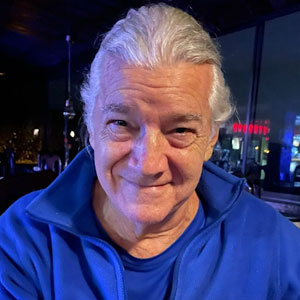
Artie Vipperla, PhD, is a clinical psychologist, energy healer, and spiritual guide with over 40 years of experience in trauma healing. A Harvard graduate and Vietnam veteran, he contributed to early PTSD research before shifting to deeper, energy-based methods. Dr Vipperla now mentors life coaches and healers, teaching his “harmonizing” approach — focused on breath, awareness, and reconnecting with one’s true nature — to support lasting transformation beyond traditional therapy.



Here’s a glimpse of what you’ll learn:
[2:23] Dr. Artie Vipperla’s background in PTSD research and decades of trauma healing work
[3:57] Discovering that traditional trauma healing leaves up to 90% unresolved
[5:55] Measuring trauma through energy awareness versus symptoms and clinical methods
[8:35] Why most unresolved trauma originates in the first year of life
[14:01] Dr. Vipperla’s transformative 67th birthday experience
[17:26] How breathwork leads to physical changes, including weight loss and increased vitality
[21:21] The concept of a “wounded self” trying to fix itself and shifting to effortless healing
[33:49] The link between unhealed early trauma, stress, and chronic disease
[37:42] How to begin the practice of inviting and allowing the breath for deeper healing
[48:02] Dr. Vipperla talks about realizing a lifelong sense of purpose and being guided toward a mission of healing and peace
About the episode
Everything we’ve been taught about healing may only be scratching the surface. For decades, people have worked to manage symptoms, regulate emotions, and “fix” themselves — yet something still feels incomplete. Is it possible that true healing requires a completely different approach?
Dr. Artie Vipperla says it begins by rethinking trauma entirely. As a clinical psychologist and pioneer in trauma research, he explains that most healing methods only address a small fraction of underlying trauma, leaving as much as 90% untouched. Instead of focusing on fixing symptoms, Dr. Vipperla emphasizes sensing and working with the body’s energetic state, particularly trauma rooted in the first year of life. He introduces a simple but powerful practice: inviting, allowing, and welcoming the breath, which enables one to access deeper healing without force or effort. By shifting from “doing” to “allowing,” individuals can reconnect with a more complete version of themselves and gradually release deeply stored trauma.
In this episode of Defining Moments, Melanie Warner sits down with Artie Vipperla, PhD, a clinical psychologist and trauma healing pioneer, to discuss deeper approaches to healing trauma. Dr. Vipperla explores why traditional trauma work leaves most wounds unresolved, how early-life experiences shape lifelong stress, and how breath-based harmonizing can unlock lasting transformation.
Resources mentioned in this episode:
Quotable Moments:
“We've been asking a ‘wounded self’ to fix itself. So that sounds like common sense.”
“The first year of life is the greatest trauma for most people.”
“The greatest power is effortlessness. That's called Wu Wei in Chinese.”
“Invite breathing to come as breathing wants. Don’t do it. Don’t breathe.”
“Healing isn’t about fixing what’s broken. It’s about inviting what was always whole.”
Action Steps:
Practice inviting your breath instead of controlling it: This helps shift you from effort-driven stress into a more natural, restorative state of awareness.
Recognize that surface-level healing may not address root trauma: Understanding this encourages you to explore deeper, longer-lasting approaches to emotional well-being.
Reflect on early life experiences and their impact: Identifying how early conditioning shaped you can reveal hidden patterns influencing your current behavior.
Shift from fixing yourself to allowing awareness: Letting go of constant self-improvement efforts creates space for genuine healing and inner alignment.
Develop sensitivity to your internal energy and state: Becoming more aware of subtle changes in how you feel can guide more intentional and effective personal growth.
Sponsor for this episode...
This episode is brought to you by Defining Moments Press, Inc.
We are a US-based publishing company helping aspiring authors around the world to write, publish, and promote a nonfiction book to elevate their brands, create a meaningful impact, and generate profit in eight weeks or less.
An example of how we help our clients is with Eric Alikpala. He went from earning $100K per year as a coach in his first quarter to doubling his income in Q2, and increasing his income tenfold by Q3 — growing him into a seven-figure author, speaker, coach, and consultant.
Do you have a message that could become a best-selling book and business asset? Defining Moments Press provides the strategy, structure, and coaching to help you get it done quickly and profitably.
Visit mydefiningmoments.com to schedule a strategy call and turn your expertise into a published book and a powerful platform.
If you want to leverage your expertise with a book, check out the 7-Figure Book MethodTM.
Powered by Rise25 Podcast Production Company
Transcript
Dr. Artie Vipperla: 00:00
It is an instance of the whole universe co-creating itself in and through the uniqueness of you. That's what you can get to if you rephrase what a lot of people are saying about the findings of quantum mechanics. You know, one electron is actually entangled with the whole business. Well, if the electron is so is every atom molecule, cell. And you.
But we have no way of recognizing that. So we only see the package in space and time and not consciously. But we know we're not being responded to in our fullness and we shrivel to fit in. That's the message. We'll love you.
We'll take care of you. You'll be fine, and we'll teach you how to fit in. That's where everybody is. A cog in the wheel. Learning how to play the games till you get yours.
Not each of us is as remarkable and magnificent a divine cosmic being as anybody who ever walked this earth. That's who we are.
Intro: 01:08
Welcome to the Defining Moments podcast, where leaders, innovators, and everyday heroes share the moments that changed everything. These are the stories behind resilience, purpose, and legacy. Now let's dive into today's defining moment.
Melanie Warner: 01:24
Hi everyone. I'm Melanie Warner, the founder of Defining Moments. Welcome to today's episode. Today's guest has spent over four decades pioneering trauma treatment. He's a Harvard High Honors graduate, a Vietnam veteran, a clinical psychologist, and part of the first national study that helped identify PTSD and put it on the map in the United States.
But after decades of being known as a leader in trauma healing, he discovered something that shifted his entire professional identity. He found that up to 90% of earliest trauma may still remain untouched. Not because people are broken, because we've been asking a wounded self to fix itself. So that sounds like common sense. But today we talk about what happens when the healer realizes the healing hasn't gone deep enough, and what it means to truly heal all the way down and all the way up.
Please welcome to the show, Dr. Artie, Thank you so much for being here.
Dr. Artie Vipperla: 02:23
Oh, you're so welcome. And I'm delighted to be here with you, Melanie. Melanie is also the publisher of my book and a great soul who I've been in touch with now for the last few years.
Melanie Warner: 02:36
Oh, thank you so much, Artie. You know, you are, I would say. And I, I don't say this about a lot of people, but I would say you're one of my favorite people on the planet because I think you have such a huge heart for wanting to help heal people. And you just show up in these ways that, you know, I know they're not random. Like sometimes you'll just pop in my inbox and say, hey, I'm just letting you know I'm reading this about you and I'm reading this energy about you and you just know what's going on.
Dr. Artie Vipperla: 03:04
Yeah. And the other reason she likes me, I'm psychic and I'm able to pick up what most people can't. How honest, good, true and caring and competent this woman is. And dedicated. Yeah.
Thank you. And I also picked up when she was not adhering to her optimal diet. I called her on it. She got back on board.
Melanie Warner: 03:24
That's so true. I mean, and there were things that I, I went to so many different doctors and I, they were trying to diagnose all these other things and make me get on all this medication. And it just, I wasn't feeling like, no, I don't want to be addicted. I don't want to have to survive on taking a bunch of pills. And so you help me with that.
So thank you so much. Now, Artie, you are already respected in your field. Okay? Harvard, clinical psychology, national PTSD research, a Vietnam veteran. You had nothing to prove.
So what made you question everything?
Dr. Artie Vipperla: 03:57
Well, after those, actually, it was in the middle of my fifth decade post Vietnam War search to serve peace that I had been doing. Also meditation and yoga and energy healing, breathwork, bodywork and prayer, 12 step programs, everything. All kinds of things. And my hands got sensitive enough. I could read energy, and psychically, I could look at somebody and I could see where their blood sugar was and all kinds of other things, and also how honest they were and all the different chakras.
Oh, that's good. I can read everything psychically. Oh, well, how about reading my own work? How well am I doing on trauma? Am I reducing symptoms?
Oh, yeah. Yeah, yeah. How much? And I discovered I got interested. I'm a troublemaker, you know?
So I just said, let's make a little trouble. How well am I doing on my own? Trauma healing. What? Skim the surface 90% unhealed.
I surprised myself, and fortunately I'm a fairly honest guy. I mean, I can spin a liar too. I mean, you know, I'm not a saint, but about that kind of stuff, I have some integrity. And I discovered that. Not just me.
I checked my colleagues, all the people famous for being trauma healers and this and that and something else. And I discovered the whole field is missing the boat. And that's when I set out to find what will get all the way down there.
Melanie Warner: 05:29
Wow. Now, you said for decades that trauma treatment has only skimmed the surface. That's pretty.
Dr. Artie Vipperla: 05:37
Decades since Freud.
Melanie Warner: 05:39
So you're saying this is the. You're saying this is the greatest discovery in human health and healing in the last hundred years, since Freud at least. What did you see that others weren't seeing?
Dr. Artie Vipperla: 05:55
I could pick up. It's not that I saw things in the usual sense of seeing signs and symptoms that are usually focused on by doctors and psychiatrists and so on. I can see how much trauma did they have before, how much trauma they have now, how much has it been reduced? What percentage of it? And I had various ways to cross-check the findings of the treatment they had.
Oh. Did it reduce symptoms? Yes. How many? Five.
Ten. Wonderful. Very good. Was the research significant? Statistically, yes.
But how much trauma? Energy was actually reduced. And I could pick it up. Usually no more than 4 or 5%. Sometimes 8 or 9.
And so what I was able to get from having become psychic enough through all these decades of prior practices and the curiosity to check was a way of reading, not just signs and symptoms, but the underlying energetic condition of the person. That's what's crucial. And I could then check how much of what degree does this underlying unhealed trauma affect people now? I could find out ten, 20, 30, 40, almost 80, 90, 100%. And to what degree does it affect health?
You know, the standard, the new surgeon general of the United States, Doctor Casey Means, she was the top of her Stanford School of Medicine. She's a real truth teller. And she tells the truth that chronic disease is about diet and stress, but the stress she focuses on are the things that you can diagnose with signs and symptoms. How much has she healed through underlying stress? 10%.
That's because there's a whole other layer of this that I didn't even see until I began giving free energy readings. I, you know, when Covid came out and they all said, oh yeah, all you have to do is social distance and wear a mask and wash your hands. And I said, what they're, they're, they're closing the gyms and keeping the liquor stores open. There's a scam going on here. And the people like me who were giving free advice to improve your health were called misinformation.
What? I started getting misinformation for free every Friday Facebook page and reading people's auras. And that's when I found that even the people who were doing the practice, I discovered that it does heal all the way. There was still some underlying. There was still some underlying trauma, unhealed.
What is it? And I eventually traced it back to infancy. The first year of life is the greatest trauma for most people. And how do I show that I can do it with Melanie? Her stature energetically at birth.
Let's just say or say it arbitrarily here. Where was her stature at one year? This. She has a father whose minister is a very holy man. But what happened in that year?
She shrank. That's the pandemic. That's a true pandemic in the first year of life. To what degree is that initial shriveling? We haven't done a whole lot of work together yet, so.
Okay. To what?
Melanie Warner: 09:22
Yeah, this is all new. This is all new stuff. Yes. I've known what you've done, but this whole conversation is brand new, even since you wrote your book. And just for the record, you know, my dad, when I was born, my dad was teaching, he's an attorney.
He was teaching Dale Carnegie classes and teaching Sunday school. And so it's funny because he's done so much for the community and, you know, and he's been such a solid like life force in my life. Like a rock for me. So that's interesting to hear about because people that have this trauma the first year of life, you know.
Dr. Artie Vipperla: 09:53
What is it that people don't see respond to? It's what was never seen and responded to in themselves. Who are we? Ultimately, if I put the phrase together, that's what came to me to say sort of fluently, it seemed divine, cosmic, and uniquely invaluable. It's not just a cute little package inside a bio machinery run by the brain that you have to love and take care of.
No, it's a divine cosmic being. It is. It is the. What's the word? It is.
It is an instance of the whole universe co-creating itself in and through the uniqueness of you. That's what you can get to. If you rephrase what a lot of people are saying about the findings of quantum mechanics. You know, one electron is actually entangled with the whole business. Whether the electron is so is every atom molecule, cell.
And you. But we have no way of recognizing that. So we only see the package in space and time and not consciously. But we know we're not being responded to in our fullness and we shrivel to fit in. That's the message.
We'll love you. We'll take care of you. You'll be fine, and we'll teach you how to fit in. That's where everybody is. A cog in the wheel.
Learning how to play the games till you get yours. Not each of us. As remarkable and magnificent. A divine cosmic being as anybody who ever walked this earth. That's who we are.
Melanie Warner: 11:41
That's powerful. And I, I, you know, I remember Wayne Dyer used to talk about if you really understood the power of who walks next to you every single day, you would never have fear or doubt again. And like, that is so much part of who we are. And there's so much childhood trauma and childhood wounds in everybody, no matter how successful. And I think there are people that are successful and driven, maybe because they have some type of insecurity.
Do you feel like there's some people that are secretly afraid of doing this type of work because they think it might affect their drive or ambition?
Dr. Artie Vipperla: 12:16
That can all be mixed in. But you know, everybody's a big mix. People who are ambitious and driven often have great talents. And there are also things they looked into in previous lives. And yeah, it's not all just a reaction to trauma, but what has been missed in all this trauma is the initial shriveling that keeps everybody a lot less healthy than we need to be.
This triggers every trigger at the bottom and reduces longevity. People ask, how come? How come people in the Bible could live for 900 years? But because they didn't walk around thinking that they were bio machines run by the brain. They knew they were walking embodiments of the divine presence.
That makes sense too.
Melanie Warner: 13:06
And you're saying so much of this happens in that first year of life because of society, pressure, limited beliefs. What's happening in the family? You know, in the household when you're pregnant or, you know, when you're when you're, you know, your child is one year old. So now, now you have learned all of this over many, many years of experience and studying it. And I want to talk about a defining moment for you, which was your 67th birthday.
You were already collecting Social Security. Most people at that stage are kind of winding down there like, hey, I'm just going to coast through life and see how much time I have left and be retired. But instead, you felt this calling to start this world changing mission. You went from this type A personality to all of a sudden it's like you, you started downloading these energy readings I guess is the best way to say it. Tell us more about what happened that day.
Dr. Artie Vipperla: 14:01
My 67th birthday. I did everything I usually do. You know, I meditate, I do yoga, I do energy healing, and then on the floor in the morning and then I get up and I get up. And I start moving like this. I wasn't doing it.
What was happening? All my joints were going, what? In circles? Semicircles? No.
They were. I realized before long I was moving like this. Like we learned to crawl contralateral movements, but in slow mo. And breathing was moving me, and I had to do research and find out what these semicircles are? All my joints are moving in and I eventually found it's the path of energy through every energy field of figure eight Y, every energy field, every energy field is a cylinder end to end with an infinitesimal hole, a fat bagel, cut it down from the top in the middle and you got two circles side by side.
That's a figure eight. Now what's it doing? Being a figure eight. Science has begun to catch up with profound wisdom. All this energy.
There are no things. That's actually a finding by The founding insight of the great philosopher Whitehead's process and reality of 1929. There are no things. Things are fiction. Everything is a dynamic expression of energy.
And what is energy? Do only one thing it creates. What is it? Creative itself out of itself. How?
By using itself. With what results in more of itself. Out of by means of, into more of itself. And all our higher wisdom is expressed in these recursive and reflexive ways. As above, so below.
Whatever goes, comes around. I am. That I am giving is receiving. Why? Because it's all energetic self co-creating.
And so are we. So you call.
Melanie Warner: 16:25
That harmonizing, right? You call that harmonizing.
Dr. Artie Vipperla: 16:28
Now I call it harmonizing all of you with all. When you go into the very beginning of this, unlike everything else, you don't do anything to get that initial discovery out to other people. What I discovered is to invite breathing to come as breathing once. Don't do it. Don't breathe.
Don't be automatic. Invite this breath and this breath and this breath and you'll get into allowing and eventually welcoming and getting, breathing, welcoming. You're welcome. And this is the communing you with breathing, your divine, cosmic co-creating together with breathing. And you come home to who you truly are that unleashes energy like nothing else.
Melanie Warner: 17:26
You've said this practice helped you lose £35 and rejuvenate your energy. What changed in a physiological way?
Dr. Artie Vipperla: 17:37
Anytime I had an urge to compensate by using food, I could remind myself, oh, in right breathing. Allow. Welcome. And then. Oh, this feels good.
I'm not so sure I need that food. In fact, I know what would be best. I'll feel even better if I pass up the carbohydrates, period. And then I can congratulate myself at the end of the day. Oh.
Another day. That's cool. And I did all this in my late 60s, early 70s. Oh, I'm not going to show you my six pack, but I will show you. I can do splits at 81.
Melanie Warner: 18:24
Yes, yes. In a six pack. That's amazing. So what did it cost you to tell colleagues that their life's work was incomplete? I would imagine that probably went over like a wet blanket on the industry.
Dr. Artie Vipperla: 18:39
Hey, I'm used to being a little unusual. I'm used to being. Not exactly the most popular guy in the professional circles. When you come out of graduate school and you manage to get the National Council of Churches to help you lobby the US Congress to do a study of Vietnam veterans and when the funds are voted, the pilot group you organized is chosen and your name is on the first study of PTSD. Guess what?
They don't invite you to join the faculty. They don't want to talk to you. They don't want to know about you. So?
Melanie Warner: 19:26
So they just try to discredit you so that their ideas are ignored.
Dr. Artie Vipperla: 19:32
I was in a department store. I was on the faculty of the Department of Psychiatry at a major medical school in New York City. I couldn't get an appointment with the head of the department because he was all about getting research on drugs into his department, and I. I had the possibility of bringing half $1 million of overhead money into his department, and I couldn't get an appointment, so I had to leave and go someplace else. That's the way it happens.
So I don't know, Melanie, you got a genius here. That's it. Maybe you'll spread this around. Well, actually, here's the thing. It's not a coincidence that I'm talking to a woman who has done amazing work on herself, is highly enterprising, is curious, open, and is still learning.
And she's into that period of life where women start to get bold, courageous as well as beautiful and ripened. And that is indicative of what I found for the most part, the people who listen and hear me and say, oh, let me try that. Let me see, oh, that feels great. Or women. Now there are few men who are exceptions, sensitive guys.
They're like me, you know, there are guys like me, but they are not a large number yet. They're mostly like you. Not that you're so common, but they have features in common with you and the women you'd be like. And the women.
Melanie Warner: 21:10
Found that women seem to be more receptive to this work of.
Dr. Artie Vipperla: 21:14
Intentionally.
Melanie Warner: 21:15
Inviting the breath, as opposed to.
Dr. Artie Vipperla: 21:18
Exactly.
Melanie Warner: 21:19
It.
Dr. Artie Vipperla: 21:19
Exactly.
Melanie Warner: 21:21
Now, you said something that I think is so fascinating. You said, we've been using a wounded self to fix itself. Explain that. Like, if we're not supposed to fix ourselves and what are we supposed to do?
Dr. Artie Vipperla: 21:33
Well, then you step back. All the coaching industry, the therapy industry is about telling people what to fix or change beliefs, emotions, behaviors. Tell them what to change or inquire into and find out. Why do you think that? And let's get that more grown up.
Let's get that more logical. Let's get that more advanced or adaptive. What I discovered is actually ancient wisdom. The greatest power is effortlessness. That's called Wu Wei in Chinese.
What is so powerful about Tai Chi and qigong is that effortlessness with every great performing artist? No. Is that your work as something? They really get it. Really get it, really get it.
But when you really play music, the music plays through you. It's called grace. It comes as a gift, but the healing professions have not focused on that. There are exceptions, of course, but what I discovered, having done an awful lot of work on myself, is that that way of inviting, allowing and welcoming came to me naturally, like a guided process. And then it came together with the ability to read energy.
Wow. This is what reduces the trauma. I was moving like that the morning of my 67th birthday, and I could check energetically. This is reducing the trauma. Oh my goodness.
And expanding the energy dramatically. That's when I set out to learn how to teach this to people. And it begins most simply with invading breathing to come. And then I discovered it by inviting people. He goes up against all their training.
Oh, I want to know what I have to do to fix myself. Oh, they don't use the word fix. But the whole orientation of coaching and change and growth and self-development is about self engineering, as if you're a piece of tech to work on, rather than graciously inviting the divine cosmic being, you are to enter in such a way that you can come more fully and commune and bring that into how you move and feel and overflow and come into grounded experience that's renewed and direct and concrete of who you truly are.
Melanie Warner: 24:16
If that movement and breath is so important, then can't people just do it on their own? Why do they?
Dr. Artie Vipperla: 24:22
Of course.
Melanie Warner: 24:23
To help them.
Dr. Artie Vipperla: 24:24
Why do they need what?
Melanie Warner: 24:26
Why do they need a guide to help them deal with their trauma or. Or identify what that trauma is so that they can heal it. If they can just kind of breathe through it and move in that motion to bring that in. And how do they know they're actually healed?
Dr. Artie Vipperla: 24:42
I see, why do someone who you give the hint to do something they've never done in their whole life? How come they don't just run with the ball and discover the way to deepen it and apply it and take it all through their lives? Well, there might be some who do, but I haven't run into any of them that I have needed. Well, how do you do that exactly? And then what?
And you say you commune with reading, but then you bring it into having breathing move you. How does that work? And I show them and I guide them. And then how does that provide an antidote to all the material programming that your bio machinery runs by the brain. You have to come into a directly sensed experience head to toe of living vibrance.
And then how does this revise your concept of yourself? Why can't you just say, well, I'm spiritual. I'm, you know, I'm divinity. I'm whatever. That's just a heads up.
It doesn't do anything. There's no new energy with it. How do you get into the fullness of that so that it's real? You have to discover the sense in which that vibrance is boundless and becomes timeless, instant by timeless instance. And this is who you are, and have that rehearsed enough so that you then come in to feel the energy and can begin to apply it retroactively to all the lived moments of your life.
They're not just memories. They're not just thought forms. They're just not just muscle, muscle memories and all the things that the trauma industry has thought up as concepts to avoid dealing with the fact that everything in you is you. Everything that's still living in you are moments of your life that live on. For including the first moment of your life at every moment during infancy.
How do you reach into and commune so that you bring the shriveled moments that are like this into, unfolding through patient, gentle, sensitive, communing with where you don't fix change. You provide the retroactive nurturing that was never there when you first lived that moment. And then bit by bit, you unfold into the fullness of all of you coming together.
Melanie Warner: 27:02
On my wall from Tennyson. It says, I am a part of all that I have seen. That reminds me so much of that because we develop and cultivate these limited beliefs or just beliefs in general as we have life experiences and we go through. Some are conscious. Most of them are subconscious.
And when we do trauma work, it's usually about symptoms. Symptom reduction. Right. So how should we be measuring this type of healing instead? And how do you measure it?
Because I've seen you do healing, like your Friday healings, where you can literally see the difference in somebody's photo, just their photo or their face or their whole energy is shifted. How do you measure that?
Dr. Artie Vipperla: 27:47
Most directly by learning to do what I do, what I learned, which is to feel energy. You're still energy hands. How much was it before? How much is it now? And you can do it.
That's analogical. That's the quantity like that. But you can also do it digitally. How? What percentage had I healed before?
One, two. 5%. How about now? 1020. 30, 40.
It's not a symptom. It's not that we don't have electronic machinery yet. That is sensitive enough that I know of. There may be some place, you know, Russia has led in this research on what they call torsion, but I haven't been able to get to anybody who has that equipment yet. But from what I found out, they can't measure what happens to auras here, that my aura goes out many, many, many, many, many, many miles.
Normal aura goes out ten, 20, 30, 40, 50ft. You know, yours is now ten, 20, 30, 40ft. Mine's out thousands of miles. And that's what happens when people practice harmonizing on a daily basis. There's no way to measure that other than being able to tune into energy that I know of so far.
So anybody can learn to do that.
Melanie Warner: 29:46
Hear the term, that person is out there, right? Like do you think that that really is, is a deeper meaning of like, that person is so far away, right? When you say, I'm 40ft, you're thousands of miles away, like because of the work that you've done. Maybe there's people who don't understand them.
Dr. Artie Vipperla: 30:09
I think there could be many versions out there. There could be someone who's a little bit lost their marbles and is off the wall.
Melanie Warner: 30:18
There are people that think this is woo woo stuff, right?
Dr. Artie Vipperla: 30:44
Yeah. The difference might be more, more precisely captured as a matter of the degree to which you've entered into energetic sensitivity, not so much far like distance in the usual 3D sense, but to what degree are you sensitive to registering and expanding into the energy realm, which colloquially in the new age, and the new consciousness world is called 5D5 dimensional. What? There's three dimensions of space. One of time, and then the fifth dimension is the aether.
There are other dimensions. It's not the ultimate, but it is the point at which the earth, water, air and fire then go into the life realm. Just as we have a, we have one, two, three, four chakras, about four chakras down to the heart. And then the fifth is the solar plexus. That is the balancing, digesting energy that governs physical digestion, psychological boundaries, but also the entry into this fifth dimension of energy.
Melanie Warner: 32:08
So where do you see people that are high strung, high stress, high performers like leaders, entrepreneurs? Where do you see them staying stuck longer than they need to be?
Dr. Artie Vipperla: 32:22
Well, ultimately this is an individual matter. You know, it's hard to say one thing about such a large group that's, you know, a very, very mixed bag. But the general thing with successful people is they're stuck into doing what they already know. And what we already know in this culture is limited by the mainstream reality that people like me call materialism. It's the matter that is the real thing.
And we got physics and chemistry layered in the coagulated in biology and then other layers on top. It's bottom up and my colloquial expression for all that, it's all dumb. It is no intelligence, no intrinsic intelligence. It's numb. There's no feeling, and it's dead.
When the ultimate wisdom in all the traditions is, it doesn't come from the bottom up. It comes from the top down. The ultimate creator is divine. It's already alive, smart and boundlessly, intelligent and living. That shift into ultimate reality is what hasn't yet been accomplished by the leading figures of the culture.
Melanie Warner: 33:49
What's the greatest stressor contributing to chronic disease that people are ignoring today?
Dr. Artie Vipperla: 33:56
Underlying unhealed trauma from the first year of birth? It's the shriveling of their energy. And how does that show up in medical tests? High cortisol, inflammation, stress. And people say, well, you have high cortisol stress.
You know, you've got to relax more and not work so hard. That's usually also only skimming the surface. The underlying trauma dates from the first year of life that's been there. Unconscious that medical, psychiatric, psychological Diagnosticians don't know how to pick up yet. It's the first year of life.
And it's operating on diminishing health. And people work on their triggers. Oh, I got to get better at handling that trigger. And they work on that trigger and they work on that trigger. But what makes you triggerable is the original insult that diminishes you into a thing to fit in, and you have to stop being who you ultimately, eternally are.
You're an eternal soul passing through this life. That's the ultimate wisdom. How do you come into an experience of that? So you're living like that. Not having to compensate and pretend like you're not, and anything else that's distress or stress, having to pretend and fix yourself into a package that fits in.
Including high performers.
Melanie Warner: 35:23
Yeah, I think a lot of people respond out of fear mode, right? And I know, you know, Gary Zukov is one of my mentors. He talks about that a lot. The difference between responding from the ego, which is fear based versus responding from the soul. That is love based on those decisions, you know?
And we talk about, you know, the soul is the part of us that lives forever, no matter what. People have different religious beliefs, but most people believe we have a soul and that it is the wisest part of us. So when you can lean into that soul, the part that's already inside of you, it's not coming from external validation. Like if we lean into that, that soul guides us through a lot of what you're talking about here, right? But, but so often we let fear drive that instead of the soul driving it.
And the fear is the external part where we have to go to somebody else, or we have to get validation from somebody about our own thoughts or how we're feeling about something.
Dr. Artie Vipperla: 36:22
So what you just did is a marvelous presentation of the standard enlightened story. You know, there's the fear and there's the love. You have to lean into the love and the soul and see what is leaning into the love. How is it that you have to do a thing called leaning in rather than simply you are this love. You are this eternal, divine, all encompassing and embracing coherence that we call love.
How is that not yet concrete, immediate direct experience? That's the path of harmonizing. Helps people traverse. So it's not like an effort or a gesture you have to exercise or a, a, you know, a meme or a frame that you have to implement or somebody's instruction to apply. How do you live this truth?
Melanie Warner: 37:31
Would you give it to somebody who is more curious about this or wanting to start? Like what? What's the first small invitation that they could practice today?
Dr. Artie Vipperla: 37:42
Invite breathing to come as reading once.
Melanie Warner: 37:46
Invite breathing to come as breathing wants. And what does that look and sound like?
Dr. Artie Vipperla: 37:53
It doesn't look very much because it's all going on with you reading and it doesn't sound. But it's you setting aside everything you know how to do and. Or do automatically and pores to open everything you know about yourself. You set aside for a moment so that none of your identities are engaged in this. You who open like when.
Someone knocks at the door and you open it and then you. Step aside to let them come in. When they come all the way in, you open your arms and you welcome them. You do that with breathing. You invite, allow, welcome and that can feel like this.
You can squeeze yourself like a turtle all the way down. Every little muscle contracted, and then you opened up like a peacock. Like this. And then you come back and notice. Oh, you feel a little more energized, a little bit more relaxed, a little more open.
Now bring that into breathing. Invite this breath, this breath, this breath. And notice before long, you'll not only allow, but you'll notice breathing gets a little easier, gentler, smoother. And although reading doesn't say or do anything you notice, it's not just a bunch of physiology that's going on there. There's high intelligence in breathing that knows and feels how to bring life into you, and has the power to pull that off and go like this, in effect.
Oh, you're welcoming! How cool. I'll welcome that. Welcome. And you get a very subtle experience of communing. Like if we did communing, eye gazing.
Melanie, we'd look at each other and we'd see some things about each other's face, and then we'd soften and we'd feel, I'm seeing. I'm seeing that you're seeing. And then we'd see. I see you're seeing, am I seeing? Oh, contact, intimacy, communing.
And we recognize that that communing is blessed. And that's the enacting of what's set in the Bible and the Hebrew Bible and in the Greek Bible, in the Hebrew Bible. It's wherever I come, wherever I cause my name to be mentioned, I'll come among you and bless you. Or Jesus, saying, when 2 or 3 are gathered together in my name, I will be there. Connecting is a blessing And it happens not just with another person, but connecting with breathing.
And you get the blessedness. Coming in are things that you can then bring all through you. Not a frame, not a thought, not an instruction. Not a bit of engineering, a direct, immediate experience. Okay.
You're asking good questions, Melanie. You're really. We're really pulling it out of me.
Melanie Warner: 41:21
That's good. Where would you say, like, who would you say is your greatest influence on your life? Like, what made you who, who would you say is responsible for the man that you've become today the most?
Dr. Artie Vipperla: 41:36
I don't have one person. I have a series of mentors who have been quite significant and each is unique and I've had a most recent. Appearance in my sensorium. That is the most of the most and I realize has been there all along. So rather than talk about guys, why don't I just talk about this one?
Oh, okay. You think that before was woo woo? Where did you hear this shit? Okay. So ever since I learned how to use my hand in chronic healing to check something like yes or no.
And I did a process where I focused on negative energy and I felt it like this. And then I did a process to remove it. And I noticed afterwards what was reduced. Am I really getting this accurately? And I asked, and I got a yes.
And then I turned and said, is this you? Hire you. And I got it. Yes. Is this the line?
Yes. Does this mean I'll never be alone? I can do this anytime I want. Yes, and I cried for three hours. That I guessed.
Your question brought me to focus on this, because what's happened in the. 16 years since I've been able to do this. I've more and more frequently practiced and taught and guided people to harmonize. So you get really clear and then you can turn to ask higher. Knowing what's going to be really good here.
Now with this and listen for inspiration. Or I have an idea about doing X, Y, Z. Is it? How good is that? 1,020%?
Okay. Is there something else that would be better? Yes. Yeah. Okay.
Keep searching. Okay. And have it have a dialogue with higher knowing. I've been doing that for 16 years and teaching that all over the place and demonstrating free on Facebook every Friday and on and on and on and on. I put it in my book and I've got all kinds of video tapes.
Melanie Warner: 44:17
I remember the first time I talked to you, you did this when you were deciding whether you were going to work with our company to do your book.
Dr. Artie Vipperla: 44:35
And yeah.
Melanie Warner: 44:37
And I.
Dr. Artie Vipperla: 44:39
And you ten, 20, 30, 40, 50, 60, 70, 80, 90. That's no brainer. I go with Melanie. And down. Yeah.
Hell with Jack. You know, I don't care how much more famous he is.
Dr. Artie Vipperla: 44:55
Here's what happened recently. I turned to ask higher, knowing something. And I hear he asks already. Yes, you got it right. And I had to ask.
Are you talking to me? Oh, you catch on. You can hear me now. Holy shit. This is a life changer, right?
It just might be. I'll take it in. It's fine that you're finally ready to hear and feel. Are you always going to be with me anytime I want? I always have been, haven't I?
But now I can be even more fully with you. And I noticed you've always been here all along. Yeah, you got that right. A long time ago when you realized you were guided. Any time I want, I can turn to you and feel you.
Feel this closeness, this depth that you're in. Me. You are me. You feel me? Yes.
And you know what else? I'm. And everyone else. Only they haven't caught on as much yet. You might have to clue them in.
Holy shit, I guess so, yeah. You're in everyone. You're the one that's in everyone. Everyone who says I am means you, right? Yeah.
Anybody who says I am means me. Okay. So the greatest influence on being the man I am. That's you.
Melanie Warner: 46:37
So, Artie, as we start wrapping up our time together here today. Is there something like that?
Dr. Artie Vipperla: 46:44
Stop? Really, we. Melanie. You're a you're a you're a gas.
Melanie Warner: 46:52
Is there something I haven't asked you? Is there something else that you want to share with our audience today?
Dr. Artie Vipperla: 46:59
Book. Go to my website. Heal your deepest trauma.com. Get my book, get my guiding video and start to practice and then look me up. If it feels right.
You can tell I'm very accessible. I have things that are free that cost money. You want to go a long distance. I have mentors and I'm pretty good at mentoring. Okay, I get behind you.
You'll go someplace. So start with my book. 12 bucks. Okay. Discounted on Amazon.
It's 18 for a paperback. I sell it for $12 that I read into a video. So you get my face and sound and the vibe and the scrolling text. It can't be beat.
Melanie Warner: 47:44
So you came home from Vietnam wanting to help create a world culture of peace. At 67, you realize that mission wasn't just a fantasy. It was guidance. Like what were you pretending not to know before that moment?
Dr. Artie Vipperla: 48:02
And had been guided from the beginning. I didn't think up this idea. This is like my heritage of multiple lifetimes. There's a guiding word that is the ultimate word in the prayers of my people. May God bless you and keep you.
May God bring the light of his or her face to shine on you. May God turn his face to you and bring you peace. This has been in my soul for thousands of years.
Melanie Warner: 48:45
Wow. Thank you so much. Now, I just have one last question. This energy that you feel, this voice, this wisdom that you feel when you talk about God and peace. Do you feel that this is God working through people as a higher self, higher being?
Or do you feel like you know, it's a different entity or energy? Like how would you describe it?
Dr. Artie Vipperla: 49:08
With allowance, there can be all kinds of complications and, you know, confusion and complicated shadowy beings overall. Yes. Ultimately. We're one human family under one ultimate mystery, ultimately creating the ultimate coherence that holds it all together that we call love. yes.
Melanie Warner: 49:39
So what I'm hearing is that healing isn't about fixing what's broken. I think that's what gives people hope in this conversation. It's about inviting what was already and always whole inside of us, and that changes everything. So thank you. Thank you for being so willing to question your own profession, to question your mentors, your guides, and question yourself to come to this conclusion, even at 67, to start understanding that there's a deeper level of how we can heal.
That's in a different realm than what we're seeing physically and metaphysically. So I want to thank you for being here today, for spending your time with us. And I encourage you to start with either getting a book, you know, or going to one of these readings that already does. Are you still doing those on Facebook?
Dr. Artie Vipperla: 50:31
I do free energy readings every Friday at noon Eastern time on Facebook. Until I get overwhelmed.
Melanie Warner: 50:38
Okay, I'm going to put that link in here. So if you guys want to come and meet Aarti and go try it out, take a test drive. Like I encourage you because you learn a lot about yourself, but be careful what you ask for because you already do not have a filter, and he will just tell you he does not filter whatever that message that comes, he doesn't. He doesn't stop and think about it and translate it. He doesn't filter it.
It's like it's whether you're like it, it's the full truth. So you have to be prepared for that too. It may not be what you want to hear. And so, but he's always going to give you the truth that he's receiving for you. And I think that takes a special person to be able to be that conduit, that guide for people.
So thank you for your heart and your commitment to that as well.
Dr. Artie Vipperla: 51:30
So welcome, super Melanie, a joy to be able to play with you and celebrate and party like this. How great.
Melanie Warner: 51:42
Now, before we wrap up, before we wrap up, I just have to share that we have a special mystery story that we do at the end of every single episode. And this one is perfect for what we're talking about here today. So just to set up the story, there was a young doctor who idolized the father of modern psychology, Sigmund Freud. He admired his brilliance. He studied his theories.
He defended him publicly. The older mentor believed that human suffering could be traced to buried childhood conflicts, often rooted in repression. The younger doctor agreed. At first they traveled together. They lectured together, they broke bread.
Together, they built an entire movement together. But something began to trouble him in his patience and in himself. He noticed that uncovering repressed memories doesn't always heal the person and yet insight brought awareness. But awareness didn't always bring wholeness. And he began to sense that the psyche was more than just trauma, more than repression, more than pathology.
He saw something deeper, something spiritual, archetypal, ancient. The older mentor warned him, if you move in that direction, you're going to lose credibility for everybody in the world and all the work that you've worked hard for, everything that you're doing. But the younger doctor couldn't ignore what he was seeing, and he began having these vivid dreams, these inner visions and encounters with symbols that felt older than his own lifetime. And it was destabilizing. Colleagues whispered his mentor cut ties completely.
He lost his professional alliance and all credibility, and he nearly lost his reputation. For years he withdrew. He studied mythology, religions, symbols, the unconscious not as a storage vault of wounds, but as a living, evolving force. And he concluded something radical. The goal of healing was not simply to analyze what was broken, it was to integrate the entire whole self shadow included.
He called it individuation, the journey toward wholeness. The man who dared to evolve behind his mentor. Now you know the defining moment of Carl Jung J u n g. Carl Jung right? His defining moment wasn't rejecting Freud.
It was realizing that healing wasn't just about digging into old wounds. It was about becoming, becoming whole. And so that at the time was such profound wisdom. It was something so unique and different. And so sometimes, like what Artie is saying, we've been trying to fix a wounded self.
And Jung said, we must integrate the whole self. And so I couldn't think of a better story to end with today, as two great men on the planet who have challenged their mentors, challenged common beliefs, discovered a whole new evolutionary way of healing, and are sharing that with the world. So thank you, Artie, for your gift of just being you and always being present and always being real in how you see things and how you say things. And we here appreciate everything you do and just wish you the best of luck as you move forward with all of your work and know that you're going to be inspiring so many people. So thank you again for being here and thank you all.
Thank you all for being here as well, and we can't wait to see you next time. So take care, everybody. Bye.
Dr. Artie Vipperla: 55:14
Blessings to all.
Outro: 55:16
Thanks for listening to the Defining Moments podcast. We'll see you again. Next time, be sure to click subscribe to get future episodes.
Meet the Host
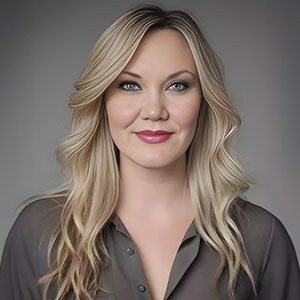
Melanie Warner
Melanie Warner is the host of [Defining Moments where she chats with established experts, corporate leaders, and high-level coaches who are turning their expertise into best-selling books, premium brands, and powerful media platforms. As a media veteran for 4 decades, Melanie walks guests through their own Defining Moments.