

Podcast
How To Heal Your Relationship With Food and Find True Freedom With Sue Van Raes
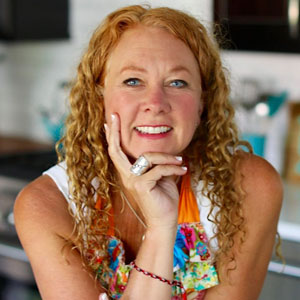
Sue Van Raes is a functional nutritionist, food psychology specialist, and the Founder of Boulder Nutrition, where she helps women transform their relationship with food, body, and self. With over two decades of experience, Sue leads private programs, workshops, and international retreats focused on healing, self-trust, and sustainable wellness. She is the author of Food and Freedom and blends modern nutritional science, psychology, and mind-body practices to guide clients toward lasting health and inner balance.



Here’s a glimpse of what you’ll learn:
[3:51] Melanie Warner shares her transformational Bali retreat experience and nervous system reset
[7:22] Sue Van Raes explains the healing energy of Bali and why she returns every year
[12:11] How stress impacts the nervous system and the importance of intentional self-care
[18:34] “Good girl” conditioning, perfectionism, and why women feel constantly depleted
[29:53] Sue reflects on her divorce, single motherhood, and navigating fear, overwhelm, and an unknown future
[35:39] The science of stress: adrenaline, appetite suppression, and burnout effects on the body
[41:55] Why high-performing women equate control with safety — and how it leads to burnout
[53:18] “Drowning in information, starving for wisdom” in the wellness industry
[1:16] How Sue fills retreats: starting with smaller offers, building trust, and growing through repeat clients
[1:35] A health and fitness expert's defining moment: the body is not the enemy
About the episode
Many high-achieving women feel trapped in cycles of stress, perfectionism, and control, especially when it comes to food, health, and self-worth. Despite access to endless wellness advice, they often feel disconnected from their bodies and overwhelmed by conflicting information. What happens when discipline turns into burnout and control becomes a barrier to true freedom?
Sue Van Raes, a functional nutritionist and food psychology specialist, explains that healing begins by shifting from external rules to internal awareness. Sue encourages tuning into body sensations — recognizing what feels energizing versus draining — and replacing willpower with sustainable self-care practices. She highlights the importance of nervous system regulation, rest, and regenerative living, along with questioning perfectionism and societal conditioning. By prioritizing intuition, creating space for reflection, and redefining success as a feeling rather than an outcome, individuals can rebuild trust with their bodies and create lasting change.
In this episode of Defining Moments, Melanie Warner interviews Sue Van Raes, the Founder of Boulder Nutrition, about food freedom and body awareness. Sue discusses nervous system healing, the dangers of control-based habits, and building intuitive self-trust.
Resources mentioned in this episode:
Quotable Moments:
“I literally felt my nervous system just relax and unclench like never before.”
“We are looking at the external productivity that’s happening, and that’s what equals success.”
“Control is a false sense of certainty, and our brains are scanning for certainty so that we feel safe.”
“The most unreliable source of follow-through really is willpower because it’s not consistent.”
“When we tune into the wisdom of our bodies, there’s so much information there that we can fine-tune.”
Action Steps:
Tune into your body’s signals daily: Recognizing sensations like tension or energy helps guide better decisions and builds self-trust.
Prioritize rest and nervous system regulation: Slowing down reduces stress and allows your body to recover, improving overall well-being.
Replace willpower with sustainable habits: Creating supportive routines is more effective than relying on inconsistent bursts of motivation.
Question perfectionism and “good girl” conditioning: Letting go of unrealistic standards prevents burnout and supports a healthier relationship with yourself.
Create space for reflection and integration: Taking time to pause helps process experiences and leads to deeper, more lasting personal growth.
Sponsor for this episode...
This episode is brought to you by Defining Moments Press, Inc.
We are a US-based publishing company helping aspiring authors around the world to write, publish, and promote a nonfiction book to elevate their brands, create a meaningful impact, and generate profit in eight weeks or less.
An example of how we help our clients is with Eric Alikpala. He went from earning $100K per year as a coach in his first quarter to doubling his income in Q2, and increasing his income tenfold by Q3 — growing him into a seven-figure author, speaker, coach, and consultant.
Do you have a message that could become a best-selling book and business asset? Defining Moments Press provides the strategy, structure, and coaching to help you get it done quickly and profitably.
Visit mydefiningmoments.com to schedule a strategy call and turn your expertise into a published book and a powerful platform.
If you want to leverage your expertise with a book, check out the 7-Figure Book MethodTM.
Powered by Rise25 Podcast Production Company
Transcript
Intro: 00:00
But I was going through a really stressful time and one of my kids was going through a really stressful time, and it was giving me so much anxiety and I almost didn't go. Like, I literally got to the point where I'm like, should I go on this trip? And luckily I chose to go and I spent the first part of my trip, like really taking care of myself and looking for people who could support me in kind of bringing my nervous system back into balance because I'd been just so heightened. And so in like a fight or flight response. And it was amazing.
Like I literally felt my nervous system just relax and unclench like never before. And now my family has this saying like, if I'm ever not okay, send me to Bali.
Melanie Warner: 00:41
Welcome to the Defining Moments podcast, where leaders, innovators and everyday heroes share the moments that changed everything. These are the stories behind resilience, purpose, and legacy. Now let's dive into today's defining moment.
Melanie Warner: 00:58
Welcome everyone. It's Melanie Warner here with Defining Moments. I want to welcome you to our podcast and also thank Defining Moments Press for being our sponsor of this podcast. Defining Moments Press helps experts, business owners, coaches and thought leaders create thought provoking content, everything from books and speaking on stages and being featured on TV shows. So if you are interested in building your platforms of knowledge as a thought leader or a business owner, I highly recommend that you visit our website at mydefiningmoments.com or 7figurebookmethod.com so both of those links are going to be in the show notes. And this is an amazing way to help you get your expertise out to the world and start building your platforms. So today's guest is Sue Van Raes. She is a functional nutritionist, a food psychology specialist and author of Food and Freedom. She helps women end the war with food.
Aren't you tired of going to the grocery store and fighting with yourself over food? You guys, I do this every day, right? And she does it. Not through more rules, restrictions, or willpower, but through reconnecting with their bodies, their intuition, and their sense of pleasure. Her work bridges biochemistry, psychology, and something we don't talk about enough.
The deep wisdom of the body itself. The body has the ability to heal itself. And food is medicine. But her defining moment didn't come from a textbook or a certification. It came from a season of her life that brought her to her knees.
A traumatic divorce at 30. Raising two young children alone in a new country with no roadmap forward. And so what she discovered in that moment changed not only how she viewed herself and how she ate, but how she lived. So, Sue, welcome to the show.
Sue Van Raes: 02:58
Thank you so much, Melanie. What an honor to be here with you. I'm so excited.
Melanie Warner: 03:03
Oh thank you. I'm excited to have you here, too. We have got a chance to meet each other. We had an amazing experience in Bali at one of your retreats. We filmed our PBS TV show Recipe for Wellness.
You were one of our experts on the show, so that was one of the things that brought us together. And boy, was that an experience. So I was so grateful that we have stayed in each other's lives because I learned so much from you every time I talk to you.
Sue Van Raes: 03:30
Thank you so much. I've learned so much from you too, and I can't believe we went through that experience together. That was such a highlight of my whole career, to be filming in Bali and having you there, like you were the most supportive producer and just taking such good care of me. And I really just am so grateful for that experience. It was life changing.
Melanie Warner: 03:51
Oh, thank you so much. Well, it was always a dream of mine to go to Bali ever since I saw the movie eat, pray, love. That was like on my bucket list. And so I remember saying, I want to go. Have my own eat, pray, love experience in Bali.
And you helped me do that at a retreat. And what we did is we scheduled our TV show filming right after your retreat. So I got to. Go over there for seven days. And it was really interesting because day one of getting over.
There I lost my luggage. So I was there for ten days and they lost my luggage. I never got it back. And there were other women in the retreat that were so great. One of them even had a bathing suit that she loaned me that she had bought the year before when they lost her luggage.
And then somebody else had like an a, like a travel toothbrush and toothpaste that was extra that they loaned me or gave me. And you were so kind to help me. Like, I remember being on the back of a scooter in Bali, going to a grocery store, trying to find clothes to wear, and then realizing I'm in Bali. You don't need a lot of clothes, right? And then they lost my medication in my luggage.
So I joke and tell people I was naked without meds in a foreign country for ten days, right? But it was still one of the greatest moments of my life. It was so much fun. It was so beautiful. I remember waking up at this retreat and and we get there at night and we have no idea what the view is.
And we wake up in the morning. I got up before the sun because you said, this is Bali is the land of downloads. And I got up before the sun. I listened to the sun come up. I heard this chanting of the villagers across the the way.
And it was just the most magical, beautiful, ceremonial moment. I've never experienced a sunrise where I was bawling my eyes out and I call it Bali like b a w because I was bawling so much on that trip because it was so beautiful. And it just it was such a great experience. It took me about three days for my nervous system to finally slow down and stop. Like the instinct of checking emails, getting on the phone.
And you took such good care of us, Sue. Like, I love how much you love the women that come to these events. And I'm not somebody that is relaxes very easy. I'm the person that I'm I'm in my happy place when I'm working, creating on my computer, doing stuff. I'm it's hard for me to be present and in the moment.
And yet you were so patient with me. I was dealing with all this trauma of like not having my luggage. And then I slipped and fell and tore my meniscus. That first day. And so I was literally like on crutches and like limping the whole time.
And yet everything worked out like it was like it, it started out feeling like, oh my gosh, there's this nightmare. But there was so much love and healing. And even the people that came into the retreat and I remember when I left, I literally cried because I had to say goodbye to my healer. Yeah, who healed my knee? Shout out to naman because he healed my knee enough to where I could go climb a volcano a few miles just a few days later after having a torn meniscus.
So there is something very magical about Bali, and I know you go there every year. You do retreats. You have one coming up. Tell us more about Bali, because I want to jump into that first and then kind of get into some of your history.
Sue Van Raes: 07:22
Totally. So I just have to start with this actual blog I wrote years ago, which speaks to exactly what you said in the blog was called I cried at the airport, and it literally was about me leaving Bali for the first time, like on my first trip. And I really did pull up in the cab at the airport to go check into my flight home with a dear friend, and before I could even get to the security, I was bawling because it was like the most magical and healing experience of my life, and I was so sad to leave. And she, I remember she was like, do you think we should maybe sit down before we go through security until you stop crying? And I mean, we sat there until I could get myself together and then proceeded onward.
And it's just been the most magical part of my life for years, going back year after year. And that's for two reasons. One, Bali is just magical itself. It's Paradise. It's incredible.
The people are incredible.
Melanie Warner: 08:24
The people are so loving and kind. Like I can say as a woman, I've I've been a travel journalist too, and I've traveled all over the world and I've never, ever in my life been to a country where I felt so safe other than being on the back of a scooter. That was a little sketchy, but but the people were so loving and kind and it was like, you, you you just there doesn't feel like there's no like dark underbelly side that you feel like is in some of these types of countries. Like you might feel that in Thailand or, or certain places, but there, there was just like this purity of celebration and people honoring their gods and goddesses and doing these ceremonies every day and just being so grateful and having so much joy, even though they've never left Bali. It just blew my mind how beautiful the people were.
Sue Van Raes: 09:15
Yeah, there's the culture is really, really sweet and they're so devotional. And I think that really adds another layer to their day to day ritual that really enhances who they are. It's so beautiful to see how devoted they are to their ceremony and their rituals and their offerings and all the things they do regularly. I remember one time I was in a taxi years ago, and I asked the taxi driver, like, how is it that everyone here is so incredible and so kind and so loving and so generous and even so happy actually. And he said, well, it was so simple.
He's like, they believe in karma. We believe in karma. So we don't want to do things that are going to ruin our karma. And I was just like, well, that's a pretty clear answer. And yeah, it's so wild.
But the other thing that's really profound in going back to Bali every year for me is that every time I go back, there's something different going on in my life, right? There's like a different experience. I'm having a different struggle. I'm having a different era that I'm going through. And the amount of those particular early morning downloads that you mentioned at sunrise that I've experienced in over 11 trips to Bali, 11 years of going to Bali, 12 coming up, it's profound to see how much of that has impacted the course of my life.
When we get the moments And, you know, not to mention the awe and wonder that comes with each. Morning, sunrise, and the vibe of the entire island of Bali. But just in general, like. What I take away as personal medicine is it's just it's so priceless and it's made such a huge difference in my life year after year. It's.
Melanie Warner: 11:04
So I want everybody to experience this. Like, and I remember talking about this on the TV show when we were filming, you know, like it. The crew came in, they shot for a few days. They, they blew out. Like they didn't get to have that whole experience of just getting settled like I did.
And, and, and it was just like night and day difference to, to, I'm so grateful to have that experience with you, to experience the culture. Yeah. To get to know the people and all the water rituals and meeting all these gurus. It was so amazing. And then to have my own experience there as a producer of the show, to know this is what I want the people watching the show to feel so that they can have this experience at home or, you know, like with eat, pray, love, like you may not have to go to all these countries to have your own eat, pray, love experience.
And by the way, I had forgotten until I watched the movie after I got back that she hurt her knee, her left knee in the movie, and I.
Sue Van Raes: 12:01
Forgot that too.
Melanie Warner: 12:02
I did have my. I did have.
Melanie Warner: 12:04
My own eat, pray, love experience and you have to be careful what you wish for.
Melanie Warner: 12:10
Oh, but yeah.
Sue Van Raes: 12:11
It's a place that can really do wonders. Like, there was one year where I went early to prepare for my retreat, but I was going through a really stressful time and one of my kids was going through a really stressful time, and it was giving me so much anxiety and I almost didn't go. Like, I literally got to the point where I'm like, should I go on this trip? And luckily I chose to go. And I spent the first part of my trip, like really taking care of myself and looking for people who could support me in kind of bringing my nervous system back into balance because I'd been just so heightened.
And so in like a fight or flight response. And it was amazing. Like I literally felt my nervous system just relax and unclench like never before. And now my family has the saying like, if I'm ever not okay, send me to Bali. That's what that's what they know to do with me.
Because there's something just that you can access there that feels so much more palpable than other places, like the energy and the healing and the the magic is so palpable. It's hard to describe, but I know you know what I'm saying. It's like, you know, it's like you take what we have on our day to day and our normal day to day for most of us, and you turn it all the way up to maximum volume. And that's how it feels to be in Bali and.
Melanie Warner: 13:28
And Costa Rica, because you also do events there. And I've noticed in both places because I love Costa Rica, we shot our film, our TV show there as well. And they both have like these blue zones of health where people eat really healthy. And I love the fact in Bali that you had a chef. We didn't have to worry as woman to take seven days and not have to worry about cooking or cleaning for seven whole days and just do nothing.
Oh my gosh, that was like the greatest thing ever. It just it reset my whole nervous system in such a beautiful way. It was a very, very healing experience for me, even though I was dealing with like, you know, my leg giving out and things like that. But it was, it really didn't slow me down as much as I thought it would, which is interesting. But yeah, so I think that's the key is anybody that's ever thought about going to Bali or Costa Rica, like definitely connect with Sue because she makes it such a beautiful, sacred, safe space where you have the chance to be in that space.
And it's for women mostly it's, it's really just encouraging women to Come back to themselves and put themselves on their priority list. And that's really what it's all about.
Sue Van Raes: 14:42
Yeah, it's something that is so incredible to watch, and I say this a lot. I might have even said this to you. I know I said this to Sanjay when women come on retreat with me. Well, first of all, they almost always say at the end, like, whoa, I needed that. Right?
Like, it's kind of the, the line that I hear so much. But what's so cool to watch is how they show up on day one and how they are midweek and how they are at the end of a week and like literally watching people relax. But what I noticed that's so wild is people's faces relax. And so the women, they soften, you know, and they smile more and you, it's, it's like the stress melts away. And it's really interesting to watch that happen over and over again.
And it just feels like the most rewarding part of my work, to be honest, because we hold so much, we do so much. We take care of so many other people, so many other things. It's really beautiful to give that space back to ourselves.
Melanie Warner: 15:45
Yes. And I think that everybody deserves that, you know? And I remember getting that message when I was there that it wasn't about like it, it wasn't about taking this trip because I deserve it. Right? It wasn't about earning that space to feel like I deserved it.
You don't have to earn that. It's just part of who we are, that we all have that inherent right to feel taken care of and feel safe. And that, to me, is not something you have to earn. Like it's just you. You don't have to deserve it.
It's already there. And we just, you know, we tend to like, suppress it and not invite that in because we're so busy doing that we forget to just be. And as women, it's that feminine energy of makes us different than men because we're not doing and doing and doing in that masculine energy. It's just that something beautiful about just being in this space and taking up that space and not feeling like you're not enough or you're too much.
Sue Van Raes: 16:44
Well, it's so interesting that you brought that up because I think that so often we are looking at the external productivity that's happening on paper or our computers or what have you, and that's what equals success or the road to success or the, you know, the sort of way in which we're going to get to our goal. And I, and I do, I do think it's an important layer for sure. Right? We have to be in action. But man, the inner work that happens when we learn how to rest and unwind and listen inward and almost like rewire some of the old ways in our system that we've been taught through society and through social constructs and through family, and through all the things that we have kind of like programmed internally, you know, all of us with slightly different internal ways of experiencing that.
But, you know, it's, it's actually a very integral piece of moving towards what we're wanting, right? It's not only the productivity, it's not only the to do list, it's the internal capacity of being willing and open to receive and to be guided and to be in tune with our intuition and our in our body so that we can follow that as well. And then when we pair those two things, that's, I believe, where the exponential growth comes from. But one without the other, you know, it doesn't work as well. We need both.
And so when we go and resource ourselves and take breaks, it, it really does move the needle in a really profound way for each of us individually.
Melanie Warner: 18:23
I think that's so true. And you talk a lot about the good girl conditioning, right? The good girl rules. What are those rules and how do they show up in women's lives?
Sue Van Raes: 18:34
Yeah. Well, first of all, I want to say I do really think we have our own version of them, each of us, but they have a lot in common, right? Like we're all going to have a slightly different nuanced way that we talk to ourselves or what we think is like good girl or bad girl behavior. But what it often comes down to is showing up in our lives and feeling like we have to be perfect. And now perfect is also defined by various things for various people.
But we are looking to, you know, do the things that give us, you know, this satisfaction of, of completion of perfection, of showing up in the world in the way that we most feel useful. And at the same time, there's just this undercurrent of it not being enough, no matter how hard we try. So we have all these rules that are most often at standards that are unreasonable. So that's the first thing, right, is like, we're trying to do these things that are almost humanly impossible. And I think about that with like diet culture.
And I think about that with holding so much. And I think about that as putting ourselves last because we feel like we have to take care of everyone else to be good, but yet we can't really take care of everyone else that well when we're so depleted. And so the rules tend to be really coming from a place of that inner inner critic, the inner perfectionist, and the one who feels like there's just no wiggle room or there's no space for ourselves. And I think that's why we end up so depleted, right? And so we're like looking at willpower, for example, like the most unreliable source of follow through really is willpower because it's not consistent.
I mean, you can have so much less willpower on a day where you just didn't get a good sleep the night before, or where you didn't eat well, and all of a sudden you're relying on this very wobbly thing to push yourself through to the next rule that you know that. So you can follow through on, on the rule that you think you should be doing. And it's so wild how we've been conditioned to believe that that's the way is to try harder, to push harder, to force more, and to rely on sources like willpower when we really can actually do more with less, when we learn how to leverage our energy, and when we learn how to basically refill ourselves up more consistently. And I mean, this year, for example, I chose a word and I always choose a word with one of my best friends for years and years, probably 20 years. And this year, my word is regenerative.
And I just got so filled up by that word. I'm like, how can I live my life? How can I do my work in the world? How can I run my business in a way that is life giving as well as in service? And I experienced that on my retreats a lot because there's so much that fills me up and energizes me.
In watching women really put themselves first and learn how to rest and relax and unwind. And so, you know, it's, it's a really interesting practice to see where in our lives there is a regenerative quality happening and where there isn't. And when, when we find the places where there isn't, it's like, okay, what is missing here? Like, what do we need to shift to enact that more fully for ourselves?
Melanie Warner: 22:14
How do you define regenerative in your mind?
Sue Van Raes: 22:17
Well, you know, for me, I'm still actually in conversation with myself around this a lot. And I've actually had some really cool conversations with other women over the past few months about it. There's a couple of things. One is giving myself permission to change my mind. That's been a big one.
I have an event tomorrow night that I'm really excited about, but I'm also noticing that it's a lot of energy output for my work week. And so I'm kind of like, I was feeling obligated. And then I started thinking about it and I'm like, oh, wait, what about that thing that I decided that I'm allowed to change my mind and I still might go, but just the feeling of being able to change my mind is life giving. It makes me feel like I have choice and agency. Another is finding ways to lean into support more often and at a deeper level.
And I was just in a conversation in a mastermind about this earlier, which is the support that is maybe structures in our business, the support that might be helping our businesses or in our lives. But then there's also unseen support. And I think that's one that I often forget, like, where am I leaning into trusting that I'm being guided in some way? You know, and I know you have such profound stories around this as well. And so when I'm looking for those places, it's like I can feel a different feeling inside my body and it's more energizing.
It's brightening, it's uplifting, it's full of life force. And it helps me to feel like even if I'm giving a lot, that I'm receiving such gratification, gratification and satisfaction back. And so that's just been, it's been interesting, like a, my recent retreat in Costa Rica, there was 22 women and I had two assistants for the first time. I've had one assistant before, and I've never led this Costa Rica retreat by myself until this year. And so I was like, I'm gonna have two assistants.
And the amount of support and rewiring that I was experiencing by being so held. And the interesting part was like how much extra bandwidth I had to offer to the women.
Melanie Warner: 24:31
Because you didn't have to have host energy and take care of everybody. Yeah. Like I wasn't.
Sue Van Raes: 24:36
Worried, like I wasn't worried about the soundboard. I had a woman doing all the media for me. She was amazing. She would literally be like, time to mic up. And I'm just like, oh, I used to look at that same soundboard for years and kind of freeze and be like, I don't know which buttons to push, and I shouldn't be thinking about this when I'm about to be talking to this group of people.
I want to show up as my best. But also what I was noticing is I would wake up in the morning and I would be so excited to go and hang out. And I came home after that week. First 22 women international by myself with two two assistants and I was not drained. I energy.
Melanie Warner: 25:14
I hear you sister. I know I was like, I'm never ever doing events without a producer. Again, there was an event we did recently. We were supposed to have three people and all three of them didn't come at the last minute. Something happened and I had to run everything by myself and it went okay.
But it was a nightmare of just like I couldn't be present and train and teach when I was dealing with logistics and lunch and all these other things and all the questions that come up behind the scenes and then working, worrying about the soundboard, like you said. And, and a lot of people, I think that they cut, they think, oh, I don't need all these people. Like, I know there's some people who like, I don't need to pay for a whole production team like media and camera people because it's expensive to hire that crew for the day. Right? But then you get such amazing footage from that that helps you sell the next one, right?
Or by having somebody coordinate as a producer or an assistant, like you said, just, just the logistics, even though it's already planned, even though you've got a chef and you've got people on staff or whatever on site at the villa. You know, from the venue itself, it's just it's like you just need that buffer and it's so worth it, the expense and the time and the energy. And I know some people that do retreats are like, oh, because we're doing that now. And, and we have a, a book camp coming up and it's like, okay, we have our team coming. That means we have to, you know, we have to spend the money to put them up for the hotel or for the room and the food in this retreat space, which means we won't be able to sell that space.
Yeah, but it's not worth it. Like you're absorbing that as part of your cost. So that means you have less spaces to sell because you got to, you know, have your team there too, right? And if you're doing retreats like Costa Rica and Bali, a lot of these are very special in villas where you might only have seven rooms or ten rooms. It's very rare to find villas with, you know, 25, 30 rooms anywhere that don't feel like a hotel.
And so that's part of the challenge of hosting events is finding the right location, having the right team, the right support. So, you know, as you were putting these together, I know you mentioned this was, you know, sometimes you had partners. And then now this was your first time doing it by yourself. And yet you had the support so you didn't feel drained.
Sue Van Raes: 27:38
It was amazing. And, you know, yeah, that was the largest. I mean, I've been otherwise other places leading retreats by myself. But for some reason, this one retreat was just, you know, with a co facilitator and we just were doing fine with it. And it just kept going on and on and it was doing great.
And we were selling it out every year and it was awesome. And we loved teaching it together. So when it was, when that era sort of gradually came to an end and it was my retreat to come back to just for me, you know, it was a really interesting experiment to be holding space for that many women and not feeling drained. And it's interesting though, because that was February. So January when I declared the word I.
You know, it's funny because sometimes you declare a word, but you're not necessarily there yet. And so I remember I was launching a program, I was like busy in January because wellness industry New Year stuff is always busy and I was just basically doing too much. And so in the first month of that word, I was telling Jason, my partner, I'm like, yeah, so I'm getting an F in regenerative this month, but I'm going to keep working at it and sort of crack the code on this because I know this is how I want to live my life in my and in my business. And, and so then a month later, when I was in Costa Rica, I'm like, okay, I'm making progress and I'm loving that aspect of personal growth and internal awareness that comes from doing our work. Right.
It's like a teacher, our own work as a teacher. And I've learned so much about myself and about leadership and about holding space from leading all these retreats. Over 50 retreats. And it's just such interesting opportunity for our own growth and our own internal awareness.
Melanie Warner: 29:30
Absolutely. And I want to get into that a little later. We're going to put a pin in this and come back later. For those of you that want to lead retreats and you want to understand that strategy behind it, the business model, we'll talk about that in a little bit. First, I want to take a step back for a second and go back to a moment in your life that we talked about in the opening.
That was a defining moment for you. Can you share that experience with us?
Sue Van Raes: 29:53
Yeah, you, you mentioned it and it was this era of my life where I was only 30 years old. I had just had my second child. He was about 11 months or ten months, I think, when I first got separated. And yeah, I was in the US. I'm Canadian.
I just recently got my American citizenship actually, after all this time.
Melanie Warner: 30:20
Congratulations.
Sue Van Raes: 30:21
Thank you. And I was just feeling really alone. Actually, I really uncovered how alone I was feeling just a few years ago, actually, because I was the only person in my friend group in this situation. I didn't have any family in town. I was just starting my master's degree in holistic nutrition, which, you know, I, I wasn't ready to be working.
I still had a really young child. And so I was really kind of like overwhelmed with the transition of needing to start working again, like a little sooner than I expected. And I really just felt like I was giving up dreams. I was feeling alone, I was scared, I was just scared because my plan was enacted and in place. But it was the timeline wasn't matching up like I was in a two year master's degree program, and I didn't have two years to go wait to go back to work.
So I started having to do, you know, little things here and there and kind of piece it all together and bring in, obviously some daycare and all of the things. But I think that the hardest part about that was the overwhelm of what I had ahead of me. I felt very much like I was holding it all for both kids. So they were 1 in 5 essentially. And I really just, you know, it's like when you don't know the path forward in a, in a certain kind of challenging situation.
I know we've all had moments like that where you just, you don't know the path forward. And it's scary to have that much uncertainty. And I look back now and I can find plenty of things I did now or did then that I wouldn't do now. Like I can definitely find if I was to look at it from a critique perspective. You know, now knowing what I know now, like there's things I did that were just unwise because I was just young.
But when I look back through a loving lens, which I've been really working on lately, like what I'm really seeing about myself, like I'm so proud of that version of myself because I did make it work and I did stand on my two feet and like, pull it together and figure out a path forward that was kind of felt like bushwhacking, like I didn't know where I was heading. But as life tends to present us, there's like those moments, those moments in time where the right person comes into your life or an opportunity comes into your life, or a moment of intuition comes into your into your psyche and you start to trust that these these steps are going to be presented to you like one step at a time. But man, it definitely left me feeling very overwhelmed and overloaded to begin with. And I had a really keep coming back and finding my resiliency and my power and my trust in the process. And it, you know, it was really, it was really, really hard.
It was a really hard era.
Melanie Warner: 33:34
So before that moment, what was your relationship with food and your body like?
Sue Van Raes: 33:41
Well, it was sort of automatic. I was just starting to get into school, so I was starting to explore different kinds of things. It was very kid focused. You know, I was, you know, you know, that era when you're feeding your kids and then you're eating what you're feeding your kids and you're just like trying to just keep the kids fed and you're not really like taking time for yourself because there's just so many meals to feed. Yeah.
Melanie Warner: 34:04
They don't like what you like. They don't want to eat healthy stuff. They just won't eat. Yeah, I know.
Sue Van Raes: 34:08
It was really automatic. And it was kind of it was like, you know, I was raised by women pleasers and they were loving and generous and kind and beautiful. And I did not know anything about personal boundaries. Like I just gave everything to my kids. I just gave them all I had.
And so I was often kind of left depleted. I didn't leave much for myself, like most of us can relate to. And it was interesting though, because over time they would start to go to their dads for eventually a night. Like it took a while because the baby was so little, but I just remember like I was so used to doing it all for them that I would get stuck in this pattern of just not feeling like I would be almost like in a freeze response. And because I wasn't cooking for them, I was really having a hard time cooking for myself.
Like there was such a disconnect in that motherhood realm for me, especially when they were so young and so. Yeah, it was like it went from automatic and sort of taking it for granted and just giving to the kids to really being stuck in myself and really being kind of traumatized about the whole situation that I was going through. And therefore that traumatizing experience really shut down like my need and want to eat. So it became quite challenging.
Melanie Warner: 35:32
And you said that you could barely eat because you were so stressed. So what was happening in your body during that time?
Sue Van Raes: 35:39
Yeah. So yeah, if I would have known then what I know now, it would have helped. And I do think that knowing what's happening helps a lot. So adrenaline shuts down our appetite. And there's people who are adrenaline dominant like me.
Melanie Warner: 35:56
And I'm an adrenaline junkie for sure. I think I could live off caffeine and and.
Melanie Warner: 36:02
Very.
Melanie Warner: 36:02
Little food. And that doesn't work.
Sue Van Raes: 36:04
And cortisol dominant people tend to crave food when they're stressed and adrenaline dominant. People tend to basically shut down appetite when they're stressed. And so I so there was two things happening. One is I wasn't used to taking care of myself. And two, the adrenaline was shutting down my appetite.
I mean, it is very a very good reason. Like if you were being chased by a grizzly bear, you're not going to sit down on a stump and be like, oh, I'm hungry, right? You're gonna like, not be thinking about food.
Melanie Warner: 36:35
You don't want to be lunch. You're not.
Sue Van Raes: 36:37
Yeah. You're not going to be like snacking mid grizzly bear chase. So there's a very, very like evolutionary perspective here of just primal brain stuff, right? Of just that's why your appetite is shut down when adrenaline is high. And so yeah, so it was quite, quite a challenging era and people started to notice, you know, because I lost a lot of weight.
Like I remember I dropped off some friends at the at the airport and they were going to Peru for a month over the holidays. And then I picked them up at the airport a month later, and it was right in the height of all of this. And they were just like, what is going on with you? Like you like how much weight you've lost in a month was, you know, too much, too much. It was too much.
And I was just, I fainted at one point because I was malnourished and just lightheaded and just my blood sugar. I was just, I just hit the wall. Actually, fainting was a really big moment for me because it really cracked me open. And I remember the day like I cried all day that day after fainting. And I was crying for so many reasons.
But one of the reasons was why am I not taking care of myself? Like, what is going on here? You know, like, I know logically that my kids need a mother who takes care of themselves. And I'm studying nutrition of all things. And at the same time here I am fainting because I didn't eat enough.
And and realizing that this needs to be a really sacred agreement with myself. And I made this agreement with myself that day from bed while crying. That was well, it was like, I'm never skipping eating meals. Like I can't afford to skip eating. And eating needs to be the primary source of how I take care of myself.
And it was like this moment where, you know, a defining moment like you call it, where, you know, the sacred agreement and I still have it. I still have it with myself.
Melanie Warner: 38:35
Like, so that was a defining moment, a very specific moment where you realize, I can't keep living like this if I don't take care of myself, my kids aren't going to have a mother, right? I know a lot of this. Sometimes they call it the divorce diet. When you go through a divorce, I, I, I coined this phrase when when I was going through a divorce. It's like when you get married, you tie the knot.
And when you get divorced, the knot moves into your stomach and. And you feel like you're just eating this knot all day long. So you're not hungry and you lose weight. Like I remember, I lost like £30. I think my ex-husband lost like £40 and we looked good, but we weren't feeling good.
It wasn't healthy. And it was the same thing. Like people were like, wow, you've lost all this weight. And I wish I could go back and figure out what it was and find a healthier way to lose weight like that, that fast. But it was like one of those things where you realize, like, it's not just about how you look, it's the overall quality of your life and how you feel and what those habits are.
It's not a short term solution. It's how you live your life. It's like your, your diet, your exercise, your the way the commitment, like you said, the commitment you made to yourself.
Sue Van Raes: 39:45
Yeah.
Melanie Warner: 39:46
So what did you discover about yourself in that season that surprised you?
Sue Van Raes: 39:52
Well, I discovered that in that moment when I made that agreement with myself that I was actually really committed to it. I was really committed to myself, and I was really committed to my kids. I just like, it's like I lost myself. So when I kind of started to come back to myself, it was, you know, really beautiful to see like how actually I do self-advocate. And I do want to put myself first and I do want to feel good.
And it really started to shift how I was showing up for, you know, which soon became like my private practice in that era. Just shortly towards the end of that era, I started my business and I was working with others, and it really shifted how I was showing up for others, because now I had a palpable, visceral experience of kind of going into that really tough space of, you know, it's almost like, feels like hitting rock bottom in a certain way and rebuilding from that. So I was able to walk other people through that. With so much more compassion and depth of understanding. Even though their story might look completely different than mine, there was.
There was this level of understanding that I still feel like has helped me shape who I am as a practitioner. And it's just so wild when it's about food. And I was like studying food. I mean, it could have been about something else, but it just happened to show up that way for me.
Melanie Warner: 41:21
And I'm sure you're you're starting your practice. I'm sure there was a feeling of imposter syndrome a little bit like, wow, how am I going to coach other people when I can't even get my own act together? Like, I remember feeling that way after I lost everything and had to rebuild my life. I felt like I blew up my life. I'm such a loser.
No one's ever going to take advice from me again. Well, that was not true. That was a limited belief that I had at the time. So why do you think so many high performing women believe that control equals safety.
Sue Van Raes: 41:55
Wow. That is like a really potent question. Whew. I think control is a false sense of certainty. And our brains are scanning for certainty so that we feel safe.
And so we latch on to these aspects of life that we think we can control. And some of them pan out, like maybe we can control some things, right? But eventually, what I've learned is that there's things that we can't control that are beyond us. And that's where I think the edge is around learning to work with the uncertainty that that can provoke. And so, yeah, I really find that when we're looking for an external experience of success, that it feels like there is a very strong push for us to really, in a sense, override ourselves because of what we're being asked to do.
And so we get stuck in this loop of pushing, pushing, pushing, overriding, overriding, overriding. And it's also very much supported by our society, right? Because our society is also looking for these external accolades that show that we are, you know, productive and hard workers and, you know, pushing ourselves and, and a lot of us grew up, I mean, I grew up as a competitive gymnast. So that was like ingrained in me since I was like six. I mean, you don't stop because you have pain.
You don't stop because you have fear. You don't stop if you're tired. You just, you know, you learn to push. And well, I think it's a great it's like grit. Like, I know we all need grit to be able to do the hard things, but also I am so much more in.
I'm like flow over force at this point in my life. Like what is the flow pathway instead of the force pathway? Because I'm just done with forcing and overriding my body and it just doesn't, it's not sustainable for me. And I don't think it's sustainable for most of us.
Melanie Warner: 44:09
No, it's so true. And you know what shifted when you stopped overriding your body and started listening to it?
Sue Van Raes: 44:20
Well, it was a process because as as I said, I was trained from a young age and I did gymnastics competitively all the way through college. So that was like a lot of years of pushing and forcing.
Melanie Warner: 44:33
I did competitive gymnastics too. I didn't know that about you. Oh, that's so funny. It's a lot on your body. Like I had the chiropractor at 15.
Like I did it from like age 5 to 15. And I loved that adrenaline of flying through the air and feeling like you can do anything. I missed that feeling of like, you can fly. Like that's how it felt. And I, I, I realized as an adult now, like I had this adrenaline junkie addiction, like I needed adrenaline in my life.
I was always bored. And that was a big cure for me. Like, I loved that feeling of flying, you know, in gymnastics. So that's so funny that you that you had that experience too.
Sue Van Raes: 45:12
Absolutely. I mean, I loved my gymnastics career so much. Like it taught me so much about self discipline and it taught me what I was made of. And it taught me that I, I can do things when I'm afraid and I can have courage and I can, you know, push myself more than what I probably would have ever known had I not been in that gymnastics world for so long. But listening to my body and trusting my intuition or I don't even like to use the word intuition sometimes because it's a little bit too abstract.
Trusting the sensations in my body is a better way for me to explain that, because when I'm listening to my body, I'm actually listening to sensations and I'm following aliveness, I'm following energy, I'm following what lights me up. I'm following what feels good. And that is so much more fun. Oh.
Melanie Warner: 46:03
And you can feel in your body, like you can feel the stress. Your where your body just starts vibrating and you feel hot. Like you can feel that stress. I remember, you know, being like, like being in a relationships with people that were it was so toxic. And I just felt this immediate sense of like dread and like, I could feel it in my body.
Right. And you made that decision to stop following the rules and start trusting your body. And you talked about some of those sensations. And it sounds simple, but it's not easy. So what did that actually look like for people listening that want to apply that in their own life?
They can feel the stress in their body, but how do they learn to trust. Like if you don't realize, like you don't recognize it as pain. How do you know when you feel good? How do you how do you listen to that part?
Sue Van Raes: 46:54
Yeah. And it can be so subtle. So the body has so many beautiful ways of communicating. But I personally, I'm really, I really love the sensation level. I really love to get granular of like, what does a yes feel like?
What is a no feel like in your body? And for me, just to kind of give you some context, like a yes for me is very tingly and it's kind of like the whole body tingles, actually.
Melanie Warner: 47:19
Like when you did the TV show and you're like, it's a yes. I don't know how I'm going to figure it out, but I'm going to do it.
Sue Van Raes: 47:24
Exactly. Yes. You watched me experience a yes. And then the no is more clenchy heavy, kind of like, you know, a little bit hunched over, just kind of like. And so I.
Melanie Warner: 47:38
Know that's not fear, though. How do you know that's not just fear talking. If especially if you're trying to do something really big in your life, like we help people write books and get on stages, and a lot of times they feel that negative, clenchy stuff because they're fearful, but yet they gotta release that to get to that space of creating, you know, from a better place in their body and their mind. So how do you how do you know that that's not not just fear talking? For me.
Sue Van Raes: 48:05
I think everyone's got a little bit of a different system code, a code, you know, that they can like decode with practice. For me, if I'm really meant to do something or I feel like a really big, yes, the tingling is going to be stronger for me. Like I might be nervous and have my heart racing and I might be even a little like, am I making the right choice? But this the it's almost like I've used this metaphor a few times. It feels like trying to swim upstream in Niagara Falls.
Like when a yes is happening, it's like, oh yeah, there's no choice. It's not even really a choice. Yeah. But what I will say is that as you start to get deeper into your body, you know, of course it takes practice. And so it's like, it's like weight training.
Like you have to, you know, to get stronger. Lifting weights, you probably need to lift weights regularly. So to listen to your body and to learn what your body's saying to you, of course, you need to spend some time, maybe a few minutes, quiet every day, or maybe sometime outside every day, or maybe a walk undistracted, or maybe a meditation or all of these different things, and you start to understand yourself a little bit more. But I have this, you know, these things I look for and I can see them in my clients, I can see them in my kids. I can tell when there's something that's, you know, telling someone something and there's something telling them no.
And it's like, okay, what makes you feel more alive? What makes you feel less alive? What makes you brighten up and what dims you down? What makes you stand taller and what makes you hunch? what makes your eyes open and brighten versus kind of like soften and like, get a little like, withdrawn?
What is the energy in your body? Is it increasing or is it decreasing? And it's like, this is what muscle testing is based on. This is what, you know, the pendulum is based, this is what's so much is based on that's already happening in and around us in different, you know, different sections of, of society. And we have the ability, like you could even stand and be like, do I lean in to this thing that I'm thinking about or do I lean back?
Yesterday, I was having a conversation about hiring someone to help me with something, and she was giving me two options. And she's like, well, option one is you can take this online course that I have and then you can do it yourself. And then option two is I just do it for you. And I literally was like, oh my gosh, the first option made me so tired. And I was just like an online course that I have to do right now.
I was just like, I was like, I can't do it right now. I'm doing all these other things. And so just feeling tired by the thought of it. There was my answer. And I told her that in the meeting, I was like, well, the first option made me feel really tired.
So I think the second option is probably better for me because it lit me up. And you know, it's like, these are subtle nuances, but when you start to pay attention to them, they get really loud. And now I can't, I can't live it. Like I was talking to someone else the other day about. She was like, we could schedule these social media.
And I'm like, I can't, I can't do it that way. Because if I don't want to post and I don't feel inspired by posting, then I'm not going to post. Right. I used to do it that.
Melanie Warner: 51:22
Way, that energy. Like I hate that too. Like you feel like I have to get up and do TikTok and dance and do I have to do all these things just to pay attention? And it's so exhausting. And then you feel like you're screaming into a cavern or you're throwing, you know, a drop of water in the ocean and like it's just so vast.
No one sees it or hears it. And you're like, what's the point? And some of that stuff is so draining. But when you don't do the, the quantity, when you, when you actually feel like aligned and you can feel it in your body and you're doing it and it's not a script and it's, you know, it's more in tune with yourself. Not only do you produce better content, but that connects more strongly because it's in alignment with the people that are out there feeling those things.
Sue Van Raes: 52:10
Absolutely. And it's coming from aliveness. It's coming from inspiration. It's coming from not AI.
Melanie Warner: 52:17
Not an AI script that's just being read by somebody who can't read on camera very well. Totally.
Sue Van Raes: 52:24
And it's such a different feeling, like to be able to put out quality that is going to hopefully transmit that frequency of aliveness to the internet or to the people reading it or what have you. Versus doing something out of obligation that's kind of flat. It's like, what's the point of that? That is actually, to me, a waste of time. Producing things.
I agree, I get the more the older I get, the more committed I get to following aliveness and to following inspiration. And it's like the standard. And then if it's the standard, it's like, oh, okay. So that's, that's how that.
Melanie Warner: 53:02
Becomes your new standard.
Sue Van Raes: 53:04
Yeah. And it shifts so much.
Melanie Warner: 53:07
You said that the wellness industry, we've talked about this before, it's drowning in information and starving for wisdom. What did you mean by that?
Sue Van Raes: 53:18
Well, if we look around, there is so much externalized, outsourced information. And the part that's even more wild about it is that there's so much contradiction in that information. Like one, you know, one outlet is going to say this, another is going to say that another is going to say that. I mean, it is just so confusing when we are outsourcing our power to these externalized resources. Now, I'm not going to say that.
I mean, I love research and I love data and I love science. So, you know, find me a good study on something and I'll be like, as happy as a clam. But what's interesting, and I think this is a place that especially for women, we can really just explore is when we tune into the wisdom of our bodies. There's so much information there that we can fine tune to understand what we need instead of what's been put out in the world as these, you know, kind of scaffolds around how we should be eating or what we should be doing for our wellness. And when we can find the balance of gathering data and information and science, or finding the right support to help us understand our own bodies more, it's that's the wisdom, right?
And so the information is just endless. And some of it is grounded in science and some of it is not. And there's just so much confusion. So it's like we have to pull our power back in a lot of ways to understand how to resource ourselves from the inside out around what is best for us. And that does take some experimenting, right?
Like you could try being a vegan for a month, and then you could try being someone who eats, you know, more of a high protein diet and you could see how you feel. But there's people going to say both of those are the only way, right? And that's where I find that it gets so confusing because it just kind of depends on what happened to be in your social media feed one day, or what commercial you saw on TV, and it goes in and you're like, no, this is the only way. They said it was the only way. And meanwhile, there's this whole other way over here that you maybe haven't ever tried.
And so if you're feeling like you're unsure of what you need and you're not feeling good with your wellness, you're eating your energy, your sleep, your metabolism, all the things, then it's time to actually start to understand yourself more through the wisdom of your body in how you feel in these different situations. And I mean, I customized the work that I do with people. I call it precision nutrition because it is different for everyone. And so, you know, sometimes you need help in another set of eyes to kind of guide you deeper. But I do believe that it's, you know, the wisdom part is, comes from within.
Melanie Warner: 56:27
Yeah. Because sometimes people get overwhelmed. Like knowledge doesn't actually solve the problem for most people because there's so much conflicting information out there. So what changed in your own work that when you stopped trying to prove your approach through traditional nutrition language?
Sue Van Raes: 56:47
Yeah, I started to trust that I could make my work feel like a creative expression of me. And I had gained a lot of experience having sat with folks, primarily women for, you know, years. And I really started to allow myself to bring in all of these other parts of me to my work. So my intuition, my background in yoga, my desire to help people with their relationship to food and their bodies. And it's, you know, it's almost like I gave myself permission, just like I was giving my clients permission to show up as my full true self.
And that does include for me being able to like, almost like be a detective in helping someone reveal what they're needing or wanting or missing. And I think from the early days, I was doing it more from my head because, you know, that's what I was taught, like most of us. Yeah. And then when I started to explore doing it from a place of body wisdom, intuition, sometimes even almost like channeling, like, I don't know what I'm going to say in a session, right? But it comes through.
And it's, it's almost like you can't know it until it's right in front of you and then you, and then it.
Melanie Warner: 58:17
Comes and it's not a script. Like you can have scripts and they just don't ring true. But like, and it's really hard to train other people how to do that. right. And I think that that wisdom really comes from experience.
It's for me, the reason that they call it experience is because there's no other way to get it. You can't just go and train somebody else how to think this way or how to say these words like you really have to like, like you said, feel it inside of you and trust that intuition, which is that that soul part of you, that's the wiser part of us that lives forever, that that we don't always listen to because we get stuck in our fear mode of our brains and our bodies, I think are kind of like really, they're the in between the brain and the heart. If you think about it, your body is that part that, you know, if your brain is rationalizing something and your body is fighting it, it's kind of bridging your brain, your subconscious, your brain and your heart together. So when you start to feel things in your body, it's your body's way of subconsciously saying, screaming like, this is not right because our brains are still trying to justify, I gotta do this, I gotta do that. I gotta do this.
And our heart may be feeling something and our brain is going this way, but our body is stepping in between those two and saying, this is enough, right? That's kind of where I feel like it aligns. Because when you think about, you know, what is it actually feel like to be in alignment with your body for people? Because some people may never relate to that. They've never felt that before.
They don't even know how to recognize it.
Sue Van Raes: 59:54
Yeah. I think that it's a really, really important question to start asking ourselves, right? Because when we're in alignment, well, I believe when we're in alignment, like with all parts of ourselves, like incongruence, it's like, it's almost like you lock in and things just start flowing. Yeah.
Melanie Warner: 1:00:14
I was going to say that flow, it just and it's not something you can manufacture. You can't fake it. It's just you feel it. you. There's no other way to explain it.
You feel you're in this flow. Things become effortless. It's. And it. And it feels like it's.
It's a. It feels like it's a result from a choice that you make this determined choice of like, I'm going to go this way. Not out of stubbornness, not out of resistance, but out of freedom. Yeah.
Sue Van Raes: 1:00:44
You know, I was writing recently. I was writing some content for one of my programs called The Metabolic Makeover. And I love metaphors in my work. I just, I think, I think it helps people, you know, make sense of things, but it, it really works for me. So I love to write in metaphors.
And I was thinking about it for this program because metabolism, energy flow is kind of all part of the same experience. And so I was working with this metaphor of the garden hose, you know, which is like if your garden hose is kinked, you know, you can put all the water you want, you can turn it up to full blast. It's still kinked. You can't access the flow with a kinked garden hose. And I think that it's so interesting because when things are flowing freely, the garden is getting watered, right?
And the soil's getting nourished and the plants are thriving and the flowers are blooming, even if it's just trickling out.
Melanie Warner: 1:01:40
But like, you're right, if you do all this work and you plan all the seeds and you don't have that flow of life giving water, it doesn't matter how much work you do in the garden because it's not going to bloom. It's not going to grow.
Sue Van Raes: 1:01:52
When the hose is kinked. The garden, which could be your inner garden, whatever however you want to think about it, suffers. And what we want to learn how to do in our bodies, in our lives is to unkink. And when we find the kink and or we have somebody help us find the kink, whether it be on a physiological level or an energetic level or whatever it is we're working on, we can begin to feel that flow return. And it's like, it almost feels like magic, right?
It's like, it really does give us this different experience of how we're showing up when we're in the flow. And so that one really helped me to kind of just create a new way of thinking about that, that like, so when I'm, when I feel stuck, I'm like, okay, where's the kink? Yeah. Because, you know.
Melanie Warner: 1:02:48
I think about how, you know, people think about, you know, how some people say, I need to get back in my groove, right? And the groove could also be a rut. Like it's the same thing, but the difference is perspective.
Sue Van Raes: 1:03:02
Exactly.
Melanie Warner: 1:03:03
Right. And so, you know, you've made freedom, your measure of success. So how is that different from how most people define success?
Sue Van Raes: 1:03:17
Wow. You know, I think that for me, success is a feeling, not an external. I mean, it's it's like interesting because we're having this conversation and it all keeps coming back to the same thing, which I wasn't even expecting because in my definition of success, what I'm looking for is how do I feel? And if I don't feel free, then, you know, there's and I can feel free and still do a ton of work. Like I love doing my work.
It feels like it feels like my art in the world practically. Right. It's like, I love making it fun. I love making it energizing. I love making it creative.
So it's not about not doing, but it's about the feeling of doing. And does it feel heavy and hard and arduous and burnout central, or does it feel flowing and fun and pleasurable and alive and exciting and artistic and creative? And when it feels like that flow of creativity and artistry. It's like I have endless energy for that. And so therefore I can do more.
I can impact more. I can show up more. Full heartedly when I feel like that, I don't really want to show up to client sessions, or I don't even want to write a sales page when I feel like the weight of the world is on my shoulders and everything is feeling hard. It's right back to that. It's like, how does that even show up in the work we put out into the world?
Does it? I think it's in the frequency of the words of the of the copy of the photography, of all of it. And so, yeah, so for me, the internal feeling of peace and the internal feeling of connection and the internal feeling of freedom and inspiration are probably the top ways that I would gauge my success. And that does require some numbers, right? Like this is not moneyless.
This is because I'm not going to feel peaceful if I'm not creating in a way that is bringing in enough resources. You know.
Melanie Warner: 1:05:22
Like money itself is not emotional, but the lack of money is. And so there's a lot of creative people that struggle with that balance of, you know, if I'm just focused on money every day, then everything feels transactional and then I'm not allowed to just be and live. Like I remember feeling when my kids were little, like, I can't afford to just be a stay at home full time mom. I'm the provider, the protector and the nurturer. And I, I want to work for myself so that I can be there for their school events and still show up with cookies.
Now, maybe I didn't have time to bake them, but I could get some really good, you know, vegan, you know, nut free, really crappy cookies that are healthy and bring them to school. You know, but it's like you compromise in these things. And whether it's time or effort or energy in some way, we all feel like we have to shift that in order to become this thing that we're trying to become, right. And, and we give up certain freedom. We give up, like a lot of people shrink their dreams to fit their income because they need security and they need certainty.
And we're when you work for yourself and you're an entrepreneur, you, you live in uncertainty. You never know where your next paycheck is coming from. You never know where your next client is coming from. And there's always that fear of like waking up and wondering, what if nobody buys? What if I don't sell this?
And, and like living with the consequences of maybe I should have just done this one TikTok video and it would have changed everything. You know what I mean? And I think we all face that as content creators and people that are thought leaders and trying to influence people in a certain space is feeling like, like I said, some days you feel like you're not enough and then other days you feel like you're too much. Yeah.
Sue Van Raes: 1:07:09
Totally. Totally. Yeah. It's such an interesting teeter totter. Right.
It's like some days I'm feeling so expansive and I can see this limitless potential. And there's so many things like magic is happening all around and there's like this person, this person calling and, you know, connecting and finding these people and coincidences just happening left, right, and center. And then other days you're just like, what's happening?
Melanie Warner: 1:07:32
Like you feel like you're like, wah wah, you know?
Sue Van Raes: 1:07:35
Yeah, yeah. And those are the days when I'm like, okay, what do you need right now? Like, if you're thinking you're going to go do a whole bunch of creating today, like you need another plan because what you need today or for this next period of time or however long that's going on is you need some inspiration, you need some energy. You need. Do you need a nap?
Do you need a hike? Do you need to talk to a good friend? Like, what do you need to like refill so that the next step is actually going to come from that flow instead of this like heavy and hunched over energy?
Melanie Warner: 1:08:09
I think, too. For me, the key is scheduling and blocking out time to do those things. Because if you just spend like two hours a month, you can create all kinds of content from that versus that feeling of like, I have to do it live every single day, you know? And then you're constantly showing up and there are people who've built, you know, huge, you know, industries. I don't know that there are women that have to worry about hair and makeup and stuff every day.
But, but there are people who just live on that. I'm going to show up live every day. I'm going to build my business that way. There's others that are like, I just want to be in that space of feeling confident. I got my hair done, my makeup done.
I'm going to produce all this content today and it's going to give me enough for the next month. You know what I mean? Like it's, it's a very individual thing. There's no right or wrong. Right?
But I want to go back to for a second. So there are people who love going to retreats. There are people who, who love the idea of leading a retreat. Like how many of you out there watching or listening like would dream of doing your own, you know, healing retreats in Costa Rica or Bali and you want to learn like the process of putting that together. That's something else I think you could do at some point.
You know, if it aligns with you, is teaching people that because you've done it, you have that experience, and there's so many people that could lead other people through this transformation, just bringing them to a retreat, whether they're partnering up with you and bringing people to your retreats. I know you have people that come every year like that religiously. They come, you know, to Bali every year or Costa Rica, even if they've been. It's a different experience every year because the people that are there. So yeah.
Sue Van Raes: 1:09:49
And honestly.
Melanie Warner: 1:09:50
Give to people wanting to build that kind of retreat business and promoting it and getting it started.
Sue Van Raes: 1:09:55
Yeah, I have a lot of people who come on my retreats to either be a participant or sometimes support, like assistant type support. and because they want to learn the nuts and bolts. And quite honestly, that's how I started my very first retreat. I got to go for free on a retreat and be part of the support team and teach the yoga and lead some little workshops throughout the week. And it was like an experiential learning opportunity.
And I didn't really realize exactly why I was doing it, but I said yes. And I went to Costa Rica for the first time since I traveled there in my 20s. And, and it was awesome to be in that experience and to see that, okay, wait, I can actually do this. And the next year I did it by myself. That's awesome.
Because I felt like I'd seen how it was all put together. And there are a lot of layers to it, and there are a lot of external structures and things that I work with that help me to be organized and on top of it. And there are, you know, the little things you can do to prepare for, you know, being ready to have all of those external like, you know, have the welcome packet and have the spreadsheet and have, you know, the locations that you like and learn where other people have gone that might work for you and have ideas that you know will support you in feeling confident to open up registration for yourself. And but I do think the experiential part is really helpful. Like it was really helpful for me.
Melanie Warner: 1:11:31
I think that's a great idea is if you ever think, if you want to do a retreat somewhere, go on a retreat with somebody who's in that space and model what they're doing, see how they're booking it, ask the people how they found out about it. Like really just to learn the process before you do your own. I would recommend that versus just going to a place and having a vacation and not experiencing an organized retreat so that you understand as a customer what you like and don't like about that experience. And then you can go and adjust it from there, right? Like in certain places like Bali, I think you need to have at least 5 to 7 days because it takes so long to just it's such a long trek to get there.
For most people coming from the US, I mean, it's a long trip, you know. Same with Costa Rica. I mean, it can take you the whole day to get there. You know, Bali took me 24 hours to get there. So it was like, once you're there.
Same with Dubai. Once you're there, you want to spend some time there and experience everything you can while you're there. And I think going on those retreats is a great way to learn the process. And, and even, you know, we do that at our company. Like we, we, the only people that we hire to actually train are people that have gone through our program and know our intellectual property.
They've had success as speakers, they've become best selling authors. So then they've gone through that process, they've learned all the steps, they've completed it, they've had success. Now they're, you know, in a place where they're certified and they're able to come in and train others on that same experience using our IP. So we're we're trying to get to that space in our own company. Now that we have the Recipe for Wellness TV show, I thought, wouldn't it be cool if other people could have the same experience, like going to a retreat with Sue or going to, you know, Todos Santos, where we shot an episode and having that experience of what we shot in the show, like I want people to have those experiences, but sometimes facilitating that is so much work, you know, and it doesn't work if you get like 40 people there, you want it to be small and intimate, but you need to have the right facilitator.
So not only is it a good way before you do your own events, but also if you're looking to be able to partner with other people, by all means approaching people that are doing retreats and saying, how can I add value to your event? Whether it's promoting it, whether it's serving at it, like you said, you, you know, you, you give an opportunity for someone to come and serve, just like you did for us. We have people that come to the retreats. They experience it first as a customer, and then we bring them in and hire them to help facilitate. And that makes such a big difference in the overall experience for people.
Sue Van Raes: 1:14:17
Yeah, it's interesting with retreats because there is a really experiential part of it that's hard to conjure up without having the actual experience. Right. And also like figuring out, you know, when you go on a retreat with someone else to explore how you want to lead, you might be like, oh, I don't want to do this and I don't want to do that even though that person did it. And oh, that wouldn't work for me. But here's what would work for me.
And one of the things that I find tune over so many years of leading retreats, it's been over 18 years now of leading retreats and is the schedule, you know, it's like, oh, this schedule worked really well. Or what if we push lunch a half hour earlier so they have a longer break between, you know, lunch and the workshop or vice versa. What if we push lunch back so they have a bigger morning break or whatever the thing is? How many excursions is too many and how many is not enough? And like, right when they feel exhausted.
Melanie Warner: 1:15:13
And they don't have time to just process what they're feeling in that space because there's too many activities, I've been on those too. And it's like overwhelming. Yeah.
Sue Van Raes: 1:15:21
And I mean, I've been on a couple where the schedule was so full that there was no downtime throughout the day. And that's something that maybe worked for that person. And that's great, but I don't want that for my people. Like I specifically am holding retreats so that people have time for reflection and have time to unwind and have time to integrate. And that's actually one of the tenets of the blue zone lifestyle is integration.
Like if you don't have that piece in your week, in my experience and how I want to serve my clients, then, you know, it's you're, you basically are just repeating what you're doing at home, but you're just doing to do. To do. To do. Schedule. Schedule, schedule.
So I like to have spaciousness in my schedules so that people have that opportunity to like, integrate and relax. But that's because I've learned that that's what works best. It just, it didn't happen all at once. Right? I've figured it out.
Melanie Warner: 1:16:16
Absolutely.
Sue Van Raes: 1:16:17
Yeah.
Melanie Warner: 1:16:17
So I know the number one question that comes up for the people that want to be retreat leaders is how do you fill the retreat? Do you have any strategies? You know, of of how to get people to come to the retreat?
Sue Van Raes: 1:16:29
Yeah. So I'd love to tell the story. My first retreat in Costa Rica, I let it with a dear friend who I'm actually going to be with this weekend. And she and I were we gave a lot of discounts and we, we basically made enough money to break even. And I think there was about $50 each, which we spent on Costa Rican bikinis, And so I've told that story before and the people have been like, were you so sad?
Were you so bummed? And I'm like, no, we were ecstatic that we broke even on our very first retreat. And we loved our Costa Rican bikinis. I still have it after all these years. And it's just like, you know, I mean, it was like, you know, there is it depends on your platform.
Like, it's hard to not have ever led a retreat and then just be like, I'm leading a retreat and think that it will fill up automatically. It might, and that would be incredible. And it's very.
Melanie Warner: 1:17:27
Personal. It's very personal. Like I found running ads like cold traffic to a retreat doesn't always convert because retreats can be very. People need to feel very safe and especially international.
Sue Van Raes: 1:17:40
That's what I've noticed. So here's how I do it. So my Colorado retreats fill up with a lot of lot more cold clients that have never been.
Melanie Warner: 1:17:52
To a Colorado retreat where you may have like 30, 40 people that show up because it's cheaper, it's local.
Sue Van Raes: 1:17:58
Two nights, it's a weekend. But people come from out of state all the time. But I think that because it's a weekend, it's less of a risk to go with someone you don't know. Like maybe they've called me or we've emailed or what have you. Some of them just show up like they sign up on my website and they come and I've never talked to them other than sending out, you know, the information that they need to get there.
Melanie Warner: 1:18:19
And that's a shorter, lower ticket, just a weekend, kind of introduce them to you as kind of like a way to get in the room. And then they come to that experience. And then from there, then you pitch the larger, bigger ones, and then you get upsells from that event. Correct?
Sue Van Raes: 1:18:36
Exactly. Like this year in Costa Rica, we are going around for introductions. It was wild. Like so many women, I think I was in Colorado with Sue twice. I was in Bali with Sue, I was I've been to Costa Rica before.
I've been to Costa Rica six times. I've been on Colorado retreat and then I. And then these women that met each other on different retreats, they're like, oh, my God, I haven't seen you. We saw each other in Bali in 2018 or what have you. Those two women literally went and got tattoos together at the end of the retreat, which I was like, what are you guys doing?
But you know, it's amazing how there was very, very clear information and data, basically that that was working because how many of those women started off on my Colorado retreats? Some of them together? Yeah. Was incredible that you had that in Bali and.
Melanie Warner: 1:19:26
It was generations. It was so cool. Like I remember there was this this defining moment for me in Bali when we were climbing the volcano and there were four generations of women. There were four women, 40s, 50s, 60s, 70s. And the 40 year old had been in the military and was tough as nails.
And she was literally barfing, like going up the mountain because she was like, so overwhelmed physically. And the 70 year old was just trekking up and we couldn't keep up with her. And it was like crazy. And I had my leg that was damaged, my knee where I could barely walk. And this guide was literally pulling me straight up this incline of the mountain for two hours, just so we.
And we got up at like 230 in the morning because we, we wanted to see the sunrise at the top of this volcano, and they would take the steam from the volcano that you could put on your face. And it just something about that appealed to me. So we got up there and I remember thinking, this is amazing. We have four generations of women. And then I get to the top and a monkey steals my water.
Thank goodness he didn't steal my bag with all my stuff because he hopped over the side of the mountain with it. And it's so funny because there's security people, and it's not because they're protecting you from people. They're protecting you from the monkeys because they're crazy.
Sue Van Raes: 1:20:37
They're those monkeys are such little thieves. They love to steal the water bottles. It's crazy.
Melanie Warner: 1:20:41
But thank goodness they didn't steal my green bag with my wallet and everything in it. So I thought, okay, it could be worse. And then we're at the top and I'm limping around trying to, you know, it's this beautiful view. I was able to FaceTime my family from there, my kids, my parents. It was so magical, so beautiful at sunrise.
And then what's interesting is we go and do the steam and then we're all just like, we're exhausted. We don't want to walk down. So I remember we pivoted and you were able to find these, these guys, like you weren't even there, but somehow you found these motorcycle, these dirt bike young guys that drove all these women down this, this volcano. And that was one of the most thrilling, fun, exotic, like just the like what we don't know that we can do because we were one of us. I remember one of them was like, just leave me here, come back and get me later.
I can't go anymore. And we were pushing ourselves beyond what we knew was possible to hit that summit. And then the thought of writing these dirt bikes all the way down, it was so much fun. And it was like, yeah.
Sue Van Raes: 1:21:43
And it just appeared right there. Like, you're like, we are too tired to go down. And then in Bali style, because you can have magic all around you at all times. You're like, oh, here's a dirt bike to drive me down and it's the best time.
Melanie Warner: 1:21:55
And it was such a bonding experience with those, those four women. Because like, I remember thinking like, I'll never forget this moment as long as I live. And then shortly after, like literally a week or so after we left the, this volcano like erupted like there was, it was crazy to think about, you know, and that's the other thing about making decisions about going on these trips is we think that someday I'll do this. Someday I'm going to take time for myself someday when my kids are adults, someday when I do this, and we think that someday is a deadline and then we realize it never comes. Or like, like we, we, we, we die with our dreams in us because we think, we all think we have more time.
And I think about how we regret what we don't do, not what we do. And so if you're somebody that.
Sue Van Raes: 1:22:40
Yeah, that's a good point.
Melanie Warner: 1:22:42
Yeah. If you're somebody that wants to, you know, experience this. I'm telling you. And and going to certain countries, it's very affordable. It's not like $20,000, like it's a few thousand bucks.
It's not a lot of money. It includes everything like your, your room and your food and like all the experiences. So it's totally worth doing. It's very affordable and it really is a transformational experience. And I think if you ever dream of leading retreats that, you know, partnering up with Sue or going on one of hers, I highly recommend it.
I, I don't endorse things unless I personally done them. And I feel like Sue is somebody that can trust, like you can trust her with your feelings, with your fears, even getting hurt, like she's loving and nurturing and kind and a really good host. Like way more patient than I am. I'm like, I'm the person that just went, I don't do retreats because I'm like, I just want to get her done. I want to get things done.
I don't relax on retreats, ever. But you even got me to relax for several days. So that was like an act of God there, you know? It was amazing.
Sue Van Raes: 1:23:45
Thank you. Yeah. And it's just so much fun. And that's, I think, what makes it even more intense, like what you can really magnetize to you as far as if you're looking to, you know, host something like that, sell retreat spots. It's like for me, I get so lit up by even thinking about going on these retreats and hosting them with all these incredible women that I get to be with.
And so if I can convey that to the people that I'm inviting to come, whether that be through social media, through my website, through my emails or through one on one, like you and I were one on one. Really, when we think about it, that's how you decided to come. And having conversations with people and really speaking to what is the transformation that happens and everyone's transformation is different.
Melanie Warner: 1:24:34
And this is a great gift too, for Mother's Day, for Christmas, for, you know, Valentine's Day, like just the gift to give a woman this time to find themselves again is the most rare thing. So. Yeah. If you know somebody that's a busy mom, you know, that's stressed out, like. That looks like fried chicken because, like, they're trying to do too much, right?
Like this could be the difference between them being able to serve their family and, and not overload like you. We often, especially in the US, we tend to learn from tragic circumstances. Like we don't slow down until we hit a wall. Yeah, yeah. We get a diagnosis or we lose somebody or we lose something like a job or a relationship or a family or something that's critical to us before we finally wake up and realize that life is not just about doing and doing and doing.
It's about we're called human beings for a reason. And just that the, the, the ability to just be and feel like you're enough to just be in that space and that you deserve it and you've earned it without having to like, prove yourself to anybody. It is the greatest gift to give somebody I want. I just wish every woman I know could have this experience that we did. And it's just so magical and so beautiful, and I highly recommend it.
So, Sue, how can people get in touch with you if they're interested in joining you on some of these things?
Sue Van Raes: 1:25:56
Yeah, absolutely. So everything that I do lives at Boulder nutrition.com and it's b o u l d e r for the town of Boulder, Bouldernutrition.com. There's a link for all my retreats, Boulder Nutrition retreats right there in the top navigation bar. I have some free things if you want to explore my work. You just click on the free link.
There's a free downloadable PDF and there is also a really fun that I had. Really fun, a lot of fun creating in this free secret podcast called Food Therapy The Secret Podcast. And you can check out one or both of those things if you're interested. I have a retreat coming up in Colorado at the end of April. I have a retreat in Bali in early June.
June 6th and then another Colorado retreat in September, and then Costa Rica 2027 is in February of 2027. And it's got like, I think, I think there's like 5 or 6 spots left for that.
Melanie Warner: 1:26:56
That's awesome.
Sue Van Raes: 1:26:57
Yeah, that one's been selling really fast. So yeah, someone.
Melanie Warner: 1:27:01
If someone is listening and they're feeling stuck in that cycle of control, restriction, frustration, what's the first place you would have them start?
Sue Van Raes: 1:27:12
I think that there's so much power in the pause, and I find that when we get stuck, often what I call my small mind is creating a lot of limitations and constrictions and rules and kind of keeping me in this, like I can only do what I have done, and it's hard to do something new and branch out and expand when we're kind of stuck in that small mind of only doing what's familiar. And what I find that is one of the most useful ingredients to help us get out of our small mind is awe and wonder, and that comes from nature, that comes from connection, that comes from really beautiful moments where we just can kind of get out of that small mind and get into that connected place of awe and wonder, where we really also have peace and excitement by being in that moment of awe and wonder, but also really coming back to the peace and excitement that lives inside of us that we forget about. It's really our light, right? Like the awe and wonder, those moments, they reflect our own light back to us. And I think that that's where we sometimes are just forgetting like what we're made of, you know?
And so that's probably where I would start is finding more or finding more wonder and looking for ways to expand out of that small mind, thinking into what's possible and limitless and available for us. It's like, I have this blog that I wrote called From Hamster Wheel to Magic Carpet. That's what it is. That's what it is.
Melanie Warner: 1:28:49
Yeah. And just being in that space, I mean, getting away, having this immersive experience is one of the best ways to do that because in the retreats, you also teach people tools you do like, I mean, we did yoga every day. Like it just felt so healing and so good. Okay. Now I have a couple of as we're wrapping up, I have a couple of lightning round questions for you.
Okay. And then I have our mystery guest coming up in a minute too. Okay. So what's one sign your body is trying to get your attention?
Sue Van Raes: 1:29:19
My stomach clenching.
Melanie Warner: 1:29:22
What's one belief about food that needs to go?
Sue Van Raes: 1:29:27
That restriction is the answer.
Melanie Warner: 1:29:31
What is one word that describes true freedom?
Sue Van Raes: 1:29:36
Pleasure.
Melanie Warner: 1:29:37
Love that. And what was your word for last year? I know you said this year. You have a word. What was your word for last year?
Sue Van Raes: 1:29:44
You're going to laugh when I tell you what it is. Visibility.
Melanie Warner: 1:29:50
I was going to say expansion. Visibility. That's perfect. So you manifested that in January of last year. Then you shot our TV show on PBS.
That is in 240 million households. That is the coolest thing. And I saw you literally rise with visibility last year because you set that intention early on before we even knew each other.
Sue Van Raes: 1:30:10
Yeah. I mean, I had no idea that that intention would turn into what happened. So it's become quite the pro intention setting experience.
Melanie Warner: 1:30:19
I love that idea for people to define what and you know, it's funny, I've done something similar, not in a precise way like you have where I've, I've focused on, you know, one thing or one part of growth, you know, because it's really hard and overwhelming to start a year feeling like you got to do everything. And I remember thinking like New Year's resolutions, the reason they fail is because people try to do it every day. And the truth is, if you if you miss one day, it's not the end of the world. You just get back on track. But if you miss more than two days now, you're creating a new habit of not doing it.
Sue Van Raes: 1:30:54
Yeah.
Melanie Warner: 1:30:54
So when you commit to something, I remember, you know, mine last year was growth. That was like, that was just growth and personal level and my business level, our business really grew even when a lot of other people were shrinking back in their lives and their business out of fear. We, we kind of led with that growth mindset. And there were things that I had, I wanted to create in my life and my business that I thought would take a whole year. And I did it all in six weeks, the first of the year because it I gave up sugar for six weeks.
And that was one of those things that gave me such clarity. And I didn't have the cloudy thoughts and that it was just amazing how many people told me how much their business grew when they gave up sugar? And there are some people I know that are highly successful that don't do sugar at all. So it was really interesting. That was like a short term, like thought for me last year, but it evolved into so much growth last year just from that one little thing.
So you don't always know going forward what that one thing is going to be like, or how it's going to, how it's going to grow and do, you know, perform. But when you look back and reflect, it's so much easier to see how those dots connected. So I love that.
Sue Van Raes: 1:32:04
Yeah, one of my coaches always says better than you can imagine. And I love that because we can't really always imagine something that we've never seen, right?
Melanie Warner: 1:32:11
You reach the end of your point of reference.
Sue Van Raes: 1:32:14
Like I said, visibility because I just thought I should get in the community more. I did not think it was because I was going to get onto PBS. Yeah, that's for sure. Like it wasn't like that was my goal. I mean, I'm not saying I wouldn't be psyched about that, but it surely wasn't in my mind because I couldn't imagine it.
Melanie Warner: 1:32:28
Right. That's so cool. So, Sue, is there anything else you want to share with our audience that we didn't cover today before we wrap up?
Sue Van Raes: 1:32:36
Well, just one little caveat, I think, and that comes from a lot of the work that I do is really focused on really working our relationship with ourself. And it's interesting because it's like I start out working with food. It's kind of like the entryway in a lot of my client relationships. And so people come to me because they're like, I want to, you know, improve my relationship with my body or food or eat better or be healthier or what have you. But really what I work with that is deeper than that.
Through that entry point is that we are really working with our relationship to ourselves, and that how we feed ourselves is one part of that. But it's like whatever doorway we can walk through to enhance and improve and prioritize the relationship with ourselves. I think we're going to see that there's so much good that comes from that. It's like the most important relationship we have. We often forget that.
Melanie Warner: 1:33:39
Absolutely. I remember, and I struggled for years trying to lose weight because I just never was hungry. I was always stressed out. And that cortisol was like creating more weight gain for me and for me. When I came in and changed my entire relationship with food and redefined what that looked like, is when I started losing weight, I just, I and it wasn't like I was changing what I was eating.
I just wasn't stressed about what I was eating per se. And I just had different habits and, and it kind of naturally fell off. Whereas before I was trying to force it and make it happen on a timeline and that my body was like resisting to that. So I was like, yo yo dieting and I was gaining weight and losing weight. I gained £30 and lose £30.
And it was just this pattern for years. And, and I think just doing all these different healing on myself, like working with different healers, understanding that your body holds on to certain traumas as well, and like being able to resolve the trauma and release those things within the cells of your body and certain organs that hold on to it. All of that really made a difference for me on that, on that relationship with food and really just experts like you from our show. I've been so grateful to learn so much from all of you. And I just want to invite this audience to also check out Recipe for Wellness, our TV show on PBS.
We are in the middle of filming season three right now and it's so spectacular. Season two. The trailers look amazing because we shot all over the world like Bali and Costa Rica and some beautiful locations, so I was so excited how we elevated season two so and our Defining Moments TV show is also filming right now for season one. That is going to be on all the streaming platforms, and it's 1.5 billion screens that will have access to that show.
It's just blowing my mind of what we're doing with these platforms. Thank you to all of you. Thank you to our sponsor, Defining Moments. And for all of our experts that come on the show, and please remember to subscribe if you're on a channel that can subscribe. And I promise you that subscription helps us grow the audience to continue to make this free and continue to bring amazing guests like Sue and so many others.
So before we wrap up, I love it's my favorite part of the show, besides talking to you guys is sharing a story because we often, you know, hear about people's success, but we don't always know the inner struggle. We don't know what they really went through. So, so thank you for sharing your vulnerability. And I want to share a special story from a guest that you know is not here. You don't know this person, but you may know of them and you certainly know of their success.
And I want to talk about what happened, like the defining moment behind their life. So this is about a woman and she built her career helping people understand the body. She focused on calories, metabolism, exercise. She became one of the most recognized voices in health and fitness. From the outside, she looked like a picture of discipline strong, fit in control.
But behind the scenes, something wasn't right. She was constantly thinking about food, obsessing over it, controlling it. Her entire life revolved around staying on track. Until one day she realized something that shook her identity. She wasn't free.
And the very thing that she taught others had become her own prison. So she made a decision. She stepped away from the rules, the restrictions, the identity that she built her entire career on. And she started asking a different question. What if health isn't about control, but about trust?
And what followed wasn't a quick fix. It was just a complete unraveling and rebuilding. But in that process, she discovered something that changed everything. The body is not your enemy. It's the guide.
And that woman was Jenna Kutcher, who became a very powerful voice in redefining body image, self-worth and freedom. And that is her defining moment. So stories like this remind us that sometimes the very thing that we think and define is discipline is actually disconnection. And the control that we've been praised for is that thing that quietly keeps us stuck. And that's exactly what Suzanne Raes has discovered in her own life, that the body is not something to fix.
It's something to listen to. And we stop fighting ourselves, and we don't just change how we eat. We change how we live. So Sue, thank you for sharing your defining moment and for being so vulnerable and giving us just, just giving so many people permission to trust themselves again, to be able to listen not only to their their heart and soul and intuition, but to their body. And for those of you listening, if this conversation resonated with you, you can learn more about Sue's work from her book, Food and Freedom and her resources at Bouldernutrition.com.
And that's Boulder B o u l d e r. Like the rock. And remember, the moment that you stop trying to control everything might be the moment that you finally begin to change everything about who you are and what you want. So thank you so much for your courage, Sue, and thank you all for listening and for hanging in here and getting to the end of this podcast. So we love you and we appreciate you all so much.
And we can't wait to see you next week. Thank you for subscribing and supporting this mission. Alright, take care everyone and God bless.
Outro: 1:39:07
Thanks for listening to the Defining Moments podcast. We'll see you again.
Sue Van Raes is a functional nutritionist, food psychology specialist, and the Founder of Boulder Nutrition, where she helps women transform their relationship with food, body, and self. With over two decades of experience, Sue leads private programs, workshops, and international retreats focused on healing, self-trust, and sustainable wellness. She is the author of Food and Freedom and blends modern nutritional science, psychology, and mind-body practices to guide clients toward lasting health and inner balance.
Meet the Host
Melanie Warner
Melanie Warner is the host of [Defining Moments where she chats with established experts, corporate leaders, and high-level coaches who are turning their expertise into best-selling books, premium brands, and powerful media platforms. As a media veteran for 4 decades, Melanie walks guests through their own Defining Moments.



Here’s a glimpse of what you’ll learn:
[3:51] Melanie Warner shares her transformational Bali retreat experience and nervous system reset
[7:22] Sue Van Raes explains the healing energy of Bali and why she returns every year
[12:11] How stress impacts the nervous system and the importance of intentional self-care
[18:34] “Good girl” conditioning, perfectionism, and why women feel constantly depleted
[29:53] Sue reflects on her divorce, single motherhood, and navigating fear, overwhelm, and an unknown future
[35:39] The science of stress: adrenaline, appetite suppression, and burnout effects on the body
[41:55] Why high-performing women equate control with safety — and how it leads to burnout
[53:18] “Drowning in information, starving for wisdom” in the wellness industry
[1:16] How Sue fills retreats: starting with smaller offers, building trust, and growing through repeat clients
[1:35] A health and fitness expert's defining moment: the body is not the enemy
About the episode
Many high-achieving women feel trapped in cycles of stress, perfectionism, and control, especially when it comes to food, health, and self-worth. Despite access to endless wellness advice, they often feel disconnected from their bodies and overwhelmed by conflicting information. What happens when discipline turns into burnout and control becomes a barrier to true freedom?
Sue Van Raes, a functional nutritionist and food psychology specialist, explains that healing begins by shifting from external rules to internal awareness. Sue encourages tuning into body sensations — recognizing what feels energizing versus draining — and replacing willpower with sustainable self-care practices. She highlights the importance of nervous system regulation, rest, and regenerative living, along with questioning perfectionism and societal conditioning. By prioritizing intuition, creating space for reflection, and redefining success as a feeling rather than an outcome, individuals can rebuild trust with their bodies and create lasting change.
In this episode of Defining Moments, Melanie Warner interviews Sue Van Raes, the Founder of Boulder Nutrition, about food freedom and body awareness. Sue discusses nervous system healing, the dangers of control-based habits, and building intuitive self-trust.
Resources mentioned in this episode:
Quotable Moments:
“I literally felt my nervous system just relax and unclench like never before.”
“We are looking at the external productivity that’s happening, and that’s what equals success.”
“Control is a false sense of certainty, and our brains are scanning for certainty so that we feel safe.”
“The most unreliable source of follow-through really is willpower because it’s not consistent.”
“When we tune into the wisdom of our bodies, there’s so much information there that we can fine-tune.”
Action Steps:
Tune into your body’s signals daily: Recognizing sensations like tension or energy helps guide better decisions and builds self-trust.
Prioritize rest and nervous system regulation: Slowing down reduces stress and allows your body to recover, improving overall well-being.
Replace willpower with sustainable habits: Creating supportive routines is more effective than relying on inconsistent bursts of motivation.
Question perfectionism and “good girl” conditioning: Letting go of unrealistic standards prevents burnout and supports a healthier relationship with yourself.
Create space for reflection and integration: Taking time to pause helps process experiences and leads to deeper, more lasting personal growth.
Sponsor for this episode...
This episode is brought to you by Defining Moments Press, Inc.
We are a US-based publishing company helping aspiring authors around the world to write, publish, and promote a nonfiction book to elevate their brands, create a meaningful impact, and generate profit in eight weeks or less.
An example of how we help our clients is with Eric Alikpala. He went from earning $100K per year as a coach in his first quarter to doubling his income in Q2, and increasing his income tenfold by Q3 — growing him into a seven-figure author, speaker, coach, and consultant.
Do you have a message that could become a best-selling book and business asset? Defining Moments Press provides the strategy, structure, and coaching to help you get it done quickly and profitably.
Visit mydefiningmoments.com to schedule a strategy call and turn your expertise into a published book and a powerful platform.
If you want to leverage your expertise with a book, check out the 7-Figure Book MethodTM.
Powered by Rise25 Podcast Production Company
Transcript
Intro: 00:00
But I was going through a really stressful time and one of my kids was going through a really stressful time, and it was giving me so much anxiety and I almost didn't go. Like, I literally got to the point where I'm like, should I go on this trip? And luckily I chose to go and I spent the first part of my trip, like really taking care of myself and looking for people who could support me in kind of bringing my nervous system back into balance because I'd been just so heightened. And so in like a fight or flight response. And it was amazing.
Like I literally felt my nervous system just relax and unclench like never before. And now my family has this saying like, if I'm ever not okay, send me to Bali.
Melanie Warner: 00:41
Welcome to the Defining Moments podcast, where leaders, innovators and everyday heroes share the moments that changed everything. These are the stories behind resilience, purpose, and legacy. Now let's dive into today's defining moment.
Melanie Warner: 00:58
Welcome everyone. It's Melanie Warner here with Defining Moments. I want to welcome you to our podcast and also thank Defining Moments Press for being our sponsor of this podcast. Defining Moments Press helps experts, business owners, coaches and thought leaders create thought provoking content, everything from books and speaking on stages and being featured on TV shows. So if you are interested in building your platforms of knowledge as a thought leader or a business owner, I highly recommend that you visit our website at mydefiningmoments.com or 7figurebookmethod.com so both of those links are going to be in the show notes. And this is an amazing way to help you get your expertise out to the world and start building your platforms. So today's guest is Sue Van Raes. She is a functional nutritionist, a food psychology specialist and author of Food and Freedom. She helps women end the war with food.
Aren't you tired of going to the grocery store and fighting with yourself over food? You guys, I do this every day, right? And she does it. Not through more rules, restrictions, or willpower, but through reconnecting with their bodies, their intuition, and their sense of pleasure. Her work bridges biochemistry, psychology, and something we don't talk about enough.
The deep wisdom of the body itself. The body has the ability to heal itself. And food is medicine. But her defining moment didn't come from a textbook or a certification. It came from a season of her life that brought her to her knees.
A traumatic divorce at 30. Raising two young children alone in a new country with no roadmap forward. And so what she discovered in that moment changed not only how she viewed herself and how she ate, but how she lived. So, Sue, welcome to the show.
Sue Van Raes: 02:58
Thank you so much, Melanie. What an honor to be here with you. I'm so excited.
Melanie Warner: 03:03
Oh thank you. I'm excited to have you here, too. We have got a chance to meet each other. We had an amazing experience in Bali at one of your retreats. We filmed our PBS TV show Recipe for Wellness.
You were one of our experts on the show, so that was one of the things that brought us together. And boy, was that an experience. So I was so grateful that we have stayed in each other's lives because I learned so much from you every time I talk to you.
Sue Van Raes: 03:30
Thank you so much. I've learned so much from you too, and I can't believe we went through that experience together. That was such a highlight of my whole career, to be filming in Bali and having you there, like you were the most supportive producer and just taking such good care of me. And I really just am so grateful for that experience. It was life changing.
Melanie Warner: 03:51
Oh, thank you so much. Well, it was always a dream of mine to go to Bali ever since I saw the movie eat, pray, love. That was like on my bucket list. And so I remember saying, I want to go. Have my own eat, pray, love experience in Bali.
And you helped me do that at a retreat. And what we did is we scheduled our TV show filming right after your retreat. So I got to. Go over there for seven days. And it was really interesting because day one of getting over.
There I lost my luggage. So I was there for ten days and they lost my luggage. I never got it back. And there were other women in the retreat that were so great. One of them even had a bathing suit that she loaned me that she had bought the year before when they lost her luggage.
And then somebody else had like an a, like a travel toothbrush and toothpaste that was extra that they loaned me or gave me. And you were so kind to help me. Like, I remember being on the back of a scooter in Bali, going to a grocery store, trying to find clothes to wear, and then realizing I'm in Bali. You don't need a lot of clothes, right? And then they lost my medication in my luggage.
So I joke and tell people I was naked without meds in a foreign country for ten days, right? But it was still one of the greatest moments of my life. It was so much fun. It was so beautiful. I remember waking up at this retreat and and we get there at night and we have no idea what the view is.
And we wake up in the morning. I got up before the sun because you said, this is Bali is the land of downloads. And I got up before the sun. I listened to the sun come up. I heard this chanting of the villagers across the the way.
And it was just the most magical, beautiful, ceremonial moment. I've never experienced a sunrise where I was bawling my eyes out and I call it Bali like b a w because I was bawling so much on that trip because it was so beautiful. And it just it was such a great experience. It took me about three days for my nervous system to finally slow down and stop. Like the instinct of checking emails, getting on the phone.
And you took such good care of us, Sue. Like, I love how much you love the women that come to these events. And I'm not somebody that is relaxes very easy. I'm the person that I'm I'm in my happy place when I'm working, creating on my computer, doing stuff. I'm it's hard for me to be present and in the moment.
And yet you were so patient with me. I was dealing with all this trauma of like not having my luggage. And then I slipped and fell and tore my meniscus. That first day. And so I was literally like on crutches and like limping the whole time.
And yet everything worked out like it was like it, it started out feeling like, oh my gosh, there's this nightmare. But there was so much love and healing. And even the people that came into the retreat and I remember when I left, I literally cried because I had to say goodbye to my healer. Yeah, who healed my knee? Shout out to naman because he healed my knee enough to where I could go climb a volcano a few miles just a few days later after having a torn meniscus.
So there is something very magical about Bali, and I know you go there every year. You do retreats. You have one coming up. Tell us more about Bali, because I want to jump into that first and then kind of get into some of your history.
Sue Van Raes: 07:22
Totally. So I just have to start with this actual blog I wrote years ago, which speaks to exactly what you said in the blog was called I cried at the airport, and it literally was about me leaving Bali for the first time, like on my first trip. And I really did pull up in the cab at the airport to go check into my flight home with a dear friend, and before I could even get to the security, I was bawling because it was like the most magical and healing experience of my life, and I was so sad to leave. And she, I remember she was like, do you think we should maybe sit down before we go through security until you stop crying? And I mean, we sat there until I could get myself together and then proceeded onward.
And it's just been the most magical part of my life for years, going back year after year. And that's for two reasons. One, Bali is just magical itself. It's Paradise. It's incredible.
The people are incredible.
Melanie Warner: 08:24
The people are so loving and kind. Like I can say as a woman, I've I've been a travel journalist too, and I've traveled all over the world and I've never, ever in my life been to a country where I felt so safe other than being on the back of a scooter. That was a little sketchy, but but the people were so loving and kind and it was like, you, you you just there doesn't feel like there's no like dark underbelly side that you feel like is in some of these types of countries. Like you might feel that in Thailand or, or certain places, but there, there was just like this purity of celebration and people honoring their gods and goddesses and doing these ceremonies every day and just being so grateful and having so much joy, even though they've never left Bali. It just blew my mind how beautiful the people were.
Sue Van Raes: 09:15
Yeah, there's the culture is really, really sweet and they're so devotional. And I think that really adds another layer to their day to day ritual that really enhances who they are. It's so beautiful to see how devoted they are to their ceremony and their rituals and their offerings and all the things they do regularly. I remember one time I was in a taxi years ago, and I asked the taxi driver, like, how is it that everyone here is so incredible and so kind and so loving and so generous and even so happy actually. And he said, well, it was so simple.
He's like, they believe in karma. We believe in karma. So we don't want to do things that are going to ruin our karma. And I was just like, well, that's a pretty clear answer. And yeah, it's so wild.
But the other thing that's really profound in going back to Bali every year for me is that every time I go back, there's something different going on in my life, right? There's like a different experience. I'm having a different struggle. I'm having a different era that I'm going through. And the amount of those particular early morning downloads that you mentioned at sunrise that I've experienced in over 11 trips to Bali, 11 years of going to Bali, 12 coming up, it's profound to see how much of that has impacted the course of my life.
When we get the moments And, you know, not to mention the awe and wonder that comes with each. Morning, sunrise, and the vibe of the entire island of Bali. But just in general, like. What I take away as personal medicine is it's just it's so priceless and it's made such a huge difference in my life year after year. It's.
Melanie Warner: 11:04
So I want everybody to experience this. Like, and I remember talking about this on the TV show when we were filming, you know, like it. The crew came in, they shot for a few days. They, they blew out. Like they didn't get to have that whole experience of just getting settled like I did.
And, and, and it was just like night and day difference to, to, I'm so grateful to have that experience with you, to experience the culture. Yeah. To get to know the people and all the water rituals and meeting all these gurus. It was so amazing. And then to have my own experience there as a producer of the show, to know this is what I want the people watching the show to feel so that they can have this experience at home or, you know, like with eat, pray, love, like you may not have to go to all these countries to have your own eat, pray, love experience.
And by the way, I had forgotten until I watched the movie after I got back that she hurt her knee, her left knee in the movie, and I.
Sue Van Raes: 12:01
Forgot that too.
Melanie Warner: 12:02
I did have my. I did have.
Melanie Warner: 12:04
My own eat, pray, love experience and you have to be careful what you wish for.
Melanie Warner: 12:10
Oh, but yeah.
Sue Van Raes: 12:11
It's a place that can really do wonders. Like, there was one year where I went early to prepare for my retreat, but I was going through a really stressful time and one of my kids was going through a really stressful time, and it was giving me so much anxiety and I almost didn't go. Like, I literally got to the point where I'm like, should I go on this trip? And luckily I chose to go. And I spent the first part of my trip, like really taking care of myself and looking for people who could support me in kind of bringing my nervous system back into balance because I'd been just so heightened.
And so in like a fight or flight response. And it was amazing. Like I literally felt my nervous system just relax and unclench like never before. And now my family has the saying like, if I'm ever not okay, send me to Bali. That's what that's what they know to do with me.
Because there's something just that you can access there that feels so much more palpable than other places, like the energy and the healing and the the magic is so palpable. It's hard to describe, but I know you know what I'm saying. It's like, you know, it's like you take what we have on our day to day and our normal day to day for most of us, and you turn it all the way up to maximum volume. And that's how it feels to be in Bali and.
Melanie Warner: 13:28
And Costa Rica, because you also do events there. And I've noticed in both places because I love Costa Rica, we shot our film, our TV show there as well. And they both have like these blue zones of health where people eat really healthy. And I love the fact in Bali that you had a chef. We didn't have to worry as woman to take seven days and not have to worry about cooking or cleaning for seven whole days and just do nothing.
Oh my gosh, that was like the greatest thing ever. It just it reset my whole nervous system in such a beautiful way. It was a very, very healing experience for me, even though I was dealing with like, you know, my leg giving out and things like that. But it was, it really didn't slow me down as much as I thought it would, which is interesting. But yeah, so I think that's the key is anybody that's ever thought about going to Bali or Costa Rica, like definitely connect with Sue because she makes it such a beautiful, sacred, safe space where you have the chance to be in that space.
And it's for women mostly it's, it's really just encouraging women to Come back to themselves and put themselves on their priority list. And that's really what it's all about.
Sue Van Raes: 14:42
Yeah, it's something that is so incredible to watch, and I say this a lot. I might have even said this to you. I know I said this to Sanjay when women come on retreat with me. Well, first of all, they almost always say at the end, like, whoa, I needed that. Right?
Like, it's kind of the, the line that I hear so much. But what's so cool to watch is how they show up on day one and how they are midweek and how they are at the end of a week and like literally watching people relax. But what I noticed that's so wild is people's faces relax. And so the women, they soften, you know, and they smile more and you, it's, it's like the stress melts away. And it's really interesting to watch that happen over and over again.
And it just feels like the most rewarding part of my work, to be honest, because we hold so much, we do so much. We take care of so many other people, so many other things. It's really beautiful to give that space back to ourselves.
Melanie Warner: 15:45
Yes. And I think that everybody deserves that, you know? And I remember getting that message when I was there that it wasn't about like it, it wasn't about taking this trip because I deserve it. Right? It wasn't about earning that space to feel like I deserved it.
You don't have to earn that. It's just part of who we are, that we all have that inherent right to feel taken care of and feel safe. And that, to me, is not something you have to earn. Like it's just you. You don't have to deserve it.
It's already there. And we just, you know, we tend to like, suppress it and not invite that in because we're so busy doing that we forget to just be. And as women, it's that feminine energy of makes us different than men because we're not doing and doing and doing in that masculine energy. It's just that something beautiful about just being in this space and taking up that space and not feeling like you're not enough or you're too much.
Sue Van Raes: 16:44
Well, it's so interesting that you brought that up because I think that so often we are looking at the external productivity that's happening on paper or our computers or what have you, and that's what equals success or the road to success or the, you know, the sort of way in which we're going to get to our goal. And I, and I do, I do think it's an important layer for sure. Right? We have to be in action. But man, the inner work that happens when we learn how to rest and unwind and listen inward and almost like rewire some of the old ways in our system that we've been taught through society and through social constructs and through family, and through all the things that we have kind of like programmed internally, you know, all of us with slightly different internal ways of experiencing that.
But, you know, it's, it's actually a very integral piece of moving towards what we're wanting, right? It's not only the productivity, it's not only the to do list, it's the internal capacity of being willing and open to receive and to be guided and to be in tune with our intuition and our in our body so that we can follow that as well. And then when we pair those two things, that's, I believe, where the exponential growth comes from. But one without the other, you know, it doesn't work as well. We need both.
And so when we go and resource ourselves and take breaks, it, it really does move the needle in a really profound way for each of us individually.
Melanie Warner: 18:23
I think that's so true. And you talk a lot about the good girl conditioning, right? The good girl rules. What are those rules and how do they show up in women's lives?
Sue Van Raes: 18:34
Yeah. Well, first of all, I want to say I do really think we have our own version of them, each of us, but they have a lot in common, right? Like we're all going to have a slightly different nuanced way that we talk to ourselves or what we think is like good girl or bad girl behavior. But what it often comes down to is showing up in our lives and feeling like we have to be perfect. And now perfect is also defined by various things for various people.
But we are looking to, you know, do the things that give us, you know, this satisfaction of, of completion of perfection, of showing up in the world in the way that we most feel useful. And at the same time, there's just this undercurrent of it not being enough, no matter how hard we try. So we have all these rules that are most often at standards that are unreasonable. So that's the first thing, right, is like, we're trying to do these things that are almost humanly impossible. And I think about that with like diet culture.
And I think about that with holding so much. And I think about that as putting ourselves last because we feel like we have to take care of everyone else to be good, but yet we can't really take care of everyone else that well when we're so depleted. And so the rules tend to be really coming from a place of that inner inner critic, the inner perfectionist, and the one who feels like there's just no wiggle room or there's no space for ourselves. And I think that's why we end up so depleted, right? And so we're like looking at willpower, for example, like the most unreliable source of follow through really is willpower because it's not consistent.
I mean, you can have so much less willpower on a day where you just didn't get a good sleep the night before, or where you didn't eat well, and all of a sudden you're relying on this very wobbly thing to push yourself through to the next rule that you know that. So you can follow through on, on the rule that you think you should be doing. And it's so wild how we've been conditioned to believe that that's the way is to try harder, to push harder, to force more, and to rely on sources like willpower when we really can actually do more with less, when we learn how to leverage our energy, and when we learn how to basically refill ourselves up more consistently. And I mean, this year, for example, I chose a word and I always choose a word with one of my best friends for years and years, probably 20 years. And this year, my word is regenerative.
And I just got so filled up by that word. I'm like, how can I live my life? How can I do my work in the world? How can I run my business in a way that is life giving as well as in service? And I experienced that on my retreats a lot because there's so much that fills me up and energizes me.
In watching women really put themselves first and learn how to rest and relax and unwind. And so, you know, it's, it's a really interesting practice to see where in our lives there is a regenerative quality happening and where there isn't. And when, when we find the places where there isn't, it's like, okay, what is missing here? Like, what do we need to shift to enact that more fully for ourselves?
Melanie Warner: 22:14
How do you define regenerative in your mind?
Sue Van Raes: 22:17
Well, you know, for me, I'm still actually in conversation with myself around this a lot. And I've actually had some really cool conversations with other women over the past few months about it. There's a couple of things. One is giving myself permission to change my mind. That's been a big one.
I have an event tomorrow night that I'm really excited about, but I'm also noticing that it's a lot of energy output for my work week. And so I'm kind of like, I was feeling obligated. And then I started thinking about it and I'm like, oh, wait, what about that thing that I decided that I'm allowed to change my mind and I still might go, but just the feeling of being able to change my mind is life giving. It makes me feel like I have choice and agency. Another is finding ways to lean into support more often and at a deeper level.
And I was just in a conversation in a mastermind about this earlier, which is the support that is maybe structures in our business, the support that might be helping our businesses or in our lives. But then there's also unseen support. And I think that's one that I often forget, like, where am I leaning into trusting that I'm being guided in some way? You know, and I know you have such profound stories around this as well. And so when I'm looking for those places, it's like I can feel a different feeling inside my body and it's more energizing.
It's brightening, it's uplifting, it's full of life force. And it helps me to feel like even if I'm giving a lot, that I'm receiving such gratification, gratification and satisfaction back. And so that's just been, it's been interesting, like a, my recent retreat in Costa Rica, there was 22 women and I had two assistants for the first time. I've had one assistant before, and I've never led this Costa Rica retreat by myself until this year. And so I was like, I'm gonna have two assistants.
And the amount of support and rewiring that I was experiencing by being so held. And the interesting part was like how much extra bandwidth I had to offer to the women.
Melanie Warner: 24:31
Because you didn't have to have host energy and take care of everybody. Yeah. Like I wasn't.
Sue Van Raes: 24:36
Worried, like I wasn't worried about the soundboard. I had a woman doing all the media for me. She was amazing. She would literally be like, time to mic up. And I'm just like, oh, I used to look at that same soundboard for years and kind of freeze and be like, I don't know which buttons to push, and I shouldn't be thinking about this when I'm about to be talking to this group of people.
I want to show up as my best. But also what I was noticing is I would wake up in the morning and I would be so excited to go and hang out. And I came home after that week. First 22 women international by myself with two two assistants and I was not drained. I energy.
Melanie Warner: 25:14
I hear you sister. I know I was like, I'm never ever doing events without a producer. Again, there was an event we did recently. We were supposed to have three people and all three of them didn't come at the last minute. Something happened and I had to run everything by myself and it went okay.
But it was a nightmare of just like I couldn't be present and train and teach when I was dealing with logistics and lunch and all these other things and all the questions that come up behind the scenes and then working, worrying about the soundboard, like you said. And, and a lot of people, I think that they cut, they think, oh, I don't need all these people. Like, I know there's some people who like, I don't need to pay for a whole production team like media and camera people because it's expensive to hire that crew for the day. Right? But then you get such amazing footage from that that helps you sell the next one, right?
Or by having somebody coordinate as a producer or an assistant, like you said, just, just the logistics, even though it's already planned, even though you've got a chef and you've got people on staff or whatever on site at the villa. You know, from the venue itself, it's just it's like you just need that buffer and it's so worth it, the expense and the time and the energy. And I know some people that do retreats are like, oh, because we're doing that now. And, and we have a, a book camp coming up and it's like, okay, we have our team coming. That means we have to, you know, we have to spend the money to put them up for the hotel or for the room and the food in this retreat space, which means we won't be able to sell that space.
Yeah, but it's not worth it. Like you're absorbing that as part of your cost. So that means you have less spaces to sell because you got to, you know, have your team there too, right? And if you're doing retreats like Costa Rica and Bali, a lot of these are very special in villas where you might only have seven rooms or ten rooms. It's very rare to find villas with, you know, 25, 30 rooms anywhere that don't feel like a hotel.
And so that's part of the challenge of hosting events is finding the right location, having the right team, the right support. So, you know, as you were putting these together, I know you mentioned this was, you know, sometimes you had partners. And then now this was your first time doing it by yourself. And yet you had the support so you didn't feel drained.
Sue Van Raes: 27:38
It was amazing. And, you know, yeah, that was the largest. I mean, I've been otherwise other places leading retreats by myself. But for some reason, this one retreat was just, you know, with a co facilitator and we just were doing fine with it. And it just kept going on and on and it was doing great.
And we were selling it out every year and it was awesome. And we loved teaching it together. So when it was, when that era sort of gradually came to an end and it was my retreat to come back to just for me, you know, it was a really interesting experiment to be holding space for that many women and not feeling drained. And it's interesting though, because that was February. So January when I declared the word I.
You know, it's funny because sometimes you declare a word, but you're not necessarily there yet. And so I remember I was launching a program, I was like busy in January because wellness industry New Year stuff is always busy and I was just basically doing too much. And so in the first month of that word, I was telling Jason, my partner, I'm like, yeah, so I'm getting an F in regenerative this month, but I'm going to keep working at it and sort of crack the code on this because I know this is how I want to live my life in my and in my business. And, and so then a month later, when I was in Costa Rica, I'm like, okay, I'm making progress and I'm loving that aspect of personal growth and internal awareness that comes from doing our work. Right.
It's like a teacher, our own work as a teacher. And I've learned so much about myself and about leadership and about holding space from leading all these retreats. Over 50 retreats. And it's just such interesting opportunity for our own growth and our own internal awareness.
Melanie Warner: 29:30
Absolutely. And I want to get into that a little later. We're going to put a pin in this and come back later. For those of you that want to lead retreats and you want to understand that strategy behind it, the business model, we'll talk about that in a little bit. First, I want to take a step back for a second and go back to a moment in your life that we talked about in the opening.
That was a defining moment for you. Can you share that experience with us?
Sue Van Raes: 29:53
Yeah, you, you mentioned it and it was this era of my life where I was only 30 years old. I had just had my second child. He was about 11 months or ten months, I think, when I first got separated. And yeah, I was in the US. I'm Canadian.
I just recently got my American citizenship actually, after all this time.
Melanie Warner: 30:20
Congratulations.
Sue Van Raes: 30:21
Thank you. And I was just feeling really alone. Actually, I really uncovered how alone I was feeling just a few years ago, actually, because I was the only person in my friend group in this situation. I didn't have any family in town. I was just starting my master's degree in holistic nutrition, which, you know, I, I wasn't ready to be working.
I still had a really young child. And so I was really kind of like overwhelmed with the transition of needing to start working again, like a little sooner than I expected. And I really just felt like I was giving up dreams. I was feeling alone, I was scared, I was just scared because my plan was enacted and in place. But it was the timeline wasn't matching up like I was in a two year master's degree program, and I didn't have two years to go wait to go back to work.
So I started having to do, you know, little things here and there and kind of piece it all together and bring in, obviously some daycare and all of the things. But I think that the hardest part about that was the overwhelm of what I had ahead of me. I felt very much like I was holding it all for both kids. So they were 1 in 5 essentially. And I really just, you know, it's like when you don't know the path forward in a, in a certain kind of challenging situation.
I know we've all had moments like that where you just, you don't know the path forward. And it's scary to have that much uncertainty. And I look back now and I can find plenty of things I did now or did then that I wouldn't do now. Like I can definitely find if I was to look at it from a critique perspective. You know, now knowing what I know now, like there's things I did that were just unwise because I was just young.
But when I look back through a loving lens, which I've been really working on lately, like what I'm really seeing about myself, like I'm so proud of that version of myself because I did make it work and I did stand on my two feet and like, pull it together and figure out a path forward that was kind of felt like bushwhacking, like I didn't know where I was heading. But as life tends to present us, there's like those moments, those moments in time where the right person comes into your life or an opportunity comes into your life, or a moment of intuition comes into your into your psyche and you start to trust that these these steps are going to be presented to you like one step at a time. But man, it definitely left me feeling very overwhelmed and overloaded to begin with. And I had a really keep coming back and finding my resiliency and my power and my trust in the process. And it, you know, it was really, it was really, really hard.
It was a really hard era.
Melanie Warner: 33:34
So before that moment, what was your relationship with food and your body like?
Sue Van Raes: 33:41
Well, it was sort of automatic. I was just starting to get into school, so I was starting to explore different kinds of things. It was very kid focused. You know, I was, you know, you know, that era when you're feeding your kids and then you're eating what you're feeding your kids and you're just like trying to just keep the kids fed and you're not really like taking time for yourself because there's just so many meals to feed. Yeah.
Melanie Warner: 34:04
They don't like what you like. They don't want to eat healthy stuff. They just won't eat. Yeah, I know.
Sue Van Raes: 34:08
It was really automatic. And it was kind of it was like, you know, I was raised by women pleasers and they were loving and generous and kind and beautiful. And I did not know anything about personal boundaries. Like I just gave everything to my kids. I just gave them all I had.
And so I was often kind of left depleted. I didn't leave much for myself, like most of us can relate to. And it was interesting though, because over time they would start to go to their dads for eventually a night. Like it took a while because the baby was so little, but I just remember like I was so used to doing it all for them that I would get stuck in this pattern of just not feeling like I would be almost like in a freeze response. And because I wasn't cooking for them, I was really having a hard time cooking for myself.
Like there was such a disconnect in that motherhood realm for me, especially when they were so young and so. Yeah, it was like it went from automatic and sort of taking it for granted and just giving to the kids to really being stuck in myself and really being kind of traumatized about the whole situation that I was going through. And therefore that traumatizing experience really shut down like my need and want to eat. So it became quite challenging.
Melanie Warner: 35:32
And you said that you could barely eat because you were so stressed. So what was happening in your body during that time?
Sue Van Raes: 35:39
Yeah. So yeah, if I would have known then what I know now, it would have helped. And I do think that knowing what's happening helps a lot. So adrenaline shuts down our appetite. And there's people who are adrenaline dominant like me.
Melanie Warner: 35:56
And I'm an adrenaline junkie for sure. I think I could live off caffeine and and.
Melanie Warner: 36:02
Very.
Melanie Warner: 36:02
Little food. And that doesn't work.
Sue Van Raes: 36:04
And cortisol dominant people tend to crave food when they're stressed and adrenaline dominant. People tend to basically shut down appetite when they're stressed. And so I so there was two things happening. One is I wasn't used to taking care of myself. And two, the adrenaline was shutting down my appetite.
I mean, it is very a very good reason. Like if you were being chased by a grizzly bear, you're not going to sit down on a stump and be like, oh, I'm hungry, right? You're gonna like, not be thinking about food.
Melanie Warner: 36:35
You don't want to be lunch. You're not.
Sue Van Raes: 36:37
Yeah. You're not going to be like snacking mid grizzly bear chase. So there's a very, very like evolutionary perspective here of just primal brain stuff, right? Of just that's why your appetite is shut down when adrenaline is high. And so yeah, so it was quite, quite a challenging era and people started to notice, you know, because I lost a lot of weight.
Like I remember I dropped off some friends at the at the airport and they were going to Peru for a month over the holidays. And then I picked them up at the airport a month later, and it was right in the height of all of this. And they were just like, what is going on with you? Like you like how much weight you've lost in a month was, you know, too much, too much. It was too much.
And I was just, I fainted at one point because I was malnourished and just lightheaded and just my blood sugar. I was just, I just hit the wall. Actually, fainting was a really big moment for me because it really cracked me open. And I remember the day like I cried all day that day after fainting. And I was crying for so many reasons.
But one of the reasons was why am I not taking care of myself? Like, what is going on here? You know, like, I know logically that my kids need a mother who takes care of themselves. And I'm studying nutrition of all things. And at the same time here I am fainting because I didn't eat enough.
And and realizing that this needs to be a really sacred agreement with myself. And I made this agreement with myself that day from bed while crying. That was well, it was like, I'm never skipping eating meals. Like I can't afford to skip eating. And eating needs to be the primary source of how I take care of myself.
And it was like this moment where, you know, a defining moment like you call it, where, you know, the sacred agreement and I still have it. I still have it with myself.
Melanie Warner: 38:35
Like, so that was a defining moment, a very specific moment where you realize, I can't keep living like this if I don't take care of myself, my kids aren't going to have a mother, right? I know a lot of this. Sometimes they call it the divorce diet. When you go through a divorce, I, I, I coined this phrase when when I was going through a divorce. It's like when you get married, you tie the knot.
And when you get divorced, the knot moves into your stomach and. And you feel like you're just eating this knot all day long. So you're not hungry and you lose weight. Like I remember, I lost like £30. I think my ex-husband lost like £40 and we looked good, but we weren't feeling good.
It wasn't healthy. And it was the same thing. Like people were like, wow, you've lost all this weight. And I wish I could go back and figure out what it was and find a healthier way to lose weight like that, that fast. But it was like one of those things where you realize, like, it's not just about how you look, it's the overall quality of your life and how you feel and what those habits are.
It's not a short term solution. It's how you live your life. It's like your, your diet, your exercise, your the way the commitment, like you said, the commitment you made to yourself.
Sue Van Raes: 39:45
Yeah.
Melanie Warner: 39:46
So what did you discover about yourself in that season that surprised you?
Sue Van Raes: 39:52
Well, I discovered that in that moment when I made that agreement with myself that I was actually really committed to it. I was really committed to myself, and I was really committed to my kids. I just like, it's like I lost myself. So when I kind of started to come back to myself, it was, you know, really beautiful to see like how actually I do self-advocate. And I do want to put myself first and I do want to feel good.
And it really started to shift how I was showing up for, you know, which soon became like my private practice in that era. Just shortly towards the end of that era, I started my business and I was working with others, and it really shifted how I was showing up for others, because now I had a palpable, visceral experience of kind of going into that really tough space of, you know, it's almost like, feels like hitting rock bottom in a certain way and rebuilding from that. So I was able to walk other people through that. With so much more compassion and depth of understanding. Even though their story might look completely different than mine, there was.
There was this level of understanding that I still feel like has helped me shape who I am as a practitioner. And it's just so wild when it's about food. And I was like studying food. I mean, it could have been about something else, but it just happened to show up that way for me.
Melanie Warner: 41:21
And I'm sure you're you're starting your practice. I'm sure there was a feeling of imposter syndrome a little bit like, wow, how am I going to coach other people when I can't even get my own act together? Like, I remember feeling that way after I lost everything and had to rebuild my life. I felt like I blew up my life. I'm such a loser.
No one's ever going to take advice from me again. Well, that was not true. That was a limited belief that I had at the time. So why do you think so many high performing women believe that control equals safety.
Sue Van Raes: 41:55
Wow. That is like a really potent question. Whew. I think control is a false sense of certainty. And our brains are scanning for certainty so that we feel safe.
And so we latch on to these aspects of life that we think we can control. And some of them pan out, like maybe we can control some things, right? But eventually, what I've learned is that there's things that we can't control that are beyond us. And that's where I think the edge is around learning to work with the uncertainty that that can provoke. And so, yeah, I really find that when we're looking for an external experience of success, that it feels like there is a very strong push for us to really, in a sense, override ourselves because of what we're being asked to do.
And so we get stuck in this loop of pushing, pushing, pushing, overriding, overriding, overriding. And it's also very much supported by our society, right? Because our society is also looking for these external accolades that show that we are, you know, productive and hard workers and, you know, pushing ourselves and, and a lot of us grew up, I mean, I grew up as a competitive gymnast. So that was like ingrained in me since I was like six. I mean, you don't stop because you have pain.
You don't stop because you have fear. You don't stop if you're tired. You just, you know, you learn to push. And well, I think it's a great it's like grit. Like, I know we all need grit to be able to do the hard things, but also I am so much more in.
I'm like flow over force at this point in my life. Like what is the flow pathway instead of the force pathway? Because I'm just done with forcing and overriding my body and it just doesn't, it's not sustainable for me. And I don't think it's sustainable for most of us.
Melanie Warner: 44:09
No, it's so true. And you know what shifted when you stopped overriding your body and started listening to it?
Sue Van Raes: 44:20
Well, it was a process because as as I said, I was trained from a young age and I did gymnastics competitively all the way through college. So that was like a lot of years of pushing and forcing.
Melanie Warner: 44:33
I did competitive gymnastics too. I didn't know that about you. Oh, that's so funny. It's a lot on your body. Like I had the chiropractor at 15.
Like I did it from like age 5 to 15. And I loved that adrenaline of flying through the air and feeling like you can do anything. I missed that feeling of like, you can fly. Like that's how it felt. And I, I, I realized as an adult now, like I had this adrenaline junkie addiction, like I needed adrenaline in my life.
I was always bored. And that was a big cure for me. Like, I loved that feeling of flying, you know, in gymnastics. So that's so funny that you that you had that experience too.
Sue Van Raes: 45:12
Absolutely. I mean, I loved my gymnastics career so much. Like it taught me so much about self discipline and it taught me what I was made of. And it taught me that I, I can do things when I'm afraid and I can have courage and I can, you know, push myself more than what I probably would have ever known had I not been in that gymnastics world for so long. But listening to my body and trusting my intuition or I don't even like to use the word intuition sometimes because it's a little bit too abstract.
Trusting the sensations in my body is a better way for me to explain that, because when I'm listening to my body, I'm actually listening to sensations and I'm following aliveness, I'm following energy, I'm following what lights me up. I'm following what feels good. And that is so much more fun. Oh.
Melanie Warner: 46:03
And you can feel in your body, like you can feel the stress. Your where your body just starts vibrating and you feel hot. Like you can feel that stress. I remember, you know, being like, like being in a relationships with people that were it was so toxic. And I just felt this immediate sense of like dread and like, I could feel it in my body.
Right. And you made that decision to stop following the rules and start trusting your body. And you talked about some of those sensations. And it sounds simple, but it's not easy. So what did that actually look like for people listening that want to apply that in their own life?
They can feel the stress in their body, but how do they learn to trust. Like if you don't realize, like you don't recognize it as pain. How do you know when you feel good? How do you how do you listen to that part?
Sue Van Raes: 46:54
Yeah. And it can be so subtle. So the body has so many beautiful ways of communicating. But I personally, I'm really, I really love the sensation level. I really love to get granular of like, what does a yes feel like?
What is a no feel like in your body? And for me, just to kind of give you some context, like a yes for me is very tingly and it's kind of like the whole body tingles, actually.
Melanie Warner: 47:19
Like when you did the TV show and you're like, it's a yes. I don't know how I'm going to figure it out, but I'm going to do it.
Sue Van Raes: 47:24
Exactly. Yes. You watched me experience a yes. And then the no is more clenchy heavy, kind of like, you know, a little bit hunched over, just kind of like. And so I.
Melanie Warner: 47:38
Know that's not fear, though. How do you know that's not just fear talking. If especially if you're trying to do something really big in your life, like we help people write books and get on stages, and a lot of times they feel that negative, clenchy stuff because they're fearful, but yet they gotta release that to get to that space of creating, you know, from a better place in their body and their mind. So how do you how do you know that that's not not just fear talking? For me.
Sue Van Raes: 48:05
I think everyone's got a little bit of a different system code, a code, you know, that they can like decode with practice. For me, if I'm really meant to do something or I feel like a really big, yes, the tingling is going to be stronger for me. Like I might be nervous and have my heart racing and I might be even a little like, am I making the right choice? But this the it's almost like I've used this metaphor a few times. It feels like trying to swim upstream in Niagara Falls.
Like when a yes is happening, it's like, oh yeah, there's no choice. It's not even really a choice. Yeah. But what I will say is that as you start to get deeper into your body, you know, of course it takes practice. And so it's like, it's like weight training.
Like you have to, you know, to get stronger. Lifting weights, you probably need to lift weights regularly. So to listen to your body and to learn what your body's saying to you, of course, you need to spend some time, maybe a few minutes, quiet every day, or maybe sometime outside every day, or maybe a walk undistracted, or maybe a meditation or all of these different things, and you start to understand yourself a little bit more. But I have this, you know, these things I look for and I can see them in my clients, I can see them in my kids. I can tell when there's something that's, you know, telling someone something and there's something telling them no.
And it's like, okay, what makes you feel more alive? What makes you feel less alive? What makes you brighten up and what dims you down? What makes you stand taller and what makes you hunch? what makes your eyes open and brighten versus kind of like soften and like, get a little like, withdrawn?
What is the energy in your body? Is it increasing or is it decreasing? And it's like, this is what muscle testing is based on. This is what, you know, the pendulum is based, this is what's so much is based on that's already happening in and around us in different, you know, different sections of, of society. And we have the ability, like you could even stand and be like, do I lean in to this thing that I'm thinking about or do I lean back?
Yesterday, I was having a conversation about hiring someone to help me with something, and she was giving me two options. And she's like, well, option one is you can take this online course that I have and then you can do it yourself. And then option two is I just do it for you. And I literally was like, oh my gosh, the first option made me so tired. And I was just like an online course that I have to do right now.
I was just like, I was like, I can't do it right now. I'm doing all these other things. And so just feeling tired by the thought of it. There was my answer. And I told her that in the meeting, I was like, well, the first option made me feel really tired.
So I think the second option is probably better for me because it lit me up. And you know, it's like, these are subtle nuances, but when you start to pay attention to them, they get really loud. And now I can't, I can't live it. Like I was talking to someone else the other day about. She was like, we could schedule these social media.
And I'm like, I can't, I can't do it that way. Because if I don't want to post and I don't feel inspired by posting, then I'm not going to post. Right. I used to do it that.
Melanie Warner: 51:22
Way, that energy. Like I hate that too. Like you feel like I have to get up and do TikTok and dance and do I have to do all these things just to pay attention? And it's so exhausting. And then you feel like you're screaming into a cavern or you're throwing, you know, a drop of water in the ocean and like it's just so vast.
No one sees it or hears it. And you're like, what's the point? And some of that stuff is so draining. But when you don't do the, the quantity, when you, when you actually feel like aligned and you can feel it in your body and you're doing it and it's not a script and it's, you know, it's more in tune with yourself. Not only do you produce better content, but that connects more strongly because it's in alignment with the people that are out there feeling those things.
Sue Van Raes: 52:10
Absolutely. And it's coming from aliveness. It's coming from inspiration. It's coming from not AI.
Melanie Warner: 52:17
Not an AI script that's just being read by somebody who can't read on camera very well. Totally.
Sue Van Raes: 52:24
And it's such a different feeling, like to be able to put out quality that is going to hopefully transmit that frequency of aliveness to the internet or to the people reading it or what have you. Versus doing something out of obligation that's kind of flat. It's like, what's the point of that? That is actually, to me, a waste of time. Producing things.
I agree, I get the more the older I get, the more committed I get to following aliveness and to following inspiration. And it's like the standard. And then if it's the standard, it's like, oh, okay. So that's, that's how that.
Melanie Warner: 53:02
Becomes your new standard.
Sue Van Raes: 53:04
Yeah. And it shifts so much.
Melanie Warner: 53:07
You said that the wellness industry, we've talked about this before, it's drowning in information and starving for wisdom. What did you mean by that?
Sue Van Raes: 53:18
Well, if we look around, there is so much externalized, outsourced information. And the part that's even more wild about it is that there's so much contradiction in that information. Like one, you know, one outlet is going to say this, another is going to say that another is going to say that. I mean, it is just so confusing when we are outsourcing our power to these externalized resources. Now, I'm not going to say that.
I mean, I love research and I love data and I love science. So, you know, find me a good study on something and I'll be like, as happy as a clam. But what's interesting, and I think this is a place that especially for women, we can really just explore is when we tune into the wisdom of our bodies. There's so much information there that we can fine tune to understand what we need instead of what's been put out in the world as these, you know, kind of scaffolds around how we should be eating or what we should be doing for our wellness. And when we can find the balance of gathering data and information and science, or finding the right support to help us understand our own bodies more, it's that's the wisdom, right?
And so the information is just endless. And some of it is grounded in science and some of it is not. And there's just so much confusion. So it's like we have to pull our power back in a lot of ways to understand how to resource ourselves from the inside out around what is best for us. And that does take some experimenting, right?
Like you could try being a vegan for a month, and then you could try being someone who eats, you know, more of a high protein diet and you could see how you feel. But there's people going to say both of those are the only way, right? And that's where I find that it gets so confusing because it just kind of depends on what happened to be in your social media feed one day, or what commercial you saw on TV, and it goes in and you're like, no, this is the only way. They said it was the only way. And meanwhile, there's this whole other way over here that you maybe haven't ever tried.
And so if you're feeling like you're unsure of what you need and you're not feeling good with your wellness, you're eating your energy, your sleep, your metabolism, all the things, then it's time to actually start to understand yourself more through the wisdom of your body in how you feel in these different situations. And I mean, I customized the work that I do with people. I call it precision nutrition because it is different for everyone. And so, you know, sometimes you need help in another set of eyes to kind of guide you deeper. But I do believe that it's, you know, the wisdom part is, comes from within.
Melanie Warner: 56:27
Yeah. Because sometimes people get overwhelmed. Like knowledge doesn't actually solve the problem for most people because there's so much conflicting information out there. So what changed in your own work that when you stopped trying to prove your approach through traditional nutrition language?
Sue Van Raes: 56:47
Yeah, I started to trust that I could make my work feel like a creative expression of me. And I had gained a lot of experience having sat with folks, primarily women for, you know, years. And I really started to allow myself to bring in all of these other parts of me to my work. So my intuition, my background in yoga, my desire to help people with their relationship to food and their bodies. And it's, you know, it's almost like I gave myself permission, just like I was giving my clients permission to show up as my full true self.
And that does include for me being able to like, almost like be a detective in helping someone reveal what they're needing or wanting or missing. And I think from the early days, I was doing it more from my head because, you know, that's what I was taught, like most of us. Yeah. And then when I started to explore doing it from a place of body wisdom, intuition, sometimes even almost like channeling, like, I don't know what I'm going to say in a session, right? But it comes through.
And it's, it's almost like you can't know it until it's right in front of you and then you, and then it.
Melanie Warner: 58:17
Comes and it's not a script. Like you can have scripts and they just don't ring true. But like, and it's really hard to train other people how to do that. right. And I think that that wisdom really comes from experience.
It's for me, the reason that they call it experience is because there's no other way to get it. You can't just go and train somebody else how to think this way or how to say these words like you really have to like, like you said, feel it inside of you and trust that intuition, which is that that soul part of you, that's the wiser part of us that lives forever, that that we don't always listen to because we get stuck in our fear mode of our brains and our bodies, I think are kind of like really, they're the in between the brain and the heart. If you think about it, your body is that part that, you know, if your brain is rationalizing something and your body is fighting it, it's kind of bridging your brain, your subconscious, your brain and your heart together. So when you start to feel things in your body, it's your body's way of subconsciously saying, screaming like, this is not right because our brains are still trying to justify, I gotta do this, I gotta do that. I gotta do this.
And our heart may be feeling something and our brain is going this way, but our body is stepping in between those two and saying, this is enough, right? That's kind of where I feel like it aligns. Because when you think about, you know, what is it actually feel like to be in alignment with your body for people? Because some people may never relate to that. They've never felt that before.
They don't even know how to recognize it.
Sue Van Raes: 59:54
Yeah. I think that it's a really, really important question to start asking ourselves, right? Because when we're in alignment, well, I believe when we're in alignment, like with all parts of ourselves, like incongruence, it's like, it's almost like you lock in and things just start flowing. Yeah.
Melanie Warner: 1:00:14
I was going to say that flow, it just and it's not something you can manufacture. You can't fake it. It's just you feel it. you. There's no other way to explain it.
You feel you're in this flow. Things become effortless. It's. And it. And it feels like it's.
It's a. It feels like it's a result from a choice that you make this determined choice of like, I'm going to go this way. Not out of stubbornness, not out of resistance, but out of freedom. Yeah.
Sue Van Raes: 1:00:44
You know, I was writing recently. I was writing some content for one of my programs called The Metabolic Makeover. And I love metaphors in my work. I just, I think, I think it helps people, you know, make sense of things, but it, it really works for me. So I love to write in metaphors.
And I was thinking about it for this program because metabolism, energy flow is kind of all part of the same experience. And so I was working with this metaphor of the garden hose, you know, which is like if your garden hose is kinked, you know, you can put all the water you want, you can turn it up to full blast. It's still kinked. You can't access the flow with a kinked garden hose. And I think that it's so interesting because when things are flowing freely, the garden is getting watered, right?
And the soil's getting nourished and the plants are thriving and the flowers are blooming, even if it's just trickling out.
Melanie Warner: 1:01:40
But like, you're right, if you do all this work and you plan all the seeds and you don't have that flow of life giving water, it doesn't matter how much work you do in the garden because it's not going to bloom. It's not going to grow.
Sue Van Raes: 1:01:52
When the hose is kinked. The garden, which could be your inner garden, whatever however you want to think about it, suffers. And what we want to learn how to do in our bodies, in our lives is to unkink. And when we find the kink and or we have somebody help us find the kink, whether it be on a physiological level or an energetic level or whatever it is we're working on, we can begin to feel that flow return. And it's like, it almost feels like magic, right?
It's like, it really does give us this different experience of how we're showing up when we're in the flow. And so that one really helped me to kind of just create a new way of thinking about that, that like, so when I'm, when I feel stuck, I'm like, okay, where's the kink? Yeah. Because, you know.
Melanie Warner: 1:02:48
I think about how, you know, people think about, you know, how some people say, I need to get back in my groove, right? And the groove could also be a rut. Like it's the same thing, but the difference is perspective.
Sue Van Raes: 1:03:02
Exactly.
Melanie Warner: 1:03:03
Right. And so, you know, you've made freedom, your measure of success. So how is that different from how most people define success?
Sue Van Raes: 1:03:17
Wow. You know, I think that for me, success is a feeling, not an external. I mean, it's it's like interesting because we're having this conversation and it all keeps coming back to the same thing, which I wasn't even expecting because in my definition of success, what I'm looking for is how do I feel? And if I don't feel free, then, you know, there's and I can feel free and still do a ton of work. Like I love doing my work.
It feels like it feels like my art in the world practically. Right. It's like, I love making it fun. I love making it energizing. I love making it creative.
So it's not about not doing, but it's about the feeling of doing. And does it feel heavy and hard and arduous and burnout central, or does it feel flowing and fun and pleasurable and alive and exciting and artistic and creative? And when it feels like that flow of creativity and artistry. It's like I have endless energy for that. And so therefore I can do more.
I can impact more. I can show up more. Full heartedly when I feel like that, I don't really want to show up to client sessions, or I don't even want to write a sales page when I feel like the weight of the world is on my shoulders and everything is feeling hard. It's right back to that. It's like, how does that even show up in the work we put out into the world?
Does it? I think it's in the frequency of the words of the of the copy of the photography, of all of it. And so, yeah, so for me, the internal feeling of peace and the internal feeling of connection and the internal feeling of freedom and inspiration are probably the top ways that I would gauge my success. And that does require some numbers, right? Like this is not moneyless.
This is because I'm not going to feel peaceful if I'm not creating in a way that is bringing in enough resources. You know.
Melanie Warner: 1:05:22
Like money itself is not emotional, but the lack of money is. And so there's a lot of creative people that struggle with that balance of, you know, if I'm just focused on money every day, then everything feels transactional and then I'm not allowed to just be and live. Like I remember feeling when my kids were little, like, I can't afford to just be a stay at home full time mom. I'm the provider, the protector and the nurturer. And I, I want to work for myself so that I can be there for their school events and still show up with cookies.
Now, maybe I didn't have time to bake them, but I could get some really good, you know, vegan, you know, nut free, really crappy cookies that are healthy and bring them to school. You know, but it's like you compromise in these things. And whether it's time or effort or energy in some way, we all feel like we have to shift that in order to become this thing that we're trying to become, right. And, and we give up certain freedom. We give up, like a lot of people shrink their dreams to fit their income because they need security and they need certainty.
And we're when you work for yourself and you're an entrepreneur, you, you live in uncertainty. You never know where your next paycheck is coming from. You never know where your next client is coming from. And there's always that fear of like waking up and wondering, what if nobody buys? What if I don't sell this?
And, and like living with the consequences of maybe I should have just done this one TikTok video and it would have changed everything. You know what I mean? And I think we all face that as content creators and people that are thought leaders and trying to influence people in a certain space is feeling like, like I said, some days you feel like you're not enough and then other days you feel like you're too much. Yeah.
Sue Van Raes: 1:07:09
Totally. Totally. Yeah. It's such an interesting teeter totter. Right.
It's like some days I'm feeling so expansive and I can see this limitless potential. And there's so many things like magic is happening all around and there's like this person, this person calling and, you know, connecting and finding these people and coincidences just happening left, right, and center. And then other days you're just like, what's happening?
Melanie Warner: 1:07:32
Like you feel like you're like, wah wah, you know?
Sue Van Raes: 1:07:35
Yeah, yeah. And those are the days when I'm like, okay, what do you need right now? Like, if you're thinking you're going to go do a whole bunch of creating today, like you need another plan because what you need today or for this next period of time or however long that's going on is you need some inspiration, you need some energy. You need. Do you need a nap?
Do you need a hike? Do you need to talk to a good friend? Like, what do you need to like refill so that the next step is actually going to come from that flow instead of this like heavy and hunched over energy?
Melanie Warner: 1:08:09
I think, too. For me, the key is scheduling and blocking out time to do those things. Because if you just spend like two hours a month, you can create all kinds of content from that versus that feeling of like, I have to do it live every single day, you know? And then you're constantly showing up and there are people who've built, you know, huge, you know, industries. I don't know that there are women that have to worry about hair and makeup and stuff every day.
But, but there are people who just live on that. I'm going to show up live every day. I'm going to build my business that way. There's others that are like, I just want to be in that space of feeling confident. I got my hair done, my makeup done.
I'm going to produce all this content today and it's going to give me enough for the next month. You know what I mean? Like it's, it's a very individual thing. There's no right or wrong. Right?
But I want to go back to for a second. So there are people who love going to retreats. There are people who, who love the idea of leading a retreat. Like how many of you out there watching or listening like would dream of doing your own, you know, healing retreats in Costa Rica or Bali and you want to learn like the process of putting that together. That's something else I think you could do at some point.
You know, if it aligns with you, is teaching people that because you've done it, you have that experience, and there's so many people that could lead other people through this transformation, just bringing them to a retreat, whether they're partnering up with you and bringing people to your retreats. I know you have people that come every year like that religiously. They come, you know, to Bali every year or Costa Rica, even if they've been. It's a different experience every year because the people that are there. So yeah.
Sue Van Raes: 1:09:49
And honestly.
Melanie Warner: 1:09:50
Give to people wanting to build that kind of retreat business and promoting it and getting it started.
Sue Van Raes: 1:09:55
Yeah, I have a lot of people who come on my retreats to either be a participant or sometimes support, like assistant type support. and because they want to learn the nuts and bolts. And quite honestly, that's how I started my very first retreat. I got to go for free on a retreat and be part of the support team and teach the yoga and lead some little workshops throughout the week. And it was like an experiential learning opportunity.
And I didn't really realize exactly why I was doing it, but I said yes. And I went to Costa Rica for the first time since I traveled there in my 20s. And, and it was awesome to be in that experience and to see that, okay, wait, I can actually do this. And the next year I did it by myself. That's awesome.
Because I felt like I'd seen how it was all put together. And there are a lot of layers to it, and there are a lot of external structures and things that I work with that help me to be organized and on top of it. And there are, you know, the little things you can do to prepare for, you know, being ready to have all of those external like, you know, have the welcome packet and have the spreadsheet and have, you know, the locations that you like and learn where other people have gone that might work for you and have ideas that you know will support you in feeling confident to open up registration for yourself. And but I do think the experiential part is really helpful. Like it was really helpful for me.
Melanie Warner: 1:11:31
I think that's a great idea is if you ever think, if you want to do a retreat somewhere, go on a retreat with somebody who's in that space and model what they're doing, see how they're booking it, ask the people how they found out about it. Like really just to learn the process before you do your own. I would recommend that versus just going to a place and having a vacation and not experiencing an organized retreat so that you understand as a customer what you like and don't like about that experience. And then you can go and adjust it from there, right? Like in certain places like Bali, I think you need to have at least 5 to 7 days because it takes so long to just it's such a long trek to get there.
For most people coming from the US, I mean, it's a long trip, you know. Same with Costa Rica. I mean, it can take you the whole day to get there. You know, Bali took me 24 hours to get there. So it was like, once you're there.
Same with Dubai. Once you're there, you want to spend some time there and experience everything you can while you're there. And I think going on those retreats is a great way to learn the process. And, and even, you know, we do that at our company. Like we, we, the only people that we hire to actually train are people that have gone through our program and know our intellectual property.
They've had success as speakers, they've become best selling authors. So then they've gone through that process, they've learned all the steps, they've completed it, they've had success. Now they're, you know, in a place where they're certified and they're able to come in and train others on that same experience using our IP. So we're we're trying to get to that space in our own company. Now that we have the Recipe for Wellness TV show, I thought, wouldn't it be cool if other people could have the same experience, like going to a retreat with Sue or going to, you know, Todos Santos, where we shot an episode and having that experience of what we shot in the show, like I want people to have those experiences, but sometimes facilitating that is so much work, you know, and it doesn't work if you get like 40 people there, you want it to be small and intimate, but you need to have the right facilitator.
So not only is it a good way before you do your own events, but also if you're looking to be able to partner with other people, by all means approaching people that are doing retreats and saying, how can I add value to your event? Whether it's promoting it, whether it's serving at it, like you said, you, you know, you, you give an opportunity for someone to come and serve, just like you did for us. We have people that come to the retreats. They experience it first as a customer, and then we bring them in and hire them to help facilitate. And that makes such a big difference in the overall experience for people.
Sue Van Raes: 1:14:17
Yeah, it's interesting with retreats because there is a really experiential part of it that's hard to conjure up without having the actual experience. Right. And also like figuring out, you know, when you go on a retreat with someone else to explore how you want to lead, you might be like, oh, I don't want to do this and I don't want to do that even though that person did it. And oh, that wouldn't work for me. But here's what would work for me.
And one of the things that I find tune over so many years of leading retreats, it's been over 18 years now of leading retreats and is the schedule, you know, it's like, oh, this schedule worked really well. Or what if we push lunch a half hour earlier so they have a longer break between, you know, lunch and the workshop or vice versa. What if we push lunch back so they have a bigger morning break or whatever the thing is? How many excursions is too many and how many is not enough? And like, right when they feel exhausted.
Melanie Warner: 1:15:13
And they don't have time to just process what they're feeling in that space because there's too many activities, I've been on those too. And it's like overwhelming. Yeah.
Sue Van Raes: 1:15:21
And I mean, I've been on a couple where the schedule was so full that there was no downtime throughout the day. And that's something that maybe worked for that person. And that's great, but I don't want that for my people. Like I specifically am holding retreats so that people have time for reflection and have time to unwind and have time to integrate. And that's actually one of the tenets of the blue zone lifestyle is integration.
Like if you don't have that piece in your week, in my experience and how I want to serve my clients, then, you know, it's you're, you basically are just repeating what you're doing at home, but you're just doing to do. To do. To do. Schedule. Schedule, schedule.
So I like to have spaciousness in my schedules so that people have that opportunity to like, integrate and relax. But that's because I've learned that that's what works best. It just, it didn't happen all at once. Right? I've figured it out.
Melanie Warner: 1:16:16
Absolutely.
Sue Van Raes: 1:16:17
Yeah.
Melanie Warner: 1:16:17
So I know the number one question that comes up for the people that want to be retreat leaders is how do you fill the retreat? Do you have any strategies? You know, of of how to get people to come to the retreat?
Sue Van Raes: 1:16:29
Yeah. So I'd love to tell the story. My first retreat in Costa Rica, I let it with a dear friend who I'm actually going to be with this weekend. And she and I were we gave a lot of discounts and we, we basically made enough money to break even. And I think there was about $50 each, which we spent on Costa Rican bikinis, And so I've told that story before and the people have been like, were you so sad?
Were you so bummed? And I'm like, no, we were ecstatic that we broke even on our very first retreat. And we loved our Costa Rican bikinis. I still have it after all these years. And it's just like, you know, I mean, it was like, you know, there is it depends on your platform.
Like, it's hard to not have ever led a retreat and then just be like, I'm leading a retreat and think that it will fill up automatically. It might, and that would be incredible. And it's very.
Melanie Warner: 1:17:27
Personal. It's very personal. Like I found running ads like cold traffic to a retreat doesn't always convert because retreats can be very. People need to feel very safe and especially international.
Sue Van Raes: 1:17:40
That's what I've noticed. So here's how I do it. So my Colorado retreats fill up with a lot of lot more cold clients that have never been.
Melanie Warner: 1:17:52
To a Colorado retreat where you may have like 30, 40 people that show up because it's cheaper, it's local.
Sue Van Raes: 1:17:58
Two nights, it's a weekend. But people come from out of state all the time. But I think that because it's a weekend, it's less of a risk to go with someone you don't know. Like maybe they've called me or we've emailed or what have you. Some of them just show up like they sign up on my website and they come and I've never talked to them other than sending out, you know, the information that they need to get there.
Melanie Warner: 1:18:19
And that's a shorter, lower ticket, just a weekend, kind of introduce them to you as kind of like a way to get in the room. And then they come to that experience. And then from there, then you pitch the larger, bigger ones, and then you get upsells from that event. Correct?
Sue Van Raes: 1:18:36
Exactly. Like this year in Costa Rica, we are going around for introductions. It was wild. Like so many women, I think I was in Colorado with Sue twice. I was in Bali with Sue, I was I've been to Costa Rica before.
I've been to Costa Rica six times. I've been on Colorado retreat and then I. And then these women that met each other on different retreats, they're like, oh, my God, I haven't seen you. We saw each other in Bali in 2018 or what have you. Those two women literally went and got tattoos together at the end of the retreat, which I was like, what are you guys doing?
But you know, it's amazing how there was very, very clear information and data, basically that that was working because how many of those women started off on my Colorado retreats? Some of them together? Yeah. Was incredible that you had that in Bali and.
Melanie Warner: 1:19:26
It was generations. It was so cool. Like I remember there was this this defining moment for me in Bali when we were climbing the volcano and there were four generations of women. There were four women, 40s, 50s, 60s, 70s. And the 40 year old had been in the military and was tough as nails.
And she was literally barfing, like going up the mountain because she was like, so overwhelmed physically. And the 70 year old was just trekking up and we couldn't keep up with her. And it was like crazy. And I had my leg that was damaged, my knee where I could barely walk. And this guide was literally pulling me straight up this incline of the mountain for two hours, just so we.
And we got up at like 230 in the morning because we, we wanted to see the sunrise at the top of this volcano, and they would take the steam from the volcano that you could put on your face. And it just something about that appealed to me. So we got up there and I remember thinking, this is amazing. We have four generations of women. And then I get to the top and a monkey steals my water.
Thank goodness he didn't steal my bag with all my stuff because he hopped over the side of the mountain with it. And it's so funny because there's security people, and it's not because they're protecting you from people. They're protecting you from the monkeys because they're crazy.
Sue Van Raes: 1:20:37
They're those monkeys are such little thieves. They love to steal the water bottles. It's crazy.
Melanie Warner: 1:20:41
But thank goodness they didn't steal my green bag with my wallet and everything in it. So I thought, okay, it could be worse. And then we're at the top and I'm limping around trying to, you know, it's this beautiful view. I was able to FaceTime my family from there, my kids, my parents. It was so magical, so beautiful at sunrise.
And then what's interesting is we go and do the steam and then we're all just like, we're exhausted. We don't want to walk down. So I remember we pivoted and you were able to find these, these guys, like you weren't even there, but somehow you found these motorcycle, these dirt bike young guys that drove all these women down this, this volcano. And that was one of the most thrilling, fun, exotic, like just the like what we don't know that we can do because we were one of us. I remember one of them was like, just leave me here, come back and get me later.
I can't go anymore. And we were pushing ourselves beyond what we knew was possible to hit that summit. And then the thought of writing these dirt bikes all the way down, it was so much fun. And it was like, yeah.
Sue Van Raes: 1:21:43
And it just appeared right there. Like, you're like, we are too tired to go down. And then in Bali style, because you can have magic all around you at all times. You're like, oh, here's a dirt bike to drive me down and it's the best time.
Melanie Warner: 1:21:55
And it was such a bonding experience with those, those four women. Because like, I remember thinking like, I'll never forget this moment as long as I live. And then shortly after, like literally a week or so after we left the, this volcano like erupted like there was, it was crazy to think about, you know, and that's the other thing about making decisions about going on these trips is we think that someday I'll do this. Someday I'm going to take time for myself someday when my kids are adults, someday when I do this, and we think that someday is a deadline and then we realize it never comes. Or like, like we, we, we, we die with our dreams in us because we think, we all think we have more time.
And I think about how we regret what we don't do, not what we do. And so if you're somebody that.
Sue Van Raes: 1:22:40
Yeah, that's a good point.
Melanie Warner: 1:22:42
Yeah. If you're somebody that wants to, you know, experience this. I'm telling you. And and going to certain countries, it's very affordable. It's not like $20,000, like it's a few thousand bucks.
It's not a lot of money. It includes everything like your, your room and your food and like all the experiences. So it's totally worth doing. It's very affordable and it really is a transformational experience. And I think if you ever dream of leading retreats that, you know, partnering up with Sue or going on one of hers, I highly recommend it.
I, I don't endorse things unless I personally done them. And I feel like Sue is somebody that can trust, like you can trust her with your feelings, with your fears, even getting hurt, like she's loving and nurturing and kind and a really good host. Like way more patient than I am. I'm like, I'm the person that just went, I don't do retreats because I'm like, I just want to get her done. I want to get things done.
I don't relax on retreats, ever. But you even got me to relax for several days. So that was like an act of God there, you know? It was amazing.
Sue Van Raes: 1:23:45
Thank you. Yeah. And it's just so much fun. And that's, I think, what makes it even more intense, like what you can really magnetize to you as far as if you're looking to, you know, host something like that, sell retreat spots. It's like for me, I get so lit up by even thinking about going on these retreats and hosting them with all these incredible women that I get to be with.
And so if I can convey that to the people that I'm inviting to come, whether that be through social media, through my website, through my emails or through one on one, like you and I were one on one. Really, when we think about it, that's how you decided to come. And having conversations with people and really speaking to what is the transformation that happens and everyone's transformation is different.
Melanie Warner: 1:24:34
And this is a great gift too, for Mother's Day, for Christmas, for, you know, Valentine's Day, like just the gift to give a woman this time to find themselves again is the most rare thing. So. Yeah. If you know somebody that's a busy mom, you know, that's stressed out, like. That looks like fried chicken because, like, they're trying to do too much, right?
Like this could be the difference between them being able to serve their family and, and not overload like you. We often, especially in the US, we tend to learn from tragic circumstances. Like we don't slow down until we hit a wall. Yeah, yeah. We get a diagnosis or we lose somebody or we lose something like a job or a relationship or a family or something that's critical to us before we finally wake up and realize that life is not just about doing and doing and doing.
It's about we're called human beings for a reason. And just that the, the, the ability to just be and feel like you're enough to just be in that space and that you deserve it and you've earned it without having to like, prove yourself to anybody. It is the greatest gift to give somebody I want. I just wish every woman I know could have this experience that we did. And it's just so magical and so beautiful, and I highly recommend it.
So, Sue, how can people get in touch with you if they're interested in joining you on some of these things?
Sue Van Raes: 1:25:56
Yeah, absolutely. So everything that I do lives at Boulder nutrition.com and it's b o u l d e r for the town of Boulder, Bouldernutrition.com. There's a link for all my retreats, Boulder Nutrition retreats right there in the top navigation bar. I have some free things if you want to explore my work. You just click on the free link.
There's a free downloadable PDF and there is also a really fun that I had. Really fun, a lot of fun creating in this free secret podcast called Food Therapy The Secret Podcast. And you can check out one or both of those things if you're interested. I have a retreat coming up in Colorado at the end of April. I have a retreat in Bali in early June.
June 6th and then another Colorado retreat in September, and then Costa Rica 2027 is in February of 2027. And it's got like, I think, I think there's like 5 or 6 spots left for that.
Melanie Warner: 1:26:56
That's awesome.
Sue Van Raes: 1:26:57
Yeah, that one's been selling really fast. So yeah, someone.
Melanie Warner: 1:27:01
If someone is listening and they're feeling stuck in that cycle of control, restriction, frustration, what's the first place you would have them start?
Sue Van Raes: 1:27:12
I think that there's so much power in the pause, and I find that when we get stuck, often what I call my small mind is creating a lot of limitations and constrictions and rules and kind of keeping me in this, like I can only do what I have done, and it's hard to do something new and branch out and expand when we're kind of stuck in that small mind of only doing what's familiar. And what I find that is one of the most useful ingredients to help us get out of our small mind is awe and wonder, and that comes from nature, that comes from connection, that comes from really beautiful moments where we just can kind of get out of that small mind and get into that connected place of awe and wonder, where we really also have peace and excitement by being in that moment of awe and wonder, but also really coming back to the peace and excitement that lives inside of us that we forget about. It's really our light, right? Like the awe and wonder, those moments, they reflect our own light back to us. And I think that that's where we sometimes are just forgetting like what we're made of, you know?
And so that's probably where I would start is finding more or finding more wonder and looking for ways to expand out of that small mind, thinking into what's possible and limitless and available for us. It's like, I have this blog that I wrote called From Hamster Wheel to Magic Carpet. That's what it is. That's what it is.
Melanie Warner: 1:28:49
Yeah. And just being in that space, I mean, getting away, having this immersive experience is one of the best ways to do that because in the retreats, you also teach people tools you do like, I mean, we did yoga every day. Like it just felt so healing and so good. Okay. Now I have a couple of as we're wrapping up, I have a couple of lightning round questions for you.
Okay. And then I have our mystery guest coming up in a minute too. Okay. So what's one sign your body is trying to get your attention?
Sue Van Raes: 1:29:19
My stomach clenching.
Melanie Warner: 1:29:22
What's one belief about food that needs to go?
Sue Van Raes: 1:29:27
That restriction is the answer.
Melanie Warner: 1:29:31
What is one word that describes true freedom?
Sue Van Raes: 1:29:36
Pleasure.
Melanie Warner: 1:29:37
Love that. And what was your word for last year? I know you said this year. You have a word. What was your word for last year?
Sue Van Raes: 1:29:44
You're going to laugh when I tell you what it is. Visibility.
Melanie Warner: 1:29:50
I was going to say expansion. Visibility. That's perfect. So you manifested that in January of last year. Then you shot our TV show on PBS.
That is in 240 million households. That is the coolest thing. And I saw you literally rise with visibility last year because you set that intention early on before we even knew each other.
Sue Van Raes: 1:30:10
Yeah. I mean, I had no idea that that intention would turn into what happened. So it's become quite the pro intention setting experience.
Melanie Warner: 1:30:19
I love that idea for people to define what and you know, it's funny, I've done something similar, not in a precise way like you have where I've, I've focused on, you know, one thing or one part of growth, you know, because it's really hard and overwhelming to start a year feeling like you got to do everything. And I remember thinking like New Year's resolutions, the reason they fail is because people try to do it every day. And the truth is, if you if you miss one day, it's not the end of the world. You just get back on track. But if you miss more than two days now, you're creating a new habit of not doing it.
Sue Van Raes: 1:30:54
Yeah.
Melanie Warner: 1:30:54
So when you commit to something, I remember, you know, mine last year was growth. That was like, that was just growth and personal level and my business level, our business really grew even when a lot of other people were shrinking back in their lives and their business out of fear. We, we kind of led with that growth mindset. And there were things that I had, I wanted to create in my life and my business that I thought would take a whole year. And I did it all in six weeks, the first of the year because it I gave up sugar for six weeks.
And that was one of those things that gave me such clarity. And I didn't have the cloudy thoughts and that it was just amazing how many people told me how much their business grew when they gave up sugar? And there are some people I know that are highly successful that don't do sugar at all. So it was really interesting. That was like a short term, like thought for me last year, but it evolved into so much growth last year just from that one little thing.
So you don't always know going forward what that one thing is going to be like, or how it's going to, how it's going to grow and do, you know, perform. But when you look back and reflect, it's so much easier to see how those dots connected. So I love that.
Sue Van Raes: 1:32:04
Yeah, one of my coaches always says better than you can imagine. And I love that because we can't really always imagine something that we've never seen, right?
Melanie Warner: 1:32:11
You reach the end of your point of reference.
Sue Van Raes: 1:32:14
Like I said, visibility because I just thought I should get in the community more. I did not think it was because I was going to get onto PBS. Yeah, that's for sure. Like it wasn't like that was my goal. I mean, I'm not saying I wouldn't be psyched about that, but it surely wasn't in my mind because I couldn't imagine it.
Melanie Warner: 1:32:28
Right. That's so cool. So, Sue, is there anything else you want to share with our audience that we didn't cover today before we wrap up?
Sue Van Raes: 1:32:36
Well, just one little caveat, I think, and that comes from a lot of the work that I do is really focused on really working our relationship with ourself. And it's interesting because it's like I start out working with food. It's kind of like the entryway in a lot of my client relationships. And so people come to me because they're like, I want to, you know, improve my relationship with my body or food or eat better or be healthier or what have you. But really what I work with that is deeper than that.
Through that entry point is that we are really working with our relationship to ourselves, and that how we feed ourselves is one part of that. But it's like whatever doorway we can walk through to enhance and improve and prioritize the relationship with ourselves. I think we're going to see that there's so much good that comes from that. It's like the most important relationship we have. We often forget that.
Melanie Warner: 1:33:39
Absolutely. I remember, and I struggled for years trying to lose weight because I just never was hungry. I was always stressed out. And that cortisol was like creating more weight gain for me and for me. When I came in and changed my entire relationship with food and redefined what that looked like, is when I started losing weight, I just, I and it wasn't like I was changing what I was eating.
I just wasn't stressed about what I was eating per se. And I just had different habits and, and it kind of naturally fell off. Whereas before I was trying to force it and make it happen on a timeline and that my body was like resisting to that. So I was like, yo yo dieting and I was gaining weight and losing weight. I gained £30 and lose £30.
And it was just this pattern for years. And, and I think just doing all these different healing on myself, like working with different healers, understanding that your body holds on to certain traumas as well, and like being able to resolve the trauma and release those things within the cells of your body and certain organs that hold on to it. All of that really made a difference for me on that, on that relationship with food and really just experts like you from our show. I've been so grateful to learn so much from all of you. And I just want to invite this audience to also check out Recipe for Wellness, our TV show on PBS.
We are in the middle of filming season three right now and it's so spectacular. Season two. The trailers look amazing because we shot all over the world like Bali and Costa Rica and some beautiful locations, so I was so excited how we elevated season two so and our Defining Moments TV show is also filming right now for season one. That is going to be on all the streaming platforms, and it's 1.5 billion screens that will have access to that show.
It's just blowing my mind of what we're doing with these platforms. Thank you to all of you. Thank you to our sponsor, Defining Moments. And for all of our experts that come on the show, and please remember to subscribe if you're on a channel that can subscribe. And I promise you that subscription helps us grow the audience to continue to make this free and continue to bring amazing guests like Sue and so many others.
So before we wrap up, I love it's my favorite part of the show, besides talking to you guys is sharing a story because we often, you know, hear about people's success, but we don't always know the inner struggle. We don't know what they really went through. So, so thank you for sharing your vulnerability. And I want to share a special story from a guest that you know is not here. You don't know this person, but you may know of them and you certainly know of their success.
And I want to talk about what happened, like the defining moment behind their life. So this is about a woman and she built her career helping people understand the body. She focused on calories, metabolism, exercise. She became one of the most recognized voices in health and fitness. From the outside, she looked like a picture of discipline strong, fit in control.
But behind the scenes, something wasn't right. She was constantly thinking about food, obsessing over it, controlling it. Her entire life revolved around staying on track. Until one day she realized something that shook her identity. She wasn't free.
And the very thing that she taught others had become her own prison. So she made a decision. She stepped away from the rules, the restrictions, the identity that she built her entire career on. And she started asking a different question. What if health isn't about control, but about trust?
And what followed wasn't a quick fix. It was just a complete unraveling and rebuilding. But in that process, she discovered something that changed everything. The body is not your enemy. It's the guide.
And that woman was Jenna Kutcher, who became a very powerful voice in redefining body image, self-worth and freedom. And that is her defining moment. So stories like this remind us that sometimes the very thing that we think and define is discipline is actually disconnection. And the control that we've been praised for is that thing that quietly keeps us stuck. And that's exactly what Suzanne Raes has discovered in her own life, that the body is not something to fix.
It's something to listen to. And we stop fighting ourselves, and we don't just change how we eat. We change how we live. So Sue, thank you for sharing your defining moment and for being so vulnerable and giving us just, just giving so many people permission to trust themselves again, to be able to listen not only to their their heart and soul and intuition, but to their body. And for those of you listening, if this conversation resonated with you, you can learn more about Sue's work from her book, Food and Freedom and her resources at Bouldernutrition.com.
And that's Boulder B o u l d e r. Like the rock. And remember, the moment that you stop trying to control everything might be the moment that you finally begin to change everything about who you are and what you want. So thank you so much for your courage, Sue, and thank you all for listening and for hanging in here and getting to the end of this podcast. So we love you and we appreciate you all so much.
And we can't wait to see you next week. Thank you for subscribing and supporting this mission. Alright, take care everyone and God bless.
Outro: 1:39:07
Thanks for listening to the Defining Moments podcast. We'll see you again.