

Podcast
The Power of Choosing Yourself: Anna Girgan’s Journey From Burnout to Purpose

Anna Girgan is the Founder and CEO of EPIPHANIES Coaching, a movement that helps high-achieving, faith-driven women transition from striving to surrender through mindset shifts, luxury retreats, and her signature EPIPHANY EFFECTTM framework. A leadership coach and identity architect, Anna left a 20-year corporate career to rebuild her life through self-discovery, now guiding others toward aligned purpose, peace, and transformation. She also hosts the EPIPHANIES podcast, combining neuroscience, spiritual insight, and practical strategy to help clients overcome limiting beliefs and live with clarity and joy.



Here’s a glimpse of what you’ll learn:
[4:14] Anna Girgan shares how corporate success led her to burnout despite her title and salary
[5:43] Why Anna’s ER visit became the wake-up call that her body was signaling burnout and misalignment
[7:20] How Anna recognized the deeper signs she had been ignoring, from hidden dreams to fragmented identity
[11:20] Anna reflects on the emotional fear of leaving a stable job with no backup plan
[17:30] How Anna’s healing journey and road trip helped her reconnect with herself after loss
[22:45] Why physical health and emotional well-being are deeply connected to Anna's transformation
[32:23] The role of community and mentorship in helping women break through limiting beliefs and thrive
[41:09] How Anna teaches women to break free from golden handcuffs and find true fulfillment
[45:27] Anna shares her leap into entrepreneurship and how embracing uncertainty helped her redefine success on her own terms
[53:10] The importance of support in leadership roles and how an abundance mindset fosters collaboration and growth among women
About the episode
Success can look impressive from the outside while quietly feeling unsustainable on the inside. Titles, income, and achievement may create stability, but they do not always create fulfillment, health, or peace. What happens when the life someone worked so hard to build no longer feels aligned with who they are becoming?
The answer begins with learning to listen before burnout becomes a breaking point. Anna Girgan, a mindset and leadership coach, shares how physical symptoms, panic, grief, and identity loss pushed her to stop performing and start paying attention to what her body, faith, and purpose were trying to tell her. Instead of tying worth to a title or paycheck, Anna encourages women to recognize their choices, care for their physical and emotional health, seek community and mentorship, and take the next step toward a life that feels true. Her message is a reminder that fulfillment often starts with choosing yourself before life forces you to.
In this episode of Defining Moments, Melanie Warner sits down with Anna Girgan, Founder & CEO of EPIPHANIES Coaching, to discuss burnout, identity, and choosing purpose over performance. Anna shares how to recognize misalignment, release the golden handcuffs, and rebuild through faith, health, and support. She also touches on grief, leadership isolation, and trusting the next step.
Resources mentioned in this episode:
Quotable Moments:
"Your body is going to scream when you're not paying attention."
"I was living completely out of alignment with my true purpose and passion."
"It was a whole other level of faith and trust and pushing into my mindset of abundance."
"You always have a choice, and you can make a decision if you're going to stay there."
"If you have a dream in your heart, it was not put there to tease you."
Action Steps:
Listen to your body’s signals: Paying attention to physical symptoms like stress or fatigue can help prevent burnout before it becomes overwhelming.
Realign your life with your passions: Identifying and pursuing your true desires can bring deeper fulfillment, both personally and professionally.
Embrace uncertainty in decision-making: Stepping into the unknown with confidence can lead to personal growth and unexpected opportunities.
Choose your own path: Taking ownership of your choices and stepping away from external pressures can unlock your true potential.
Seek mentorship and community support: Surrounding yourself with guidance and like-minded individuals helps you navigate transitions and find your authentic self.
Sponsor for this episode...
This episode is brought to you by Defining Moments Press, Inc.
We are a US-based publishing company helping aspiring authors around the world to write, publish, and promote a nonfiction book to elevate their brands, create a meaningful impact, and generate profit in eight weeks or less.
An example of how we help our clients is with Eric Alikpala. He went from earning $100K per year as a coach in his first quarter to doubling his income in Q2, and increasing his income tenfold by Q3 — growing him into a seven-figure author, speaker, coach, and consultant.
Do you have a message that could become a best-selling book and business asset? Defining Moments Press provides the strategy, structure, and coaching to help you get it done quickly and profitably.
Visit mydefiningmoments.com to schedule a strategy call and turn your expertise into a published book and a powerful platform.
If you want to leverage your expertise with a book, check out the 7-Figure Book MethodTM.
Powered by Rise25 Podcast Production Company
Transcript
Intro: 00:00
I had grown up in this company. I started with this company when I was 18 years old and grew up within the organization, and then got to that point of I made it. I had the title, and I had the salary, and I did the thing and then realized that's not actually what I really needed to be fulfilled. So I feel like that's where true burnout comes from, is when you're out of alignment with really living for something that you're so passionate for, that it's driving you. And I was just burnt to a crisp. I was going to all the different specialists trying to figure out why I had all these weird symptoms in my body experiencing double vision and just crazy stuff, even tooth pain.
And I went to all these specialists and they'd say, nope, you're just stressed out. You're just stressed.
Melanie Warner: 00:49
Welcome to the Defining Moments podcast, where leaders, innovators, and everyday heroes share the moments that changed everything. These are the stories behind resilience, purpose, and legacy. Now let's dive into today's defining moment.
Melanie Warner: 01:05
Hi everyone. It's Melanie Warner here with Defining Moments and host of the Defining Moments podcast and TV show. Today we have a special guest for you. Now, on paper, she had everything: the title, the salary, the success that most people spend their lives chasing. But behind the scenes, her body was breaking down, her identity was slipping away, and the life that she had built no longer felt like hers.
So she made a decision that most people never would. And you're going to hear about that in just a minute. So this is the show's defining moments where we uncover the decisions that change everything. Not the highlight reel, not the version people post online, not the fake book story, but the moment when staying the same becomes more painful than changing. And what happens during those defining moments?
I am Melanie Warner, the host of Defining Moments, our podcast and TV show. And this is where we chat with authors, experts, corporate leaders, high-level coaches, and people who are turning their expertise into best-selling books, premium brands, and powerful media platforms. This episode is brought to you by Defining Moments Press. We are a US-based publishing company, and we help aspiring authors around the world to write, publish, and promote a non-fiction book to elevate their or their expertise, their brand, and create a meaningful impact and create profit in eight weeks or less. An example of how we did this was with one of our clients.
Her name is Maryna Bilousova from Germany. She was a relationship expert, a hypnotherapist. She found herself stuck in a toxic relationship, feeling imposter syndrome. How could she help someone else navigate their own if her own personal life was crumbling? So she came in, wrote a book about it, and became an international best-selling author.
The book was called Loving Without Losing Yourself. And now she has spoken all over the world, including at the United Nations and so many other amazing places. So these are just examples of some of the things that we can help people do. So I want to jump into today's show. Our guest today is Anna Girgan.
Anna, welcome to the show.
Anna Girgan: 03:12
Thank you so much. It's great to be here.
Melanie Warner: 03:15
Absolutely. We've been talking about this for a while. I'm so excited that you're here today. I know there's so much for us to hop into. Now, Anna, you know, you guys, Anna helped successful women realign their identities so that they can create confident, aligned growth without the pressure and burnout that so often comes with success.
Because you don't feel like you have to choose, right? I know as a woman, sometimes I feel like I'm not enough. And then there's other times I feel like I'm just too much, right?
Anna Girgan: 03:43
Yeah, yeah, 100.
Melanie Warner: 03:44
And I know, Anna, your work didn't come from just theory. It came from a moment where everything you had built stopped working. And after 20 years in corporate, you walked away from your career not for another job, but for a healing journey that would completely redefine your life. So let's go back to that moment. You had the career, you had the title, you had the income, and on paper, everything looks successful.
What was actually happening behind the scenes?
Anna Girgan: 04:14
Oh my gosh. I had grown up in this company. I started with this company when I was 18 years old and grew up within the organization. And then got to that point of, I made it, I had the title and I had the salary, and I did the thing and then realized that's not actually what I really needed to be fulfilled. So I feel like that's where true burnout comes from, is when you're out of alignment with really living for something that you're so passionate for, that it's driving you.
And I was just burnt to a crisp. I was going to all the different specialists trying to figure out why I had all these weird symptoms in my body experiencing double vision and just crazy stuff, even tooth pain. And I went to all these specialists and they'd say, nope, you're just stressed out. You're just stressed. And I'm like, how is this possible?
I think I'm fine. I'm fine. But I wasn't fine because I was living completely out of alignment with my true purpose and passion. So.
Melanie Warner: 05:15
So you talk about how you could feel it in your body. And I know so many people, they feel symptoms, they get frustrated, they go to the doctor and the doctor says, oh, it's just in your head, or just take this pill and, you know, and, and get back to me next week. And you knew it was something beyond that. And they and, and they and you thought it was just stress. And then you ended up in the ER.
Anna Girgan: 05:38
I did. Yeah.
Melanie Warner: 05:40
What did that moment make undeniable for you?
Anna Girgan: 05:43
Oh my gosh, your body is going to scream when you're not paying attention. Right. And so I went to the ER thinking, I think I'm having a stroke. My whole body was just numb and tingling and everything, and it ended up being a panic attack, not me. I don't get panic attacks.
Right? And so it became undeniable that if I am pushing myself beyond the point that my body is literally screaming for help now, I cannot continue to live out of alignment and try to continue persevering through saying, this is fine. It's that famous meme where there's the cartoon dog sitting in the kitchen and it's burning down around him, and he's like, this is fine. Everything's fine. It was like I had to realize that that's really how I was operating in life for quite a while at that point.
Melanie Warner: 06:35
So I remember seeing a t- shirt that I loved and it was like, it was like a shark bite. It was like somebody and they were literally bleeding out. And it was like, I'm fine. Yeah, exactly. I think that those two words are probably the biggest lie in the English word, you know, language, because nobody's just fine.
Either you're fantastic or your life is falling apart. And I think that we will tell ourselves I'm okay. I'm fine as a way to cope, to just take a breath and keep going, because that's what we're determined to do as human beings. We're supposed to just go and keep doing and doing and doing until the wheels fall off. And there's always a point before the breaking point.
So what were the signs that you were ignoring?
Anna Girgan: 07:20
The signs that I was ignoring were probably what I was saying about the feeling misaligned and knowing I had these other passions. I had these big, huge dreams of, I want to be on stages and I want to be writing books and I want to be doing these things. But I had to hush all of that and push it aside and pretend like maybe one day I'll get there eventually. But that gets louder and louder and louder, I feel. And so it became.
I think that part of my awakening experience was okay. I can no longer continue to ignore the fact that there's these dreams that I have, and these things that I have inside of me that are begging for attention, begging for me to actually pursue them. And I can't continue giving all of myself to a career that's paying my bills and making me really comfortable financially, but not satisfying me from a purpose driven perspective or an emotional or spiritual perspective at all. So it was really, you know, realizing how much I was fragmenting myself. That was a huge realization that I have to show up in a certain way at these corporate meetings and for these corporate events.
That's not true to who I am, because I can't be my full, authentic self in every room. And eventually that starts wearing you down when you have to show up one way in one group and one way for another. It just doesn't. It's not sustainable.
Melanie Warner: 08:52
Yeah. It's like a little piece of your soul is dying every time because you know, this isn't you and you're wearing this mask to try to, you know, be the right employee and have the right mindset and be a good team player. And all the things that you hear about in corporate America. And God forbid, if you, you know, you already feel this pressure of trying to represent womanhood in the workplace, you know, and then God forbid, you have a, you know, a bad day or a moment where, you know, something doesn't align the way you want it to or even call in sick. And any vulnerability feels like weakness in that environment.
Anna Girgan: 09:31
So yeah, absolutely.
Melanie Warner: 09:33
Most people describe it as burnout. What did that actually look like in your day-to-day life? And what happened when everything just kind of fell apart? Like, what was that moment like for you?
Anna Girgan: 09:45
Yeah, I would say in my day-to-day life, it looked like calling my best friend on the way to work, saying, this is it. This is the last. This. I'm going to do it soon. This is the last year I'm going to submit my resignation.
I know you're so sick of hearing me say this and not following through. I'm sick of myself too, but it's happening. So it looked like that. It looked like clocking out at night and being so completely fried that you're just laying on the couch, doom scrolling on your phone and having the TV on in the background because you can't really ever fully relax, like your nervous system being so on edge all the time. Those are two big ones.
Journaling every Sunday. Like if I still have the Sunday scaries next year, I'm definitely quitting this job, like those types of things. And also, I think some people could probably relate to certain things like team rings and alarms going off that would be so triggering because you're just nonstop with the emails and the text messages and the chasing after fires and feeling like you, you know, that's part of your purpose. So you feel like you need to bend over backwards in order to make things happen. And the reality is that the show goes on without you.
So we should take our time and take time for ourselves before it hits that point of just total and complete burnout.
Melanie Warner: 11:09
So you didn't actually leave for another job. You left with no plan. What? What was the real fear in that moment?
Anna Girgan: 11:16
Oh my.
Melanie Warner: 11:17
God. Not the logical one, but the emotional fear.
Anna Girgan: 11:20
Yeah. You know, the fear didn't hit me initially because I genuinely felt God called me to go on an adventure. Like it was initially exciting. It was, I'm, I'm doing this like, I'm really going to check this off my bucket list and live this dream and go on this solo road trip adventure. And this is going to be so amazing.
And so my palms were sweaty when I sent my resignation letter. But I was excited. But then when I walked out. And then maybe I want to say a week later, I'm like, okay, what did I do? I have no place to live.
And coming in a month from now, I don't know what I'm going to do with my life. I have no idea what I just did. I'm going to go to Starbucks and I'm going to go get a venti drink that's going to make me feel better. And then I'm like, I can't go spend $10 on Starbucks. I don't even have a job anymore.
Like, what am I doing? So that was really the fear that came in was okay. It was the reality of like, after you jump out of the plane going, oh my God, is the parachute. Is it going to open? Like, am I actually going to be able to survive this?
Melanie Warner: 12:40
Wow. Now, you also said you were negotiating with God about going back to work in six weeks?
Anna Girgan: 12:47
Yes.
Melanie Warner: 12:48
What did that season of not knowing teach you?
Anna Girgan: 12:53
Oh, wow. Yeah, it was all I knew was work. I had worked my whole life, so I felt like six weeks was going to be a really nice amount of time. And I told God, okay, I'm going to give it six weeks, and then I'm going to really hit the ground running and go after my coaching clients and everything else. And I felt so strong in my spirit.
God said, no, it's going to be a lot longer than six weeks. Anna. And that was so uncomfortable because all I knew was to be a hard worker and achiever and award winner. And so that time period taught me a few things. It taught me how to be a human being and not a human doing, of knowing how to just be able to find value in being and not performing and achieving and how to trust God.
Oh my gosh. Like when you don't have when you go from 20 years of a stable paycheck to, I don't know when my next check is coming in and how I'm going to pay my bills. That's a whole other level of faith and trust and pushing into my mindset of abundance. I always had an abundance mindset and a mindset of generosity, and it's going to come back to me and I'm going to be taken care of. That was definitely a way that it needed to be tested like that.
If you want to talk about testing, not having any income, coming in and leaning into that mindset at the same time was the greatest test. So.
Melanie Warner: 14:28
So there was this adjustment of for so long tying value to performance, right? And, and that was so deeply wired into who you were. If somebody had taken that title away before that moment. Who were you without that title?
Anna Girgan: 14:49
I had no idea. I had no idea. My identity was completely wrapped up in performance and in my job. And also, as we'll probably talk about soon as in being a daughter, my mom was my best friend. Like those things were associated.
My entire identity was associated with performing and showing up and winning awards and achieving things. And so if you had taken that away from me, like it, it, I took it away from myself and it was hard enough. So I can't imagine it was not voluntary.
Melanie Warner: 15:31
Yeah. I mean, and they often say that men define who they are by what they do. And women define who they are by who they're with. Right. But I've always identified with doing and being successful because I became like a single mom and I, I was the breadwinner.
Even when I was married, I was kind of like the driving force of our family, just like being very ambitious and, and, you know, driven, things like that. So it was really difficult for me when I had a company that I had to shut down because I felt like that was my identity and that I was letting so many people down who loved that company, you know, and or like the people that worked there. So that was really tough too. And I understand, you know, it's different when you leave a job because you're leaving those people behind and they're miserable, and you're now living this freedom in this life, and they're looking at you and they're jealous of like your freedom and you're, and you're looking at them and you're like, they still have security and they don't even know what they have and how good they have it. And it's often said that, you know, there are two doors in life.
And if you pick one, you give up the other. So if you choose freedom, you give up stability. If you choose stability, you're giving up freedom. And what you built and curated was a life that looks very different today than where you were then. So tell us about that journey now.
You ended up leaving the job you had. Your body was giving you signs. You ended up in the air. You were having a panic attack. You're like, I can't keep going on this route.
And then you mentioned you went on a road trip. Yeah. So how did that lead to where you are today?
Anna Girgan: 17:07
Yes. Thank you. So it was crazy because I had lost my dad in 2015. My mom moved down to Texas and we were roommates, so we were best friends and roomies for a few years. I gave my resignation at this job, which was the only job I had ever known in my whole life.
And the next week, my mom comes to me and tells me that she needs to go see an oncologist. So my whole entire world is flipped on its head. And I had already had this plan that I knew was divine guidance. Like I knew it was God telling me to go on this road trip. So as much as it felt like, is it selfish to still pursue this and do this, mom was like, you need to do the road trip.
You need to go. God already knew what was going to happen when he gave you this direction. Go. So I did. And so I'm on my road trip and I'm experiencing the most incredible healing journey.
Like when my nervous system is healing, my spiritual life is healing. I'm able to finally start hearing God for the first time in so long, because my head wasn't completely cluttered and overwhelmed with all the junk of the day to day. And my mom's going through treatment and she's getting better and things are good. Until they weren't. And she took a turn for the worse.
So it was this whole dynamic of I'm healing, my body's healing, my nervous system is healing. I'm getting closer to God. I'm learning more about myself and who I am and finding myself again. And then also this mixed dynamic of then mom. I end up ultimately losing my mom in the journey.
So it was great. Thank you. Yeah.
Melanie Warner: 18:57
And I, I mean, the irony of like you leaving that job because your body was trying to tell you something that you couldn't see, and then being able to have that time with your mom that was so incredibly valuable that you didn't know was coming for her being diagnosed with stage four cancer, and then you were able to be there for her. If you hadn't made that decision to step away, what do you think that would have cost you?
Anna Girgan: 19:23
I honestly don't know how I would have survived. I feel like my losing my mom would have been my last straw because my nervous system was already on the fringe And my mom was my person, you know, and it, it almost feels like the journey was an emotional healing preparation for the bigger loss that I was about to experience in order to even give me like a stable foundation to be able to bear the weight of that grief too. So if I hadn't walked away from it. Oh my gosh, I would have still been in a state of complete burnout, nervous system, overwhelm, and then have suffered the ultimate loss of my life after that. Yeah, I honestly don't know how I would have handled that.
I had just lost my brother two years before that and my dad a few years before. So it was a culmination of so much loss and grief that I think I probably would have just gone into complete overwhelm at that point.
Melanie Warner: 20:27
Wow. I can't even imagine that much grief from so many immediate family members. And like that feeling of isolation. I can only imagine. And then to have, you know, the irony of your finally healing and getting better, and then your mom's getting worse, you know, and, and, but yet you were able to be there for her because you listened to those signs and you took care of yourself.
And that ultimately helped you be there for her. So, you know, thank you for being there for your mom. I know there's a lot of people that have guilt about that because they have to work and, and they can't be there for their loved ones and their family members that are sick and taking care of them. And I think sometimes, you know, life forces us to slow down before something bigger breaks. And these are the signs that we need to look for.
And sometimes they're subtle. And if we ignore them, then it gets bigger. And, you know, first it's like maybe a pebble against the window, and then maybe it's a brick. And then before you know it, it's like a truck running through your living room, you know, like it's something that has to stop and get our attention because we get so focused on just doing the things that are comfortable to us.
Anna Girgan: 21:38
Yeah.
Melanie Warner: 21:39
And so you also mentioned in your own healing journey that you went to several specialists like vision issues, neuropathy, pain, and they all said that it was stress.
Anna Girgan: 21:51
Yes.
Melanie Warner: 21:52
You know, and, and you were literally living on caffeine. You know, it was like caffeine to get through the day and wine at night. Yeah. And what had to change, not just for discipline, but for survival.
Anna Girgan: 22:07
Yeah. We completely neglect our bodies in these states, right? Like it, taking care of ourselves and our internal, even our physical health is so important to our emotional health and everything else. But it's the thing that we end up completely putting to the wayside. So I will say that it was a whole other part of the journey after I lost my mom.
When I'm in the dark night of the soul season. It did. I leaned into physical health for just honest survival at that point, too. But what had to change was starting to take care and pay attention to what I'm eating, what I'm putting in my body, how I'm taking care of, making sure I'm exercising all of these things we are not. We can't divorce ourselves from body, soul, spirit.
It all is connected. So I had to start taking care of my physical health in order for my emotional health and my spiritual health in order for that to be healthy overall.
Melanie Warner: 23:13
So you talk about going from, you know, 60 hours a week of working to just learning how to just be still. What was the hardest thing about slowing down?
Anna Girgan: 23:25
Oh my gosh.
Melanie Warner: 23:26
Because I know I'm the same way. I'm like, oh my gosh, I can't even meditate. Somebody told me the other day, I want to give you a free 90 minute meditation thing. And I was literally like, that gives me anxiety.
Anna Girgan: 23:39
Yes. I'll never forget when I first for months after I quit, I was making up to do lists, like literally faking to do lists. Like I think I should probably have to do these things today just because I need to feel like I've got purpose and things to accomplish, which, okay, there's something to be said for having purpose, but when you are literally creating tasks for yourself to stay busy in order to feel useful in life, there's something that was definitely still misaligned that took me a long time to unpack, and that is really being able to sit with yourself and be comfortable sitting with. And like you said, meditation, like if we're never quiet, if we're never able to just really sit and breathe. We're never able to really tap in, really hear God's voice, our own inner thoughts.
There's a part of your brain that's actually only activated when you hit a state of boredom. And it's the most creative, innovative part of your brain. So we're never bored and we're always keeping ourselves going, go, go, go, going busy, busy, busy, busy on our phones, scrolling, looking at things we're never able to actually be our most creative, innovative, best selves.
Melanie Warner: 25:03
So it's that dopamine that, that dopamine hits when you're scrolling through and you're bored. I mean, think about how many times you watch a movie or a TV show and you're on your phone because you can't even engage in, in being entertained, God forbid. And I think it's only going to get worse because as we get universal income, that starts to get rid of the financial stress that a lot of people feel in multiple countries around the world as healthcare has evolved and people won't be getting sick like they used to, you know, then the only hardship that people will start having in life, I mean, think about in the last hundred years a lot. I mean, the quality of life has gotten way better for everybody around the world. And we're solving a lot of these issues like hunger and survival and all these things.
And pretty soon the only hardship is going to be losing somebody to grief. And that mental health crisis of how do we, how do we function when everything else seems to be going, okay, then we have nothing to compare the bad stuff to, right? And I think that's where you start looking at statistics over the next few years, even the next 5 to 10 years, that mental health is going to surpass all the other physical challenges that people have and become the number one biggest threat to humanity, which I cannot believe. When I started seeing those statistics, I was in Dubai in December and started looking at what they were researching and scientific evidence towards that for the next 40 years, all the way to the year 2070, that mental health will be this long, outstanding problem that we struggle with as human beings. And so I think anybody in that space is, is there's always going to be a demand for being able to help people navigate those tools, whether it's grief because of grief.
Grief is not processed properly. It will continue to be there for years and years and years. And it turns into a deep depression. Yeah. So you must have learned something along this journey to, to, to work through all of this, this hard, raw grief that you were dealing with losing your brother, your dad, your mom, I can't even imagine.
And then now you're in a stage where you teach women that they can create success without stress, that they can take that pain and turn it into purpose. So what does that actually look like in practice?
Anna Girgan: 27:38
Yeah, I think you have it always comes down to choices, right? You always have a decision. You always have a choice. And when you're in that state of being, feeling like you just have your life burned down, whether it's from the loss of a loved one or the loss of a job, or just any really big transition in your life, you can feel like you're in that state of ashes and you have to have you have to know that you have a choice and you can make a decision if you're going to stay there, or if you're going to be that phoenix and rise up and make it turn those ashes into something that can be your most creative, your most beautiful, your most constructive season coming from pain, right? And taking the pain and making it into something that is valuable and it's not about discounting the pain and it's not about ignoring it.
Right? Like you said, you can't just stuff it down or bury it because it's going to stay there. You have to acknowledge the pain. There are so many times that I have screamed and cried and punched pillows to process through the things that I've experienced and acknowledge the things that I've experienced and how horrible some of it has been. But through it all, realizing that I have to have.
I have a decision to make and how I'm going to move forward here. And I have a choice to make that I'm going to push forward, push on, and look up and forward into what I can create for my life as opposed to sitting in that and staying there.
Melanie Warner: 29:15
Well, I think that there's a lot of people listening that may feel like they're stuck. They may recognize these pain points that you had and say, wait a second, I have blurred vision, I feel numb. I have these same challenges. What advice would you give to somebody who's watching or listening today that resonates with this, but maybe they're stuck in a job or a life, a relationship, something that they feel stuck in, that they know they don't want, but they don't know how to get out of it.
Anna Girgan: 29:45
Yeah. Oh my gosh, that's. And I, I have so much compassion for that because I've been there in so many different avenues and areas of life that stuckness is actually a literal physical representation of being in a really low, energetic state. So I'm a core energy coach. I know I've studied energy and frequencies and all of those things.
And when you're in a really low, energetic state, you feel stuck. You feel like you're powerless, you feel like you can't take control. And the reality is, it has to start with realizing that you do have a choice. You always have choices. It might not even be the choice that you want, but you always have a choice to make some decision to push yourself forward.
And if you think about it from an energetic perspective, even like we were talking about with the physical health, how can you move yourself into a healthier state in a higher energy state, in a more productive energy state, in order to even enable you to get out of that place of feeling stuck because you're not really stuck. It's mental. It's a mindset. It's a feeling, but it's not. It's not reality.
The reality is that we're always empowered with choices.
Melanie Warner: 30:58
And I think the thing that's missing for a lot of people is the tools, right? Like I, I remember thinking about this in my own life when everything fell apart, you know, I went through bankruptcy and divorce and foreclosure and tax audits, and I lost my son. So I got stuck in that grief mode. That kind of triggered a lot of other loss because I just couldn't function. And I remember thinking, okay, if something's broken in my house, like my plumbing, I call a plumber, if it's my electricity, I call an electrician.
But I couldn't quite figure out what was broken in my life. I just remember going, I'm not an alcoholic. I'm not a drug addict. Like, why is my life falling apart? And I remember being so hard on myself and kept saying, what's wrong with me?
And I could not pinpoint what the issue was, you know what I mean? And so I often say that a good coach or a mentor is almost like a handyman for your life. You know, like we all could use that guidance. And it's not just to like, you know, cut back on the Chardonnay or lose a few pounds or find Mr. or Mrs.. Right.
You know, it's really like those are surface level things that may be hiding the true symptoms behind the pain, right? So what are some of the things you do to help people get to the root of that pain? Are there tools that you can help people, you know, like introducing people to that they can really identify the root of that pain so they can then resolve it.
Anna Girgan: 32:23
Yeah, I love that. The first thing I want to mention is that you talked about how we're going to be in this mental health crisis. And I believe that a lot of that comes from isolation. And we're so isolated, we're so pigeonholed. A lot of us are working from home and not interacting with other humans and using ChatGPT as our new best friend and our therapist and what it's doing.
It feels good at the moment, but it's actually isolating us. So I think first and foremost, it's realizing that we need each other. We need other people, we need community. We need to be surrounded. And having a coach or a mentor, you, you, even ChatGPT is just an echo chamber.
It's just telling you what you want to hear. You know.
Melanie Warner: 33:09
That's true. That's true.
Anna Girgan: 33:10
You have somebody that's able to act, ask the right questions, and excavate the things out of you that really are your big moments or EPIPHANIES to what it is that's truly holding you back. So I do start every one on one interaction with a client with my energy. Energy assessment, which is through the coaching certification I have is Ipek. So we have an energy assessment. And this is literally an assessment that's going to mirror back all of your what basically where your frequencies are right now.
And the cool thing about it is, unlike other personality profile tests that are really identity driven, this is attitudinal. So it's a snapshot of where you are right now. And then from that assessment, we can see, okay, here's where your energy is and in a 90 minute debrief, pull out so much of what's driving that, what's driving your stressors, what's driving your stress responses, what's driving some of those feelings of stuckness or overwhelm, and then come up with tools and things to help push forward and through. Obviously, coaching would then come with even more EPIPHANIES and breakthroughs so that you can really excavate all those answers because you have all the answers inside of yourself. It's just pulling.
Having someone that's skilled that's able to help you pull them out.
Melanie Warner: 34:29
That's a good point. And I find that most people, when they're going through a journey, they're, they're seeking something. They shouldn't do it alone, right? Like we always tell people, don't try this at home. You can get burned, right?
So it's like having a guide and somebody who's literally walked through this battlefield and knows where, you know, all the mines are buried and you can literally walk in their footsteps. So I'm a big fan of mentorship and having somebody who's been through it and can show you what that looks like. And it just cuts that time in half. And there's a, there's a, a new currency out there that we talk about in this what's called a trust recession that we're in. And there's also one called an isolation tax, right?
Like what's the price you're paying to figure things out on your own, right? Or what is the cost of trying to be alone and hide these things and not be honest and act like everything's fine and say I'm fine. And in the meantime, everything's falling apart and you're just sticking your head in the sand and pretending it's not happening, which is not healthy. And so many of us, that's how we deal with bad things, right? We, we, or we self-medicate through wine or drugs or pills or sleeping pills or some things to just not feel so that we numb ourselves and we ignore the signs.
And until it takes much more a profound experience to finally, you know, wake us up to realize something is happening. And I think that's just kind of even the American way. Like we're just so hunky dory all the time. Like we're going to pretend everything's great when it's not. And we don't talk about the things when they aren't working because we want everything to just be fine.
And so I think that's the biggest thing is that assessment. And to become aware, because the first step towards making a real change in life is the admission that there is something wrong, and then assessing where you are and where you want to go? Because then it's much easier. It's like saying, I want to take a vacation. Well, where do you want to go?
I don't know. Well, how are you going to know where, what hotel and what airline? Like you got to pick a destination first, and then these tools can help you get there faster. Like a vehicle to get you there faster. Yeah.
And so, you know, you talk about alignment. You talk about how it doesn't have to be this huge effort to, to feel alignment. Where do you think that message often gets misunderstood?
Anna Girgan: 37:09
Of feeling misaligned? Yes. I think it comes from society. And we all are adopting who we think we should be, or how we should be showing up, or the titles that people give us, or how we need to be acting. And I think people pleasing a lot of women show up really big.
But I think just society tells you, and even especially I, I believe it's mostly an American culture thing with the performance and the asking, what do you do being the first question that you ask someone, well, then that's associated with your identity of the job that you're doing. So then if you're constantly forming yourself into this thing that people are expecting of you and how you think you need to show up, and how you need to show up to be valued or accepted. Somewhere along the lines, you start to lose track of like, wait a second, who is it that I wanted to be? Who is it? Who is it that, like, what is my heart really saying?
What are my passions and my desires? And who did God call me to be? Not what everybody else around me is dictating I should be or am supposed to be. And again, especially, I think with now, now more than ever with us being on social media and consuming other people's lives at this insane degree, that's it's never in existence been like this before. Then the comparison is there and looking at everybody else's life thinking, I need to be more like this and more like them and more like that, and just completely losing sight of who it is that you were born to be.
You know, like you go anywhere and everybody's just like this. And scrolling their phones stuck to a screen, absorbing, consuming, consuming, consuming. I think it's time for us to stop consuming and start creating. And out of that creation is more of coming out of who you were supposed to put on this earth to be. You know.
Melanie Warner: 39:01
That's a really good point. I mean, if you think about it, the term consumer was created to consume things like, you know, it fueled our entire economy by people buying a bunch of stuff they didn't want or need and then paying for storage on top of that. You know, and, and there's just this huge waste of time and energy and money. And I think there's a lot of people I know I was one of them for sure for years where I noticed if I had extra time or extra money, I would squander it. You know what I mean?
Like, because I didn't have a plan and if I had a plan, I would feel like, well, then I'm in a routine and I don't want to be in a routine. So there was this resistance to having, you know, structure in my life and wanting to be spontaneous and fun and taking vacations to escape from life instead of really facing things, you know, and I think that there's different ways that people avoid their pain. What would you say is the, the biggest lie that high-achieving women believe about success?
Anna Girgan: 40:01
Oh my gosh, the biggest lie that high-achieving women believe about success. Yeah. It's that it's that your value, your inherent personal value is associated with a title or a degree or a paycheck. I think that that's probably the biggest one I have to strive to become and to do and to achieve and to perform. And at the end of the day, especially after experiencing so much loss, it really gives you a different perspective of what really matters, what really is going to matter when you're 80 years old and you are looking back at your life, is it going to be how much, how many zeros you had on your paycheck or how many awards you won?
Or is it going to be the value that you find in relationship and love and community and creation and those types of things that really light you up and, and give you a lot of purpose, I think is probably the biggest one.
Melanie Warner: 41:00
And that's something that you can help people with. Yes, yes. So why, why do so many women stay stuck in what you call the golden handcuffs?
Anna Girgan: 41:09
Oh my gosh, because it's so scary to let go of the thing that you feel like you worked so hard to achieve. And because of that stability, it feels like stability. It feels like, oh, well, I have a regular paycheck, I have health insurance, I have these things. But is stability really stable if you're completely losing yourself in the process? So you opened the podcast with the, the pain of change has to become less than the pain of staying the same.
And that's really what it's all about is the golden handcuffs are just not quite painful enough to get you to that place. You have to have that awareness and that eye opening experience of just saying, you know what? I know that I'm made for more. I know that I'm meant for more. I know that there has to be more to life than this.
And I hope and my goal is to get women to that point of choosing themselves without having to experience what I experienced in the things that you've experienced with experiencing this great loss in life of having that be okay. Well, then once you experience that level of loss, you realize that you might as well go after the dream and chase the thing and do the thing that you want to do. So let's get there before it comes to that critical juncture or retirement or your 80th birthday of saying, okay, let's unleash these golden handcuffs. That stability is not actually stability. That paycheck isn't actually bringing you joy and happiness and fulfillment.
And let's step you into a life that's wholly fulfilling and wholly joyful and not just what you think you need to work for to achieve.
Melanie Warner: 42:54
Yeah, I love that because I think so many people, they shrink their dreams to fit their income. And then have this resentment for the job. And I always like to tell people, you know, working for yourself, if you're making several hundred thousand a year working for somebody, then they've invested a lot in your knowledge. Like I have a friend that worked for 32 years in one of the top five companies in the world, was a major corporate executive, and they paid him several hundred thousand dollars, but they invested over $1 billion in his brain, a billion, and he had to manage a thousand people. That was a lot of people to manage, a lot of like, he had to sleep on a cot and wake up every three hours because there was drama going on somewhere in the world.
And he never had a life outside of there. And, and then it caused him to go through a late in life divorce. But he was a very stable, loyal person who had so much certainty. And then, you know, goes into this space of like, what? I'm not used to having uncertainty in my life.
And I think that there's a lot of people who think that way. And then what happened is I was like, no, your knowledge is worth something. People are willing to pay you for it. And it's the same thing if you work for somebody else. It's like the difference between renting and owning.
If you. If you are renting a house instead of owning. You know, because you think you can't afford it, it's like, what makes you think you can pay your landlord's house payment and not your own? Right. It's just a mindset shift.
And so congratulations on taking that leap. Just like my friend did. He finally left. He retired early, and then he was able to get a contract with Amazon for like $8 or $900,000 in one year using the same brain, the same skills that he did for a job, but now working for himself, getting three times as much. And this is the thing that I like to celebrate, where they say 97% of people work for 3% of America.
And I would much rather change those statistics, right? Because that is, you know, when you can create offers and ideas and a business from a service or from your own skill set, and you can monetize, but also help other people solve a pain point in their life. That is what sets you free. Because now you can choose freedom and security. You don't have to choose between those two doors.
When you do work for yourself and create value and help other people get through their own stuff, you know, and you've been able to do that. So congratulations.
Anna Girgan: 45:27
Thank you so much. And something else too. You just brought it to mind. I'm so excited for him. That's amazing.
I always, I always love these transformational business shows like Restaurant Impossible and Bar Rescue and all of those like going in and just completely flipping businesses. And in my corporate job, I'd watch those shows and be like, well, that looks fun, but I have no idea how I would get there. And it took me going through this process and creating the space and everything else to now I'm consulting for businesses too. So I was able to take the leap, do the thing, separate myself, and then now I'm able to actually step in and help retail organizations revitalize. But still, my own boss, my own control, my own schedule, my own life, my own freedom.
And so thank you so much because you just actually reminded me that I would have never been able to do this if I hadn't taken that initial, very scary, very risky leap into believing in myself and just going after the dream.
Melanie Warner: 46:33
Can you do me a favor? Your video was cutting out there for a second. Is there any way you can repeat what you just said? Because I think it was so powerful, and I want to make sure everybody gets to hear it.
Anna Girgan: 46:43
Okay, cool. Yeah. So it was. Thank you so much for bringing that back and, and saying that you just really brought something else back to my memory or just realization that now I'm actually also consulting for businesses. And I love the shows of Restaurant Impossible and Bar Rescue where they go into these businesses and transform them in this record breaking time.
And I've always loved that and been how do I do that? You know, how do I get there? And now I'm doing that. I'm actually consulting for retail retailers to where I'm able to go in and put my magic on it and transform it in a really short amount of time. But I'm not their employee.
I'm my own boss. I have my own life. I have freedom and time, freedom and everything else. And if I hadn't taken the risk and taken the leap and chosen to live life on my own terms, I would have never been able to follow that dream and chase that dream and check that box off too. And it's so fulfilling.
And so I love that story you just shared about him because yes, I'm so glad he did that. And he chose himself. And I think it takes taking the risk, taking the leap, doing the thing. You're not always going to know how you're going to get to your destination, but you have to start, right? I use an analogy with my clients.
If I can share this analogy really quickly when you are going, let's say you want to drive from California to Maine, you know your destination, you know you want to get to Maine. We tend to say, okay, God, I need to know the whole trip. I need to know where I'm going to get off. I need to know where I'm going to go to lunch. I need to know my bathroom breaks.
And God's like, that's not how this works. All you have to do is get in the car and plug in your destination, and you're going to see your next two steps and that's it. And you're not going to know that you're going to stop for lunch in Indiana or get off on exit 56. You just know your next five steps. So we need to think about life like that and translate that into our lives. All you have to do is trust that God's got the destination, that you know, the destination you're headed for.
And you have to stay like this and just focus on your next five steps. That's it, not the next 50.
Melanie Warner: 49:07
I love that. And you know, you made me think too, when you were talking earlier about when you stepped away from that corporate job and you felt like you lost this identity and everything, all the accomplishments, the awards, the things that kind of keep you trapped in that environment, if you will, you know, that must be how people that retire feel because they lose their sense of identity. So I think you have a whole other either, you know, mentorship or revenue stream or opportunity to connect because we're in this stage of like the largest time in history of baby boomers retiring, selling their businesses. And there's this huge gap because think about it, who's going to take over their businesses? Millennials.
Like, are they, are they really equipped? Do they have the business acumen? Have they got that experience to step in? There's such a huge gap in the marketplace right now on so many levels for business owners who want to sell their companies for people who want to retire and could actually fund their retirement using their own knowledge by writing a book, creating a course, becoming a mentor. And you're basically living as an example of somebody who's done these things and you're showing people, like you said, that map, like this is how you do it.
And people can follow you because you've done it and you don't want them to make the same mistakes you made. So you're going to, you're kind of giving them like the FastPass, like the Disneyland FastPass.
Anna Girgan: 50:30
I love that so much. Yes. That's my, the program I'm launching right now is the epiphany, and it's a 12 month experience to choose your path. Do you want to write your book or launch your podcast or create your coaching business? Whatever your path is, let's do it.
I did all of those things in nine months. I launched a retreat business, launched a podcast, published my journal, and revitalized and rebranded my coaching business all in nine months. So now. Exactly. And I did that coming straight off of my dark Night of the soul, straight off of my grief season.
Jumped into that. So now, whatever transition it is that people are going through, whether it's a new, you know, coming out of divorce or coming out of job loss or coming out of retirement and just wanting to revitalize and reinvent themselves. I'm so here for that, and I can't wait to help so many people reinvent themselves and get their epiphany.
Melanie Warner: 51:28
Well, you said that one of the hardest parts of leadership is feeling alone. So why do so many successful women feel isolated at the top?
Anna Girgan: 51:37
Wow. Yeah. So I think you don't have the higher up you go, the less you have camaraderie and peers and the more you're leading people. But it's not people that you feel like you can really be vulnerable with and be open with. So it's that whole, the higher up you go, the less there is around you and you feel lonely.
And so I think that it's so, so critical that people, women in leadership positions, especially high level CEOs, C-suite, have camaraderie, companionship, have peers that they can be vulnerable with and not have to put on a face for. Right. And coaches and mentors that can come alongside them and help them because I think the bigger the title, the heavier the weight of carrying that load of showing up a certain way. And the more dangerous it is that you might lose yourself along the way. So I think that making sure that you are staying in alignment with yourself, in alignment with your true identity and your passions is so critical when you get up to the top.
Melanie Warner: 52:45
So what does real support actually look like and why is it so rare, especially for women? I found that so many times there's a perception that men are holding women back. But the truth is, I find that it's a lot of other women sometimes that make women feel like they don't have that support from women, you know? Why do you think that? Why do you think that it is so rare to see women supporting each other?
!no name provided!: 53:10
I think it's probably.
Anna Girgan: 53:11
A scarcity mindset. Like me personally, I've never been without support. I've never been without abundant support and mentorship and people pulling me up the ranks with, with them. And I think if you have, you're going to attract what you put out. So if you have an abundant mindset that there's more than enough, more than enough of more than enough for all of us.
And I personally have always had the mentality of pulling everybody up the ranks with me. If you have that mindset and that energy, you're going to attract that mindset and that energy. But if you have the mindset that there's not enough and scarce and you have to fight your way to the top, and you have to pull other women down to pull yourself up. You're going to get up there and you're going to be alone because you had to step on other people in order to get to where you were aspiring to be. So I think it really comes down to belief, mindset and having that completely abundant mindset that there is way too much to go around.
Melanie Warner: 54:18
Well, this is amazing. Anna, thank you so much for being here. Is there anything else that you want to add today?
Anna Girgan: 54:24
Oh my gosh. I think just the knowing that if you have a dream in your heart, if you have something that you want to pursue, that even if you are in your deepest, darkest hour, that I know both of us can relate to having that dark night of the soul where you feel like, did I just blow my whole life up? What did I do? You're going through grief. You're going through loss.
Just know that there is hope and that if there is a dream that is in your heart, it was not put there to tease you. It was not put there for any reason other than to empower you and inspire you to chase after it. So if you want to chase after that dream, I would love to come alongside you and support you. And yeah, you can come join me in EPIPHANIES coaching.com to to come find me and I'd love to connect to EPIPHANIES coaching.com.
Melanie Warner: 55:16
Yes. All right guys, and you can see that in the show notes below as well. So again, thank you so much for being here. Now I'm going to step into one of my favorite parts of the show is where we get to talk about a mystery guest. And you guys at home can try to guess who we're talking about.
And this is about a special female founder. Before her company became one of the most widely used platforms in the world, before millions of entrepreneurs, creators, and businesses relied on it every single day. She was a 19 year old teaching design classes. What she noticed was an opportunity. At first it was frustration.
Students were struggling and not because they weren't creative, but because the tools were complicated, clunky, built for experts, not for people. And she had a simple idea: what if design didn't have to be hard? What if anybody could create something beautiful? Now, today, that sounds obvious, but back then it sounded naive. So she took that idea to investors.
And guess what? They all said no, not once. Not ten times. Over a hundred rejections. The same feedback over and over and over.
People. She heard things like design software. It's too complex to disrupt. This is not a venture scale idea. You're too young.
You don't understand the industry. They would pat her on the head and say, okay, little girl, good idea. By. And here's the part that most people miss. It wasn't just rejection, it was dismissal.
And I'm sure there's a lot of people, especially women out there, that can resonate with this. It was dismissal of her age, her vision being a woman, her belief that simplicity could win. And she was tired of building the tables and never getting a seat at the same table that she was building, building other people's companies and dreams. And at one point, she and her co-founders were literally flying across the world pitching anybody who would listen, sleeping on couches, taking meetings that went nowhere, even going out to dinner with people who were threatening to fund her company, who really just wanted to try to date her. And hearing not so many times, it would have been easy to start shrinking the idea to make it smaller, safer, more realistic.
But that became her defining moment because she had a choice. She adjusted the vision so she could say, okay, I'm going to adjust the vision to fit what people believed, or hold steady with the vision until the world catches up. So she chose to hold it. She didn't simplify the dream. In fact, she doubled down on it.
And eventually somebody said yes. And that yes became Canva, a platform that didn't just compete with design software. It completely changed who design was for because it wasn't built for designers, it was built for everyone. And today, millions of people who once thought I'm not creative are building brands, businesses, and ideas. And in the gig economy it employed billions of dollars of freelancers who were able to pay their bills, avoid bankruptcy, help cover medical costs for their people and their families, and have impacted millions of people because one person refused to believe that it had to be complicated.
And that is the defining moment of Melanie Perkins, the founder of Canva. And that is what powerful stories are all about. She didn't succeed by becoming more like what the world expected. She succeeded by staying aligned with what she knew in her gut was true. And when no one else could see it yet.
Anna, when you made the decision to walk away, when your body was telling you there was more for you, you know, did it feel like you were holding on to something that only you could see before the rest of your life actually caught up with it?
Anna Girgan: 59:16
Yes, that story just gave me chills upon chills upon chills. It was so beautiful and I absolutely felt that way. People were saying, midlife crisis, she's having a mental breakdown. And I'm like, no, I know that there's so much beauty on the other side of this, and I know that I am going after a dream that's been planted in my heart for a reason. And along the lines, it got really crazy.
But I've never once regretted making that decision.
Melanie Warner: 59:47
I love to say, you know, I'm not having a midlife crisis. I'm building a midlife castle, and that's the choice. And if I want glitter and unicorns, I can have it, you know, and, and I think that's where we feel like we, we feel disempowered when we put our power in someone else, whether it's a boss or a relationship or a parent or a partner or somebody that we feel like is letting us down. And when we understand that we are responsible for our own happiness and our own choices, and everyone else is just along for that ride, then it empowers us to make better decisions and really be able to listen to our bodies and let them guide us into these right decisions that turn everything around. So, Anna, I am so grateful that you had your own defining moment, and thank you for coming here today to share it.
And we honor your dad, your mom, your brother, and all that you stand for and all that you have created from taking your own personal pain and creating purpose, not just in your life, but for so many of the people that you are impacting and helping them make changes. And the ripple effect and butterfly effect of that is so beautiful. So we, we appreciate you. God bless you. And thank you again for being here.
And thank you all for watching today. I hope you feel inspired. I'm still getting goosebumps and I will you please do us a favor and hit that subscribe button, share this channel with other people. And this helps us maintain this as a free show so that we can continue to inspire people and get more guests on like Anna that have incredible stories to share of hope and inspiration. So again, thank you all for being here and we'll see you next time.
All right. Take care, everyone. Thanks, Anna.
Outro: 1:01:35
Thanks for listening to the Defining Moments podcast. We'll see you again next time. And be sure to click subscribe to get future episodes.
Anna Girgan is the Founder and CEO of EPIPHANIES Coaching, a movement that helps high-achieving, faith-driven women transition from striving to surrender through mindset shifts, luxury retreats, and her signature EPIPHANY EFFECTTM framework. A leadership coach and identity architect, Anna left a 20-year corporate career to rebuild her life through self-discovery, now guiding others toward aligned purpose, peace, and transformation. She also hosts the EPIPHANIES podcast, combining neuroscience, spiritual insight, and practical strategy to help clients overcome limiting beliefs and live with clarity and joy.
Meet the Host
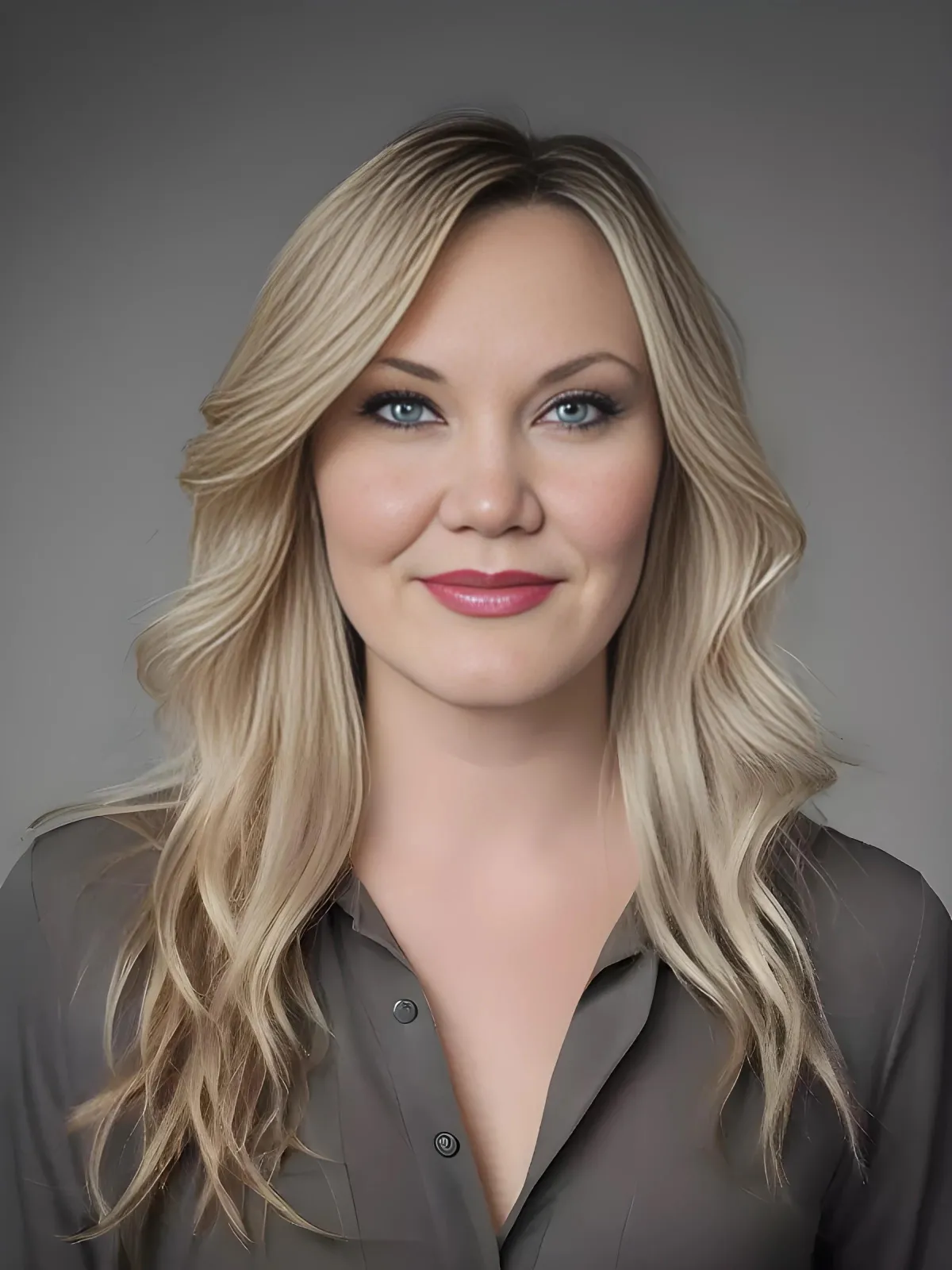
Melanie Warner
Melanie Warner is the host of [Defining Moments where she chats with established experts, corporate leaders, and high-level coaches who are turning their expertise into best-selling books, premium brands, and powerful media platforms. As a media veteran for 4 decades, Melanie walks guests through their own Defining Moments.



Here’s a glimpse of what you’ll learn:
[4:14] Anna Girgan shares how corporate success led her to burnout despite her title and salary
[5:43] Why Anna’s ER visit became the wake-up call that her body was signaling burnout and misalignment
[7:20] How Anna recognized the deeper signs she had been ignoring, from hidden dreams to fragmented identity
[11:20] Anna reflects on the emotional fear of leaving a stable job with no backup plan
[17:30] How Anna’s healing journey and road trip helped her reconnect with herself after loss
[22:45] Why physical health and emotional well-being are deeply connected to Anna's transformation
[32:23] The role of community and mentorship in helping women break through limiting beliefs and thrive
[41:09] How Anna teaches women to break free from golden handcuffs and find true fulfillment
[45:27] Anna shares her leap into entrepreneurship and how embracing uncertainty helped her redefine success on her own terms
[53:10] The importance of support in leadership roles and how an abundance mindset fosters collaboration and growth among women
About the episode
Success can look impressive from the outside while quietly feeling unsustainable on the inside. Titles, income, and achievement may create stability, but they do not always create fulfillment, health, or peace. What happens when the life someone worked so hard to build no longer feels aligned with who they are becoming?
The answer begins with learning to listen before burnout becomes a breaking point. Anna Girgan, a mindset and leadership coach, shares how physical symptoms, panic, grief, and identity loss pushed her to stop performing and start paying attention to what her body, faith, and purpose were trying to tell her. Instead of tying worth to a title or paycheck, Anna encourages women to recognize their choices, care for their physical and emotional health, seek community and mentorship, and take the next step toward a life that feels true. Her message is a reminder that fulfillment often starts with choosing yourself before life forces you to.
In this episode of Defining Moments, Melanie Warner sits down with Anna Girgan, Founder & CEO of EPIPHANIES Coaching, to discuss burnout, identity, and choosing purpose over performance. Anna shares how to recognize misalignment, release the golden handcuffs, and rebuild through faith, health, and support. She also touches on grief, leadership isolation, and trusting the next step.
Resources mentioned in this episode:
Quotable Moments:
"Your body is going to scream when you're not paying attention."
"I was living completely out of alignment with my true purpose and passion."
"It was a whole other level of faith and trust and pushing into my mindset of abundance."
"You always have a choice, and you can make a decision if you're going to stay there."
"If you have a dream in your heart, it was not put there to tease you."
Action Steps:
Listen to your body’s signals: Paying attention to physical symptoms like stress or fatigue can help prevent burnout before it becomes overwhelming.
Realign your life with your passions: Identifying and pursuing your true desires can bring deeper fulfillment, both personally and professionally.
Embrace uncertainty in decision-making: Stepping into the unknown with confidence can lead to personal growth and unexpected opportunities.
Choose your own path: Taking ownership of your choices and stepping away from external pressures can unlock your true potential.
Seek mentorship and community support: Surrounding yourself with guidance and like-minded individuals helps you navigate transitions and find your authentic self.
Sponsor for this episode...
This episode is brought to you by Defining Moments Press, Inc.
We are a US-based publishing company helping aspiring authors around the world to write, publish, and promote a nonfiction book to elevate their brands, create a meaningful impact, and generate profit in eight weeks or less.
An example of how we help our clients is with Eric Alikpala. He went from earning $100K per year as a coach in his first quarter to doubling his income in Q2, and increasing his income tenfold by Q3 — growing him into a seven-figure author, speaker, coach, and consultant.
Do you have a message that could become a best-selling book and business asset? Defining Moments Press provides the strategy, structure, and coaching to help you get it done quickly and profitably.
Visit mydefiningmoments.com to schedule a strategy call and turn your expertise into a published book and a powerful platform.
If you want to leverage your expertise with a book, check out the 7-Figure Book MethodTM.
Powered by Rise25 Podcast Production Company
Transcript
Intro: 00:00
I had grown up in this company. I started with this company when I was 18 years old and grew up within the organization, and then got to that point of I made it. I had the title, and I had the salary, and I did the thing and then realized that's not actually what I really needed to be fulfilled. So I feel like that's where true burnout comes from, is when you're out of alignment with really living for something that you're so passionate for, that it's driving you. And I was just burnt to a crisp. I was going to all the different specialists trying to figure out why I had all these weird symptoms in my body experiencing double vision and just crazy stuff, even tooth pain.
And I went to all these specialists and they'd say, nope, you're just stressed out. You're just stressed.
Melanie Warner: 00:49
Welcome to the Defining Moments podcast, where leaders, innovators, and everyday heroes share the moments that changed everything. These are the stories behind resilience, purpose, and legacy. Now let's dive into today's defining moment.
Melanie Warner: 01:05
Hi everyone. It's Melanie Warner here with Defining Moments and host of the Defining Moments podcast and TV show. Today we have a special guest for you. Now, on paper, she had everything: the title, the salary, the success that most people spend their lives chasing. But behind the scenes, her body was breaking down, her identity was slipping away, and the life that she had built no longer felt like hers.
So she made a decision that most people never would. And you're going to hear about that in just a minute. So this is the show's defining moments where we uncover the decisions that change everything. Not the highlight reel, not the version people post online, not the fake book story, but the moment when staying the same becomes more painful than changing. And what happens during those defining moments?
I am Melanie Warner, the host of Defining Moments, our podcast and TV show. And this is where we chat with authors, experts, corporate leaders, high-level coaches, and people who are turning their expertise into best-selling books, premium brands, and powerful media platforms. This episode is brought to you by Defining Moments Press. We are a US-based publishing company, and we help aspiring authors around the world to write, publish, and promote a non-fiction book to elevate their or their expertise, their brand, and create a meaningful impact and create profit in eight weeks or less. An example of how we did this was with one of our clients.
Her name is Maryna Bilousova from Germany. She was a relationship expert, a hypnotherapist. She found herself stuck in a toxic relationship, feeling imposter syndrome. How could she help someone else navigate their own if her own personal life was crumbling? So she came in, wrote a book about it, and became an international best-selling author.
The book was called Loving Without Losing Yourself. And now she has spoken all over the world, including at the United Nations and so many other amazing places. So these are just examples of some of the things that we can help people do. So I want to jump into today's show. Our guest today is Anna Girgan.
Anna, welcome to the show.
Anna Girgan: 03:12
Thank you so much. It's great to be here.
Melanie Warner: 03:15
Absolutely. We've been talking about this for a while. I'm so excited that you're here today. I know there's so much for us to hop into. Now, Anna, you know, you guys, Anna helped successful women realign their identities so that they can create confident, aligned growth without the pressure and burnout that so often comes with success.
Because you don't feel like you have to choose, right? I know as a woman, sometimes I feel like I'm not enough. And then there's other times I feel like I'm just too much, right?
Anna Girgan: 03:43
Yeah, yeah, 100.
Melanie Warner: 03:44
And I know, Anna, your work didn't come from just theory. It came from a moment where everything you had built stopped working. And after 20 years in corporate, you walked away from your career not for another job, but for a healing journey that would completely redefine your life. So let's go back to that moment. You had the career, you had the title, you had the income, and on paper, everything looks successful.
What was actually happening behind the scenes?
Anna Girgan: 04:14
Oh my gosh. I had grown up in this company. I started with this company when I was 18 years old and grew up within the organization. And then got to that point of, I made it, I had the title and I had the salary, and I did the thing and then realized that's not actually what I really needed to be fulfilled. So I feel like that's where true burnout comes from, is when you're out of alignment with really living for something that you're so passionate for, that it's driving you.
And I was just burnt to a crisp. I was going to all the different specialists trying to figure out why I had all these weird symptoms in my body experiencing double vision and just crazy stuff, even tooth pain. And I went to all these specialists and they'd say, nope, you're just stressed out. You're just stressed. And I'm like, how is this possible?
I think I'm fine. I'm fine. But I wasn't fine because I was living completely out of alignment with my true purpose and passion. So.
Melanie Warner: 05:15
So you talk about how you could feel it in your body. And I know so many people, they feel symptoms, they get frustrated, they go to the doctor and the doctor says, oh, it's just in your head, or just take this pill and, you know, and, and get back to me next week. And you knew it was something beyond that. And they and, and they and you thought it was just stress. And then you ended up in the ER.
Anna Girgan: 05:38
I did. Yeah.
Melanie Warner: 05:40
What did that moment make undeniable for you?
Anna Girgan: 05:43
Oh my gosh, your body is going to scream when you're not paying attention. Right. And so I went to the ER thinking, I think I'm having a stroke. My whole body was just numb and tingling and everything, and it ended up being a panic attack, not me. I don't get panic attacks.
Right? And so it became undeniable that if I am pushing myself beyond the point that my body is literally screaming for help now, I cannot continue to live out of alignment and try to continue persevering through saying, this is fine. It's that famous meme where there's the cartoon dog sitting in the kitchen and it's burning down around him, and he's like, this is fine. Everything's fine. It was like I had to realize that that's really how I was operating in life for quite a while at that point.
Melanie Warner: 06:35
So I remember seeing a t- shirt that I loved and it was like, it was like a shark bite. It was like somebody and they were literally bleeding out. And it was like, I'm fine. Yeah, exactly. I think that those two words are probably the biggest lie in the English word, you know, language, because nobody's just fine.
Either you're fantastic or your life is falling apart. And I think that we will tell ourselves I'm okay. I'm fine as a way to cope, to just take a breath and keep going, because that's what we're determined to do as human beings. We're supposed to just go and keep doing and doing and doing until the wheels fall off. And there's always a point before the breaking point.
So what were the signs that you were ignoring?
Anna Girgan: 07:20
The signs that I was ignoring were probably what I was saying about the feeling misaligned and knowing I had these other passions. I had these big, huge dreams of, I want to be on stages and I want to be writing books and I want to be doing these things. But I had to hush all of that and push it aside and pretend like maybe one day I'll get there eventually. But that gets louder and louder and louder, I feel. And so it became.
I think that part of my awakening experience was okay. I can no longer continue to ignore the fact that there's these dreams that I have, and these things that I have inside of me that are begging for attention, begging for me to actually pursue them. And I can't continue giving all of myself to a career that's paying my bills and making me really comfortable financially, but not satisfying me from a purpose driven perspective or an emotional or spiritual perspective at all. So it was really, you know, realizing how much I was fragmenting myself. That was a huge realization that I have to show up in a certain way at these corporate meetings and for these corporate events.
That's not true to who I am, because I can't be my full, authentic self in every room. And eventually that starts wearing you down when you have to show up one way in one group and one way for another. It just doesn't. It's not sustainable.
Melanie Warner: 08:52
Yeah. It's like a little piece of your soul is dying every time because you know, this isn't you and you're wearing this mask to try to, you know, be the right employee and have the right mindset and be a good team player. And all the things that you hear about in corporate America. And God forbid, if you, you know, you already feel this pressure of trying to represent womanhood in the workplace, you know, and then God forbid, you have a, you know, a bad day or a moment where, you know, something doesn't align the way you want it to or even call in sick. And any vulnerability feels like weakness in that environment.
Anna Girgan: 09:31
So yeah, absolutely.
Melanie Warner: 09:33
Most people describe it as burnout. What did that actually look like in your day-to-day life? And what happened when everything just kind of fell apart? Like, what was that moment like for you?
Anna Girgan: 09:45
Yeah, I would say in my day-to-day life, it looked like calling my best friend on the way to work, saying, this is it. This is the last. This. I'm going to do it soon. This is the last year I'm going to submit my resignation.
I know you're so sick of hearing me say this and not following through. I'm sick of myself too, but it's happening. So it looked like that. It looked like clocking out at night and being so completely fried that you're just laying on the couch, doom scrolling on your phone and having the TV on in the background because you can't really ever fully relax, like your nervous system being so on edge all the time. Those are two big ones.
Journaling every Sunday. Like if I still have the Sunday scaries next year, I'm definitely quitting this job, like those types of things. And also, I think some people could probably relate to certain things like team rings and alarms going off that would be so triggering because you're just nonstop with the emails and the text messages and the chasing after fires and feeling like you, you know, that's part of your purpose. So you feel like you need to bend over backwards in order to make things happen. And the reality is that the show goes on without you.
So we should take our time and take time for ourselves before it hits that point of just total and complete burnout.
Melanie Warner: 11:09
So you didn't actually leave for another job. You left with no plan. What? What was the real fear in that moment?
Anna Girgan: 11:16
Oh my.
Melanie Warner: 11:17
God. Not the logical one, but the emotional fear.
Anna Girgan: 11:20
Yeah. You know, the fear didn't hit me initially because I genuinely felt God called me to go on an adventure. Like it was initially exciting. It was, I'm, I'm doing this like, I'm really going to check this off my bucket list and live this dream and go on this solo road trip adventure. And this is going to be so amazing.
And so my palms were sweaty when I sent my resignation letter. But I was excited. But then when I walked out. And then maybe I want to say a week later, I'm like, okay, what did I do? I have no place to live.
And coming in a month from now, I don't know what I'm going to do with my life. I have no idea what I just did. I'm going to go to Starbucks and I'm going to go get a venti drink that's going to make me feel better. And then I'm like, I can't go spend $10 on Starbucks. I don't even have a job anymore.
Like, what am I doing? So that was really the fear that came in was okay. It was the reality of like, after you jump out of the plane going, oh my God, is the parachute. Is it going to open? Like, am I actually going to be able to survive this?
Melanie Warner: 12:40
Wow. Now, you also said you were negotiating with God about going back to work in six weeks?
Anna Girgan: 12:47
Yes.
Melanie Warner: 12:48
What did that season of not knowing teach you?
Anna Girgan: 12:53
Oh, wow. Yeah, it was all I knew was work. I had worked my whole life, so I felt like six weeks was going to be a really nice amount of time. And I told God, okay, I'm going to give it six weeks, and then I'm going to really hit the ground running and go after my coaching clients and everything else. And I felt so strong in my spirit.
God said, no, it's going to be a lot longer than six weeks. Anna. And that was so uncomfortable because all I knew was to be a hard worker and achiever and award winner. And so that time period taught me a few things. It taught me how to be a human being and not a human doing, of knowing how to just be able to find value in being and not performing and achieving and how to trust God.
Oh my gosh. Like when you don't have when you go from 20 years of a stable paycheck to, I don't know when my next check is coming in and how I'm going to pay my bills. That's a whole other level of faith and trust and pushing into my mindset of abundance. I always had an abundance mindset and a mindset of generosity, and it's going to come back to me and I'm going to be taken care of. That was definitely a way that it needed to be tested like that.
If you want to talk about testing, not having any income, coming in and leaning into that mindset at the same time was the greatest test. So.
Melanie Warner: 14:28
So there was this adjustment of for so long tying value to performance, right? And, and that was so deeply wired into who you were. If somebody had taken that title away before that moment. Who were you without that title?
Anna Girgan: 14:49
I had no idea. I had no idea. My identity was completely wrapped up in performance and in my job. And also, as we'll probably talk about soon as in being a daughter, my mom was my best friend. Like those things were associated.
My entire identity was associated with performing and showing up and winning awards and achieving things. And so if you had taken that away from me, like it, it, I took it away from myself and it was hard enough. So I can't imagine it was not voluntary.
Melanie Warner: 15:31
Yeah. I mean, and they often say that men define who they are by what they do. And women define who they are by who they're with. Right. But I've always identified with doing and being successful because I became like a single mom and I, I was the breadwinner.
Even when I was married, I was kind of like the driving force of our family, just like being very ambitious and, and, you know, driven, things like that. So it was really difficult for me when I had a company that I had to shut down because I felt like that was my identity and that I was letting so many people down who loved that company, you know, and or like the people that worked there. So that was really tough too. And I understand, you know, it's different when you leave a job because you're leaving those people behind and they're miserable, and you're now living this freedom in this life, and they're looking at you and they're jealous of like your freedom and you're, and you're looking at them and you're like, they still have security and they don't even know what they have and how good they have it. And it's often said that, you know, there are two doors in life.
And if you pick one, you give up the other. So if you choose freedom, you give up stability. If you choose stability, you're giving up freedom. And what you built and curated was a life that looks very different today than where you were then. So tell us about that journey now.
You ended up leaving the job you had. Your body was giving you signs. You ended up in the air. You were having a panic attack. You're like, I can't keep going on this route.
And then you mentioned you went on a road trip. Yeah. So how did that lead to where you are today?
Anna Girgan: 17:07
Yes. Thank you. So it was crazy because I had lost my dad in 2015. My mom moved down to Texas and we were roommates, so we were best friends and roomies for a few years. I gave my resignation at this job, which was the only job I had ever known in my whole life.
And the next week, my mom comes to me and tells me that she needs to go see an oncologist. So my whole entire world is flipped on its head. And I had already had this plan that I knew was divine guidance. Like I knew it was God telling me to go on this road trip. So as much as it felt like, is it selfish to still pursue this and do this, mom was like, you need to do the road trip.
You need to go. God already knew what was going to happen when he gave you this direction. Go. So I did. And so I'm on my road trip and I'm experiencing the most incredible healing journey.
Like when my nervous system is healing, my spiritual life is healing. I'm able to finally start hearing God for the first time in so long, because my head wasn't completely cluttered and overwhelmed with all the junk of the day to day. And my mom's going through treatment and she's getting better and things are good. Until they weren't. And she took a turn for the worse.
So it was this whole dynamic of I'm healing, my body's healing, my nervous system is healing. I'm getting closer to God. I'm learning more about myself and who I am and finding myself again. And then also this mixed dynamic of then mom. I end up ultimately losing my mom in the journey.
So it was great. Thank you. Yeah.
Melanie Warner: 18:57
And I, I mean, the irony of like you leaving that job because your body was trying to tell you something that you couldn't see, and then being able to have that time with your mom that was so incredibly valuable that you didn't know was coming for her being diagnosed with stage four cancer, and then you were able to be there for her. If you hadn't made that decision to step away, what do you think that would have cost you?
Anna Girgan: 19:23
I honestly don't know how I would have survived. I feel like my losing my mom would have been my last straw because my nervous system was already on the fringe And my mom was my person, you know, and it, it almost feels like the journey was an emotional healing preparation for the bigger loss that I was about to experience in order to even give me like a stable foundation to be able to bear the weight of that grief too. So if I hadn't walked away from it. Oh my gosh, I would have still been in a state of complete burnout, nervous system, overwhelm, and then have suffered the ultimate loss of my life after that. Yeah, I honestly don't know how I would have handled that.
I had just lost my brother two years before that and my dad a few years before. So it was a culmination of so much loss and grief that I think I probably would have just gone into complete overwhelm at that point.
Melanie Warner: 20:27
Wow. I can't even imagine that much grief from so many immediate family members. And like that feeling of isolation. I can only imagine. And then to have, you know, the irony of your finally healing and getting better, and then your mom's getting worse, you know, and, and, but yet you were able to be there for her because you listened to those signs and you took care of yourself.
And that ultimately helped you be there for her. So, you know, thank you for being there for your mom. I know there's a lot of people that have guilt about that because they have to work and, and they can't be there for their loved ones and their family members that are sick and taking care of them. And I think sometimes, you know, life forces us to slow down before something bigger breaks. And these are the signs that we need to look for.
And sometimes they're subtle. And if we ignore them, then it gets bigger. And, you know, first it's like maybe a pebble against the window, and then maybe it's a brick. And then before you know it, it's like a truck running through your living room, you know, like it's something that has to stop and get our attention because we get so focused on just doing the things that are comfortable to us.
Anna Girgan: 21:38
Yeah.
Melanie Warner: 21:39
And so you also mentioned in your own healing journey that you went to several specialists like vision issues, neuropathy, pain, and they all said that it was stress.
Anna Girgan: 21:51
Yes.
Melanie Warner: 21:52
You know, and, and you were literally living on caffeine. You know, it was like caffeine to get through the day and wine at night. Yeah. And what had to change, not just for discipline, but for survival.
Anna Girgan: 22:07
Yeah. We completely neglect our bodies in these states, right? Like it, taking care of ourselves and our internal, even our physical health is so important to our emotional health and everything else. But it's the thing that we end up completely putting to the wayside. So I will say that it was a whole other part of the journey after I lost my mom.
When I'm in the dark night of the soul season. It did. I leaned into physical health for just honest survival at that point, too. But what had to change was starting to take care and pay attention to what I'm eating, what I'm putting in my body, how I'm taking care of, making sure I'm exercising all of these things we are not. We can't divorce ourselves from body, soul, spirit.
It all is connected. So I had to start taking care of my physical health in order for my emotional health and my spiritual health in order for that to be healthy overall.
Melanie Warner: 23:13
So you talk about going from, you know, 60 hours a week of working to just learning how to just be still. What was the hardest thing about slowing down?
Anna Girgan: 23:25
Oh my gosh.
Melanie Warner: 23:26
Because I know I'm the same way. I'm like, oh my gosh, I can't even meditate. Somebody told me the other day, I want to give you a free 90 minute meditation thing. And I was literally like, that gives me anxiety.
Anna Girgan: 23:39
Yes. I'll never forget when I first for months after I quit, I was making up to do lists, like literally faking to do lists. Like I think I should probably have to do these things today just because I need to feel like I've got purpose and things to accomplish, which, okay, there's something to be said for having purpose, but when you are literally creating tasks for yourself to stay busy in order to feel useful in life, there's something that was definitely still misaligned that took me a long time to unpack, and that is really being able to sit with yourself and be comfortable sitting with. And like you said, meditation, like if we're never quiet, if we're never able to just really sit and breathe. We're never able to really tap in, really hear God's voice, our own inner thoughts.
There's a part of your brain that's actually only activated when you hit a state of boredom. And it's the most creative, innovative part of your brain. So we're never bored and we're always keeping ourselves going, go, go, go, going busy, busy, busy, busy on our phones, scrolling, looking at things we're never able to actually be our most creative, innovative, best selves.
Melanie Warner: 25:03
So it's that dopamine that, that dopamine hits when you're scrolling through and you're bored. I mean, think about how many times you watch a movie or a TV show and you're on your phone because you can't even engage in, in being entertained, God forbid. And I think it's only going to get worse because as we get universal income, that starts to get rid of the financial stress that a lot of people feel in multiple countries around the world as healthcare has evolved and people won't be getting sick like they used to, you know, then the only hardship that people will start having in life, I mean, think about in the last hundred years a lot. I mean, the quality of life has gotten way better for everybody around the world. And we're solving a lot of these issues like hunger and survival and all these things.
And pretty soon the only hardship is going to be losing somebody to grief. And that mental health crisis of how do we, how do we function when everything else seems to be going, okay, then we have nothing to compare the bad stuff to, right? And I think that's where you start looking at statistics over the next few years, even the next 5 to 10 years, that mental health is going to surpass all the other physical challenges that people have and become the number one biggest threat to humanity, which I cannot believe. When I started seeing those statistics, I was in Dubai in December and started looking at what they were researching and scientific evidence towards that for the next 40 years, all the way to the year 2070, that mental health will be this long, outstanding problem that we struggle with as human beings. And so I think anybody in that space is, is there's always going to be a demand for being able to help people navigate those tools, whether it's grief because of grief.
Grief is not processed properly. It will continue to be there for years and years and years. And it turns into a deep depression. Yeah. So you must have learned something along this journey to, to, to work through all of this, this hard, raw grief that you were dealing with losing your brother, your dad, your mom, I can't even imagine.
And then now you're in a stage where you teach women that they can create success without stress, that they can take that pain and turn it into purpose. So what does that actually look like in practice?
Anna Girgan: 27:38
Yeah, I think you have it always comes down to choices, right? You always have a decision. You always have a choice. And when you're in that state of being, feeling like you just have your life burned down, whether it's from the loss of a loved one or the loss of a job, or just any really big transition in your life, you can feel like you're in that state of ashes and you have to have you have to know that you have a choice and you can make a decision if you're going to stay there, or if you're going to be that phoenix and rise up and make it turn those ashes into something that can be your most creative, your most beautiful, your most constructive season coming from pain, right? And taking the pain and making it into something that is valuable and it's not about discounting the pain and it's not about ignoring it.
Right? Like you said, you can't just stuff it down or bury it because it's going to stay there. You have to acknowledge the pain. There are so many times that I have screamed and cried and punched pillows to process through the things that I've experienced and acknowledge the things that I've experienced and how horrible some of it has been. But through it all, realizing that I have to have.
I have a decision to make and how I'm going to move forward here. And I have a choice to make that I'm going to push forward, push on, and look up and forward into what I can create for my life as opposed to sitting in that and staying there.
Melanie Warner: 29:15
Well, I think that there's a lot of people listening that may feel like they're stuck. They may recognize these pain points that you had and say, wait a second, I have blurred vision, I feel numb. I have these same challenges. What advice would you give to somebody who's watching or listening today that resonates with this, but maybe they're stuck in a job or a life, a relationship, something that they feel stuck in, that they know they don't want, but they don't know how to get out of it.
Anna Girgan: 29:45
Yeah. Oh my gosh, that's. And I, I have so much compassion for that because I've been there in so many different avenues and areas of life that stuckness is actually a literal physical representation of being in a really low, energetic state. So I'm a core energy coach. I know I've studied energy and frequencies and all of those things.
And when you're in a really low, energetic state, you feel stuck. You feel like you're powerless, you feel like you can't take control. And the reality is, it has to start with realizing that you do have a choice. You always have choices. It might not even be the choice that you want, but you always have a choice to make some decision to push yourself forward.
And if you think about it from an energetic perspective, even like we were talking about with the physical health, how can you move yourself into a healthier state in a higher energy state, in a more productive energy state, in order to even enable you to get out of that place of feeling stuck because you're not really stuck. It's mental. It's a mindset. It's a feeling, but it's not. It's not reality.
The reality is that we're always empowered with choices.
Melanie Warner: 30:58
And I think the thing that's missing for a lot of people is the tools, right? Like I, I remember thinking about this in my own life when everything fell apart, you know, I went through bankruptcy and divorce and foreclosure and tax audits, and I lost my son. So I got stuck in that grief mode. That kind of triggered a lot of other loss because I just couldn't function. And I remember thinking, okay, if something's broken in my house, like my plumbing, I call a plumber, if it's my electricity, I call an electrician.
But I couldn't quite figure out what was broken in my life. I just remember going, I'm not an alcoholic. I'm not a drug addict. Like, why is my life falling apart? And I remember being so hard on myself and kept saying, what's wrong with me?
And I could not pinpoint what the issue was, you know what I mean? And so I often say that a good coach or a mentor is almost like a handyman for your life. You know, like we all could use that guidance. And it's not just to like, you know, cut back on the Chardonnay or lose a few pounds or find Mr. or Mrs.. Right.
You know, it's really like those are surface level things that may be hiding the true symptoms behind the pain, right? So what are some of the things you do to help people get to the root of that pain? Are there tools that you can help people, you know, like introducing people to that they can really identify the root of that pain so they can then resolve it.
Anna Girgan: 32:23
Yeah, I love that. The first thing I want to mention is that you talked about how we're going to be in this mental health crisis. And I believe that a lot of that comes from isolation. And we're so isolated, we're so pigeonholed. A lot of us are working from home and not interacting with other humans and using ChatGPT as our new best friend and our therapist and what it's doing.
It feels good at the moment, but it's actually isolating us. So I think first and foremost, it's realizing that we need each other. We need other people, we need community. We need to be surrounded. And having a coach or a mentor, you, you, even ChatGPT is just an echo chamber.
It's just telling you what you want to hear. You know.
Melanie Warner: 33:09
That's true. That's true.
Anna Girgan: 33:10
You have somebody that's able to act, ask the right questions, and excavate the things out of you that really are your big moments or EPIPHANIES to what it is that's truly holding you back. So I do start every one on one interaction with a client with my energy. Energy assessment, which is through the coaching certification I have is Ipek. So we have an energy assessment. And this is literally an assessment that's going to mirror back all of your what basically where your frequencies are right now.
And the cool thing about it is, unlike other personality profile tests that are really identity driven, this is attitudinal. So it's a snapshot of where you are right now. And then from that assessment, we can see, okay, here's where your energy is and in a 90 minute debrief, pull out so much of what's driving that, what's driving your stressors, what's driving your stress responses, what's driving some of those feelings of stuckness or overwhelm, and then come up with tools and things to help push forward and through. Obviously, coaching would then come with even more EPIPHANIES and breakthroughs so that you can really excavate all those answers because you have all the answers inside of yourself. It's just pulling.
Having someone that's skilled that's able to help you pull them out.
Melanie Warner: 34:29
That's a good point. And I find that most people, when they're going through a journey, they're, they're seeking something. They shouldn't do it alone, right? Like we always tell people, don't try this at home. You can get burned, right?
So it's like having a guide and somebody who's literally walked through this battlefield and knows where, you know, all the mines are buried and you can literally walk in their footsteps. So I'm a big fan of mentorship and having somebody who's been through it and can show you what that looks like. And it just cuts that time in half. And there's a, there's a, a new currency out there that we talk about in this what's called a trust recession that we're in. And there's also one called an isolation tax, right?
Like what's the price you're paying to figure things out on your own, right? Or what is the cost of trying to be alone and hide these things and not be honest and act like everything's fine and say I'm fine. And in the meantime, everything's falling apart and you're just sticking your head in the sand and pretending it's not happening, which is not healthy. And so many of us, that's how we deal with bad things, right? We, we, or we self-medicate through wine or drugs or pills or sleeping pills or some things to just not feel so that we numb ourselves and we ignore the signs.
And until it takes much more a profound experience to finally, you know, wake us up to realize something is happening. And I think that's just kind of even the American way. Like we're just so hunky dory all the time. Like we're going to pretend everything's great when it's not. And we don't talk about the things when they aren't working because we want everything to just be fine.
And so I think that's the biggest thing is that assessment. And to become aware, because the first step towards making a real change in life is the admission that there is something wrong, and then assessing where you are and where you want to go? Because then it's much easier. It's like saying, I want to take a vacation. Well, where do you want to go?
I don't know. Well, how are you going to know where, what hotel and what airline? Like you got to pick a destination first, and then these tools can help you get there faster. Like a vehicle to get you there faster. Yeah.
And so, you know, you talk about alignment. You talk about how it doesn't have to be this huge effort to, to feel alignment. Where do you think that message often gets misunderstood?
Anna Girgan: 37:09
Of feeling misaligned? Yes. I think it comes from society. And we all are adopting who we think we should be, or how we should be showing up, or the titles that people give us, or how we need to be acting. And I think people pleasing a lot of women show up really big.
But I think just society tells you, and even especially I, I believe it's mostly an American culture thing with the performance and the asking, what do you do being the first question that you ask someone, well, then that's associated with your identity of the job that you're doing. So then if you're constantly forming yourself into this thing that people are expecting of you and how you think you need to show up, and how you need to show up to be valued or accepted. Somewhere along the lines, you start to lose track of like, wait a second, who is it that I wanted to be? Who is it? Who is it that, like, what is my heart really saying?
What are my passions and my desires? And who did God call me to be? Not what everybody else around me is dictating I should be or am supposed to be. And again, especially, I think with now, now more than ever with us being on social media and consuming other people's lives at this insane degree, that's it's never in existence been like this before. Then the comparison is there and looking at everybody else's life thinking, I need to be more like this and more like them and more like that, and just completely losing sight of who it is that you were born to be.
You know, like you go anywhere and everybody's just like this. And scrolling their phones stuck to a screen, absorbing, consuming, consuming, consuming. I think it's time for us to stop consuming and start creating. And out of that creation is more of coming out of who you were supposed to put on this earth to be. You know.
Melanie Warner: 39:01
That's a really good point. I mean, if you think about it, the term consumer was created to consume things like, you know, it fueled our entire economy by people buying a bunch of stuff they didn't want or need and then paying for storage on top of that. You know, and, and there's just this huge waste of time and energy and money. And I think there's a lot of people I know I was one of them for sure for years where I noticed if I had extra time or extra money, I would squander it. You know what I mean?
Like, because I didn't have a plan and if I had a plan, I would feel like, well, then I'm in a routine and I don't want to be in a routine. So there was this resistance to having, you know, structure in my life and wanting to be spontaneous and fun and taking vacations to escape from life instead of really facing things, you know, and I think that there's different ways that people avoid their pain. What would you say is the, the biggest lie that high-achieving women believe about success?
Anna Girgan: 40:01
Oh my gosh, the biggest lie that high-achieving women believe about success. Yeah. It's that it's that your value, your inherent personal value is associated with a title or a degree or a paycheck. I think that that's probably the biggest one I have to strive to become and to do and to achieve and to perform. And at the end of the day, especially after experiencing so much loss, it really gives you a different perspective of what really matters, what really is going to matter when you're 80 years old and you are looking back at your life, is it going to be how much, how many zeros you had on your paycheck or how many awards you won?
Or is it going to be the value that you find in relationship and love and community and creation and those types of things that really light you up and, and give you a lot of purpose, I think is probably the biggest one.
Melanie Warner: 41:00
And that's something that you can help people with. Yes, yes. So why, why do so many women stay stuck in what you call the golden handcuffs?
Anna Girgan: 41:09
Oh my gosh, because it's so scary to let go of the thing that you feel like you worked so hard to achieve. And because of that stability, it feels like stability. It feels like, oh, well, I have a regular paycheck, I have health insurance, I have these things. But is stability really stable if you're completely losing yourself in the process? So you opened the podcast with the, the pain of change has to become less than the pain of staying the same.
And that's really what it's all about is the golden handcuffs are just not quite painful enough to get you to that place. You have to have that awareness and that eye opening experience of just saying, you know what? I know that I'm made for more. I know that I'm meant for more. I know that there has to be more to life than this.
And I hope and my goal is to get women to that point of choosing themselves without having to experience what I experienced in the things that you've experienced with experiencing this great loss in life of having that be okay. Well, then once you experience that level of loss, you realize that you might as well go after the dream and chase the thing and do the thing that you want to do. So let's get there before it comes to that critical juncture or retirement or your 80th birthday of saying, okay, let's unleash these golden handcuffs. That stability is not actually stability. That paycheck isn't actually bringing you joy and happiness and fulfillment.
And let's step you into a life that's wholly fulfilling and wholly joyful and not just what you think you need to work for to achieve.
Melanie Warner: 42:54
Yeah, I love that because I think so many people, they shrink their dreams to fit their income. And then have this resentment for the job. And I always like to tell people, you know, working for yourself, if you're making several hundred thousand a year working for somebody, then they've invested a lot in your knowledge. Like I have a friend that worked for 32 years in one of the top five companies in the world, was a major corporate executive, and they paid him several hundred thousand dollars, but they invested over $1 billion in his brain, a billion, and he had to manage a thousand people. That was a lot of people to manage, a lot of like, he had to sleep on a cot and wake up every three hours because there was drama going on somewhere in the world.
And he never had a life outside of there. And, and then it caused him to go through a late in life divorce. But he was a very stable, loyal person who had so much certainty. And then, you know, goes into this space of like, what? I'm not used to having uncertainty in my life.
And I think that there's a lot of people who think that way. And then what happened is I was like, no, your knowledge is worth something. People are willing to pay you for it. And it's the same thing if you work for somebody else. It's like the difference between renting and owning.
If you. If you are renting a house instead of owning. You know, because you think you can't afford it, it's like, what makes you think you can pay your landlord's house payment and not your own? Right. It's just a mindset shift.
And so congratulations on taking that leap. Just like my friend did. He finally left. He retired early, and then he was able to get a contract with Amazon for like $8 or $900,000 in one year using the same brain, the same skills that he did for a job, but now working for himself, getting three times as much. And this is the thing that I like to celebrate, where they say 97% of people work for 3% of America.
And I would much rather change those statistics, right? Because that is, you know, when you can create offers and ideas and a business from a service or from your own skill set, and you can monetize, but also help other people solve a pain point in their life. That is what sets you free. Because now you can choose freedom and security. You don't have to choose between those two doors.
When you do work for yourself and create value and help other people get through their own stuff, you know, and you've been able to do that. So congratulations.
Anna Girgan: 45:27
Thank you so much. And something else too. You just brought it to mind. I'm so excited for him. That's amazing.
I always, I always love these transformational business shows like Restaurant Impossible and Bar Rescue and all of those like going in and just completely flipping businesses. And in my corporate job, I'd watch those shows and be like, well, that looks fun, but I have no idea how I would get there. And it took me going through this process and creating the space and everything else to now I'm consulting for businesses too. So I was able to take the leap, do the thing, separate myself, and then now I'm able to actually step in and help retail organizations revitalize. But still, my own boss, my own control, my own schedule, my own life, my own freedom.
And so thank you so much because you just actually reminded me that I would have never been able to do this if I hadn't taken that initial, very scary, very risky leap into believing in myself and just going after the dream.
Melanie Warner: 46:33
Can you do me a favor? Your video was cutting out there for a second. Is there any way you can repeat what you just said? Because I think it was so powerful, and I want to make sure everybody gets to hear it.
Anna Girgan: 46:43
Okay, cool. Yeah. So it was. Thank you so much for bringing that back and, and saying that you just really brought something else back to my memory or just realization that now I'm actually also consulting for businesses. And I love the shows of Restaurant Impossible and Bar Rescue where they go into these businesses and transform them in this record breaking time.
And I've always loved that and been how do I do that? You know, how do I get there? And now I'm doing that. I'm actually consulting for retail retailers to where I'm able to go in and put my magic on it and transform it in a really short amount of time. But I'm not their employee.
I'm my own boss. I have my own life. I have freedom and time, freedom and everything else. And if I hadn't taken the risk and taken the leap and chosen to live life on my own terms, I would have never been able to follow that dream and chase that dream and check that box off too. And it's so fulfilling.
And so I love that story you just shared about him because yes, I'm so glad he did that. And he chose himself. And I think it takes taking the risk, taking the leap, doing the thing. You're not always going to know how you're going to get to your destination, but you have to start, right? I use an analogy with my clients.
If I can share this analogy really quickly when you are going, let's say you want to drive from California to Maine, you know your destination, you know you want to get to Maine. We tend to say, okay, God, I need to know the whole trip. I need to know where I'm going to get off. I need to know where I'm going to go to lunch. I need to know my bathroom breaks.
And God's like, that's not how this works. All you have to do is get in the car and plug in your destination, and you're going to see your next two steps and that's it. And you're not going to know that you're going to stop for lunch in Indiana or get off on exit 56. You just know your next five steps. So we need to think about life like that and translate that into our lives. All you have to do is trust that God's got the destination, that you know, the destination you're headed for.
And you have to stay like this and just focus on your next five steps. That's it, not the next 50.
Melanie Warner: 49:07
I love that. And you know, you made me think too, when you were talking earlier about when you stepped away from that corporate job and you felt like you lost this identity and everything, all the accomplishments, the awards, the things that kind of keep you trapped in that environment, if you will, you know, that must be how people that retire feel because they lose their sense of identity. So I think you have a whole other either, you know, mentorship or revenue stream or opportunity to connect because we're in this stage of like the largest time in history of baby boomers retiring, selling their businesses. And there's this huge gap because think about it, who's going to take over their businesses? Millennials.
Like, are they, are they really equipped? Do they have the business acumen? Have they got that experience to step in? There's such a huge gap in the marketplace right now on so many levels for business owners who want to sell their companies for people who want to retire and could actually fund their retirement using their own knowledge by writing a book, creating a course, becoming a mentor. And you're basically living as an example of somebody who's done these things and you're showing people, like you said, that map, like this is how you do it.
And people can follow you because you've done it and you don't want them to make the same mistakes you made. So you're going to, you're kind of giving them like the FastPass, like the Disneyland FastPass.
Anna Girgan: 50:30
I love that so much. Yes. That's my, the program I'm launching right now is the epiphany, and it's a 12 month experience to choose your path. Do you want to write your book or launch your podcast or create your coaching business? Whatever your path is, let's do it.
I did all of those things in nine months. I launched a retreat business, launched a podcast, published my journal, and revitalized and rebranded my coaching business all in nine months. So now. Exactly. And I did that coming straight off of my dark Night of the soul, straight off of my grief season.
Jumped into that. So now, whatever transition it is that people are going through, whether it's a new, you know, coming out of divorce or coming out of job loss or coming out of retirement and just wanting to revitalize and reinvent themselves. I'm so here for that, and I can't wait to help so many people reinvent themselves and get their epiphany.
Melanie Warner: 51:28
Well, you said that one of the hardest parts of leadership is feeling alone. So why do so many successful women feel isolated at the top?
Anna Girgan: 51:37
Wow. Yeah. So I think you don't have the higher up you go, the less you have camaraderie and peers and the more you're leading people. But it's not people that you feel like you can really be vulnerable with and be open with. So it's that whole, the higher up you go, the less there is around you and you feel lonely.
And so I think that it's so, so critical that people, women in leadership positions, especially high level CEOs, C-suite, have camaraderie, companionship, have peers that they can be vulnerable with and not have to put on a face for. Right. And coaches and mentors that can come alongside them and help them because I think the bigger the title, the heavier the weight of carrying that load of showing up a certain way. And the more dangerous it is that you might lose yourself along the way. So I think that making sure that you are staying in alignment with yourself, in alignment with your true identity and your passions is so critical when you get up to the top.
Melanie Warner: 52:45
So what does real support actually look like and why is it so rare, especially for women? I found that so many times there's a perception that men are holding women back. But the truth is, I find that it's a lot of other women sometimes that make women feel like they don't have that support from women, you know? Why do you think that? Why do you think that it is so rare to see women supporting each other?
!no name provided!: 53:10
I think it's probably.
Anna Girgan: 53:11
A scarcity mindset. Like me personally, I've never been without support. I've never been without abundant support and mentorship and people pulling me up the ranks with, with them. And I think if you have, you're going to attract what you put out. So if you have an abundant mindset that there's more than enough, more than enough of more than enough for all of us.
And I personally have always had the mentality of pulling everybody up the ranks with me. If you have that mindset and that energy, you're going to attract that mindset and that energy. But if you have the mindset that there's not enough and scarce and you have to fight your way to the top, and you have to pull other women down to pull yourself up. You're going to get up there and you're going to be alone because you had to step on other people in order to get to where you were aspiring to be. So I think it really comes down to belief, mindset and having that completely abundant mindset that there is way too much to go around.
Melanie Warner: 54:18
Well, this is amazing. Anna, thank you so much for being here. Is there anything else that you want to add today?
Anna Girgan: 54:24
Oh my gosh. I think just the knowing that if you have a dream in your heart, if you have something that you want to pursue, that even if you are in your deepest, darkest hour, that I know both of us can relate to having that dark night of the soul where you feel like, did I just blow my whole life up? What did I do? You're going through grief. You're going through loss.
Just know that there is hope and that if there is a dream that is in your heart, it was not put there to tease you. It was not put there for any reason other than to empower you and inspire you to chase after it. So if you want to chase after that dream, I would love to come alongside you and support you. And yeah, you can come join me in EPIPHANIES coaching.com to to come find me and I'd love to connect to EPIPHANIES coaching.com.
Melanie Warner: 55:16
Yes. All right guys, and you can see that in the show notes below as well. So again, thank you so much for being here. Now I'm going to step into one of my favorite parts of the show is where we get to talk about a mystery guest. And you guys at home can try to guess who we're talking about.
And this is about a special female founder. Before her company became one of the most widely used platforms in the world, before millions of entrepreneurs, creators, and businesses relied on it every single day. She was a 19 year old teaching design classes. What she noticed was an opportunity. At first it was frustration.
Students were struggling and not because they weren't creative, but because the tools were complicated, clunky, built for experts, not for people. And she had a simple idea: what if design didn't have to be hard? What if anybody could create something beautiful? Now, today, that sounds obvious, but back then it sounded naive. So she took that idea to investors.
And guess what? They all said no, not once. Not ten times. Over a hundred rejections. The same feedback over and over and over.
People. She heard things like design software. It's too complex to disrupt. This is not a venture scale idea. You're too young.
You don't understand the industry. They would pat her on the head and say, okay, little girl, good idea. By. And here's the part that most people miss. It wasn't just rejection, it was dismissal.
And I'm sure there's a lot of people, especially women out there, that can resonate with this. It was dismissal of her age, her vision being a woman, her belief that simplicity could win. And she was tired of building the tables and never getting a seat at the same table that she was building, building other people's companies and dreams. And at one point, she and her co-founders were literally flying across the world pitching anybody who would listen, sleeping on couches, taking meetings that went nowhere, even going out to dinner with people who were threatening to fund her company, who really just wanted to try to date her. And hearing not so many times, it would have been easy to start shrinking the idea to make it smaller, safer, more realistic.
But that became her defining moment because she had a choice. She adjusted the vision so she could say, okay, I'm going to adjust the vision to fit what people believed, or hold steady with the vision until the world catches up. So she chose to hold it. She didn't simplify the dream. In fact, she doubled down on it.
And eventually somebody said yes. And that yes became Canva, a platform that didn't just compete with design software. It completely changed who design was for because it wasn't built for designers, it was built for everyone. And today, millions of people who once thought I'm not creative are building brands, businesses, and ideas. And in the gig economy it employed billions of dollars of freelancers who were able to pay their bills, avoid bankruptcy, help cover medical costs for their people and their families, and have impacted millions of people because one person refused to believe that it had to be complicated.
And that is the defining moment of Melanie Perkins, the founder of Canva. And that is what powerful stories are all about. She didn't succeed by becoming more like what the world expected. She succeeded by staying aligned with what she knew in her gut was true. And when no one else could see it yet.
Anna, when you made the decision to walk away, when your body was telling you there was more for you, you know, did it feel like you were holding on to something that only you could see before the rest of your life actually caught up with it?
Anna Girgan: 59:16
Yes, that story just gave me chills upon chills upon chills. It was so beautiful and I absolutely felt that way. People were saying, midlife crisis, she's having a mental breakdown. And I'm like, no, I know that there's so much beauty on the other side of this, and I know that I am going after a dream that's been planted in my heart for a reason. And along the lines, it got really crazy.
But I've never once regretted making that decision.
Melanie Warner: 59:47
I love to say, you know, I'm not having a midlife crisis. I'm building a midlife castle, and that's the choice. And if I want glitter and unicorns, I can have it, you know, and, and I think that's where we feel like we, we feel disempowered when we put our power in someone else, whether it's a boss or a relationship or a parent or a partner or somebody that we feel like is letting us down. And when we understand that we are responsible for our own happiness and our own choices, and everyone else is just along for that ride, then it empowers us to make better decisions and really be able to listen to our bodies and let them guide us into these right decisions that turn everything around. So, Anna, I am so grateful that you had your own defining moment, and thank you for coming here today to share it.
And we honor your dad, your mom, your brother, and all that you stand for and all that you have created from taking your own personal pain and creating purpose, not just in your life, but for so many of the people that you are impacting and helping them make changes. And the ripple effect and butterfly effect of that is so beautiful. So we, we appreciate you. God bless you. And thank you again for being here.
And thank you all for watching today. I hope you feel inspired. I'm still getting goosebumps and I will you please do us a favor and hit that subscribe button, share this channel with other people. And this helps us maintain this as a free show so that we can continue to inspire people and get more guests on like Anna that have incredible stories to share of hope and inspiration. So again, thank you all for being here and we'll see you next time.
All right. Take care, everyone. Thanks, Anna.
Outro: 1:01:35
Thanks for listening to the Defining Moments podcast. We'll see you again next time. And be sure to click subscribe to get future episodes.
Transcript
00:00
Well, here's something that I tell a lot of young people. If you have a job and you don't like what you're doing, quit doing it and go find something to do every day when you go to work, you're having fun. Don't stay at a job that you're miserable at because life is short. Go find something that you love to do every single day. And guess what?
If you love it, the money's going to find its way into your pocket because you're going to be the best at what you do. If you love what you do.
Intro: 00:39
Welcome to the Defining Moments podcast, where leaders, innovators, and everyday heroes share the moments that changed everything. These are the stories behind resilience, purpose, and legacy. Now let's dive into today's defining moment.
Melanie Warner: 00:55
Hi everyone. Welcome to Defining Moments. Now, most people spend their entire lives trying to build something successful: a company, a title, a reputation. But what happens when you wake up one day and you realize you don't want the thing that you spent decades building? Do you hold on because you've earned it?
Or do you let it go and risk starting over, even at a later stage in life? That's what we're going to be talking about today. But first, I want to thank our sponsor, Defining Moments Press. As the host of Defining Moments, the podcast and TV show, I'm Melanie Warner, and this is where we chat with authors, experts, corporate leaders, high level coaches, business owners, and people who are turning their expertise into best selling books, premium brands, and powerful media platforms. This episode is brought to you by Defining Moments Press.
We are a US based publishing company. We help aspiring authors around the world to write, publish and promote a non-fiction book to elevate their expertise, their brand and create a meaningful impact and create profit in eight weeks or less. An example of how we did this was with one of our clients recently. Her name is Maryna Bilousova from Germany. She wrote a book about learning to love without losing yourself, which is a very common problem with high performing women.
Her book became a number one bestseller. She spoke at the United Nations and was even featured in the USA today. Now she's working with clients all over the world as a global relationship expert, and she did it all within a few months. You can also watch her podcast episode that was featured recently here. So without further ado, I would like to introduce our guest today.
And in this episode, we're going to uncover the decisions that changed everything. Not the highlight reel, not the polished story, not the Insta Facebook gram thing, but the moment when staying the same becomes more painful than changing. And what happens next? Today's guest is someone who has spent a lifetime in the media. Gary Morris Cocola started in broadcasting at just 17 years old, thinking he might become a TV game show host.
I could totally see you doing that, Gary. And decades later, he built his own television station in Fresno, California. But every traditional definition, you know, he had had it made like everybody was like, this is life. And I know people that know you personally, Gary, and they're like, this guy is such a stud. He's got everything that anybody could ever want.
But here's where the story gets interesting. Instead of holding on to the role of CEO of a major media company, instead of managing people and navigating the changing landscape of broadcasting, Gary made a different decision. And this is what we're going to talk about today. So Gary, thank you so much for being here. It's such a great pleasure to have you here.
Gary Cocola: 03:51
Thank you. Melanie, thank you so much. I'm so looking forward to today because as I told you earlier, this is fun.
Melanie Warner:: 03:59
Absolutely. And you and I have known each other for decades. I remember when I was starting my media company, I was in my 20s when I first met Gary. I had my first magazine and then we met. Gosh, it's been at least 25, maybe 30 years.
And you gave me one of the best pieces of advice anybody has given me in business. And I really looked up to you. I remember there were two things when I first met you. Number one, you said, I spent ten years negotiating the air rights. I literally owned the air, and you explained to me what that meant, right?
Like owning the air in the media. And the other thing you said was, never have your bank statements sent to your office, always have them sent to your house because then your bookkeeper can easily hide them from you and do some shady things. And I was so grateful because those two bits of advice have served me well in my own media career. And you have been a big inspiration to me. So I want to thank you for that.
Gary Cocola: 05:00
Well, thank you so much. Well, listen, I've been around a long time, as you know, and I've learned a lot in my lifetime. And Melanie, I'm honest with you. And people say, Gary, how are you? I say, I've never been better because it's the truth.
I mean, at my age, I am having the time of my life and you know why and all about it. But I'm doing something that I love every week here in Monterey now where I live. And it's changed my life immensely. And I've been doing it now for almost three years. And what brought it on was my episode with Covid back three years ago when I almost passed away.
And I decided when I came back that I was going to do something that was going to be fun for the rest of my life. And I was tired of running a broadcast television company. And so now I'm only doing what is fun every Sunday.
Melanie Warner: 05:52
So every Sunday. Tell us more about what you're doing, and also a little bit about your background in broadcasting, because people that way, I think the audience can get context into just how big your company is and was as a media company.
Gary Cocola: 06:09
Let me tell you how it all started. It started about 40 years ago, and my first wife, Diane, said to me one day while I was in the produce business because of my father, she said to me, Gary, you're miserable. You're not having a good time doing what you're doing. And I said, what do you mean, I'm miserable? She said, I can tell every day when you get up in the morning and go to work, you've got a frown on your face.
And when you come home at night, you still have a frown on your face. And I said, really? Didn't know it was that noticeable. She said, well, you're a miserable man. You hate what you're doing.
Well, what I was doing, Melanie was selling produce for my father. I had gotten into the business about probably 15 years earlier, and I was sitting at a desk and I was on the phone, and I was buying and selling produce and selling the product for my father because he grew peaches, plums, nectarines, and table grapes in Fresno and the San Joaquin Valley. And so I was doing the sales for him and his other growers, and I was doing very well, very well financially. It was making darn good money. But what changed was that it was a very difficult day.
Every day when I was on the phone. I wasn't having any fun. In fact, everyone that was in the business, the growers that I was selling the fruit for, the buyers that were buying the fruit, they were all miserable too, because the produce business and this is the truth. If you do a poll, nobody's having a good day. Everyone's miserable.
Well, why is that? Because it's not fun. The growers are unhappy. They're not getting enough money for their product. The.
Melanie Warner:: 07:55
They gotta get up really early too. Oh, yeah. Take care of their crops and feed all the animals on the farm and all that stuff, too.
Gary Cocola: 08:02
Anybody that grows anything is having a really difficult time. It's not an easy thing to do. And because it's perishable and because it's a market of. So the products are basically supply and demand. So when there's little supply, the price is high.
And when there's a lot of supply, the price is low. So the growers aren't getting the kind of money they want for their product. The buyers think they're paying too much. The truckers are not getting loaded when they want to get loaded. They're not getting unloaded when they want to get unloaded.
And I was the guy in the middle. They were all complaining to me every day. So that is why I had a frown on my face. And my wife said, you're a miserable man, and if you're going to be miserable and we were only married six months, she said, I'm not going to be able to stay married to you.
Melanie Warner:: 08:51
Diane, I love Diane. She's. When I met her the first time I met you guys, I remember her. I still to this day, when I think of Merlot, I think of her because she ordered Merlot and she. She asked the waiter, what's the year?
Because only odd year merlots are any good. My whole life I remember and believe that.
Gary Cocola: 09:12
The things about Diane. When I met her, she was a flight attendant for American Airlines. And so we had a great few early years, and then she was the one that said that to me. What would you do, Gary? Because you're miserable.
What would you do every day when you got up in the morning and went to work, you were having fun. And I thought, oh my goodness, what? What would I be doing? Well, you know what? I'd be back in the television business because as you said, I started in TV in Fresno.
At 17 years old, I was doing it. I was co-hosting a TV dance party like Dick Clark's American Bandstand. Fresno had its own TV record hop, and that's how I got into TV. So when you said earlier, I thought that after I stopped doing the TV record hop, I would go down to LA and I would be a TV game show host. And I had an appointment with a very big time agent.
And I went to LA and I met with him, and the first thing he said to me was, how old are you? And I said, well, I'm 22. And he said, where do you want to be when you're 40? And I said, where do I want to be when I'm 40? I don't know where I want to be next week.
He said, well, let me tell you something, Sonny. You want to get into this business. You need to know where you're going to be when you're 40. And if you don't know where you're going to be when you're 40, you don't need to get in this business. I said, why is that?
He said, because there are new, young, very talented people coming into this business every single day. And you know what they do to the old people in this business? They push them right out of the picture. So you better be really, really good. And I'm willing to help you if this is something that you want to do.
And I thought, oh my goodness, you're going to push me out of the picture when I'm 40. Oh I don't think anyone's ever explained it to me like that. And then he said something else that really made a lot of sense to me. He said, Gary, do you want a boss or do you want to be your own boss? I said, oh wow.
Do I want to be a boss? Yeah, I want to be my own boss. You bet. Well, then don't do this. Go find something that you can be your own boss.
And I thought, thank you. You know, I'm going to go back home to Fresno. I was down in LA and I'm going to find the prayer. When I was a little Catholic boy in high school. The prayer I said every day as a senior in class, I'm going to say the Prayer To Know One's Vocation.
And, you know, you can go Google it. It's on Google right now. The prayer to No One's vocation. So I found that prayer and I went home and I started saying it every day. And about three months later, I was visiting my father's office and I saw his salesman.
Now he had a sales guy selling the fruit at that time. Wonderful man. Sid Carnine never forgot him because he became my mentor and taught me how to sell. And he said to me, Gary, you want to sell fruit? Let me tell you, you have to build relationships.
That's how you become a salesperson. You got to build relationships. You got to get to know every single thing that you could ever find out about the person you want to sell to build a dossier on them, find out the names of their kids and their wives and their birthdays and their anniversaries and their hobbies. Just put it all in the book. And then when you call them, just find out more and eventually you will build a relationship with that person you want to sell to.
Well, I got the chance to go into the office with Sid and start selling fruit. And one of the gentlemen that I would call every day, very kind to me, never bought a thing. Sid said to me, you've been talking to that man every day, Gary. And I said, yeah, he's very nice to me. He tells me to call him back.
Okay, Gary, I'm all full up today, but call me on Wednesday. So I called him on Wednesday. He listens to me, quotes all the products and he says, okay, call me on Friday. So he kept doing that for months and months. So finally Sid said, do you know when his birthday is?
And I said, yeah, I got it down right here. He said, well, go buy a birthday card and send that man a birthday card and make sure it gets to his office on his birthday and make sure you know the date of his birthday. And you call him that morning and you wish him a happy birthday. And I said, okay, I'll do that. So comes his birthday.
I call him in the morning. His name was Sam. And I go, hi Sam, it's Gary Cocola. And he goes, Gary, I've been waiting for your call. I've been doing this job for 25 years, and nobody has ever sent me a birthday card on my birthday.
Melanie Warner:: 14:05
You know, and called.
Gary Cocola: 14:07
You got a pencil? I said, yes, sir, write down these orders. And that first day he gave me three loads of product. That's when I say loads. That's a 45 foot van filled with product.
And he gave me an order for three of them, or 4500 boxes of fruit. In fact, how big of an order I had to go out and buy it to fill the vans from others. So that's the day. And then he says on Friday, this is a Wednesday. I called him on Friday.
And guess what? I got another three loads of product. Call me Monday and I got another three loads. Well pretty soon I was out selling my mentor Sid, who was the guy that taught me how to sell. I was getting more orders from Sam at Associated Grocers in Kansas City.
Then Sid was getting from all of his customers. Well, needless to say, within one year I had my own sales company. I was doing so well financially because of Sam. I built an apartment complex in Fresno, and that's how I met my first wife because she was the niece. Diane was my first tenant and that's how we met.
We met at the apartment complex and I asked her for lunch. She said yes, and she was working in downtown Fresno at a bank. And then I said, how about dinner? And a week later we had dinner. And at dinner that night she said, Gary, I'm leaving Fresno.
I'm going to Dallas to become a flight attendant for American Airlines. I said, oh, you're leaving town. We've only had two dates. She said, well, you can come to Dallas. I said, I can, sure, yeah, I have halfway through my classes, halfway through the course, I have a weekend off and you can come and see me.
So I did. I said, I have customers in Fort Worth. It's wonderful. I can write off the trip. So I went to Fort.
I actually went to Dallas, went to Fort Worth to see my customer. We went out to dinner. Well, that second date is actually the third date. Now we're in Dallas, she said. I just found out I'm going to be in New York City, based in New York City.
And I said, oh my goodness, that's a long way from Fresno. She said, well, I can bid for my trips. I can fly to Los Angeles and have layovers. I can fly to San Francisco and have layovers. So we started a two and a half year long distance bicoastal relationship until I proposed.
Two years later, we got married, and that's when she came and moved in with me and said, six months later, you're miserable. You have to find something else to do. And so she said, what would you do if every day you had the opportunity to have fun? Well, I said I'd be back in the broadcasting business. Broadcasting business.
I said, well, yeah, you didn't know me a long time ago. I used to be on TV. She said, so that's what you want to do now? And I said, no, now I want to own a television station right here in Fresno, California. And she goes, what?
How do you do that? And I said, it's impossible. If there was a TV station for sale right now in Fresno, it'd be $5 million. I don't have $5 million. And she said, well, isn't there another way?
I said, well, yeah, there is. You can apply to the FCC, the Federal Communications Commission, and you can apply to get a new channel dropped into the Fresno market, and then you can apply for it. But of course, so can anybody else. That's the United States citizen. And she said, well, I think we should do it because if we don't do it, I'm not going to be able to stay married to you.
Melanie Warner:: 18:04
So miserable.
Gary Cocola: 18:06
We're having dinner with a fellow produce guy from Orlando, Florida, and I know why she said it because he was a very wealthy produce guy from Orlando, big time orange grower. She said, Gary, tell David your idea for the TV station. And David looked at me and he goes, what are you talking about? TV station. I said, well, I've got this idea now you gotta understand the year, Melanie.
It was 1977 because we were married in 76. In fact, I just talked to her not two weeks ago and said, do you realize that if you and I had stayed married, we would have been married 50 years? She goes, oh my God. Anyway, yeah, it was 1976. We got married.
So this is 1977. I'm telling David about my idea. I said, well, what's your idea? I said, well, you know, David, I used to play records on the radio because I was a radio DJ when I was in college. And records are given to radio stations for free.
They don't buy them. The record companies send these records to help promote the artist's music. Well, I see the day when the artists are going to make videos, and those videos could be on a television station, and they could rotate 24 hours a day, and you could do it all with automation. And all you'd need is salespeople to go out and sell the advertising. You wouldn't need a lot of employees like a regular television station has, because you'd just be playing music videos one after the other.
You know, commercials come in about every third or fourth video. And so what my vision was in 1977 was MTV. Well, MTV didn't happen until 1981.
Melanie Warner:: 19:52
I remember I wanted my MTV and they had launched in one market, and then they had to create demand in other markets for it to expand on a national level. So that's the campaign I want for my MTV.
Gary Cocola: 20:06
It came on the air, Melanie in New York City, and they weren't on the cable system in New York when they came on the air, but it just caught fire and went nationwide. And MTV in 1981 turned out to be a phenomenon. Well, we're still talking about 1977. And David. So David says to me, gee, that sounds like a great idea.
Gary. I tell you what, I have a friend in Orlando that owns a TV station. So when I get back to Orlando, I'm going to call him and ask him how he got his TV station. So he does. He calls me probably a week later and he says, Gary, I talked to my friend that has a TV station, and he gave me the name of his lawyer, who's a communications lawyer in Washington, D.C. and he said for you to call him.
So I did. I hung up the phone with David, and I called Washington, D.C., and I got Roy Russo. He was the attorney at the law firm of Canaan Marks. And I said, I'm Gary. He says, oh, Mr. Cachola was waiting for your call.
Now tell me you want a TV station in Fresno, California. And I said, yes. He said, well, I checked and there's no allocations for a TV channel, so we'd have to petition for rulemaking to amend the table of assignments to add a new channel to the Fresno market. But you know, this is a long involved process. Do you ever come to Washington, D.C.?
And I said, as a matter of fact, I'm going to be there in three months for a product convention. Oh, wonderful. Come by my office and we'll talk. So Diane and I went to D.C. we went to the produce convention. We went over to Roy Russo's office at Conan Marks, and he sat down and he said, now, look, you're both young people, because we were way back then.
And he said, this could be a 5 to 10 year project if you really want to do this. And I said, well, Diane wants to stop flying and I want to stop selling produce. So yes, this is something we want to do. And he said, okay, we need to build a case for you to make you and Diane the strongest applicants. And it's not something that's easy.
So let me ask you some questions. Okay. Do you own any broadcast properties right now? And I said no. Do you own any radio or TV stations?
No, not at all. Good, because that's a gold star. If you don't have any broadcast properties, the FCC likes that because of your new fresh blood coming into the business. So that's a preference. So that's good.
All right. Another question. Would you and Diane work at the TV station every day? Oh absolutely. She wants to stop flying.
I want to stop selling produce. Yes. We would work at the station. Good. That's another preference.
Now, thirdly, is there any city around the Fresno area that doesn't have any broadcast station? I said yes. The third largest city in Fresno County. Sanger. 12 miles from Fresno.
No broadcast station. Good. We'll put the channel allocated to Sanger. That's another preference. Now fourth.
Your wife. She's a minority. So let's put everything in her name. She becomes the applicant. Her corporation is the applicant.
That applies to the channel. She's a minority. So there is another preference. So you've got all these preferences. We'll build a very strong case so that if there's other competing applicants, you'll be the strongest applicant and you'll get the grant.
The initial decision to get the construction permit to build the channel in the market, we chose a vacant channel. Channel 59 in Fresno. And so we started the process. And now the kicker is, as I say, Melanie, he said something to me that made a lot of sense. He said to me, now, if at any time, Gary, that I tell you to get out of this proceeding, I will get you all your money back.
And I said, what?
Melanie Warner:: 24:10
Wow.
Gary Cocola: 24:11
Yes, All the money that you pay me, and the engineering will get you the money back, because there'll be another applicant that'll be a stronger applicant that'll want you out of the way, and they will be willing to pay you off to go away. So I'll get you all your money back if this is not meant for you. I said, let's do it. So it cost me $7,500 to start the process in 1977, and it took me seven years.
Melanie Warner:: 24:43
Wow. Those are some lucky numbers.
Gary Cocola: 24:48
To get the grant. But here's how we had to do it. We got to a point when we had gone into the hearings in 198182, and we were the strongest applicant, we had other competing applicants. And so the other competing applicants realized that we were the strongest applicants and we were going to get the grant. So they wanted to get their money back.
So they went to Roy and they said, we want to get paid off to go away. And so Roy said one of them wanted 75,000. The other one wanted 65,000. Well, by that time I was out of money. I had given so much money to the law firm and borrowed here and borrowed there.
I said, Roy, I don't have any more money to pay these guys, but I have an idea. And he said, what's your idea? I said, well, ask them if they'll take a note. I'll give them each a note for what they want, plus interest. And then when I go to finance the TV station, I'll get the money out of that and I'll pay them off and they can go away.
Well, that's exactly what happened. Now, getting the million dollars in 1983 to build the TV station was not easy, Melanie, because I went to ten different banks with a business plan from Price Waterhouse. Fabulous business plan that was based on a video music TV station that had come on the air in Winston-Salem, North Carolina. And the banks all said, no, no, no, no, we're not interested in giving you any million dollars to go build a video music TV station, because our our proforma showed that we were going to lose money for the first three years before we would make a profit with video, music, TV in the Fresno area. Then one day I got a phone call and I said all along, the Lord was.
The Lord was on my shoulder here all the time. I got a phone call from a fella. He said, Hi, Gary, my name's Warren Trombley, and I want to sell you a TV transmitter. And I said, oh, a TV transmitter. I already made a deposit, Warren.
But you know what? You sound like a nice guy. Come on by the office. Let's go to lunch. So we go out to lunch and we're having lunch.
And Warren says to me, Gary, what are you going to do with your TV station? And I said, well, I'm going to do music television like MTV. And then he said to me, well, have you ever thought about doing Christian television? He said, Christian television. He said, yes, Christian television, you know, Pat Robertson, Jimmy Swaggart, Oral Roberts, Jerry Falwell, Jim and Tammy.
I said, no, no, no, no, no. I know I have no interest in doing that. He said, well, Gary, I used to work at a TV station in Albuquerque, New Mexico, and that gentleman signed that station on the air and it was in the black from day one. I said, whoa, seriously? He said, yes.
Melanie Warner:: 28:03
Okay, now I have. Now he has your attention.
Gary Cocola: 28:06
O name, he said, Pastor Blackie Gonzales, the stations in Albuquerque. And I said, can you introduce me to him? And he goes, sure. I said, well, I want to go to Albuquerque and meet that man. So two days later, I'm on an airplane to Albuquerque, and Pastor Blackie Gonzales picks me up at the airport.
He puts his arm around me and he says, my son, I'm going to give you the formula. I said, you're going to give me what? I'm going to give you the formula of how to get your TV station built in Fresno, California. Really? Well how's that?
We're going to go to the office and I'll show you. So we went to his office. This is now before computers. Melanie 19, 1984, I think it was 83 or 84. And he pulls out the general ledger out of the desk drawer, and he shows me that his TV station had made $450,000 the first year it was on the air.
That was in the black. I said, oh my God. And he had a 501 C three nonprofit corporation. Mine was going to be just a regular corporation. Diane's corporation.
But anyway, I said, how did you do that? He said, well, here's the formula. Now next month in Washington, D.C., is the National Religious Broadcasters Convention. You're going to go to that convention. You're going to take a coverage map that you can show them the coverage of your station.
Channel 59. You're going to have my schedule from 6 a.m. till midnight, and you're going to see the ministries played on my station three times a day. There's a morning airplay, there's an afternoon airplay, and there's an evening airplay. And here's what you say to them if you sign up right now on a one year contract with me. I will give you one airplay that you'll pay for, but I will give you two airplays that you don't pay for.
There'll be bonuses. And with that, they signed up and I had a half $1 million in contracts in three days at the National Religious Broadcasters Convention. I took those contracts to the bank in Fresno that had turned me down. And I got a million dollars to build the station. And seven months later, we signed on the air.
Channel 59 in Fresno as a Christian television station in the black. Day one. Just like Pastor Gonzales had said to me.
So look at the value of this mentorship. Like not only like what they taught you, but you're like you talking about this today. There are people listening that are probably wondering, how could they do this now? How could they build a linear TV station? How could they do a streaming platform like all of these things?
It's so funny because we've done that with our company. We have had 100 different licensing agreements in the last few months that we signed with major streaming platforms, and we were able to fund our own national PBS TV show. You know, being creative like this and learning from other people and, and, and almost everything that we have ever, ever done as a company has never involved a bank, whether it's buying property, selling property, owning business, buying companies, selling companies, building platforms, major media platforms, we've, we've found creative ways to do it without banks. So that is amazing. I love that story.
I didn't know all of that. And I'm sure this is very entertaining for people that are thinking, how can I do this?
Melanie Warner:: 31:55
Never watching. I tell you, that's why they say, Melanie, you gotta help me. We gotta write that book about this anyway. Yes. This is fascinating. Is this fun? You guys like it. Isn't it?
Isn't it helpful? Like. And every time I talk to you, Gary, I learn something new about your story. And what I love is the details. Like, it's funny, I was actually doing a podcast with my dad, John Warner.
He's 89 years young, still practicing law, and he was telling stories about his childhood when he was a teenager, and he remembered people's first and last names.
Gary Cocola: 32:28
Sharp people have told me that I don't have any dementia, so thank God.
Melanie Warner: 32:34
Well, you have a great recall of very specific conversations and people because they made an impact. And, and that's the thing, like when you own a business, when you found a way, I love that this guy that you just met put his arm around you and said, I'm going to show you the formula. And that has been the greatest lesson of life. You did that for me. You showed me a media formula.
You inspired me when I was in my 20s to create a media company and how to safeguard myself, and we had many conversations back then and many lunches and dinners like, what do I do? And I gotta hire people and how do I fire people? And like, you really taught me a lot more than you realize. So I'm very grateful. And I thank you for sharing all of this with us.
Gary Cocola: 33:20
Gotta hear the best part.
Melanie Warner:: 33:22
Oh, yes. Oh, wait, I thought the best part was that you, you, you made money from day one.
Gary Cocola: 33:28
I stopped selling produce and I went to work at the TV station. Yeah, that was fine, however.
Melanie Warner:: 33:34
And you went from being Mr. Miserable to Mr. Happy?
Gary Cocola: 33:37
Oh, very happy, very happy guy. My dream. You know, I was able to give birth to the TV station. Now remember something? The TV station was Diane's.
It wasn't mine. And Diane was not happy.
Melanie Warner:: 33:52
Oh.
Gary Cocola: 33:53
Not happy that we had Christian television. She didn't think too much of all the ministry guys. And if you remember Jim Baker and Jessica.
Melanie Warner:: 34:05
Yes, yes.
Gary Cocola: 34:07
And the affair and what happened then? But let me just say one thing that happened. I was very fortunate in that timeline to meet the man at a seminar that started the Home Shopping Network. His name was Lowell Bud Paxson, and he started the Home Shopping Network with a gentleman by the name of Roy Speer. And I met him at a seminar, and I ran up to him and I said, Mr. Paxton, I would love to have some home shopping on my TV station in Fresno.
Right now I'm running Christian television, but I'm not obligated because I've already been on the air a year. I'm not obligated to have the Christian television on from noon to 6:00 at night. That's a bonus. And I don't need a bonus. I'm in my second year, and so I have six hours available to run home shopping, programming.
He said, okay, Gary, come up to my suite. We'll talk about it. So I went up to his suite that evening and he said, we're going to do a handshake deal with you. And I said, all right, what's that? He said, you put home shopping on your station in Fresno, and I will give you 5% of everything you sell in those six hours a day.
And I said, okay, 5%. Yeah. That's great. How do you figure that out? He said, you send me a list of all the zip codes in your coverage area, and we'll track it and we'll send you a check every month.
I said, okay, when can you start? I said, tomorrow, and so he said. I said, yes, okay, great. So we started running home shopping. This was about two years after we started with Christian television and we started running shopping in the afternoon, and the first month the check arrived from the Home Shopping Network and it was for $553.
And I thought, oh, we got $553 to run shopping in the afternoons for six hours for a month. I wonder how much that was in an hour. So I called Jim into Jim's, on into the office. He was my operations guy. And I said, figure out how many hours we ran shopping and how much it was an hour that we made.
And he goes, okay, comes back and he says, we made $4.53 an hour. Gary. That's $4.53 we didn't have before we started doing what. Melanie. Every month thereafter, the sales became phenomenal from 500 the first month to 1500 to 4000 500 to 7000 to 9000 to 15,000 within six months.
We were making a lot of commission for six hours in the afternoon selling products for the Home Shopping Network. And I'll never forget the little lady that called me on the phone and she said, Mr. Cocola, I just love what you're doing. And I said, what's that, having this shopping on your station? Because now when I send in my money, I get something back. So and then and then what happened?
Melanie. Jessica Hahn and Jim Baker and what happened? What happened? All of the Christian broadcasters stopped paying me. The Christian television business went in the toilet.
They weren't paying me and my principal and interest payment on that million dollars was $32,000 a month.
Melanie Warner:: 38:00
Wow.
Gary Cocola: 38:01
So now I'm in trouble. So I called Mr. Paxon, and I get on the airplane. I went back to Tampa to his office, and I said, Bud, I'm in trouble. He said, what's wrong? I said, The Christians aren't paying me, so I need to ask you, based on the commissions we're making now, can you give me 10% instead of 5% commission?
And he goes, no, Gary, I can't do that. You can't do that. No, he says, if I do that for you, I got to do it for everybody. It's not fair if I don't. How much do you need?
I said, well, in order to pay the bank, I have some money coming in from a couple of the religious broadcasters that are still paying me. There were a couple that were still paying me. I said, I need about $25,000 a month from you, guaranteed. He said, okay, you got it. But here's what you need to do.
Get rid of all the deadbeats, take them off the air, stay on all night long and run shopping. And so that's what I did. And it kept us alive, thanks to Mr. Pecks. Well, 2 or 3 months goes by. I get a phone call from a guy in New York City and he says to me, Mr. Cocola, my name is Charles Curran and I represent a new Spanish network called Telemundo.
Oh, really? And we'd like to have your station in Fresno as our affiliate. I said, well, Charles, I'm very sorry, but I have a contract with Mr. Paxton and there's no way that I can. I could take him off the air. He said, well, my boss and I would like to fly out to see you.
I said, well, sure, come on out. So he comes out to Fresno with his boss and they sit down and they put a proposal in front of me. Well, it's three times the amount of money that we were grossing a month. And I said, you know, guys, I would love to be able to accept this, but I can't. But I do have an idea.
What's the idea? I said, well, I could sell you a couple of hours on channel 59, so maybe 5:00 in the afternoon until 7: 30 at night. We could run Spanish and I could preempt the shopping. Well, how much are you going to charge me? The same thing.
I'm charging the Christian programmers that are left. Okay, fine. So they started putting Spanish on Telemundo on our Fresno station from 5 to 730 at night. And there was a phenomenon that happened because for many, many years, there was only one Spanish television station, Univision in Fresno. And now we started running Spanish television, and the audience started watching the Telemundo product, and the ratings went through the roof.
And so now Telemundo says to me, Gary, we've gotta have channel 59. And I said, guys, I told you, you can't have it. I went home shopping there, but I have another idea. Well, what's your idea? I can buy a permit for a thing now called a low power television station, and I'll build the low power television station, and then I will put the programming from Telemundo on the high power and move the programming, the shopping programming to the new low power station.
And they said, oh, that's great. Okay, fine. When can you do it? I said, well, first of all, I have to go back to Florida and get Mr. Paxton's permission to do this. Okay, so I get on the plane, I go back to Florida, I go to Bud Paxton's office at the Home Shopping Network.
And I said, Bud and I took the proposal from Telemundo for him to see. I said, look at this. And he goes, wow, well, what do you want to do? And I said, well, I want to build a low power station, move shopping to the low power, and then move Telemundo onto the high power. He goes, okay, Gary, but you got to get the low power carried on cable.
Well, there was no way that I could get a low power station carried on cable, because there's no law from the FCC that stipulates a low power station could be on cable. So I said, Bud, you know, that's impossible. The cable system is not going to put a low power station on, he said, well, go talk to them. I'll help you. And I said, oh, okay.
So I went back to Fresno. I called the cable lady at Continental Cable. Her name was Marcia Mallis. I said, I'm Marcia, it's Gary. I'd like to take you to lunch.
I have something I want to talk to you about. She said, okay, so we went to lunch and I said, I'm going to build this low power TV station, channel 66, and I want to put shopping on it 24 hours a day. So Telemundo can go on my channel 59. And she said, okay, and I'd like you to carry the low power station on the cable system. And she looked at me and she said, Gary, before we could even talk about that, I'm going to need to see a gesture of goodwill.
I said, you're going to need to see what I'm going to need to see a gesture of goodwill. I said, oh, all right. Okay. Well, all right, well, let me, let me let me start working on this. And I left her at her office and I went back to my office and I called Mr. Paxton and I said, Bud, she said, before we could even negotiate to get the low power station carried on cable, she needs a gesture of goodwill.
I didn't know what she was talking about. He said, Gary, when did you go on cable with channel 59? I said, well, a year and a half ago. He said, I'll call you tomorrow. And he hung up.
The next day he calls me and he says, Gary, you realize the sales that you've had on channel 59 for the last year and a half since you've been on cable, because that was called Must Carry, because it was a high power station, they had to carry it on cable. He said, I'm putting a check Fedex to you today for $53,000, made payable to Continental Cable. You go take that to her and ask her if that's what she's talking about. And I said, okay, so the check comes, I call Marsha, I go to Continental Cable's offices. I got the check in my hand and I gave it to her.
And I said, Marsha, is this what you were talking about? She looks at the check and she goes, that's it. Now we can negotiate.
Melanie Warner:: 45:01
Smart woman.
Gary Cocola: 45:02
Well, everything so far is going pretty good, right? So we go, we build a low power station. We get it on cable channel four between the A, B, C and the Fox station, the sales from home shopping go to a phenomenal $250,000 a month. And Diane comes home from a trip and she says to me, Gary, sit down. I want to talk to you.
Okay. What is it? I want a divorce.
Melanie Warner:: 45:33
What? No.
Gary Cocola: 45:34
What? Of course. Yes. I met somebody on the airplane. I'm in love with him.
I don't love you anymore. I want a divorce. Oh, and channel 59 is mine. Which it was. She said,
I said, oh, no. Well, anyway, the next day she shows up at the television station, channel 59 with her lawyer and she says to me, Gary, we don't need you here anymore. Clean out your desk. You can go to channel 66, which was next door, a tiny little office for the home shopping station next door. So I cleaned out my desk.
I went to the channel 66 office and we were in litigation. Melanie for two years. Two lawyers for her and two lawyers for me and a lot of legal fees. And thank God I had a home shopping check coming in my name every month for channel 66, because that's how I paid the lawyers. Well, anyway, I was very fortunate.
I got an attorney on the business side, a very sharp attorney. In fact, he was the attorney for Gallo Wines, and he was getting ready to go on to become a federal judge in Fresno. And I was his last case, and he just happened to go to law school with her attorney. They were buddies from law school. So they cooked up a little scheme, and they said, Diane can go to the Telemundo network and she can get a ten year contract from them.
And with that contract, she can go to the bank and borrow enough money to buy you out of your half of the station because by community property law, I had 50% of channel 59, even though in her name half of it was mine. So we had an appraisal done and my attorney said, Gary, we're going to get you half of the value of channel 59. Well, channel 59, five years later appraised for $5 million. So I got $2.5 million in 1991. And that was the seed money.
Out of something bad comes something good. That was the seed money that started Cocola Broadcasting in 1991. So we ended up divorced. I got the money. I built channel 43 because the permit was for sale.
It was for a full power in Fresno. I started buying permits for low powers. I built low powers in Sacramento in Bakersfield and Salinas, Monterey and San Luis Obispo, Santa Maria, and eventually in Boise, Idaho. And at one point in time, right after the divorce, I built up a string of 28 television stations. So isn't that something bad coming your way?
Melanie Warner:: 48:43
That's amazing. That's so good. And especially because some people could have. I mean, I love how you keep turning things around. Like no matter what happened, you hit a wall, you just kept going and you just went and asked somebody, what do I do?
And you found the answers and you didn't give up and you didn't quit. In spite of doing all of that, working this hard to figure everything out. She comes to you and says, I want a divorce. I want, I'm going to, I'm going to take over the station. There's other people that could have felt defeated from that and stopped, but you used it as fuel for your superpowers and, and, and you made way more money from all of those stations than what she got from that station.
Gary Cocola: 49:27
I listen, I think you know this. Maybe you don't know this within a few months after the divorce was final. We were back together. Do you remember the movie The War of the Roses? We are divorced.
Roses. But actually back together within 3 or 4 months after the divorce. And everybody said so. Oh, I know why they got divorced. So Gary could have a high power station and Diane could have a high power station.
And that would have been illegal if they were still married. They couldn't both have a high power station.
Melanie Warner:: 50:04
Well, that's what you call a high power couple.
Gary Cocola: 50:08
But that wasn't the case. It wasn't why we divorced. You know, the guy. Whoever he was, he disappeared. So, anyway, we were back together for a while, and then she said to me, and I think this is a part you know, Gary, I want to get married to you again.
Diane, this is not Melanie Griffith and Don Johnson.
Melanie Warner:: 50:34
You know.
Gary Cocola: 50:35
They got married, they got divorced, they got married, and they got divorced again. This ain't going to happen. No way. I could never go through this again. She said, well, then I'm moving to LA, and she moved down to Los Angeles.
And that was kind of the end of our second go round. And then I, of course, a few years later met Julianna, and then Julianna and I married in 2005. And that's a whole nother story. But anyway, here's the deal. When I met Julianna, she had a teenage daughter who grew up, got married, had three beautiful children, and moved to Atlanta, Georgia.
And so this is 2021 now. And when we built the Monterey Station back in 2005 or 6, right after we were married, Julianne and I did a television show on our channel called Monterey on Tonight with Gary and Jules. We did it every Saturday night for six, six hours. No. Four hours.
Wow. Every Saturday night, we played music videos. We had guests from Monterey. Every hour, a different guest, and we had a ball. But then my mom went into hospice and my mom passed.
And so Giuliana said, let's not do the show. Let's wait a while before we come back and do the show. So we went on hiatus and then we never went back to do the show. Well, now Diane's daughter moves to Atlanta because her husband's family was located in that area. Her dad's family was located in that area.
And so Sarah's dad was there in Atlanta. And so Greg and Sarah moved to Atlanta, and we went to visit Julianne and I went to visit them Christmas 2021. And I got Covid and I got Covid so bad. Melanie, I think, you know, this, that I was 11 days in ICU and I was so bad with respirators and, and the nurses coming in and spacesuits and masks and taking my blood every hour. And I really thought that was the end.
And then I did see the Lord. I saw him in the white light. I said, this is it. I know it's over. And I called Julianne on FaceTime and I said, you gotta get me out of here.
I'm going to die if you don't get me out of here. And she said, Gary, you're too sick. I said, please, and I had the name of the doctor on my band on my arm. I said, call this guy, go see him tomorrow and tell him my husband doesn't want to die in this hospital. He wants to die at home.
Don't tell him we don't live in Atlanta. Just tell him he wants to die at home and sign whatever they put in front of you and get me out of here. Because if you don't, I'm going to die. I know I'm going to die. So the next day, she went and found the doctor.
She signed all the papers they put in front of her. She rented a medical transport and an Airbnb, and she turned the Airbnb into a hospital room. And a month and a half later, I came back to life. Thanks to Julie.
Melanie Warner: 53:49
Wow. God bless Juliana. She's amazing.
Gary Cocola: 53:52
Now, listen, this is crazy. I'm watching Johnny Carson's every single show while I'm in bed in the Airbnb, because they had a 24 hour a day channel on Roku with Johnny shows from the very beginning. And I'm watching this Tonight Show 24 hours a day, and there is no cable. There was no satellite, there was no over-the-air antenna. There was just Roku.
So I'm watching all these channels on Pluto, the app and all of them. So I'm watching Johnny while I'm laying in bed in the Airbnb. And I said, you know what? I want to do a talk show. I want to go to Monterey tonight.
If I get out of here, I want to do it again. So we get back. I made it back after almost two months in rehab, so to speak. I came back to Monterey and I said to Giuliana, I want to do Monterey on Tonight. Again.
She goes, not with me. I said, well, then you know what I'm going to do? I'm going to get a different co-host every Sunday night. I'm going to do it on Sunday because the building I want to do it in has an empty parking lot on Sunday night because they're closed. The restaurant next door is closed, so we're going to do it on Sunday.
I'm going to do it for three hours, but now. Now I can stream it live all over the world. So not only will it be on our channel in Monterey, three hours linear.
Melanie Warner:: 55:17
So for the audience that means linear television, where it's actually broadcast on a station that's allocated on TV in that market. And then streaming is basically like Zoom, like online streaming, like Hulu, Netflix globally. So people can watch it.
Gary Cocola: 55:34
You know? So on our home page of Monterey tonight, you can go and see it right now. And it loops 24 hours a day. So then I said, well, why not loop it on the TV station 24 hours a day? And then why not put it on one of the channels in Fresno that we have?
So now Monterey is on tonight, right now, this very minute that somebody is watching this, they can go to Monterey on tonight, go to the home page. They can see my little caricature with an arrow punch on that, and they can watch. And Melanie, as of today, we've done 175 three hour shows.
Melanie Warner:: 56:10
That's amazing. Gary. That really is incredible. And I love the fact that, you know, I mean, you literally came back from the dead and said, I've been broadcasting my whole life. Right.
I built this TV station. I, I, I, I've been there, I've got the, I've got the wives, I've got the stations. I've done all of this, but there's got to be something more, right.
Gary Cocola: 56:31
I love this, Melanie. You're going to love this. I don't think you know, this January 1st I turned over Cocola Broadcasting to Juliana. She's running the show now. All I have to worry about doing now is my Sunday night TV show.
Juliana's doing all the parts that I used to do with the broadcast company, and she's loving it. That's a great time of her life right now. She's like a kid in a candy store.
Melanie Warner:: 57:02
So now you have your first ex-wife, by the way. She actually made out pretty good because from what I remember in that story, she bought you out for 2.5 million. You used that to go build other stations and, and, and grow that. And then she was actually able, just a few short years later to sell that station for quite a lot of money, if I remember.
Gary Cocola: 57:23
We want to say how much it was.
Melanie Warner:: 57:25
Sure.
Gary Cocola: 57:26
25 million.
Melanie Warner:: 57:28
25 million. Can you guys believe that? Yeah. From a $7,500 start. Yeah. 1977.
Gary Cocola: 57:37
Yeah.
Melanie Warner:: 57:39
And I remember when I met you that, you know, you were like, this is how you own the air and now you own the air rights. You invested all these years to get those opportunities. And then there are other stations that lease air time. So if you own the air rights in a, in a station or in a community or an area, then even like broadcast stations like Fox, NBC, they have to pay to run their content in the market to whoever is the air god of that market. You know what I mean?
So you taught me in the media, you've got to own the platform, you've got to own the air. Just like, you know, I own magazines and newspapers for, you know, over 30 years. So when you know, and you can and now I realize you can own, you can own or you could still control platforms even if you don't own them. Yeah. And that's kind of my new thought as I, as I've advanced now I leverage other people's platforms like Forbes, PBS, USA today, New York Times, like I can leverage their platforms without having to own them.
And I can help other people get on those platforms without having to, to control or like, I have some control, but I don't have to own it. And that's the part that I love about building media platforms. There's very few people in the world that can have this kind of conversation. And, what Gary just shared with you guys is gold. Like this is something you can still do today.
Now there's just global streaming platforms all over the world. We have our own defining moments.
Gary Cocola: 59:15
Look at podcasts. Everybody can have a podcast now.
Melanie Warner: 59:19
Well, there's over 300 million podcast episodes in the world. So that's the other part. It's like, you gotta look at, you know, you're creating content, but where is it going? So what we did for Defining Moments, we have our own TV show, but we also partnered with a major streaming company, and now we have 20 million subscribers on our channel on binge television, which is super exciting. So we're filming our TV show that's going there and then also is on Apple TV.
It's on Amazon, it's on Roku. We have 1.5 billion screens that our show will be airing on. So, you know, we've grown and expanded over the years as well, but it still comes down to stories. You guys like being able to give people these media platforms to share their stories, whether it's books or podcasts or being on a TV show, because to me, the power of everything is the story behind the story. And you could look at someone like Gary and many people.
I mean, Gary, you're a legend. Like people all over California know this guy. He's so humble. Everybody loves him. Wherever he goes, people are like, It's Gary and everybody has fun with you.
Gary Cocola: 1:00:29
Let me tell you, I'm going to just share one little secret with you about how much fun I'm having and how it happens. So now one of the co-hosts of one of the shows is a young lady by the name of Michaela Kuenster. She just opened up a wonderful club about a year ago in Pacific Grove, which is not far from Monterey. She calls it pop and hiss. It's a record store.
It's a bar. It's a restaurant in Pacific Grove, and she's my co-host. And the night she's on the air. She had not opened up the record store yet, so I said to her, Michaela, what do you do for a living? She says, well, I'm a piano teacher.
I said, oh, a piano teacher. Really? Who taught you to play the piano? She said, well, my father. I said, oh, was he a piano teacher?
She said, no. He was the musical director for Glen Campbell for 35 years. I said, what? Was Glen Campbell's musical director? Where is he now?
He just moved here to Pacific Grove from Dallas. He just moved here. How long ago? A month ago. I want to meet him.
Give me his cell number. She said okay. So I called him up. T.J. Kuenster. Wonderful guy.
He was with Glen Campbell from the time he was 19 years old. Okay. And now he's 70 and Glen passed about five, six, seven, eight years ago. So now TJ's in Monterey. I called him on the phone.
I said, TJ, you don't know me. Your daughter was my co-host on my TV show. I'd like to take you to lunch. And he goes, sure. Okay.
So we go to lunch and we're having a wonderful conversation. And I said, you know what? You've only been here a month. You don't know anybody, right? He goes, yes, that's right.
I don't know anybody. My daughter. I said, well, I'm going to introduce you, TJ to everybody. I know I've been here 21 years now. I'm going to introduce you to everybody I know in the music business here on the Monterey Peninsula.
And he goes, oh, that'd be great. That man now is playing every single night piano on the Monterey Peninsula. He knows everybody now. Everybody knows him. He's been here.
Now, this is about 2 or 3 years ago. So those are the kind of people that I've come into contact with because I'm doing the TV show.
Melanie Warner:: 1:02:53
Yeah, it's a beautiful area. It's Carmel and Monterey. It's on the central coast of California. It's where Clint Eastwood lives and all these other people. It's an absolutely beautiful area of California.
It's one of my favorite areas close to Big Sur. That area. It's just so beautiful. And there's some amazing, talented people that live there. A lot of people from Hollywood have retired there.
So there's this whole other community of very talented people that no one really knows about, and then they get showcased on your show like that. That is so cool.
Gary Cocola: 1:03:25
Oh, we're having fun. And Melanie, you are a co-host on the show. We got to get you back.
Melanie Warner:: 1:03:29
I know that was so fun. In fact, I was on your show and then you had someone that saw the show and her name is Cheryl Sharp, and she is a dating coach. Cheryl came to us and we helped her write her book. We did books at the beach. She came for a weekend, she got her book done, and she released it became a number one bestseller.
And now she's doing this matchmaking here in Central California, which is so cool.
Gary Cocola: 1:03:52
Well, you see how things happen because to happen, all of this that we talked about today, my life in the media and doing what I'm doing, it's all it was all meant to be. It was in the cards.
Melanie Warner:: 1:04:05
And absolutely. Now you have seen broadcasting evolve over decades. What do you see coming that others didn't because you were able to adapt? And in all these with the new cable channels and everything coming, like, what is it? Where do you see the gaps in the industry for people that are trying to build something like where you were in 1977?
Gary Cocola: 1:04:27
Well, it's changed so much, Melanie, in the last 4 or 5 years, broadcast television has changed and it's changed because of social media. Now everyone's got a platform, whether it's YouTube, whether it's Instagram, whether it's Facebook, whether it's TikTok, they've got platforms. Now that kind of took away the need for television. I mean, what I'm doing on Sunday nights. This TV show is one of a kind.
There is nobody in the United States of America that I know that's doing three hours of live television every Sunday night and then looping every show 24 hours a day for the whole week until the next live show. Having it available on the internet streaming because of the people that are watching right now, no matter what time it is, no matter what day it is, they can go to Monterey tonight and watch a show. And that show that's a watch will be there 24 hours a day, looping until the next show comes up the following Sunday. Nobody's doing that, and nobody's putting it on the air. Nobody's streaming it.
So I'm a one of a kind kind of guy. Now, can anybody do that? Sure they can. They can get a website, they can stream a show. They can be on 24 hours a day on a website with their show.
It's very simple. Are they on a television channel? No, but listen to this. This is great. I have a friend that has a TV station in Atlanta, Georgia.
And she said to me, Gary, let me put your show on. I said, do you want to run it in Atlanta? Monterey tonight? She said, yeah, I've got a free channel. So my show is running now in Atlanta, Georgia on channel 26.12, digital TV 24 hours a day.
Right now, the same show that's running right now on Monterey tonight is in Atlanta running 24 hours a day. And I got fan mail from Atlanta.
Melanie Warner: 1:06:33
I love it.
Gary Cocola: 1:06:34
And I love your show. We love the, the, the sugar cake lady. We love your gal that does the entertainment report. We love the music as we play a concert, an old concert of somebody that we dig in and out of for the whole three hours. The other night it was Elvis from his 1977 concert just before he passed away.
And I got great comments from folks that said, oh my God, there's so many young people today that never got to see Elvis in concert, and now they could see it watching your show. It was so nice to hear those folks send me emails and text messages. And so I think, you know, Melanie, I'm having the time of my life, I really am. And for an old guy, I mean, I'm an old guy having the time of my life.
Melanie Warner:: 1:07:29
I love that. You said the only reason you're doing your show now is to have fun. And that is not something you hear often, especially from a CEO of a broadcasting company.
Gary Cocola: 1:07:38
Tell you because people say when they ask me all the time, Gary, how do you make any money doing that show? And I said, I don't make any money doing the show. It's a hobby. Don't you have a hobby? I mean, you know, how about the guys that go out and play golf?
It costs a lot of money to have a round of golf at Pebble Beach. Well, I'm using my funds to go into the studio here in Monterey, and we keep the nut down very low to do the show once a week. And it's a hobby. But the people and the connections that I've made, I mean, it's amazing. The people do the math 175 times.
Three guests. How many people is that? 175 times the co-host. How many people is that? I've met a lot of people doing the TV show.
Melanie Warner: 1:08:31
And you've given them a valuable platform that has eyeballs, that has people watching it, that has a community, you know? And that's the other thing. A lot of people that are doing podcasts and all that, there's a big shift happening in the media business right now where people don't realize, like a lot of things are, leading to pay to play, right? So you could get sponsors to sponsor your content, or you could charge guests to be on your show, which would help monetize your show. There's different ways that people are monetizing these platforms, even at the bigger national level to like, even Forbes has a pay to play model.
They have their free version online, they have their magazine and they have a book publishing division. So it's really interesting, like we patterned our company of Defining Moments after that with all these different verticals. And a lot of what I'm finding is people are spending ten, $20,000 a month for PR companies, which is a joke because then they're, they're trying to get earned media on all these different platforms. And the podcast hosts and the TV hosts and the networks are realizing like the ad dollars are shrinking up. So we got really creative with our PBS TV show, and we started finding ways to create sponsorship within the content, and it's now funded the entire show in 90 days on a national level.
Our show airs in 240 million households across the US. PBS said, this is so great. Can you do this for all of our shows? And we created this entire new business model out of necessity, because we didn't want to sell ads to McDonald's, Coca-Cola and Big Pharma and be on these big stations that would be a requirement to be able to fund the show.
Gary Cocola: 1:10:16
See that you figured out a way to do it. And my little way to cover the cost of doing my show is I've got 4 or 5 local sponsors who buy ads on the show, and it covers the cost of doing the show, which is minimal here. I mean, deal with the Chamber of Commerce by the seaside. We use their building and a little studio there that they have, and we have a green room, you know?
Melanie Warner: 1:10:40
Yeah. It's amazing. It's so fun. And it goes by so fast. Like, it's very entertaining.
Gary Cocola: 1:10:47
You for three hours. Are you crazy? It's a party atmosphere in the green. People eat pizza.
Melanie Warner: 1:10:57
I think people come for the pizza, too. That is good pizza.
Gary Cocola: 1:11:00
It's great.
Melanie Warner: 1:11:01
But that's the thing. I think that this is, again, you're reinventing yourself. You know, you're you're you're doing something completely different now. Live shows, streaming constant content. Why does this version of your career feel more aligned?
Gary Cocola: 1:11:15
You know, it's probably because when I went down to LA, when I was right out of college, 22 years old, and I met with the agent and he said to me, Gary, where do you want to be when you're 40? And, and I thought, oh my goodness, I guess I want to be a game show host. Well, he said, yeah, but think about what it's going to be like if you're a game show host in your 40's. And then when he said, do you want to be your own boss or do you want to have a boss? Whoa, wait a minute.
No, I. My dad's an entrepreneur. I want to be my own boss. Well, the choice that I made way back when was completely different from what I really wanted to do. But if you examine how I ended up where I am, in fact, this is great.
And I forgot to tell you this part when I built the channel 43 in Fresno, Melanie, after Diane and I divorced and I put that high power station on the air, guess what the format was music videos. Debt service to the bank. So I could do the music videos on channel 43 for El cheapo.
Melanie Warner:: 1:12:31
And that and you don't hear that price in California for anything. so? Owning broadcast media stations and linear television. You've also been extremely generous, and you would never tell people this, but I love the story. So a few years ago, we had this big fire in Central California and one of the transformers burned, and it was taking PBS, our local PBS, because by the way, every PBS station is an independent affiliate that's owned by an individual owner.
Yeah. And so our local PBS station here in Central California was going to be off the air because the transformer caught on fire. And Gary said, you know what? You can borrow mine. And what you could have gotten ten 000 a month from renting that or leasing that to somebody else.
And you donated that for a year to keep public television on the air. And I love that. Thank you for that.
Gary Cocola: 1:13:29
We have the ability to do it. We put them in our building and now they've been rebuilt and they're in our building as tenants, and we've got a great association with the Kvpt, the PBS affiliate in Fresno. And Robert Mollison, the CEO of PBS in Fresno, a good friend of mine. Now, you know, look what goes around comes around. Melanie, if you do good, you get good.
If you do bad, you get bad. So I'm just out there doing as much good as I can.
Melanie Warner:: 1:13:59
Well, I love you, Gary. I think you're amazing. I really appreciate your time being here. I know you've got so much going on, and the fact that you committed this time to come share these amazing stories. And not just the stories, but the actual business strategies.
Like how many of you are surprised how difficult it could be to come up with these things, but look at how easy Gary made it. Like just by going and asking somebody for something and what I got from this conversation is the power of going to lunch. Yeah, I always remember lunch with a millionaire. You can always learn so much when you go to lunch with a millionaire. So thanks.
Gary Cocola: 1:14:35
Me. Let me tell you something. If you really want to get to know somebody well, invite them to lunch because everybody has to eat anyway and it's a free lunch for them. So they'll say yes.
Melanie Warner:: 1:14:49
Well, and here's another secret. You invite a millionaire to lunch and you pay for lunch because they pay. They always pay for everything. And everybody. They pay for their team.
They pay for their clients, they pay for their family, and nobody ever buys them lunch. And it's the simplest thing. And then you ask them, what's the gap that you see in the marketplace that I could take advantage of? And that's a secret I learned when I was in my early 20s from a mentor, and it has never failed me. I have had the most amazing business mentors over the years from just asking those simple questions, taking people to lunch.
And, and I just think it's, it's like the simplest thing you can do if you're out there thinking, how do I get started? Maybe you're, you know, 17 or 20 1 or 25, or you're trying to figure out how you build a media company? That's one of the ways you did it. That's how I did it. Gary was one of my mentors.
He shared who some of his mentors were, and there's always somebody out there that's already done something that you are trying to learn how to do. In fact, Gary, what would you say to somebody who feels successful on paper but isn't enjoying their life?
Gary Cocola: 1:15:58
Well, here's something that I tell a lot of young people. If you have a job and you don't like what you're doing, quit doing it and go find something to do every day. When you go to work, you're having fun. Don't stay at a job that you're miserable at because life is short. Go find something that you love to do every single day.
And guess what? If you love it, the money's going to find its way into your pocket because you're going to be the best at what you do. If you love what you do.
Melanie Warner:: 1:16:37
What would you say your biggest failure is? If you could say in your mind at the time you thought, man, maybe I'm not cut out for this. Maybe I shouldn't be doing this. Was there ever a time where you just thought like, I can't, I don't know how to get out of this.
Gary Cocola: 1:16:49
I think probably the most devastating thing for me, quite honestly, because I was on a high when we built channel 59 and then channel 66. I think the most devastating thing for me was when Diane said to me, I want a divorce. I don't love you anymore. I've met somebody else and the TV station is mine. I think that was probably the lowest part of my whole career.
When somebody does that and someone says, especially someone who you love.
Melanie Warner:: 1:17:25
Right. Not just your life partner, but your business partner that built everything with you that that had to have been crushing.
Gary Cocola: 1:17:32
But what it does, I'll tell you what it does. It makes you realize that when you're at an when you're at the lowest, that doesn't mean that you can't climb back up there as long as you don't give up. A lot of people give up. They just are so devastated that they can't get up off the mat and stand up and go do it again. You know it.
Melanie Warner:: 1:17:59
And you did that in your relationship as well. And you met Julianna, you know, and, and if if you hadn't gotten past that fear of being hurt as a man, as a business person, as a, you know, somebody that got, you know, kind of the rug pulled out from under you, it opened up the door for you to have that relationship. Who obviously was there for you when you were really sick? And almost died. So now she's running the stations.
Gary Cocola: 1:18:26
And here's something else to remember. And we can close on this one. How many times have you been in love? I mean, you're not just in love. Maybe one time in your life, are you?
I mean, there are people that come into your life and you can love more than one person. I mean, yeah, I loved Diane when I met her and we were married and that didn't work. She wanted out. She found somebody else. Maybe it was because I was a workaholic then and I was, you know, I, I say this to guys, do not ignore your wives.
Do not because they can say, yeah, I don't love you anymore. And then think about that, especially if you have children, how difficult it is to go through a divorce with children.
Melanie Warner:: 1:19:15
So oh yeah, I went through that. That was not fun.
Gary Cocola: 1:19:18
It's not fun. And it was, you know, we were married for 16 years and it took four years to get divorced because we had businesses and assets that we had built. Same thing. It was really stressful. And now we get along great.
You know, we've learned to reconcile as co-parents and have a healthy relationship in spite of a lot of drama that we all decided to move beyond it. So we made the choice to not go backwards in life or business. And, and so, you know, and I, I said to Julianna, when I met her, I said, I had an ugly divorce and I'm not getting married again. And she said to me, well, you just haven't met the right woman. Or she said, or she should say, well, you don't want to get divorced again, is what you really mean. I didn't want to go through another divorce. So Juliana and I are 21 years old. We've still been. We're still married. So how about that?
Melanie Warner: 1:20:19
That's awesome. Congratulations. So what's the biggest lie people believe about staying relevant in business?
Gary Cocola: 1:20:29
Biggest lie. Wow wow wow. Well, I think what it is is number one. It isn't easy. It is not easy to be in business.
But if you remember, find something as you did Melanie. Find something that you love to do. And even though the business may be difficult, you're still having fun. And I know Melanie, I know you well enough to know that you are having fun.
Melanie Warner:: 1:21:00
Yes I am. I love what I do. It doesn't feel like work ever.
Gary Cocola: 1:21:04
It's not work. It's fun. And with me, tell people who are not happy to go find something that they love to do and their lives will change immensely. Because every day when they get up in the morning, they're going to go out and have fun.
Melanie Warner:: 1:21:20
What would you tell somebody who knows? It's time to pivot, but I am afraid to let go of the certainty. You have to step into the uncertainty.
Gary Cocola: 1:21:29
You have to let it go. If you're not having any fun, no matter what you're doing, maybe you've got a big company right now, you have a lot of employees and you're going, oh my goodness, why am I doing this? Stop doing it. Stop doing it and go find something. Get rid of that company, sell it and go find something to do that's fun.
Every day when you get up in the morning, here's my motto. I thank the Lord every morning for one more day. And then I say, Gary, what are you going to do today for fun? And guess what, Melanie, when this call is over right now, I'm going to go out and do something for fun.
Melanie Warner:: 1:22:09
I love it, Gary. So is there anything else you want to add, especially how people can find you if they want to watch the show, if they want to be a guest on your show, how do people get in touch with you?
Gary Cocola: 1:22:20
An easy way is to go to Cocolatv.com. That's our main home page for the company, and you'll see my name and my email address, [email protected]. They can. In fact, when they go to the Cocola TV website, there's a screen right on the Cocola TV website that is playing Monterey on Tonight. So they can click on that and they can go to Monterey on Tonight, right off the Cocola TV website.
But I'm really easy to find. They'll find my corporate office number on the website, call me, leave me a voicemail, and I will return all my calls.
Melanie Warner: 1:23:00
I think that's amazing. And, and definitely the old school way of like, you know, I love the story of how you called the guy on his birthday and you sent a card. I mean, even like handwritten birthday cards, that advice is gold, especially for anybody starting in their business or trying to grow like a sales person. That is incredible. And I guarantee you if you do that, oh, the customers that you're going to, to try to meet, like it still is relevant today.
Gary Cocola: 1:23:28
Let me say this to you. In the old days, you'd get a lot of mail right from the post office. Today you don't get a lot of mail. But if you get a nice little car. You get junk mail. You don't get anything you want.
Melanie Warner: 1:23:41
Get a part handwritten with your name on it, and it looks something really interesting on that card. You open up that card and you pay attention to who card you.
Gary Cocola: 1:23:52
Yeah, it's different than sending a text or happy birthday or an email. And like that goes such a long way with your customers. Like that's great advice. I really appreciate that.
Melanie Warner:: 1:24:04
Handwritten note. That's great. My parents taught me handwritten thank you notes, and I still do them. And I teach my kids to do them. And it really does go a long way with people.
Absolutely.
Gary Cocola: 1:24:14
They really mean a lot. Handwritten thank you card, a little note. You mail, send them. Send them a card. Send them a little note, a thank you note, send them a funny card.
Just send them something in the mail.
Melanie Warner:: 1:24:30
Yeah.
Gary Cocola: 1:24:31
Get their attention.
Melanie Warner:: 1:24:32
Absolutely. So thank you, Gary so much for being here and, and what I want to do real quick before we wrap up the show, this is, this is one of my favorite parts of the interview besides obviously talking to you and, and our guests and our audience here, but it's time for our mystery guests part of the show. So I'm going to share a story. Gary doesn't know who it is. He might know if you guess.
Gary, don't blow it for everybody else because you might know who I'm talking about. I'm going to share a story and you try to guess all of you at home. You're listening. You're watching. You try to guess who this is about.
Because the purpose of this is you hear about the success most of you, if you know Gary, have you ever met him? You wouldn't know. All of this was going on behind the scenes in his life, right? So here's a story. We focus on a young man.
He inherited one single newspaper. That was it. A small publication in Australia. It was left to him after his father passed away. Now, most people in that position would have done the responsible thing.
Protect what they had. Play it safe, maintain the legacy. Or they could have just sold it and been done with it. Like a lot of maybe families and kids would have done today. But this man was young and he saw something bigger.
He had a vision. Just like Gary. The media landscape was shifting, audiences were changing, attention was fragmenting, and traditional players were too slow to adapt. So instead of protecting the business, he started taking risks that made no sense. At the time, his competitors were like, are you crazy?
Are you trying to bankrupt yourself? He expanded aggressively, way too fast. He almost went bankrupt multiple times. He would go out and buy struggling newspapers, which everybody thought was nuts because they weren't making any money. He entered new markets, and later, when television began to reshape everything, he made one of the boldest moves of his career.
He bet on building a network from scratch. The network would eventually become Fox, and at the time it was considered a long shot because he was competing against the Giants. ABC, NBC, CBS established networks with decades of dominance. Most people thought he was too late or too small or too unconventional, but he wasn't trying to fit into the existing system he was building for what the system was becoming. So he became the person who built this massive new studio and that made decisions from who he was to become, not from his fear.
It didn't just grow his business. It reshaped and redefined an entire industry. And he became one of the most powerful figures in global media who built an empire of newspapers, television networks and studios. And that is the defining moment of Rupert Murdoch.
Gary Cocola: 1:27:25
Yes. I knew you were talking about Rupert.
Melanie Warner:: 1:27:29
And what stands out about that is he didn't hold on to what worked. He let go of everything before it stopped working. So, Gary, when I think about what you did and how you reinvented things as well, when you look at your own journey, stepping away from traditional broadcasting and doing something completely different, do you feel like you were seeing that shift before others were willing to admit it as well?
Gary Cocola: 1:27:53
I've always said that the Lord gave me the ability to look down the road into the future. I wouldn't have seen MTV in 1977 if I didn't have a little help from the Lord, And that's what got me into the TV business, having the vision. People say, what was the catalyst that made you decide you wanted your own TV station? Well, I wanted to do something that hadn't been done before. I wanted to play music on TV.
I wanted the artist to have a home for all of their hit music. And that's why I wanted a TV station to play music videos. Well, MTV beat me to the punch, but I saw it in 77. They didn't do it until 81.
Melanie Warner: 1:28:36
And here you are all these decades later, living that dream, having the time of your life, playing old music on new segments and new stations and linear blending, linear and television and streaming and social media and more importantly, community. And you have this incredible art of storytelling. You're so funny, you're so entertaining, you're charming, people love you. And, and you just created this incredible community of television for millions of people around California. So I'm grateful for your mentorship, your friendship all these decades.
Thank you. I know that I wouldn't be where I'm at without a doubt, without that support and that mentorship. And I'm just so grateful that you came on the show today. Thank you for sharing and being vulnerable and telling us about the ups and downs. And I hope that Gary has inspired you all as well.
And please go check out his show too.
Gary Cocola: 1:29:33
Reach out to me. If you want to chat, you can find me and I will return all my calls.
Melanie Warner:: 1:29:40
Well, thank you all so much for being here. We'll see you next time. Thank you Gary. Thank you everyone listening and we'll talk to you ever. We'll talk to everybody next week.
Thank you so much. Take care everyone. Bye bye.
Outro: 1:29:51
Thanks for listening to the Defining Moments podcast. We'll see you again next time. And be sure to click subscribe to get future episodes.