

Podcast
The Cost of Playing Small: A Powerful Story of Reinvention and Personal Growth With Sanjay Raja
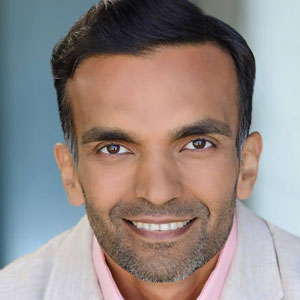
Sanjay Raja is an author, TV host, and wellness expert dedicated to helping people live more purposeful, balanced lives. He is the creator and host of the PBS show Recipe for Wellness, where he explores the connection between food, mindset, and overall well-being. Drawing from his own life transformation, Sanjay inspires audiences to break free from unfulfilling paths and pursue what truly matters. Through his work, he empowers others to turn life’s challenges into opportunities for growth, healing, and lasting fulfillment.



Here’s a glimpse of what you’ll learn:
[0:45] Sanjay Raja reflects on his divorce, losing everything, and dissatisfaction with corporate life
[3:32] Sanjay’s defining moment in 2018, and deciding to stop playing small
[5:36] Turning down a major Coca-Cola commercial to stay aligned with long-term purpose
[11:46] Integrity in health and wellness and rejecting misaligned sponsorships
[17:54] Why Sanjay started Recipe for Wellness and walked away from a Netflix offer
[20:33] Getting a PBS deal, self-funding the show, and validating audience demand
[28:53] Writing a wellness book and using it to build authority and speaking opportunities
[33:32] Scaling income, brand, and visibility through PBS and media exposure
[37:14] Handling rejection: “1,000 noes to one yes” mindset and lessons from an acting career
[47:59] How to overcome fear, shifting mindset, and using adversity as a catalyst for growth
About the episode
Many people build lives that look successful on the outside — stable careers, financial security, and family — yet feel deeply unfulfilled inside. They ignore warning signs like burnout, lack of purpose, and emotional dissatisfaction until a major life disruption forces change. Why do so many wait until everything falls apart before they finally pursue what truly matters?
Sanjay Raja, author, TV host, and wellness expert, shares how his life-changing divorce became the catalyst for transformation. He emphasizes the importance of self-awareness, listening to internal signals, and aligning decisions with long-term purpose rather than short-term gains. Sanjay highlights actionable strategies like embracing rejection as part of growth, taking consistent action despite uncertainty, and creating your own opportunities instead of waiting for validation. He also stresses maintaining integrity, trusting intuition, and focusing on meaningful impact as the foundation for lasting success.
In this episode of Defining Moments, Melanie Warner interviews Sanjay Raja, wellness expert and TV host of Recipe for Wellness, about rebuilding life after a major turning point. Sanjay also discusses overcoming rejection, building authority through media, and creating opportunities in a changing entertainment landscape.
Resources mentioned in this episode:
Quotable Moments:
“Integrity is the new currency — once you sacrifice it, your audience can feel it a mile away and immediately tune out."
"You want all the noes to come your way, because that’s proving to the universe you really want this thing."
"Most people live a life of quiet desperation; the odds are in your favor because most won’t even try."
"Make what you want to make for yourself, and then the audience will attach itself to it."
"Ease and comfort kill progress and growth every single time."
Action Steps:
Listen to your inner signals and practice self-awareness: Paying attention to feelings of dissatisfaction or misalignment can help you recognize when it’s time to make positive changes.
Align your choices with your core values and long-term vision: Making decisions that reflect your integrity — even when they seem risky in the short term — can create lasting credibility and success.
Embrace rejection and setbacks as redirection, not failure: Reframing rejection as a stepping stone rather than a defeat encourages you to persist and find the right path forward.
Take consistent, imperfect action rather than waiting for the perfect plan: Progress in health and wellness comes from moving forward and learning along the way, rather than stalling due to fear or aiming for perfection.
Surround yourself with supportive collaborators and be open to help: Leveraging partnerships and seeking input from others can accelerate growth and amplify your impact.
Sponsor for this episode...
This episode is brought to you by Defining Moments Press, Inc.
We are a US-based publishing company helping aspiring authors around the world to write, publish, and promote a nonfiction book to elevate their brands, create a meaningful impact, and generate profit in eight weeks or less.
An example of how we help our clients is with Eric Alikpala. He went from earning $100K per year as a coach in his first quarter to doubling his income in Q2, and increasing his income tenfold by Q3 — growing him into a seven-figure author, speaker, coach, and consultant.
Do you have a message that could become a best-selling book and business asset? Defining Moments Press provides the strategy, structure, and coaching to help you get it done quickly and profitably.
Visit mydefiningmoments.com to schedule a strategy call and turn your expertise into a published book and a powerful platform.
If you want to leverage your expertise with a book, check out the 7-Figure Book MethodTM.
Powered by Rise25 Podcast Production Company
Transcript
Intro: 00:00
Welcome to the Defining Moments podcast, where leaders, innovators and everyday heroes share the moments that changed everything. These are the stories behind resilience, purpose, and legacy. Now let's dive into today's defining moment.
Melanie Warner: 00:17
Hi everyone. I'm Melanie Warner, founder of Defining Moments Press. I'm the host of the Defining Moments podcast and the TV show where we chat with authors, experts, corporate leaders, high level coaches, and people who are turning their expertise into best selling books, premium brands and powerful media platforms. This episode is brought to you by Defining Moments Press. We are a US US based publishing company, and we help aspiring authors around the world to write, publish, and promote a non-fiction book to elevate their expertise, their brand, and create a meaningful impact and create profit in eight weeks or less.
An example of how we did that was one of our clients who did this. His name is Artie Vipperla
. I have his book around here somewhere. In fact, you can actually catch a podcast interview that I did with Artie here on this platform not too long ago. And Artie was a Vietnam vet.
He was a psychologist by trade, and he was one of the first people to study PTSD and put it on the map as a Vietnam vet. And he was a high honors graduate from Harvard. He's a brilliant man. Artie is now 81 years young, and we helped him write his first book. It became a best seller internationally.
Now he lives in Costa Rica, and he's an amazing energy healer. He's part of our community. I talk to him daily. He's helped heal a lot of trauma in myself, in my body, and it's something that I cannot wait for to share with you. So that's just one example of somebody that we've helped.
Another example is a special guest that I have here today. His name is Sanjay Raja, and what we're going to be talking about is the cost of playing small and the defining moment in Sanjay's life that forced him to start over. So Sanjay, welcome to the show. Thank you so much for being here.
Sanjay Raja: 02:11
No worries. I'm excited.
Melanie Warner: 02:13
Yes. So most people, they don't change, you know, anything about their life. If they're if their life is going south or they say, my life sucks, right? Most people don't change until staying the same becomes unbearable. And for you, that moment came back in 2018 and it cost you everything that was familiar to you.
So share that with our audience. What what was your defining moment?
Sanjay Raja: 02:42
You know, it's just it was a nasty divorce after being married for 12 years and building this amazing life where we could literally, with our combined income by anything, go anywhere, do anything and had two dogs, two kids, a beautiful house that we built. You know, everything got flipped upside down. But I think I look back at it now and I say to myself. There were signs that it needed to be not destroyed the way it was destroyed. I wouldn't have preferred that.
But there are signs that things need to change. I just wasn't listening to those signs. Signs would be that I was working in corporate 9 to 5. Job hated every minute of it, made a lot of money, but it just did not enjoy it one bit. I would buy things and then five minutes later regret the purchase.
So there's like this black hole inside of me that was just filling it up with stuff, but nothing would make me satisfied. And the only thing that really satisfied me was I would cook for my family, and I really enjoyed doing it, taking care of the kids. I loved being a full time dad, and then I was acting at the time and doing great. Actually, in acting at the time, I was booking everything and then when the divorce hit. Life happens for you, not to you.
Took a long time to learn that lesson, but once I embraced that, it was the positive change I needed to have. So to stop thinking small and just trying to hold everything together for other people and really follow what I was meant to do on this earth.
Melanie Warner: 04:15
Wow. So you were married. You had two kids, two dogs. You you had this amazing life from the outside, it looked great. You were an actor for TV and movies.
And some of you may recognize Sanjay from some of these projects and things that you did. And another thing I thought it was really interesting is you had this foresight. It's really when when somebody in a position in their life, when they're really broke and they need to make money and they're an actor and your agent comes to you and says, I have a Coca-Cola commercial for you, and you turned it down. Why was that?
Sanjay Raja: 04:48
You know? So I had the nutrition fitness company that I started in 2011 and it was small, but it was growing slowly and steadily. I hadn't really even written my book. My first book, in Health and wellness. There was no idea for a TV show.
No one even thought of that. But I just knew intrinsically that this is going to go somewhere in the health and wellness space. And it was a sad commercial for those who know SAG as Screen Actors Guild commercials. So the residual is on a national commercial are huge. I'd still probably be getting paid for it today, right?
And so my agent calls me and says, hey, we got two offers on the table. We've got a movie that's a small budget film that's shooting in Saint Petersburg, and we got a SAG commercial same time. And she said, well, let me just tell the SAG people for the SAG commercial, let's give them a green light. And I said.
Melanie Warner: 05:38
Give me your agent makes a commission. So those of you that know, like your agent books a gig for you, the agent wants you to get the gig that's going to pay the most money. And definitely Coca Cola is going to pay way more money than this little low budget film.
Sanjay Raja: 05:53
Yeah. Yeah. And so I said, can we do both? At first I actually did say, can we do both at first? And she goes, no, you got to do one or the other because there's a conflict.
The directors are not going to allow you to change their schedule. And I said, fine. So I said, give me a day to think about it. And so I thought about it and I realized that the choice is not that hard. I know what I'm building towards.
I just don't know what it is yet in health and wellness, but it's something there. And so I talked to my wife at the time and she's like, are you crazy? And I said, no, I just don't think it's the right move for us. And so I called my agent back. She was really upset with me, like really upset.
And she goes, you know, you may never get something like this again. And I said, I'm risking it. It is what it is. We're going to let it go. We're going to let it go.
I took the movie. The movie was a small, very low budget film shot in Saint Pete and did the movie Open Doors down the road? Yes it did. Were the doors as big as the ones at the Co commercial have opened? No they weren't.
No they weren't.
Melanie Warner: 06:59
Do you still have that same agent?
Sanjay Raja: 07:01
I do, I do.
Melanie Warner: 07:02
I bet you she's thanking you now.
Sanjay Raja: 07:05
Because I know.
Melanie Warner: 07:06
What's interesting is that you and and a lot of people don't understand this stuff. And I was the same way when I was in my 20s. I had an agent. I used to be an actor, and I got offered Playboy and I got offered a soap opera. And some things that would have been probably led to a lot more things.
And my agent was so mad. I'm sure like always wanted to fire me because I kept saying, no, that's cheesy. I don't want to do that. And they're thinking, do you know how hard this is? And the soap opera was like 10,000 a week.
That's a lot of money for anybody, even today's dollars. And this was like 100 years ago. And I, I could see why agents would push you to do soap operas because it's regular income for you and for them, right? Because when you're an actor, you're dealing with rejection every day. You go out on auditions and you know, and if you're a member of the Screen Actors Guild, the union, they penalize you.
You can't work non-union in some cities or, I mean, some states. I think Florida is a right to work state. So means you can't work union or non-union, right? That's brilliant. But like people in LA where I was, you can't do that if you're in California.
You can't you can't do union and non-union. So the unions penalize you if you work non-union. But like 97% of the people aren't getting any work, right. But if you do get work, they protect you. So there's restrictions there.
But what's interesting is your agent works on commission, usually 10 to 15%. Managers sometimes take a percentage. Attorneys can take a percentage. So even if you're an actor and you make a ton of money, there's a lot of people that already have their hand out besides Uncle Sam taking their cut. So I was always amazed because my daughter is a professional actor.
How you know she can make $20,000 an episode for TV and have like, hardly any money left over in that world? And so you're seeing now this trend of like so many actors, especially really big names that aren't getting work like they used to because the industry is so fragmented and now they're creating their own opportunities, they're funding their own shows, they're producing their own stuff. They're doing deals directly with with content creators and distributors and exhibitors even. So it's a really interesting and exciting time in Hollywood. And, you know, Sanjay and I have partnered up and actually produced a TV show, which we're going to talk to you about that in just a little bit.
But I want to step back for a second and go back to 2018. So number one, you had turned down this, this, this was earlier before that you turned down this massive opportunity for Coca-Cola, because there was something in your soul that said, this doesn't align with my mission in the world. Even though you needed the money as an actor, you broke as a joke, ready to choke. And I'm sure your wife was like, you should have taken it. Your agent was like, you should have done it.
But your gut was like, listen to your gut. And I know someday I'm going to do something where this may not align. And I had the same situation in my early 20s when they offered me Playboy and I said, someday I'm going to do something that may not align with this, and I feel it in my bones to say no, even though everybody thought I was crazy, and it probably would have opened up a lot of doors in my acting world as well. Definitely. But same thing.
I turn down a lot of things in my 20s because I didn't feel like they initially aligned with the bigger mission of my life. And now, decades later, I know looking back, that served me well. And I would say knowing you and knowing what you're doing now and how big your life has blown up into all these amazing things, it would be really weird to think of you doing a Coca-Cola commercial, because it doesn't align with everything that you are today, right?
Sanjay Raja: 10:58
Yeah. You know, integrity is in the entertainment industry is is lacking severely. And I know actors who have compromised their values to take roles. And I get it. I'm not going to judge you for it.
You know, that's your decision. But for me, I built this big reputation over the years, since 2011 in the health and wellness space. And the reason why I had longevity in that side was because I never sold anything to people based on fear mongering, which you see nowadays. Yeah. It was rooted in truth and dispel a lot of notions.
And when we got the show before we got the show, PBS vetted me up and down for months. They went through everything. They went through all my background. They went through all my digital history. They wanted.
They wanted to make sure there was not controversial stuff on social media. And that's what people don't. That's what people don't understand, is that before they give you a show and they greenlight you, they're going to vet you up and down because they have a brand to maintain. And I can't compromise.
Melanie Warner: 12:01
Under this giant microscope. Right? Yeah. And, and I think about that too, because when you are on like CNN or PBS or on one of these big platforms, now you have the same credibility as that brand. So they're yeah, they're extremely protective.
And the whole industry is designed to keep people out, first of all. But I think what's interesting is I saw something recently where there was somebody on a reality show. It was one of those like Secret Lives of Mormon wives. Right. And they were talking about their Mormon religion and their beliefs.
And this sponsor came up and offered to pay one of them $20,000 to sell like sex toys. And I watched how quickly her. She unraveled and justified her change of thought and even had a conversation with, I think, her mother about it.
Sanjay Raja: 12:55
Saying, oh my God.
Melanie Warner: 12:56
You know, and I saw in real time how somebody would completely change their whole values and morals for. And this is the price that it was only 20 grand for that manufacturer to get somebody to change their entire core beliefs over a product, which I thought was hilarious. And so you're right, we don't have those. This is where we have a trust recession. We have all these leaders out there that nobody trusts.
And one of the things that I admire about you, Sanjay, so much that people don't know this about you yet, is when you do look at a product or you are very picky, you don't endorse anything because there have been, as your producer of your PBS TV show. I will tell you, I have brought many sponsors to your show, and you have turned them down and said, this is not in alignment with me. I don't agree with their ingredients. I'm not going to endorse this to the to the audience. And as much as we needed those sponsors to help fund our show, I always trusted your integrity because of that decision that you had not to partner with somebody like Coca-Cola, right?
Sanjay Raja: 14:05
Yeah. You know, it's it's such an interesting world. Once we got the first season off the ground, then season two rolled in, and then you being a integral part of the show, being executive producer, you brought so many opportunities. And I felt bad saying no because you did a lot of work. But it just it just I'm looking at where are we going to be in five years with the show?
Melanie Warner: 14:31
Yeah. Right.
Sanjay Raja: 14:31
And you know.
Melanie Warner: 14:32
But here's the thing. When you have a show, whether it's a podcast, or a TV show, you know, and you look at some of these other famous influencers and stuff out there, the minute you sacrifice your integrity, your audience can, can, they can feel it a mile away. And they, they immediately tune out, they turn off and they don't want anything to do with you. So to me, your integrity and, and your authenticity is the new currency in that space. And you.
Sanjay Raja: 14:59
You see so many influencers right on now, social media influencers that have been bought and sold multiple times. And guess what happens? There was this big influx of the influencer market taking over Hollywood, but they what they found out it's a supernova. It burns brightly for a second, really brightly, but then it fades away very quickly because they don't they don't build it on trust. They build it on sensationalism, fear mongering.
One guy got on there and say, water is horrible for you. I mean, just this whole thing on that. I mean just nonsense out there. And they're looking for eyeballs. So you can get eyeballs, I'm sure, by saying ridiculous things.
However, it's not going to last. And so we wanted longevity where we started on PBS number one because they have credibility. Production quality is great and they've got a built in audience. And that's what people respect about PBS, and that's why they've been a household name that that stint on PBS or season one was our test bed. Then season two came.
Then we got noticed by streaming channels. So they came knocking. And so then we got noticed that way. So I know one of the things, the reason why our team is so good is we've got Michael, the director, who's just always keeping us moving forward because he's like, we can't do the same thing as we did in season one. Gotta be different.
So he keeps me in check.
Melanie Warner: 16:21
Yeah. Keep elevating. Yep. Yeah. And Michael's amazing.
Michael Mayer, he's, you know. Yeah. Awesome. Awesome. Awesome.
Sanjay Raja: 16:29
And then we got you, who's always thinking of new ways to kind of elevate the show and, and just always thinking outside the box and always saying, we should try this, this and this, which is what you need. We need to progress forward and flip the script on everything that everybody else is doing, right. So we did a lot of things that no other show did, and we got pushback from PBS. We got pushback from all these people. But guess what?
It worked.
Melanie Warner: 16:53
Right?
Sanjay Raja: 16:53
We made it happen.
Melanie Warner: 16:54
When we first started pitching this TV show to different networks, you know, I know this show has had a long history of trying to get made for a long time. You know, it was initially it was with the Discovery Channel, right?
Sanjay Raja: 17:06
Well, yeah, Discovery Channel bought it was ready to go because discovery owned Travel Channel and we were going to be on Travel Channel with all the cooking shows were there. But then discovery said, we're going to go all paranormal. So now Travel Channel's all ghost stories and stuff. So they axed everything, you know. And then Netflix came calling and we we took a meeting with them.
They offered a good deal. But here's the problem. It was going to be all paid with pharmaceutical money. Yeah. And then the other issue was they maintain creative control.
Those are the two things I was not willing to compromise on. And having and I didn't know you then, but having Michael on board, we looked at each other and said, yeah, let's not do it. So we walked away.
Melanie Warner: 17:43
Well, and Michael May is brilliant. Like he. Michael is he's actually produced several different movies, television shows, even documentaries. He has an amazing podcast himself. He's just a super talented guy.
He's won several Emmys. So like, I loved partnering with really brilliant creative people. And it's funny, out of all the projects I've done over the years, I think this one, we had such a small crew and it was just like, we all just have respect for each other to just get stuff done. And everybody stayed in their lane of expertise and zone of genius, and it just got done really quickly. And what's cool is we initially, when when this went to networks, it was like the networks were thinking, oh, this is great.
This, we would love to do this show, but guess what? Think about this. Who are the only people that can advertise on national TV. Big Pharma, Taco Bell, Coca-Cola, McDonald's, everything that a health and wellness show doesn't stand for. So when we built, we all fought the same common enemy.
We're like, okay, we want to educate people and go against what big pharma, big hospitals and big food companies are telling people because all the three of them are in bed together and everybody knows it. And, and yet, why would we go to a network that only wants us to, to give that content that's filtered for their sponsors because that's what funds it? So then we said, what if we got a creative new way to fund a TV show where we could align with sponsors and sell it directly where we're not? We're not in a space where we have to sell commercial television spots in order to fund it. So that's where it came down to partnering with PBS, which worked out so amazingly well.
So tell us more about that experience and what that was like to get that off the ground. And what did it feel like to be has had this big dream and vision. We call it a big, hairy, audacious goal for so many years in your life to finally get it off the ground.
Sanjay Raja: 19:45
Well, there was still so many challenges we had to overcome. So, for example, what people don't understand and how PBS works is that it's not just they take any good idea. They don't just do that. So what they did was they said, all right, go fund your show, go make it happen. And three things are going to happen.
We're going to send it off to the number one, number one, two and three media markets, which is LA, New York and Chicago. Those affiliates tell the smaller affiliates yes, no or there's nothing here at all. So Jerry, Jerry is our guy that we worked with at PBS and he sent it off and he said three outcomes could come. You spend all this money this time and effort. They don't like it by.
And they see. They show you the door. Second outcome would be, oh, we like it, but it's a limited series. We don't see it running more than one season. Okay.
Or the third option is they loved it. The test audience really resonated with it. Here's your time slot. Now go make content. So we got the third option and we didn't know.
We had no idea it was going to be that option. We just knew the content was good enough where it resonated with us. And I think we're creatives and filmmakers and content creators get in trouble is, don't make what you think the audience wants to see, make what you want to make for yourself, and then the audience will attach itself to it. And we did that. So we stuck to it.
We got it off the ground and they love it. And so they just keep asking us for more content. And so we're in post for season two, which is going to come out in June pre-production for season three. So there's just so many things going on we never thought. Well, I can't say we never thought.
I just didn't think it got the traction it would in such a short amount of time.
Melanie Warner: 21:35
Well, yeah, and I think it's because it's something that was really needed. And I feel like there's a lot of people that are sitting in their glass towers in Hollywood that have no clue what the audience actually wants, and they feel like they're taking risks on certain things, but they're not. They don't really have like their finger on the pulse sometimes. And I think if you always, if you're in touch with the audience, right, like you are already talking to people, you already had your book out there, but you know, here you were now post-divorce, right? Which by the way, was a big transition.
Yeah. Or something kind of broke inside you and you're like, I can't keep living this. I can't keep living like this. And, and you realize that you were playing small. To create stability for others.
And I see this a lot. People shrink their dream to fit their income. They have these goals and dreams, but they they stay in a safe zone and they don't take a risk. And so for you, that meant, you know, changing everything, all your whole identity is being this married family and having all these dreams together. And then everything shifted and it became this contentious place.
And now, you know, here you are on the other side of that. Your kids are incredible. They're I've met them. They're amazing humans. I love them, they're great.
And you take them and you travel with them, right? Like you, we, we all went to Bali last year. That was magical to go to Bali and yeah. And, and, and in fact, Sue Van Rey's is actually was in that episode. And she and I did a podcast as well.
So you can go find that one too, because that was amazing. And you see like how powerful it is to create platforms where other people get to share their zone of genius with the world. Like the best kept secrets, like the people that we featured on the show are. I have learned so much from you, from them. And it's just.
And being in these beautiful environments like Bali and then Costa Rica, it just like season two is so beautiful. I cannot wait for this to come out for you guys to see everything that it means.
Sanjay Raja: 23:46
Yeah, we've been doing the voiceovers and the dailies. I see the I see the rough cuts and there's just not a bad shot. It's such it looks so much grander and bolder and bigger than from season one. So we really elevated still on a very small budget. We were able to make that happen.
So yeah, it's amazing.
Melanie Warner: 24:04
And what's cool is we found a really unique model where we were able to create a sponsorship model because with PBS, you have to have sponsors for your show because there's not commercials where you would get like advertising revenue split, like you would with a, you know, with another traditional TV show. Or there's a way where if you're a producer, sometimes you go get funding and then you go produce the show and you go sell it to a network, right? So we did it differently, where we created a sponsorship opportunity where we could elevate some of our existing clients that were already experts in that space. Maybe they were authors or speakers or thought leaders. And so this just created an opportunity and a unique way to fund it, but also find the right partners and sponsors that were in alignment with the message already that wanted to support the content on PBS.
And then when these people are featured on one of the shows or when they're if they're an underwriting sponsor for an episode, now, they get the benefit of being on PBS, which is 240 million households. That's huge. Right? So there's a unique business model and sponsorship level that worked very well. And for PBS, this has worked great because they came back to us and said, can you do this for all of our shows?
Because it was like, they're losing a lot of funding too. Right. So this is a unique model.
Sanjay Raja: 25:26
We're in such a different world right now. So the center for Public Broadcasting was basically dismantled by the current administration. And they funneled funds, government funds to subsidize the smaller affiliates. And our favorite TV shows. So that was shut down.
Melanie Warner: 25:42
Sesame Street and all that. That was on PBS for years.
Sanjay Raja: 25:46
Yeah. So what happened was when we did our model, we presented it to PBS. They, they, they threw a lot of questions at us. They said, we don't know about this. This is very different, very unique.
But guess what? Our model is now the standard. Because because of that happening now, they have to have fully funded content to come in to their platform. They give the audience, they give you the credibility, but you got to bring in the content. And the goal is that your content is good enough, you get enough eyeballs, you get enough viewership that other platforms are going to see you and say, we really like this.
Yeah. And so slow and steady leads the way. The problem I'm seeing with a lot of content creators is I need this right out of the gate. I need to get paid right out of the gate. It is a slow burn if you want longevity.
It really is because the whole model of the industry has completely shifted. And so we just have to evolve with it. And we were actually ahead of the curve.
Melanie Warner: 26:41
Absolutely. And, and we found a solution for ourselves that worked for us. Not ever thinking that this is something that lots of people would be using. And so we created this model and it's, it's exciting for like filmmakers and content producers because it's a way to actually fund your projects. And also as a, as a producer, I love being able to help people find like guaranteed distribution before they start their projects so that they can actually get the funding and complete them.
Because that's really what's been missing in a lot of these studio environments. And since all of that is also breaking up, we're we found a way to create this and kind of cut out the middleman because these distributors were taking a lot of money the same way in the book space, the same way that Amazon disrupted the book industry, where you don't need a major publisher to publish your book, you can self-publish and fund it yourself and distribute it and market it. Now that's happening in the TV space and the film space, and it is a very exciting time to be a filmmaker. So if you're in that space as well, then we would love to talk to you more about, you know, how we can help support the same vision for you. I want to take a step to to go back to Sanjay, who was, you know, you had also written a book and you were getting a little bit of traction with the book.
And the book was kind of a foundation for this. Tell us more about that journey as well.
Sanjay Raja: 28:05
Yeah, so I started the idea for the book in 2017. It was being a like when I had my kids, I, I said to myself, I'm not going to let them go through all the eating issues I had, which was obesity and all this stuff. I wanted to start them off really on the correct foot. So I took charge of it and basically made all their baby food and just had them go on this journey with me where they're not afraid to eat anything. So we took them to so many different countries and they'll eat anything.
I can drop them anywhere. They'll be just fine. And so I was dispelling the myth of the picky eater, which is what we hear all the time. And I would do a lot of. Then I got picked up to do some speeches for free before I became a known speaker.
And I would always say something that would piss off the entire audience, which was, listen, you're not born a picky eater. It's a learned behavior. You're allowing this behavior. And it would just rattle so many people's cages. And it was a good thing because then we're having honest conversations.
So the, the book got written and then it got published in 2018. And that's discovery saw that book and gave us. You know, the first offer which didn't go through, which is okay. And then but the book led to me getting on podcasts. Then the book also led me to getting on stages for free initially and then now getting paid to be a speaker.
And so it grew into this entire thing.
Melanie Warner: 29:30
And it gave you expertise and authority instantly as credibility, as a thought leader in that space of wellness, which I thought was interesting. And then so to monetize the back end of the book, you were doing fitness where you were getting up early, right? You were training fitness people like one on one. That's exhausting. But tell us what.
So because you had the book that led to an authority, and then you kind of expanded that to like an offer where you were doing one on one fitness coaching with people, right?
Sanjay Raja: 29:59
Well, you know, I never leveraged the book enough. Honestly, knowing what I know now, knowing you and what you do.
Melanie Warner: 30:07
Because I just. Full disclosure, you guys, he wrote this book outside of our company. Yeah. He didn't publish that book. Yeah, but he just wrote it and got some authority and got some traction.
And then we met and he was able to take all of that and just explode it within a very short amount of time. So yeah.
Sanjay Raja: 30:24
Yeah, yeah, I was a, I was a trainer. The good news is I was training higher level athletes by the time it was like 2022, 2023. So I was training higher level athletes. So I was getting a lot of traction. But I, I was working out.
And one of the things about me as a trainer is I work out with all my clients. So I was getting eight workouts in a day and I was a wreck completely, you know? So that being said, I couldn't maintain that pace anymore. So I have to be more, more intelligent about how I go about things. And so the book then slowly made its way to PBS.
Somebody got it. And then our contact got Ahold of it, called us up, and I called up Michael. Him and I were doing our own projects, but we always kept this on the back burner. And I said, hey, they gave us the green light, let's go do this thing. And he's like, are you serious?
Yeah, we're they, they want it.
Melanie Warner: 31:16
And then you came to me and because you had Michael and you had your book and you had guaranteed distribution with PBS, then I was able to go and help fund that with just our own experts in our sphere of influence, because we had thought leaders and best selling authors and speakers that were already in that wellness space. So we then collaborated and helped use all of that to fund this project, which was so exciting. Now let's flash forward to what's happened since before this. You were living in an apartment, divorced with your kids. You were.
I was telling you when the first time we ever spoke, you said something to me that still stands out. Okay. And this is if you want to know how to get your own TV show, you tell a producer something like this. You said Americans have the most expensive urine on the planet.
Sanjay Raja: 32:04
Yeah.
Melanie Warner: 32:05
I'll never forget that. And I still say that to people, and they laugh. And and this is where you had such conviction. Like you're not a big fan of supplements. You're no nonsense.
You're a straight shooter. I learned so much from that conversation. I'm like, this guy needs his own show. So then we started talking about how you had this concept, and here's where you were, and you were stuck with this piece that I knew I could provide that piece. If, if there was enough evidence that that show could succeed.
And what's so cool is since then, you went from divorced dad living in an apartment with two kids, you know, doing these one on one, getting up at the buttcrack, like 3 a.m. to have time. You know, I'm like, you're not charging enough. And then you were charging a few thousand dollars for being a speaker. And I'm like, but you're this expert authority. You wrote a book, you're not charging enough there either.
So you went from charging a few thousand dollars doing one on one clients. Now that the show came out and you leverage the PBS brand and the collaborations. It is elevated your book, your authority, your fees. Now, you went from a few thousand dollars to $100,000 corporate speaking engagements, right? Corporate wellness packages getting booked like crazy as an actor, TV, movies, billboards.
I crack up seeing. I'm driving in Dallas and I look up and I see you on a billboard and then I'm in another city. I don't remember if it's in New York and you're on another billboard as a doctor, which cracked me up. And I was like, I never realized those aren't real doctors on a billboard.
Sanjay Raja: 33:40
I moonlight as a doctor in my spare time, you know? So it's all good.
Melanie Warner: 33:44
I know. So you're not even a doctor. But you are. You have at least by tenfold increase your own income and expertise and authority and credibility by utilizing a book, your expertise and the PBS brand, like having your own TV show. Now, the other thing that came from that is we found that speaking engagements, people want people that have been on PBS and they're willing to pay more because you are endorsed like you're as seen on PBS as seen on NBC.
All of those things mean more in the marketplace. Then you become the go to expert. So when here's what happens when journalists are looking for a source, they look for people that wrote a book on the subject, because now they're saying, this person is the expert and you're more likely to get booked as a media source or on certain stages because you've written a book and because now you're on PBS, so you have elevated yourself in a very short amount of time, and now you're living on the beach in this beautiful house with your kids. Like your whole life has changed completely in that last year and a half.
Sanjay Raja: 34:54
Yeah. It's funny how things come together. I think it was, you know, you. One of the things I've embraced is that nobody is self-made. You need help along the journey, no matter what you do, who you are.
I don't believe in the self-made person. Somebody gave you help. That's the only way to do it. And so, like Michael saw the vision early on, we were connected for our back story. So crazy.
I had a phone relationship with Michael for seven years before we were in the same room together. We never even met for seven years, but he believed in it. And then you and I met, and then all three of us really put it together, put our head down and said, we can do this while running our own separate businesses, while taking care of family, while doing all these other millions of things. But we all believed in the vision. And because of what we've been doing, you've expanded out, I've expanded out, Michael's expanded out, and it's just this effect of multiplication of abundance because we all kept that same mindset, make the content good, serve the public, and everything else will come.
And that's exactly what happened. But it's hard for people to see that.
Melanie Warner: 36:00
Yes. Because in the beginning, right. There's a lot of rejection, right. And you talk about how failure or rejection can be a redirect when you're an actor. I mean, you're basically going on job interviews every single day.
You I mean, how do you deal with that head space of rejection? And can you give me a specific time where like failure actually redirected your life in a better direction?
Sanjay Raja: 36:26
So I've had a unique background because I started my, my life in sales. I was a sales guy for a very long time. And anybody who's been sales is that you're going to get hit with rejection every day.
Melanie Warner: 36:37
Yeah, you gotta keep your head straight for sure.
Sanjay Raja: 36:39
You got to keep your head straight. And so what happened is that gave me a leg up. I didn't realize how much of a how much of an advantage I had is that I could take rejection and just turn it into something positive. I know so many actors who take it so personally, right? But I talked to what happened was on social media.
I'm not a big social media guy, but I'm learning the trade how to do it. And there was a guy who I forgot his name. His name's Dave Metzler. I don't know if you've ever heard of him. He's big into it.
He was $1 billion hedge fund guy. Lost everything. Came back and got it, you know, close to where he was. So he reached out to me and him and I had a conversation, and he told me something that stuck with me that really helped me. And I've shared with so many people I think will help this audience, which is if you think about it this way, if whether you're an actor TV show, you're getting closed doors or whatever it may be.
He said, okay, if I were to tell you, you had to get a thousand no's before you get your first. Yes. How fast would you go and get that first snow? I was like, yeah, that makes sense. I'm going to roll through a thousand nodes just to get to that.
Yes, I know I'm going to get that. Yes. Right. And so what people don't understand is that every no is leading up to that. Yes.
Melanie Warner: 37:51
Yes. And when you can put a monetary.
Sanjay Raja: 37:53
Redirect.
Melanie Warner: 37:53
You on that, right? Like you say, okay, how many no's can I get today? Yeah. So that I know that if I get 50 no's, that's going to be one yes or something. Yeah.
So it sounds like you, you were able to stop taking rejection personally and you found a way to use it strategically.
Sanjay Raja: 38:12
What's what actually empowered me?
Melanie Warner: 38:15
So give me an example of what's a no. At the time that felt devastating. But now you're grateful for.
Sanjay Raja: 38:22
Oh, yeah. So perfect example would be.
S4: 38:24
Besides the Coca-Cola.
Melanie Warner: 38:25
Thing we talked about.
Sanjay Raja: 38:26
But okay, so I still think about this one. Me and the kids talk about this one all the time, which is, you know, the movie venom, right? Okay. Tom Hardy's in it. It came down to me and one other guy who they cast as the main villain.
I went through six auditions for this thing. It came down to me and him. Now, the guy who got the role, his name is Riz Ahmed. He's a well-known actor. He's won an Academy Award.
He's a big deal. Great.
Melanie Warner: 38:54
The reason why I'm here.
Sanjay Raja: 38:56
Oh, yeah. Changed his career a lot of ways. And I'll tell you, what happened is I found out the back door information. You never find this stuff out as an actor. But I found out I'm six two.
He is about five nine. Tom Hardy, who's the main actor in that movie, is a little bit taller than Riz Ahmed. I can couple things worked against me. Number one, I was taller than most of the people on set. They don't like that.
Melanie Warner: 39:25
Especially. The leading men that are all pretty short.
Sanjay Raja: 39:28
Yes. Yeah. So they don't like that. Okay. And then what happened is I got passed over for that.
Then they said, okay, now we've got a co-star guy who's like the evil henchman scientist to Riz Ahmed. Right? And it's, it's an older white guy. They cast it as that scientist. Then they looked at me again.
They said, okay, but you're still taller than Riz Ahmed and you're the same skin color, so we can't have that right. So these are all the decisions that I made in the background. My agent was like, they like you. They like you. I did six auditions for these people and I never got it.
And then that guy got it. It changed the trajectory of his life. But here's the thing. I look at that and go, if I would have done that, I would have never even thought about doing all this hard work to get the show off the ground.
Melanie Warner: 40:19
And I think of the people that are literally alive today, Sanjay, because of you, I mean, honestly, but when anyone in my family gets sick, I call you before I call a doctor. And you have helped us heal so many different things. My son's knee when he was playing basketball, and he was in a an amazing season of undefeated season and he wanted to play. And it was like you gave us such great advice on that, even telling us what type of equipment to have to help it heal faster. Like I'm just amazed at what you've been able to do.
And I know you made the right decision because the impact of what you're making the real thing at the end of life that matters of the people that you've impacted are far greater where you're at now in this wellness space than having been a major actor and.
Sanjay Raja: 41:07
Well, yeah, you know, and it comes back around though, that's the thing. You never know what's going to come back around. So the interesting part was I just finished a movie earlier this year, which is going to it's called Emma's Christmas. It's going to come out in theaters at the end of this year. And what happened is that director was looking for my role and he actually had cast another actor.
That actor knew about me, referred me to him, said he's a better choice.
Melanie Warner: 41:36
I said, that never happens with actors, ever.
Sanjay Raja: 41:38
Yeah, that never happens.
Melanie Warner: 41:39
Right.
Sanjay Raja: 41:40
And he sat down with me. The director sat down, he looked at my stuff and he said, yeah, your cast is the role. He gave me the role. And then I just got a call back from him probably like two weeks ago. He's like, hey, I'm looking at the dailies.
He goes, you're really shining on this thing. And we got greenlit for part two. And they wrote a much bigger part for me in part two, which we're going to start filming probably end of this year. It's going to be all over the world. So we're going to be filming in three different countries.
And you never know, it just comes back around.
Melanie Warner: 42:08
Oh my gosh, that is so funny. I, I'm just remembering this story. This is coming back to me now too. So I had a very good friend named Alicia and she actually lives in Switzerland. She's beautiful.
Amazing. She was a model and an actress. Right? And back in the day, we met on the Baywatch set because we were both on Baywatch back 100 years ago, and we became like, such close friends, like soul sisters. And she ended up being the maid of honor in my wedding when I got married 100 years ago.
And she, she was up for a really big, big, big part in a, in a big movie with Sylvester Stallone. And she's a model, so she was really tall. And same thing. They actually started she got the role she was going to start filming and they realized she was like this much taller than Sylvester Stallone. So and they ended up going and hiring a woman, an actress that was unknown, that looked just like her. Yeah. Her name was Sandra Bullock.
Sanjay Raja: 43:05
Oh, there you go.
Melanie Warner: 43:06
And I always say Sandra Bullock owes you her career.
Sanjay Raja: 43:09
She does? Yeah.
Melanie Warner: 43:10
Sandra Bullock doesn't even know this. Sorry, Sandra. You're amazing. I love you so much. But it was because she looked like her.
She'd already been cast in the role first. Like to for it to fill that position. And everybody loved her look and everything. But she was so much taller. So.
And that's the thing, you guys, if you're an actor or you're in the creative space, sometimes we internalize this rejection as like, something's wrong with us. And I remember like years ago, I got totally rejected for this is laughable now, but I was so devastated. I went in and I was applying to work at Six Flags. I had to sing show tunes and I sang, oh, Oklahoma, you know, and.
Sanjay Raja: 43:56
Right.
Melanie Warner: 43:57
And I was so proud of myself because I worked so hard and I really, really wanted this audition and I had to fit into this costume. And later I didn't get the role. And I was just devastated. And I found out it was because I was too tall for the costume. That was it. Yeah, but I didn't know that. And so I was I literally stopped singing. I stopped pursuing that career because I felt so rejected. And it, it made me stop using my voice.
Sanjay Raja: 44:25
Yeah.
Melanie Warner: 44:26
And I think that. This I hope that all of you listening to this are so inspired by this conversation because we're like, Sanjay and I, we've been around the block with this. We're both we've spent decades in this industry. And when you're an entrepreneur, When you're in sales. When you're an actor like we are. Glutton for punishment because we deal with rejection daily. But yeah, those things. When we were younger, really positioned us to be here in this space of being like. Learning not to quit. Yeah. On this big goal and this big dream. And it just like all of these things, your gut, your choices. When, when everybody thinks you're crazy for saying no to something that, that you don't feel like is aligned with your own integrity. You've got to trust that because everybody knows the line that they're willing to draw in the sand, right? And you have to decide before you go out there, what is that line for you?
And especially if you're going to go to Hollywood, you better decide before you get there because you're you're going to be in positions constantly where you're going to have to make decisions. And if you say yes to one thing, it means you're going to say no to something else. Like Sanjay gave a classic example. I could do this commercial or this little movie, and I have these conversations with my daughter, who's on the front lines of this business every day as a professional actor. And it's, it is, it is so hard to know because you just never know.
Like you see, especially you see that guy's career take off and he won an Academy Award. And like, you're just like, this is insane. But now you can look backwards and connect the dots and see that you are exactly where you're meant to be. Your kids are happy and healthy. You're living your best life.
You're doing all these things you've dreamed of doing, and you've found a way to create both impact and income in the world. And I can't think of a better place to be.
Sanjay Raja: 46:25
Well, the other, the other piece of the pie, I mean, the other piece of the puzzle in this conversation is not only not giving up, but when we go back to that 2018, I also had the mindset of, I don't care what anybody's going to think about what I'm going to do now, I'm just going to go do it. It's because being in entertainment or in any industry, you know, for the most part, it's subjective. Everybody's going to have an opinion about something. You could do something really well and somebody's going to say, oh, this is horrible, you know, or somebody's going to say, oh, this is great, right? So when I put down the thoughts of what are people going to think at the end of the day, we are in this planet for a blip.
Melanie Warner: 47:10
Yeah.
Sanjay Raja: 47:11
And I am not going to live my life by other people's judgments. I'm going to go do that big, giant thing that I want to do. And most of the time their judgement on you is you're pointing out what they could not do.
Melanie Warner: 47:25
Exactly.
Sanjay Raja: 47:25
Which is go live a big life.
Melanie Warner: 47:29
And, you know, that's.
Sanjay Raja: 47:30
The other piece of it.
Melanie Warner: 47:31
And I think too, I mean, you look at where you started like as a kid, you know, you grew up, you know, your parents, you know, came from India. They had a different idea of food and nutrition. And I remember you telling me like when you were a kid and you were upset, like your parents didn't give you ice cream and candy, they gave you like nuts. They gave you something healthy. But you also struggled with obesity as a kid. And you mentioned that stress kind of showed up physically. What was your body trying to tell you at that time? And like, how were you able to shift that?
Sanjay Raja: 48:03
Yeah. So what happened was when the divorce hit, finally, I would get calls by lawyers all the time. My lawyer, her lawyer, I would get into full on panic attacks, like my heart rate would jump up, it would skyrocket. I couldn't breathe, and it got so bad it exacerbated. I had an ulcer that got really bad, exacerbated so many things inside of me.
But what? Instead of internalizing it even further, I took a step back and it took a long time to get here. And it was okay. When something bad happens, the first thing I need to do is just breathe. I just got to breathe.
I started breathing, breathing, relaxing my mind, my body. And then what I realized is that the worst thing in my mind that could possibly happen to me was this perfect little world was going to be blown up, right? And it did. It blew up. But guess what, I survived.
Yeah, I survived it. I thought that was going to be the end of me, I really did, I survived it and now everything else that's coming my way. It's okay. I survived the worst thing. So I'm going to survive everything else.
And so many times we think, oh, this is going to happen. This is going to happen. So that anxiety kicks in because we imagine scenarios. 90% of the stuff we imagine in our head doesn't even come, come to pass. It just is stuff we imagine.
Melanie Warner: 49:24
My dad, it's funny, the very first podcast episode I did was with my dad. I love my dad. He's amazing. He's 89 years young. He's he's so fascinating as a human.
But he always said to me growing up, some of the worst things in my life never happened to me.
Sanjay Raja: 49:39
Yeah.
Melanie Warner: 49:40
And, you know, and he's an attorney. And people would say, well, I almost had this happen. And he goes, well, then you almost had a lawsuit, but it didn't happen. So don't.
Sanjay Raja: 49:48
Exactly. You know what I mean? Yeah. And and we.
Melanie Warner: 49:50
Sit here and obsess, especially, gosh, once once you have parents like you have a whole new level of worry, right? And we worry about all these things, but like, worry is almost like a mantra, like negative prayer. And if you just keep focusing on that worry and that fear, then you're actually going to produce this outcome of something happening because you have such power to manifest things in your life. Why not focus on some positive things happening instead of using worry, which has absolutely no purpose in our lives but to hold us back and create fear?
Sanjay Raja: 50:24
Well, the other thing is, when you think about it, think about the people who've changed the world, right? Most of the people, if not all of them, didn't have a comfortable life.
Melanie Warner: 50:35
You're right. You're right.
Sanjay Raja: 50:36
They just didn't have a comfortable life, you know? You know, however you feel about Elon Musk, he changed the world in so many ways. You look at his past. He was you know, he was bullied as a kid. All these things happened to him.
You think about all these people who are change makers. You've talked about this in the past, and it's not by being comfortable. Do you do big things? And so what happens is the trap is we get comfortable and we're like, oh, everything's great. I don't have to evolve.
I don't have to grow. So ease and comfort kills progress and growth every single time.
Melanie Warner: 51:14
So true. Yeah, yeah. And the enemy. The enemy of wealth is delay. It’s saying someday. And I see this every day in our world where people someday I'm going to write a book. Someday I want to be an actor. Someday I want to be on a TV show. Someday is not a deadline, and we can get so stuck in the dream of pursuing the dream of our life that we forget to actually make it a concrete goal and have executable steps and take the action on that.
Sanjay Raja: 51:45
Yeah yeah. And so like, I look now and that is my job is not only to like change the world in terms of health and wellness and make a world a better place than I found it. But it's to be a role model for my kids to show them, hey, listen, it's a running joke in my house, which is what career are you on now? I'm on number 67. I don't know, right.
Melanie Warner: 52:06
Well, and the greatest gift. You can give your kids is your own happiness. Yeah. Right. And so, and like, and and here's the thing that I learned after my divorce, you know, you think that you're, you're, you're going to, you think that your kids are going to learn to love themselves based on how much you love them. Like if you just love your kids, they're going to love themselves. But the truth is, they look at you and your life.
S5: 52:28
They see.
Melanie Warner: 52:28
Your disciplines. They see your habits. They see how you take care of yourself. And that's what they learn. And they learned.
S5: 52:36
That.
Melanie Warner: 52:36
Dad has what it takes to get through a tough divorce and go for his dream of, and have this unstable thing happen, and now come back and be the stable provider for them, and that they have that in them as well. So you're actually showing and teaching your own kids resilience through this process, which is you're demonstrating it, which is amazing.
Sanjay Raja: 52:59
Yeah. You know, it's they're at that age, they're 14 now where they are watching.
Melanie Warner: 53:03
And they're twins.
Sanjay Raja: 53:05
Yeah. They're twins. Yeah. And they're watching. They're learning.
They've noticed everything I've ever done. Yeah. You know, as long as they've been alive, they're always watching and cataloging these things. They'll call me out on my BS sometimes too. They'll do it.
They're like, oh, you can't do that.
Melanie Wanre: 53:20
Oh, yeah. Especially your daughter. She's the best now. Now you have the house. Yeah. So you've had multiple careers producer, host, actor, fitness coach. And you said, like, they even make fun of you. Like, what are you doing now? But what is the, what is the through line that connects all of them?
Sanjay Raja: 53:39
The through line that connects all of them is that I've always wanted to be in a space where my I could focus on my own personal health. So being a performance coach, being a personal trainer, being a nutritionist, being in the health and wellness space, I always wanted a job where I get paid to focus on living my best life, right? It was that. It was how do I live a life? Because I worked in corporate America and I took home a paycheck.
It was great. But the problem was I wasn't changing the world for the better. I wasn't making the world a better place. I was making a company richer, and I had the self-awareness to go, I want to do something that really impacts people on a deeper level. And the third thing was having the self-awareness to know I am not built to work for anybody.
I also realized that too, which is I look back at a conversation with a friend over dinner last night, and that is I remember in every corporate job, they try to promote me every single time to manager. And I always said no. They're like, oh, it's no more money, blah, blah. But intrinsically, I knew deep down this is just a pit stop for me. This is not my final destination.
So I intrinsically knew I was training myself for something bigger and better, and that was to be my own boss. And as a child, one of the things my dad did that was amazing that I said I'm going to do for my kids, which is he pulled us out of the eighth grade and we traveled the entire we traveled the world for nine months, pulling us out of the eighth grade. We had to make up the entire school year. In the summer, my sister and I and I looked and I said to him, I said, how, how are you able to pull this? Off?
He goes, I work for myself. That's how he quit his corporate job. That's where I got it from. And so then I said, I'm going to do that with my kids, where I can just take off and go do this thing. And so those are kind of all the little factors in my life that that kind of influenced me and say, go down this path.
And I think about it now let's look at the economy we're in right now. It's not a good place right now. Bad economy, good economy. People are always, you know, ebbs and flows in corporate America. And what I realized was in a good economy or bad economy, there's three things people always gravitate towards.
Number one is food always going to be present. People want to eat, see good food. Number two, they'll they will invest in their health and wellness always. And the third thing is, especially in a bad economy during Covid, think about all the content that came out. Everybody wants to be entertained.
So those three things I knew I had to have my feet in. So that's why everything just kind of worked together in a roundabout way. It's never a straight line, but we got there slowly.
Melanie Warner: 56:28
So where do you see people in your industry staying stuck, and why do they stay there?
Sanjay Raja: 56:34
Because they're looking for other people to give them an opportunity.
Melanie Warner: 56:38
Or validation externally.
Sanjay Raja: 56:40
Yeah. You know, and that's the problem I saw was that if you do the, I call it the lottery when you're auditioning, it's literally a lottery. You have better chances of winning $1 million at your scratch off ticket at the gas station than you do landing a big part that you really want. That's how much the odds are stacked against you. I did during pilot season when the industry was really doing well, 16 auditions a week.
Wow. And I'd land 0.5% of them. How could you carve out a living doing that, right?
Melanie Warner: 57:11
Yeah. It's not it doesn't sound sustainable. And it's I know because I used to do it and it's a lot of stress.
Sanjay Raja: 57:17
Yeah. And so I just saw another podcast where these B-level actors that you see in every single movie, right? You don't know their names, but they're always there. They can't pay their rent. They can't pay their mortgage because those roles are not there anymore.
The industry has shifted so much now that A-list actors you see on TV commercials, they used to not do that anymore.
Melanie Warner: 57:37
Oh, when you start to see an A-list actor doing diaper commercials, you know the industry's trouble because.
Sanjay Raja: 57:44
Brands realizing that we can't put money on unknown quantity, where that's where up and coming actors got their opportunity. And so now most A-list actors are also producing their own TV content because they make more money than being in a movie.
Melanie Warner: 57:58
Well, and I think too, I mean, I've owned media companies for over 40 years. And I'll tell you like what shifted there is the same way is, you know, they, they used to pay supermodels to be on the cover of Vogue. Now they put celebrities on the cover for free to promote their movie, you know, so it's like, and then now you're seeing the pay to play model that is making a really big splash in the industry, which people don't even realize is a thing where people are paying to get featured in content in certain areas because they're creating their own like platforms and things like that. And so, but the audience has no idea these things are happening the same way. If you're watching a movie, there's a company that paid for that actor to drink a Coca Cola in the movie, and it's called product placement.
And you don't even realize it's happening, you know? So I feel like as creators, we have that responsibility to make sure that we're protecting the audience from those things. If we're not aligned with the message of those products or companies.
Sanjay Raja: 58:55
Well, we have to. And so to really answer your question, is creating your own opportunities. Yep. And that is I treat when I was an actor, I treated it like a business. This is my company.
And so I have to find those acting opportunities. And so now creating content, getting out there, I stay in my lane. That is, I am not a social media influencer. I never want to be and I never will be. I get that.
Melanie Warner: 59:19
And I always say, you can't deposit social media followers in your bank account. You know, there's so many influencers that have millions of followers that are broke. Yeah. They have no income. And now that that these, the, the fees are starting to get lower and lower on, you know, the monetization platforms like YouTube and stuff.
It's getting harder for people to make money from that. And, you know, you see all these people that know what they want to do and, but they don't know where to start. So what's the difference between somebody who says they want to follow their passion, like what you and I are doing and somebody who actually does it, what's the big difference between the people who do it and don't do it?
Sanjay Raja: 59:58
That is, you want to you want to get, number one, taking action because that's where people get stuck. It's never going to be perfect. It never is going for us. It was so many obstacles. Every obstacle came our way.
We found a way to get past it. And so once we got past it, then it presented a new challenge which made us better and those challenges made us more resilient. So what ended up happening was now we're thinking even bigger, right? Okay, we're able to get through this part. So you want to be hit with challenges.
You want to be hit with all these failures. You want all the nos to come your way because that's proving to the universe or God, whatever you believe in, you really want this thing, right? And so taking actions, the first step got to take that action. And then once you have action, then it's going to be okay. What content, if you're a creator resonates with me, not what I think is going to sell.
And that's where people get really caught in the weeds. I see this all the time. It's not what you think the audience wants because their tastes can change on a dime. It's what you think is going to really resonate with your audience. And people are attracted to passion in other people.
Melanie Warner: 1:01:08
Oh yeah, and consumers are very fickle. And so I learned about that connection from Oprah, you know? And I use this and I teach this to our clients, too. Every day is when you are speaking on a show or you're, you know, writing a book or you're speaking on a stage or you're, you know, going to be in a big project, you want to ask yourself, what do you want that audience to do, feel or think when they see this? What's your intention?
And when you start from that intention? She used to do that with every TV show. She would she would talk about it with her producers, and they would create the intention and then work backwards from that intention to create that episode. And that was such a huge moment for me when she said that years and years ago. And I've always used that for my own magazines, all of our projects that we've done, every book I've ever written.
And when you have that intention, that's what creates that connection with the audience, because you can't really manufacture it. You have to create it from the beginning of the project. And I think that's the same with people going on auditions. You know what? What's your intention?
Obviously you want to get the role, but what do you want that audience to? Is it you know, what do you want them to feel before? You know, when they're watching this.
Sanjay Raja: 1:02:27
So yeah.
Melanie Warner: 1:02:28
Let's be honest. You know, following your passion, it sounds great, but where does it actually go wrong for people?
Sanjay Raja: 1:02:37
Oh, wow. Yeah, that's a great question. I think it goes wrong for people. And the thing is that understand the chances of it happening are stacked against you. It just is.
I just when I came to terms with that where I said this could fail epically, but it's not going to fail. You know why? It's just going to change into something else. That's what it's going to be because the market's going to tell me what I'm doing is not working. People see that as rejection.
No, it's the market telling you do something else. And if you take it that way versus, oh my God, I failed. You know what? It's a learning tool. The market's always telling us something, saying, guess what?
This resonated. This did not. So we don't look at it as, oh my God, this is horrible. No, it's like, okay, we know what we got to do. We got to make it better.
We gotta change. So let the market tell you what's working and what's not working.
Melanie Warner: 1:03:30
And I think also knowing that the universe has a way of autocorrecting. Yeah. So when you don't get one part as an actor especially, it means there's another open door for something else that you wouldn't have gotten if you'd said yes to that project. So it's the same in business as well?
Sanjay Raja: 1:03:47
Yeah.
Melanie Warner: 1:03:48
So what's the lie that people believe about success that keeps them stuck?
Sanjay Raja: 1:03:54
Oh, wow.
Melanie Warner: 1:03:55
But you're also a leadership. You teach a lot about leadership in the corporate. Yeah. As well. So that's, that's, that's where that question.
Sanjay Raja: 1:04:01
I think I think that it's a straight line. It's never a straight line. And that also there is no timeline to it. I think that's the lesson I've been learning still, which is there's no timeline to this thing. You know, you hear about these people that, you know, just caught lightning in a bottle.
That's the one percenters. I get it, it does happen. However, the majority of us are going to experience a slow burn. Now you will be rewarded if your passion follows your actions, right? So most people are very passionate about something.
But this weekend, perfect example. I don't have the kids this week. Guess what I did? I stay in my office and worked the entire weekend. And guess what?
I'm loving what I do. So it wasn't work. I enjoyed every minute of it. I'm good right? And that's what that's where passion is great to have because then it doesn't feel like work, but it also means it's all on you.
So whatever results I put in, those are the results I'm going to get out. Yeah. And that's.
Melanie Warner: 1:05:07
The beauty.
Sanjay Raja: 1:05:07
Of entrepreneurship, which is it's all on you. Both good and bad. Good in the sense that you put so much effort and energy into this one thing. You'll get those results back. If you don't want to do it, you don't have to do it well.
Melanie Warner: 1:05:19
And that and that makes success a choice, which is what makes you actually feel empowered because you have to be. It actually requires you to do things that other people aren't willing to do. Like you said work all weekend instead of going out with friends. Like it's a, there's a discipline, but there's also an output.
Sanjay Raja: 1:05:36
Yeah.
Melanie Warner: 1:05:37
So let me ask you, Sanjay, if somebody is watching or listening to this and they're feeling stuck in a life they don't want their you back in 2018.
Sanjay Rajua: 1:05:47
Yeah.
Melanie Warner: 1:05:47
What's the first move they need to make this week?
Sanjay Raja: 1:05:50
Having self-awareness to understand what is it that motivates them? Is it your family that motivates you? Is it? Is it money that motivates you? There's no wrong answer to this.
What motivated me was I want to spend as much time as I can with these kids as possible, but I wanted to do it. Doing things that I love to do, which is I love to travel, I love to cook, I love to do these things. And there's an avenue in this economy to get there. Now all you need is a cell phone for the most part, for a lot of stuff nowadays, right? So just having self-awareness, once I was aware this is what I want to do.
Okay, now you know what you want to do instead of trying a million things and going, let's see what sticks. Just sit down and think about what do I want to do? Once you have the self-awareness, the roadmap roadmap actually opens itself up to you every single time. And I think people don't have that conversation with themselves. Perfect example was the kids came back, they said, oh, the counselor is asking, they're in ninth grade.
The counselor is asking us what we want to do and we have to have an idea. I said, what's your answer? They're like, we don't know. I said, that's right, you don't know. You have no clue what you want to do.
So if they're asking for an answer. I want to be a doctor. Lawyer. Tell them to call me and I'll tell them. That's.
They should have no idea what they want to do. Try everything when you're young. Take as many risks as possible. That's what I did. You can afford to do it.
Take as many of those risks, and then you weed out the stuff you don't want to do. And you're like, oh, I like this, I like this. Let's see what I can do here. And then you can start building towards that.
Melanie Warner: 1:07:26
And you know, if you trust your gut and you and you align with the your soul and that part of you that's like wiser than you, that's saying yes and no to certain things. And you really tap into that. I think it'll kind of guide you along your path of what your purpose is meant to be. Because I really do feel like your soul is tied into your purpose a lot. And it and it knows.
But we just kind of don't pay attention to it. Right. So I know we've shared so much information here. Just your journey, what you've had to overcome your own belief systems to the success that everything that you're having. And congratulations on just everything.
I'm just so, so proud of you. And I've, I've watched you personally grow in your career and as a father and as a business person, as a speaker in so many different ways. Like you, you went and just did the work. You worked so hard, you put your head down, you didn't care what people thought. And look at where you're at now so
Sanjay Raja: 1:08:26
Well, I didn't get there alone. You were you had a large hand in it. You know, the universe faded us to beat. So I always give credit where credit's due and then we all rise together. So.
Yeah. Absolutely.
Melanie Warner: 1:08:36
Thank you. Is there anything else you want to share with our audience today that we haven't talked about yet?
Sanjay Raja: 1:08:41
Yeah. You know, it is I think about today. And that is how many people are afraid to go after what they want to go after. So the the term is most people live a life of quiet desperation, right? So when you think about this, there's two things I think about.
Number one, which is the odds are in your favor because most people won't go after it. So the odds are in your favor, number one. And number two, Mark Cuban said something that has always stuck with me, which is he said, all you need in one in your life is one good idea that could set you up for the rest of your life, right? That stuck with me every single day. And he said, think about that.
One good idea will take you as far as you want to go, but most people are not even willing to go after that one. Good idea. Not ten, just one.
Melanie Warner: 1:09:31
Well or they have so many good ones that they get ADHD about it like me. But it's true. We talk about the power of one in our company, the why you should write one book to solve a problem for one type of audience, you know, and then you put it on one platform and not millions of things. Like it's just overwhelming trying to be everything to everybody. But I think of Jimmy Buffett, okay.
He's known he recently passed away and he was worth $1 billion. Yeah. He was known. For what? One song?
Sanjay Raja: 1:09:59
One song? Yeah.
Melanie Warner: 1:10:00
Margaritaville. In fact, when I was down there filming with you. I drove by Margaritaville. Yeah, in in, in Florida. And I was just like, they're everywhere.
And so he. Yeah, he was able to take that one song, that one idea, just one word even and, and monetize it in such a big way and be and build a brand that's all about fun and travel. And, and he really embodied that and lived that and, and loved to have fun with people. So I think that you could take the essence of who you are and you could create that brand on a global stage, and you don't have to try to do everything and be everything. And so many people get caught up in trying to be like Tony Robbins or try to be like Oprah, or try to be like this person or this guru instead of just being 100% themselves.
Sanjay Raja: 1:10:52
Yeah, absolutely.
Melanie Warner: 1:10:54
So, and Sanjay, I know that people are going to want to watch the show. They're going to want to, you know, follow what you're doing. What's the best way for people to get in touch with you or follow you or, or what's the next step for people?
Sanjay Raja: 1:11:05
So our website, it's called MyRecipeforWellness.com tells you about the latest things with the show. Our podcast is on there. Some of the new content we're launching off of it as well. If they want to be part of the show, there's an application process that can be they can apply through there. So there's so many different ways to get in touch through it with that social media.
Our YouTube channel we're building out, but right now on PBS, they're rerunning episodes of season one of the show, which is great. Season two. I just got off the phone with PBS today. We're looking at a June launch for season two, which is exciting. And then our streaming partners are going to be launching season one anytime now.
We're just waiting for our dates, so we're going to be able to see all the major streaming channels. And then we also found out in Q4 of this year that we've got new broadcast partners with ABC, NBC, CBS affiliates are going to broadcast the show. That was a big win we never thought we were going to get.
Melanie Warner: 1:11:58
Is huge, because initially those are the networks that are saying we're only going to run this content if you do what we say. And, you know, you put you use these big people, you know, we didn't want to align with. So now the fact that we went back and kind of did it on our own terms and are now giving them the content to put on their network, I love that full circle. That's amazing. Congratulations.
Sanjay Raja: 1:12:26
Yeah, no, it was it was just I can't thank enough our team you Michael, everybody. Because it was just like seeing it through. Anybody could have said at any given time, you or Michael could have said, you know what? This is just too much. I gotta do my own thing.
But you saw the vision, and now we want to we want to make sure that we reward the people that followed us, that stuck with us to see this thing grow into this whole new thing. And yeah, so we're hitting other platforms and we just spoke to another big platform that wants our content. So just so many things are coming our way in the most positive podcast.
Melanie Warner: 1:13:02
We have a podcast for Recipe for Wellness.
Sanjay Raja: 1:13:05
So yeah, so recipe.
Melanie Warner: 1:13:06
Listen to that podcast as well.
Sanjay Raja: 1:13:07
Third season of the podcast. When we started this thing, we just were like, we wanted to give more opportunities for our guests to get their message out there. And we found out that the podcast got picked up on streaming channels. So that's going to be shown on streaming channel in Q4 as well. Now.
So which is so exciting.
Melanie Warner: 1:13:22
Congratulations on all your success. I'm just so proud of you. Like I said, I'm just so honored to, to be, you know, able to partner with you on some of these projects. And, you know, if any of this resonates with you guys watching or listening, just know that there if you think that you're out there looking for people to help you, those people are literally out there looking for you, right? These platforms exist every day.
The money, there's no scarcity in this industry. There's no shortage of funding or money for really good content. And what dictates that is what the people want. People will vote with their dollar, whether they're buying your product or whether they're watching your show or listening to your podcast. So I just want to thank all of you for listening to our show, for supporting, for subscribing and hitting that subscribe button so that we can continue to make this content and make it free for you to have access to it as well.
I want to thank Sanjay for all of your commitments. And before we wrap up this episode, I want to do one of my favorite parts is sharing a story from a mystery guest that talks aligns with what we're talking about here today. So this particular guest was already a highly accomplished heart surgeon. And on paper, he had already made it. He was top of his field.
He had a prestigious career. He was saving lives. But here's what most people don't know. When he first started exploring being featured in the media and sharing health information beyond the operating room. His peers criticized him, so other doctors thought it was cheesy.
They questioned his credibility. They warned him that he was risking his reputation because at that level, this was years ago. Doctors didn't go on TV. They were in the operating room. They stayed in their lane.
In fact, the only doctors on TV were actually doctors that were like actors playing on soap operas. Right? So stepping outside of that lane, it didn't look like ambition. It looked like career suicide. And they all said, you're making a big mistake.
And there was this early appearances that he started to do that weren't really resonating. They weren't landing. There were moments where he had to learn how to communicate because he was going out and talking like a surgeon. And and it was like, you know, he was using this medical ease because he thought he had to talk that way to be credible as an expert. And the audience wasn't it just wasn't resonating.
And then he had this amazing experience, this defining moment where he realized when he just goes out and starts telling stories, he became a storyteller and that gave him an opportunity to heal the world. There were moments where he had decide to decide, specifically, do I stay as a respected surgeon and be quiet, or do I expand my impact? Because what he wasn't, what he was really risking? It wasn't about failure. It was judgment from the world.
It was like losing the identity that he had spent his entire life building. His whole life as a doctor was building credibility so people would listen to him and do what he told them to do. But he made a decision not from fear, but from vision. And that decision eventually led him to a platform that changed everything. He had a small segment.
He had guest appearances. He started paying publicists like six figures to start getting them on different platforms. And pretty soon he got to be known as the go to expert in his space as a credible expert. As a doctor and a surgeon, he started doing local segments in Chicago. He started doing guest appearances on different news stations, and then he had an opportunity that turned into something much bigger.
He got a call from Oprah Winfrey's producers, and she gave him the opportunity to go on her show and do the small little segment because they were both in Chicago. She found him to be charming and, and, and credible. And that was the defining moments of Doctor Mehmet Oz.
Sanjay Raja: 1:17:32
Yeah.
Melanie Warner: 1:17:32
Not just a surgeon, but became a voice for the world. Now, his net worth as estimated as high as $500 million. He is one of the top five experts, wealthiest doctors in the world, and he. Eve. And we know this net worth because he ran for Congress recently.
And so this is the true value of getting your voice out there. And if you're an expert in your space, you know, think about it. If you're a doctor or if you're a dentist or you're an insurance person and you're an expert or a realtor, where there's thousands of realtors in the market, how many of them have actually written a book? How many of them are actually on the news? How many of them have have actually become speaking, you know, speakers, professional speakers in their industry?
So the thing is, Doctor Oz was already an expert before he went on Oprah. The same with Doctor Phil and some of these people you've known to love. What sets them apart from all the other experts out there is their willingness to get their voice heard, to go make mistakes and recalibrate and keep tweaking things until now. Their voice becomes the the lone voice in the industry. And it's exactly what Sanjay did.
The same path you took, the same path I took. And what I find so interesting about this, it's not that that Doctor Oz didn't have success before, it's that he had to be willing to outgrow the version of success that he had already built, that he thought, this is the top.
Sanjay Raja: 1:19:09
Yeah.
Melanie Warner: 1:19:10
And Sanjay, when you hear that, what does that bring up for you in your own journey?
Sanjay Raja: 1:19:16
I mean, it was playing small. Yeah. You know, I didn't think that I had a big enough voice to really make an impact, you know? And so once I realized, okay, this message that I've got inside of me does resonate with people, but moreover, I had to go through a lot of negative stuff in order to realize there's nothing to lose at this point. There's just nothing to lose, right?
And if people don't resonate, it doesn't resonate. But I got it out there. And so once I made that transition and then started seeing the empirical data that, yeah, there's, there's a market for all this, and I can do what I love. And, and there's no fear of rejection because our fear of rejection comes internally. Everybody else's opinion means nothing at all.
And so once I was able to get past all that, all these doors opened up. And I'm still shocked today, every single time we get a call, we get an inquiry of, of a network or somebody saying, hey, we love your content. Come, come bring it over to us. It just further solidifies that our passion resonates with so many people. And I hope that people can take away from this is that whatever your message may be, somebody wants to hear it And we get stuck in our own little world where it's just like, oh, nobody wants to hear this.
No, somebody needs to hear it.
Melanie Warner: 1:20:44
Absolutely. And in your world of health and wellness, it could mean the difference between life or death for people. There is an urgency to get this knowledge out in the world. And so the whole theme of today, I believe, is really what is what has evolved is that that sometimes what looks like failure is life forcing you to stop playing small and to remember to use your voice and your knowledge for good, use those superpowers for good and, and to understand to on the bigger scale that sometimes, and I like to say, you know, God's rejection or God's man's rejection is God's protection. And it things always work out where you know, God.
The universe is always working out in our favor. We just can't always see it moving forward. But when we look backwards in our life, yeah, we can connect the dots and see that that protection has put us right exactly where we need to be. So, Sanjay, thank you so much for being here today and for all of you for sticking with us and watching this episode. For sharing it.
I hope this has resonated with you. And if you would like to know more information about Defining Moments or the TV show Recipe for Wellness or working with Sanjay and I, please click on the links below in the show notes. We cannot wait to see what this has inspired and unleashed in all of you. What you're going to do with all of this and how you're going to create. So keep us posted on your results and what this helped give birth to today.
So thank you so much, everyone for being here. Thank you, Sanjay, and thank you for fun to come. We'll see you guys next time. Take care everyone. Bye bye.
Outro: 1:22:24
Thanks for listening to the Defining Moments podcast. We'll see you again. Next time and be sure to click subscribe to get future episodes.
Sanjay Raja is an author, TV host, and wellness expert dedicated to helping people live more purposeful, balanced lives. He is the creator and host of the PBS show Recipe for Wellness, where he explores the connection between food, mindset, and overall well-being. Drawing from his own life transformation, Sanjay inspires audiences to break free from unfulfilling paths and pursue what truly matters. Through his work, he empowers others to turn life’s challenges into opportunities for growth, healing, and lasting fulfillment.
Meet the Host
Melanie Warner
Melanie Warner is the host of [Defining Moments where she chats with established experts, corporate leaders, and high-level coaches who are turning their expertise into best-selling books, premium brands, and powerful media platforms. As a media veteran for 4 decades, Melanie walks guests through their own Defining Moments.



Here’s a glimpse of what you’ll learn:
[0:45] Sanjay Raja reflects on his divorce, losing everything, and dissatisfaction with corporate life
[3:32] Sanjay’s defining moment in 2018, and deciding to stop playing small
[5:36] Turning down a major Coca-Cola commercial to stay aligned with long-term purpose
[11:46] Integrity in health and wellness and rejecting misaligned sponsorships
[17:54] Why Sanjay started Recipe for Wellness and walked away from a Netflix offer
[20:33] Getting a PBS deal, self-funding the show, and validating audience demand
[28:53] Writing a wellness book and using it to build authority and speaking opportunities
[33:32] Scaling income, brand, and visibility through PBS and media exposure
[37:14] Handling rejection: “1,000 noes to one yes” mindset and lessons from an acting career
[47:59] How to overcome fear, shifting mindset, and using adversity as a catalyst for growth
About the episode
Many people build lives that look successful on the outside — stable careers, financial security, and family — yet feel deeply unfulfilled inside. They ignore warning signs like burnout, lack of purpose, and emotional dissatisfaction until a major life disruption forces change. Why do so many wait until everything falls apart before they finally pursue what truly matters?
Sanjay Raja, author, TV host, and wellness expert, shares how his life-changing divorce became the catalyst for transformation. He emphasizes the importance of self-awareness, listening to internal signals, and aligning decisions with long-term purpose rather than short-term gains. Sanjay highlights actionable strategies like embracing rejection as part of growth, taking consistent action despite uncertainty, and creating your own opportunities instead of waiting for validation. He also stresses maintaining integrity, trusting intuition, and focusing on meaningful impact as the foundation for lasting success.
In this episode of Defining Moments, Melanie Warner interviews Sanjay Raja, wellness expert and TV host of Recipe for Wellness, about rebuilding life after a major turning point. Sanjay also discusses overcoming rejection, building authority through media, and creating opportunities in a changing entertainment landscape.
Resources mentioned in this episode:
Quotable Moments:
“Integrity is the new currency — once you sacrifice it, your audience can feel it a mile away and immediately tune out."
"You want all the noes to come your way, because that’s proving to the universe you really want this thing."
"Most people live a life of quiet desperation; the odds are in your favor because most won’t even try."
"Make what you want to make for yourself, and then the audience will attach itself to it."
"Ease and comfort kill progress and growth every single time."
Action Steps:
Listen to your inner signals and practice self-awareness: Paying attention to feelings of dissatisfaction or misalignment can help you recognize when it’s time to make positive changes.
Align your choices with your core values and long-term vision: Making decisions that reflect your integrity — even when they seem risky in the short term — can create lasting credibility and success.
Embrace rejection and setbacks as redirection, not failure: Reframing rejection as a stepping stone rather than a defeat encourages you to persist and find the right path forward.
Take consistent, imperfect action rather than waiting for the perfect plan: Progress in health and wellness comes from moving forward and learning along the way, rather than stalling due to fear or aiming for perfection.
Surround yourself with supportive collaborators and be open to help: Leveraging partnerships and seeking input from others can accelerate growth and amplify your impact.
Sponsor for this episode...
This episode is brought to you by Defining Moments Press, Inc.
We are a US-based publishing company helping aspiring authors around the world to write, publish, and promote a nonfiction book to elevate their brands, create a meaningful impact, and generate profit in eight weeks or less.
An example of how we help our clients is with Eric Alikpala. He went from earning $100K per year as a coach in his first quarter to doubling his income in Q2, and increasing his income tenfold by Q3 — growing him into a seven-figure author, speaker, coach, and consultant.
Do you have a message that could become a best-selling book and business asset? Defining Moments Press provides the strategy, structure, and coaching to help you get it done quickly and profitably.
Visit mydefiningmoments.com to schedule a strategy call and turn your expertise into a published book and a powerful platform.
If you want to leverage your expertise with a book, check out the 7-Figure Book MethodTM.
Powered by Rise25 Podcast Production Company
Transcript
Intro: 00:00
Welcome to the Defining Moments podcast, where leaders, innovators and everyday heroes share the moments that changed everything. These are the stories behind resilience, purpose, and legacy. Now let's dive into today's defining moment.
Melanie Warner: 00:17
Hi everyone. I'm Melanie Warner, founder of Defining Moments Press. I'm the host of the Defining Moments podcast and the TV show where we chat with authors, experts, corporate leaders, high level coaches, and people who are turning their expertise into best selling books, premium brands and powerful media platforms. This episode is brought to you by Defining Moments Press. We are a US US based publishing company, and we help aspiring authors around the world to write, publish, and promote a non-fiction book to elevate their expertise, their brand, and create a meaningful impact and create profit in eight weeks or less.
An example of how we did that was one of our clients who did this. His name is Artie Vipperla
. I have his book around here somewhere. In fact, you can actually catch a podcast interview that I did with Artie here on this platform not too long ago. And Artie was a Vietnam vet.
He was a psychologist by trade, and he was one of the first people to study PTSD and put it on the map as a Vietnam vet. And he was a high honors graduate from Harvard. He's a brilliant man. Artie is now 81 years young, and we helped him write his first book. It became a best seller internationally.
Now he lives in Costa Rica, and he's an amazing energy healer. He's part of our community. I talk to him daily. He's helped heal a lot of trauma in myself, in my body, and it's something that I cannot wait for to share with you. So that's just one example of somebody that we've helped.
Another example is a special guest that I have here today. His name is Sanjay Raja, and what we're going to be talking about is the cost of playing small and the defining moment in Sanjay's life that forced him to start over. So Sanjay, welcome to the show. Thank you so much for being here.
Sanjay Raja: 02:11
No worries. I'm excited.
Melanie Warner: 02:13
Yes. So most people, they don't change, you know, anything about their life. If they're if their life is going south or they say, my life sucks, right? Most people don't change until staying the same becomes unbearable. And for you, that moment came back in 2018 and it cost you everything that was familiar to you.
So share that with our audience. What what was your defining moment?
Sanjay Raja: 02:42
You know, it's just it was a nasty divorce after being married for 12 years and building this amazing life where we could literally, with our combined income by anything, go anywhere, do anything and had two dogs, two kids, a beautiful house that we built. You know, everything got flipped upside down. But I think I look back at it now and I say to myself. There were signs that it needed to be not destroyed the way it was destroyed. I wouldn't have preferred that.
But there are signs that things need to change. I just wasn't listening to those signs. Signs would be that I was working in corporate 9 to 5. Job hated every minute of it, made a lot of money, but it just did not enjoy it one bit. I would buy things and then five minutes later regret the purchase.
So there's like this black hole inside of me that was just filling it up with stuff, but nothing would make me satisfied. And the only thing that really satisfied me was I would cook for my family, and I really enjoyed doing it, taking care of the kids. I loved being a full time dad, and then I was acting at the time and doing great. Actually, in acting at the time, I was booking everything and then when the divorce hit. Life happens for you, not to you.
Took a long time to learn that lesson, but once I embraced that, it was the positive change I needed to have. So to stop thinking small and just trying to hold everything together for other people and really follow what I was meant to do on this earth.
Melanie Warner: 04:15
Wow. So you were married. You had two kids, two dogs. You you had this amazing life from the outside, it looked great. You were an actor for TV and movies.
And some of you may recognize Sanjay from some of these projects and things that you did. And another thing I thought it was really interesting is you had this foresight. It's really when when somebody in a position in their life, when they're really broke and they need to make money and they're an actor and your agent comes to you and says, I have a Coca-Cola commercial for you, and you turned it down. Why was that?
Sanjay Raja: 04:48
You know? So I had the nutrition fitness company that I started in 2011 and it was small, but it was growing slowly and steadily. I hadn't really even written my book. My first book, in Health and wellness. There was no idea for a TV show.
No one even thought of that. But I just knew intrinsically that this is going to go somewhere in the health and wellness space. And it was a sad commercial for those who know SAG as Screen Actors Guild commercials. So the residual is on a national commercial are huge. I'd still probably be getting paid for it today, right?
And so my agent calls me and says, hey, we got two offers on the table. We've got a movie that's a small budget film that's shooting in Saint Petersburg, and we got a SAG commercial same time. And she said, well, let me just tell the SAG people for the SAG commercial, let's give them a green light. And I said.
Melanie Warner: 05:38
Give me your agent makes a commission. So those of you that know, like your agent books a gig for you, the agent wants you to get the gig that's going to pay the most money. And definitely Coca Cola is going to pay way more money than this little low budget film.
Sanjay Raja: 05:53
Yeah. Yeah. And so I said, can we do both? At first I actually did say, can we do both at first? And she goes, no, you got to do one or the other because there's a conflict.
The directors are not going to allow you to change their schedule. And I said, fine. So I said, give me a day to think about it. And so I thought about it and I realized that the choice is not that hard. I know what I'm building towards.
I just don't know what it is yet in health and wellness, but it's something there. And so I talked to my wife at the time and she's like, are you crazy? And I said, no, I just don't think it's the right move for us. And so I called my agent back. She was really upset with me, like really upset.
And she goes, you know, you may never get something like this again. And I said, I'm risking it. It is what it is. We're going to let it go. We're going to let it go.
I took the movie. The movie was a small, very low budget film shot in Saint Pete and did the movie Open Doors down the road? Yes it did. Were the doors as big as the ones at the Co commercial have opened? No they weren't.
No they weren't.
Melanie Warner: 06:59
Do you still have that same agent?
Sanjay Raja: 07:01
I do, I do.
Melanie Warner: 07:02
I bet you she's thanking you now.
Sanjay Raja: 07:05
Because I know.
Melanie Warner: 07:06
What's interesting is that you and and a lot of people don't understand this stuff. And I was the same way when I was in my 20s. I had an agent. I used to be an actor, and I got offered Playboy and I got offered a soap opera. And some things that would have been probably led to a lot more things.
And my agent was so mad. I'm sure like always wanted to fire me because I kept saying, no, that's cheesy. I don't want to do that. And they're thinking, do you know how hard this is? And the soap opera was like 10,000 a week.
That's a lot of money for anybody, even today's dollars. And this was like 100 years ago. And I, I could see why agents would push you to do soap operas because it's regular income for you and for them, right? Because when you're an actor, you're dealing with rejection every day. You go out on auditions and you know, and if you're a member of the Screen Actors Guild, the union, they penalize you.
You can't work non-union in some cities or, I mean, some states. I think Florida is a right to work state. So means you can't work union or non-union, right? That's brilliant. But like people in LA where I was, you can't do that if you're in California.
You can't you can't do union and non-union. So the unions penalize you if you work non-union. But like 97% of the people aren't getting any work, right. But if you do get work, they protect you. So there's restrictions there.
But what's interesting is your agent works on commission, usually 10 to 15%. Managers sometimes take a percentage. Attorneys can take a percentage. So even if you're an actor and you make a ton of money, there's a lot of people that already have their hand out besides Uncle Sam taking their cut. So I was always amazed because my daughter is a professional actor.
How you know she can make $20,000 an episode for TV and have like, hardly any money left over in that world? And so you're seeing now this trend of like so many actors, especially really big names that aren't getting work like they used to because the industry is so fragmented and now they're creating their own opportunities, they're funding their own shows, they're producing their own stuff. They're doing deals directly with with content creators and distributors and exhibitors even. So it's a really interesting and exciting time in Hollywood. And, you know, Sanjay and I have partnered up and actually produced a TV show, which we're going to talk to you about that in just a little bit.
But I want to step back for a second and go back to 2018. So number one, you had turned down this, this, this was earlier before that you turned down this massive opportunity for Coca-Cola, because there was something in your soul that said, this doesn't align with my mission in the world. Even though you needed the money as an actor, you broke as a joke, ready to choke. And I'm sure your wife was like, you should have taken it. Your agent was like, you should have done it.
But your gut was like, listen to your gut. And I know someday I'm going to do something where this may not align. And I had the same situation in my early 20s when they offered me Playboy and I said, someday I'm going to do something that may not align with this, and I feel it in my bones to say no, even though everybody thought I was crazy, and it probably would have opened up a lot of doors in my acting world as well. Definitely. But same thing.
I turn down a lot of things in my 20s because I didn't feel like they initially aligned with the bigger mission of my life. And now, decades later, I know looking back, that served me well. And I would say knowing you and knowing what you're doing now and how big your life has blown up into all these amazing things, it would be really weird to think of you doing a Coca-Cola commercial, because it doesn't align with everything that you are today, right?
Sanjay Raja: 10:58
Yeah. You know, integrity is in the entertainment industry is is lacking severely. And I know actors who have compromised their values to take roles. And I get it. I'm not going to judge you for it.
You know, that's your decision. But for me, I built this big reputation over the years, since 2011 in the health and wellness space. And the reason why I had longevity in that side was because I never sold anything to people based on fear mongering, which you see nowadays. Yeah. It was rooted in truth and dispel a lot of notions.
And when we got the show before we got the show, PBS vetted me up and down for months. They went through everything. They went through all my background. They went through all my digital history. They wanted.
They wanted to make sure there was not controversial stuff on social media. And that's what people don't. That's what people don't understand, is that before they give you a show and they greenlight you, they're going to vet you up and down because they have a brand to maintain. And I can't compromise.
Melanie Warner: 12:01
Under this giant microscope. Right? Yeah. And, and I think about that too, because when you are on like CNN or PBS or on one of these big platforms, now you have the same credibility as that brand. So they're yeah, they're extremely protective.
And the whole industry is designed to keep people out, first of all. But I think what's interesting is I saw something recently where there was somebody on a reality show. It was one of those like Secret Lives of Mormon wives. Right. And they were talking about their Mormon religion and their beliefs.
And this sponsor came up and offered to pay one of them $20,000 to sell like sex toys. And I watched how quickly her. She unraveled and justified her change of thought and even had a conversation with, I think, her mother about it.
Sanjay Raja: 12:55
Saying, oh my God.
Melanie Warner: 12:56
You know, and I saw in real time how somebody would completely change their whole values and morals for. And this is the price that it was only 20 grand for that manufacturer to get somebody to change their entire core beliefs over a product, which I thought was hilarious. And so you're right, we don't have those. This is where we have a trust recession. We have all these leaders out there that nobody trusts.
And one of the things that I admire about you, Sanjay, so much that people don't know this about you yet, is when you do look at a product or you are very picky, you don't endorse anything because there have been, as your producer of your PBS TV show. I will tell you, I have brought many sponsors to your show, and you have turned them down and said, this is not in alignment with me. I don't agree with their ingredients. I'm not going to endorse this to the to the audience. And as much as we needed those sponsors to help fund our show, I always trusted your integrity because of that decision that you had not to partner with somebody like Coca-Cola, right?
Sanjay Raja: 14:05
Yeah. You know, it's it's such an interesting world. Once we got the first season off the ground, then season two rolled in, and then you being a integral part of the show, being executive producer, you brought so many opportunities. And I felt bad saying no because you did a lot of work. But it just it just I'm looking at where are we going to be in five years with the show?
Melanie Warner: 14:31
Yeah. Right.
Sanjay Raja: 14:31
And you know.
Melanie Warner: 14:32
But here's the thing. When you have a show, whether it's a podcast, or a TV show, you know, and you look at some of these other famous influencers and stuff out there, the minute you sacrifice your integrity, your audience can, can, they can feel it a mile away. And they, they immediately tune out, they turn off and they don't want anything to do with you. So to me, your integrity and, and your authenticity is the new currency in that space. And you.
Sanjay Raja: 14:59
You see so many influencers right on now, social media influencers that have been bought and sold multiple times. And guess what happens? There was this big influx of the influencer market taking over Hollywood, but they what they found out it's a supernova. It burns brightly for a second, really brightly, but then it fades away very quickly because they don't they don't build it on trust. They build it on sensationalism, fear mongering.
One guy got on there and say, water is horrible for you. I mean, just this whole thing on that. I mean just nonsense out there. And they're looking for eyeballs. So you can get eyeballs, I'm sure, by saying ridiculous things.
However, it's not going to last. And so we wanted longevity where we started on PBS number one because they have credibility. Production quality is great and they've got a built in audience. And that's what people respect about PBS, and that's why they've been a household name that that stint on PBS or season one was our test bed. Then season two came.
Then we got noticed by streaming channels. So they came knocking. And so then we got noticed that way. So I know one of the things, the reason why our team is so good is we've got Michael, the director, who's just always keeping us moving forward because he's like, we can't do the same thing as we did in season one. Gotta be different.
So he keeps me in check.
Melanie Warner: 16:21
Yeah. Keep elevating. Yep. Yeah. And Michael's amazing.
Michael Mayer, he's, you know. Yeah. Awesome. Awesome. Awesome.
Sanjay Raja: 16:29
And then we got you, who's always thinking of new ways to kind of elevate the show and, and just always thinking outside the box and always saying, we should try this, this and this, which is what you need. We need to progress forward and flip the script on everything that everybody else is doing, right. So we did a lot of things that no other show did, and we got pushback from PBS. We got pushback from all these people. But guess what?
It worked.
Melanie Warner: 16:53
Right?
Sanjay Raja: 16:53
We made it happen.
Melanie Warner: 16:54
When we first started pitching this TV show to different networks, you know, I know this show has had a long history of trying to get made for a long time. You know, it was initially it was with the Discovery Channel, right?
Sanjay Raja: 17:06
Well, yeah, Discovery Channel bought it was ready to go because discovery owned Travel Channel and we were going to be on Travel Channel with all the cooking shows were there. But then discovery said, we're going to go all paranormal. So now Travel Channel's all ghost stories and stuff. So they axed everything, you know. And then Netflix came calling and we we took a meeting with them.
They offered a good deal. But here's the problem. It was going to be all paid with pharmaceutical money. Yeah. And then the other issue was they maintain creative control.
Those are the two things I was not willing to compromise on. And having and I didn't know you then, but having Michael on board, we looked at each other and said, yeah, let's not do it. So we walked away.
Melanie Warner: 17:43
Well, and Michael May is brilliant. Like he. Michael is he's actually produced several different movies, television shows, even documentaries. He has an amazing podcast himself. He's just a super talented guy.
He's won several Emmys. So like, I loved partnering with really brilliant creative people. And it's funny, out of all the projects I've done over the years, I think this one, we had such a small crew and it was just like, we all just have respect for each other to just get stuff done. And everybody stayed in their lane of expertise and zone of genius, and it just got done really quickly. And what's cool is we initially, when when this went to networks, it was like the networks were thinking, oh, this is great.
This, we would love to do this show, but guess what? Think about this. Who are the only people that can advertise on national TV. Big Pharma, Taco Bell, Coca-Cola, McDonald's, everything that a health and wellness show doesn't stand for. So when we built, we all fought the same common enemy.
We're like, okay, we want to educate people and go against what big pharma, big hospitals and big food companies are telling people because all the three of them are in bed together and everybody knows it. And, and yet, why would we go to a network that only wants us to, to give that content that's filtered for their sponsors because that's what funds it? So then we said, what if we got a creative new way to fund a TV show where we could align with sponsors and sell it directly where we're not? We're not in a space where we have to sell commercial television spots in order to fund it. So that's where it came down to partnering with PBS, which worked out so amazingly well.
So tell us more about that experience and what that was like to get that off the ground. And what did it feel like to be has had this big dream and vision. We call it a big, hairy, audacious goal for so many years in your life to finally get it off the ground.
Sanjay Raja: 19:45
Well, there was still so many challenges we had to overcome. So, for example, what people don't understand and how PBS works is that it's not just they take any good idea. They don't just do that. So what they did was they said, all right, go fund your show, go make it happen. And three things are going to happen.
We're going to send it off to the number one, number one, two and three media markets, which is LA, New York and Chicago. Those affiliates tell the smaller affiliates yes, no or there's nothing here at all. So Jerry, Jerry is our guy that we worked with at PBS and he sent it off and he said three outcomes could come. You spend all this money this time and effort. They don't like it by.
And they see. They show you the door. Second outcome would be, oh, we like it, but it's a limited series. We don't see it running more than one season. Okay.
Or the third option is they loved it. The test audience really resonated with it. Here's your time slot. Now go make content. So we got the third option and we didn't know.
We had no idea it was going to be that option. We just knew the content was good enough where it resonated with us. And I think we're creatives and filmmakers and content creators get in trouble is, don't make what you think the audience wants to see, make what you want to make for yourself, and then the audience will attach itself to it. And we did that. So we stuck to it.
We got it off the ground and they love it. And so they just keep asking us for more content. And so we're in post for season two, which is going to come out in June pre-production for season three. So there's just so many things going on we never thought. Well, I can't say we never thought.
I just didn't think it got the traction it would in such a short amount of time.
Melanie Warner: 21:35
Well, yeah, and I think it's because it's something that was really needed. And I feel like there's a lot of people that are sitting in their glass towers in Hollywood that have no clue what the audience actually wants, and they feel like they're taking risks on certain things, but they're not. They don't really have like their finger on the pulse sometimes. And I think if you always, if you're in touch with the audience, right, like you are already talking to people, you already had your book out there, but you know, here you were now post-divorce, right? Which by the way, was a big transition.
Yeah. Or something kind of broke inside you and you're like, I can't keep living this. I can't keep living like this. And, and you realize that you were playing small. To create stability for others.
And I see this a lot. People shrink their dream to fit their income. They have these goals and dreams, but they they stay in a safe zone and they don't take a risk. And so for you, that meant, you know, changing everything, all your whole identity is being this married family and having all these dreams together. And then everything shifted and it became this contentious place.
And now, you know, here you are on the other side of that. Your kids are incredible. They're I've met them. They're amazing humans. I love them, they're great.
And you take them and you travel with them, right? Like you, we, we all went to Bali last year. That was magical to go to Bali and yeah. And, and, and in fact, Sue Van Rey's is actually was in that episode. And she and I did a podcast as well.
So you can go find that one too, because that was amazing. And you see like how powerful it is to create platforms where other people get to share their zone of genius with the world. Like the best kept secrets, like the people that we featured on the show are. I have learned so much from you, from them. And it's just.
And being in these beautiful environments like Bali and then Costa Rica, it just like season two is so beautiful. I cannot wait for this to come out for you guys to see everything that it means.
Sanjay Raja: 23:46
Yeah, we've been doing the voiceovers and the dailies. I see the I see the rough cuts and there's just not a bad shot. It's such it looks so much grander and bolder and bigger than from season one. So we really elevated still on a very small budget. We were able to make that happen.
So yeah, it's amazing.
Melanie Warner: 24:04
And what's cool is we found a really unique model where we were able to create a sponsorship model because with PBS, you have to have sponsors for your show because there's not commercials where you would get like advertising revenue split, like you would with a, you know, with another traditional TV show. Or there's a way where if you're a producer, sometimes you go get funding and then you go produce the show and you go sell it to a network, right? So we did it differently, where we created a sponsorship opportunity where we could elevate some of our existing clients that were already experts in that space. Maybe they were authors or speakers or thought leaders. And so this just created an opportunity and a unique way to fund it, but also find the right partners and sponsors that were in alignment with the message already that wanted to support the content on PBS.
And then when these people are featured on one of the shows or when they're if they're an underwriting sponsor for an episode, now, they get the benefit of being on PBS, which is 240 million households. That's huge. Right? So there's a unique business model and sponsorship level that worked very well. And for PBS, this has worked great because they came back to us and said, can you do this for all of our shows?
Because it was like, they're losing a lot of funding too. Right. So this is a unique model.
Sanjay Raja: 25:26
We're in such a different world right now. So the center for Public Broadcasting was basically dismantled by the current administration. And they funneled funds, government funds to subsidize the smaller affiliates. And our favorite TV shows. So that was shut down.
Melanie Warner: 25:42
Sesame Street and all that. That was on PBS for years.
Sanjay Raja: 25:46
Yeah. So what happened was when we did our model, we presented it to PBS. They, they, they threw a lot of questions at us. They said, we don't know about this. This is very different, very unique.
But guess what? Our model is now the standard. Because because of that happening now, they have to have fully funded content to come in to their platform. They give the audience, they give you the credibility, but you got to bring in the content. And the goal is that your content is good enough, you get enough eyeballs, you get enough viewership that other platforms are going to see you and say, we really like this.
Yeah. And so slow and steady leads the way. The problem I'm seeing with a lot of content creators is I need this right out of the gate. I need to get paid right out of the gate. It is a slow burn if you want longevity.
It really is because the whole model of the industry has completely shifted. And so we just have to evolve with it. And we were actually ahead of the curve.
Melanie Warner: 26:41
Absolutely. And, and we found a solution for ourselves that worked for us. Not ever thinking that this is something that lots of people would be using. And so we created this model and it's, it's exciting for like filmmakers and content producers because it's a way to actually fund your projects. And also as a, as a producer, I love being able to help people find like guaranteed distribution before they start their projects so that they can actually get the funding and complete them.
Because that's really what's been missing in a lot of these studio environments. And since all of that is also breaking up, we're we found a way to create this and kind of cut out the middleman because these distributors were taking a lot of money the same way in the book space, the same way that Amazon disrupted the book industry, where you don't need a major publisher to publish your book, you can self-publish and fund it yourself and distribute it and market it. Now that's happening in the TV space and the film space, and it is a very exciting time to be a filmmaker. So if you're in that space as well, then we would love to talk to you more about, you know, how we can help support the same vision for you. I want to take a step to to go back to Sanjay, who was, you know, you had also written a book and you were getting a little bit of traction with the book.
And the book was kind of a foundation for this. Tell us more about that journey as well.
Sanjay Raja: 28:05
Yeah, so I started the idea for the book in 2017. It was being a like when I had my kids, I, I said to myself, I'm not going to let them go through all the eating issues I had, which was obesity and all this stuff. I wanted to start them off really on the correct foot. So I took charge of it and basically made all their baby food and just had them go on this journey with me where they're not afraid to eat anything. So we took them to so many different countries and they'll eat anything.
I can drop them anywhere. They'll be just fine. And so I was dispelling the myth of the picky eater, which is what we hear all the time. And I would do a lot of. Then I got picked up to do some speeches for free before I became a known speaker.
And I would always say something that would piss off the entire audience, which was, listen, you're not born a picky eater. It's a learned behavior. You're allowing this behavior. And it would just rattle so many people's cages. And it was a good thing because then we're having honest conversations.
So the, the book got written and then it got published in 2018. And that's discovery saw that book and gave us. You know, the first offer which didn't go through, which is okay. And then but the book led to me getting on podcasts. Then the book also led me to getting on stages for free initially and then now getting paid to be a speaker.
And so it grew into this entire thing.
Melanie Warner: 29:30
And it gave you expertise and authority instantly as credibility, as a thought leader in that space of wellness, which I thought was interesting. And then so to monetize the back end of the book, you were doing fitness where you were getting up early, right? You were training fitness people like one on one. That's exhausting. But tell us what.
So because you had the book that led to an authority, and then you kind of expanded that to like an offer where you were doing one on one fitness coaching with people, right?
Sanjay Raja: 29:59
Well, you know, I never leveraged the book enough. Honestly, knowing what I know now, knowing you and what you do.
Melanie Warner: 30:07
Because I just. Full disclosure, you guys, he wrote this book outside of our company. Yeah. He didn't publish that book. Yeah, but he just wrote it and got some authority and got some traction.
And then we met and he was able to take all of that and just explode it within a very short amount of time. So yeah.
Sanjay Raja: 30:24
Yeah, yeah, I was a, I was a trainer. The good news is I was training higher level athletes by the time it was like 2022, 2023. So I was training higher level athletes. So I was getting a lot of traction. But I, I was working out.
And one of the things about me as a trainer is I work out with all my clients. So I was getting eight workouts in a day and I was a wreck completely, you know? So that being said, I couldn't maintain that pace anymore. So I have to be more, more intelligent about how I go about things. And so the book then slowly made its way to PBS.
Somebody got it. And then our contact got Ahold of it, called us up, and I called up Michael. Him and I were doing our own projects, but we always kept this on the back burner. And I said, hey, they gave us the green light, let's go do this thing. And he's like, are you serious?
Yeah, we're they, they want it.
Melanie Warner: 31:16
And then you came to me and because you had Michael and you had your book and you had guaranteed distribution with PBS, then I was able to go and help fund that with just our own experts in our sphere of influence, because we had thought leaders and best selling authors and speakers that were already in that wellness space. So we then collaborated and helped use all of that to fund this project, which was so exciting. Now let's flash forward to what's happened since before this. You were living in an apartment, divorced with your kids. You were.
I was telling you when the first time we ever spoke, you said something to me that still stands out. Okay. And this is if you want to know how to get your own TV show, you tell a producer something like this. You said Americans have the most expensive urine on the planet.
Sanjay Raja: 32:04
Yeah.
Melanie Warner: 32:05
I'll never forget that. And I still say that to people, and they laugh. And and this is where you had such conviction. Like you're not a big fan of supplements. You're no nonsense.
You're a straight shooter. I learned so much from that conversation. I'm like, this guy needs his own show. So then we started talking about how you had this concept, and here's where you were, and you were stuck with this piece that I knew I could provide that piece. If, if there was enough evidence that that show could succeed.
And what's so cool is since then, you went from divorced dad living in an apartment with two kids, you know, doing these one on one, getting up at the buttcrack, like 3 a.m. to have time. You know, I'm like, you're not charging enough. And then you were charging a few thousand dollars for being a speaker. And I'm like, but you're this expert authority. You wrote a book, you're not charging enough there either.
So you went from charging a few thousand dollars doing one on one clients. Now that the show came out and you leverage the PBS brand and the collaborations. It is elevated your book, your authority, your fees. Now, you went from a few thousand dollars to $100,000 corporate speaking engagements, right? Corporate wellness packages getting booked like crazy as an actor, TV, movies, billboards.
I crack up seeing. I'm driving in Dallas and I look up and I see you on a billboard and then I'm in another city. I don't remember if it's in New York and you're on another billboard as a doctor, which cracked me up. And I was like, I never realized those aren't real doctors on a billboard.
Sanjay Raja: 33:40
I moonlight as a doctor in my spare time, you know? So it's all good.
Melanie Warner: 33:44
I know. So you're not even a doctor. But you are. You have at least by tenfold increase your own income and expertise and authority and credibility by utilizing a book, your expertise and the PBS brand, like having your own TV show. Now, the other thing that came from that is we found that speaking engagements, people want people that have been on PBS and they're willing to pay more because you are endorsed like you're as seen on PBS as seen on NBC.
All of those things mean more in the marketplace. Then you become the go to expert. So when here's what happens when journalists are looking for a source, they look for people that wrote a book on the subject, because now they're saying, this person is the expert and you're more likely to get booked as a media source or on certain stages because you've written a book and because now you're on PBS, so you have elevated yourself in a very short amount of time, and now you're living on the beach in this beautiful house with your kids. Like your whole life has changed completely in that last year and a half.
Sanjay Raja: 34:54
Yeah. It's funny how things come together. I think it was, you know, you. One of the things I've embraced is that nobody is self-made. You need help along the journey, no matter what you do, who you are.
I don't believe in the self-made person. Somebody gave you help. That's the only way to do it. And so, like Michael saw the vision early on, we were connected for our back story. So crazy.
I had a phone relationship with Michael for seven years before we were in the same room together. We never even met for seven years, but he believed in it. And then you and I met, and then all three of us really put it together, put our head down and said, we can do this while running our own separate businesses, while taking care of family, while doing all these other millions of things. But we all believed in the vision. And because of what we've been doing, you've expanded out, I've expanded out, Michael's expanded out, and it's just this effect of multiplication of abundance because we all kept that same mindset, make the content good, serve the public, and everything else will come.
And that's exactly what happened. But it's hard for people to see that.
Melanie Warner: 36:00
Yes. Because in the beginning, right. There's a lot of rejection, right. And you talk about how failure or rejection can be a redirect when you're an actor. I mean, you're basically going on job interviews every single day.
You I mean, how do you deal with that head space of rejection? And can you give me a specific time where like failure actually redirected your life in a better direction?
Sanjay Raja: 36:26
So I've had a unique background because I started my, my life in sales. I was a sales guy for a very long time. And anybody who's been sales is that you're going to get hit with rejection every day.
Melanie Warner: 36:37
Yeah, you gotta keep your head straight for sure.
Sanjay Raja: 36:39
You got to keep your head straight. And so what happened is that gave me a leg up. I didn't realize how much of a how much of an advantage I had is that I could take rejection and just turn it into something positive. I know so many actors who take it so personally, right? But I talked to what happened was on social media.
I'm not a big social media guy, but I'm learning the trade how to do it. And there was a guy who I forgot his name. His name's Dave Metzler. I don't know if you've ever heard of him. He's big into it.
He was $1 billion hedge fund guy. Lost everything. Came back and got it, you know, close to where he was. So he reached out to me and him and I had a conversation, and he told me something that stuck with me that really helped me. And I've shared with so many people I think will help this audience, which is if you think about it this way, if whether you're an actor TV show, you're getting closed doors or whatever it may be.
He said, okay, if I were to tell you, you had to get a thousand no's before you get your first. Yes. How fast would you go and get that first snow? I was like, yeah, that makes sense. I'm going to roll through a thousand nodes just to get to that.
Yes, I know I'm going to get that. Yes. Right. And so what people don't understand is that every no is leading up to that. Yes.
Melanie Warner: 37:51
Yes. And when you can put a monetary.
Sanjay Raja: 37:53
Redirect.
Melanie Warner: 37:53
You on that, right? Like you say, okay, how many no's can I get today? Yeah. So that I know that if I get 50 no's, that's going to be one yes or something. Yeah.
So it sounds like you, you were able to stop taking rejection personally and you found a way to use it strategically.
Sanjay Raja: 38:12
What's what actually empowered me?
Melanie Warner: 38:15
So give me an example of what's a no. At the time that felt devastating. But now you're grateful for.
Sanjay Raja: 38:22
Oh, yeah. So perfect example would be.
S4: 38:24
Besides the Coca-Cola.
Melanie Warner: 38:25
Thing we talked about.
Sanjay Raja: 38:26
But okay, so I still think about this one. Me and the kids talk about this one all the time, which is, you know, the movie venom, right? Okay. Tom Hardy's in it. It came down to me and one other guy who they cast as the main villain.
I went through six auditions for this thing. It came down to me and him. Now, the guy who got the role, his name is Riz Ahmed. He's a well-known actor. He's won an Academy Award.
He's a big deal. Great.
Melanie Warner: 38:54
The reason why I'm here.
Sanjay Raja: 38:56
Oh, yeah. Changed his career a lot of ways. And I'll tell you, what happened is I found out the back door information. You never find this stuff out as an actor. But I found out I'm six two.
He is about five nine. Tom Hardy, who's the main actor in that movie, is a little bit taller than Riz Ahmed. I can couple things worked against me. Number one, I was taller than most of the people on set. They don't like that.
Melanie Warner: 39:25
Especially. The leading men that are all pretty short.
Sanjay Raja: 39:28
Yes. Yeah. So they don't like that. Okay. And then what happened is I got passed over for that.
Then they said, okay, now we've got a co-star guy who's like the evil henchman scientist to Riz Ahmed. Right? And it's, it's an older white guy. They cast it as that scientist. Then they looked at me again.
They said, okay, but you're still taller than Riz Ahmed and you're the same skin color, so we can't have that right. So these are all the decisions that I made in the background. My agent was like, they like you. They like you. I did six auditions for these people and I never got it.
And then that guy got it. It changed the trajectory of his life. But here's the thing. I look at that and go, if I would have done that, I would have never even thought about doing all this hard work to get the show off the ground.
Melanie Warner: 40:19
And I think of the people that are literally alive today, Sanjay, because of you, I mean, honestly, but when anyone in my family gets sick, I call you before I call a doctor. And you have helped us heal so many different things. My son's knee when he was playing basketball, and he was in a an amazing season of undefeated season and he wanted to play. And it was like you gave us such great advice on that, even telling us what type of equipment to have to help it heal faster. Like I'm just amazed at what you've been able to do.
And I know you made the right decision because the impact of what you're making the real thing at the end of life that matters of the people that you've impacted are far greater where you're at now in this wellness space than having been a major actor and.
Sanjay Raja: 41:07
Well, yeah, you know, and it comes back around though, that's the thing. You never know what's going to come back around. So the interesting part was I just finished a movie earlier this year, which is going to it's called Emma's Christmas. It's going to come out in theaters at the end of this year. And what happened is that director was looking for my role and he actually had cast another actor.
That actor knew about me, referred me to him, said he's a better choice.
Melanie Warner: 41:36
I said, that never happens with actors, ever.
Sanjay Raja: 41:38
Yeah, that never happens.
Melanie Warner: 41:39
Right.
Sanjay Raja: 41:40
And he sat down with me. The director sat down, he looked at my stuff and he said, yeah, your cast is the role. He gave me the role. And then I just got a call back from him probably like two weeks ago. He's like, hey, I'm looking at the dailies.
He goes, you're really shining on this thing. And we got greenlit for part two. And they wrote a much bigger part for me in part two, which we're going to start filming probably end of this year. It's going to be all over the world. So we're going to be filming in three different countries.
And you never know, it just comes back around.
Melanie Warner: 42:08
Oh my gosh, that is so funny. I, I'm just remembering this story. This is coming back to me now too. So I had a very good friend named Alicia and she actually lives in Switzerland. She's beautiful.
Amazing. She was a model and an actress. Right? And back in the day, we met on the Baywatch set because we were both on Baywatch back 100 years ago, and we became like, such close friends, like soul sisters. And she ended up being the maid of honor in my wedding when I got married 100 years ago.
And she, she was up for a really big, big, big part in a, in a big movie with Sylvester Stallone. And she's a model, so she was really tall. And same thing. They actually started she got the role she was going to start filming and they realized she was like this much taller than Sylvester Stallone. So and they ended up going and hiring a woman, an actress that was unknown, that looked just like her. Yeah. Her name was Sandra Bullock.
Sanjay Raja: 43:05
Oh, there you go.
Melanie Warner: 43:06
And I always say Sandra Bullock owes you her career.
Sanjay Raja: 43:09
She does? Yeah.
Melanie Warner: 43:10
Sandra Bullock doesn't even know this. Sorry, Sandra. You're amazing. I love you so much. But it was because she looked like her.
She'd already been cast in the role first. Like to for it to fill that position. And everybody loved her look and everything. But she was so much taller. So.
And that's the thing, you guys, if you're an actor or you're in the creative space, sometimes we internalize this rejection as like, something's wrong with us. And I remember like years ago, I got totally rejected for this is laughable now, but I was so devastated. I went in and I was applying to work at Six Flags. I had to sing show tunes and I sang, oh, Oklahoma, you know, and.
Sanjay Raja: 43:56
Right.
Melanie Warner: 43:57
And I was so proud of myself because I worked so hard and I really, really wanted this audition and I had to fit into this costume. And later I didn't get the role. And I was just devastated. And I found out it was because I was too tall for the costume. That was it. Yeah, but I didn't know that. And so I was I literally stopped singing. I stopped pursuing that career because I felt so rejected. And it, it made me stop using my voice.
Sanjay Raja: 44:25
Yeah.
Melanie Warner: 44:26
And I think that. This I hope that all of you listening to this are so inspired by this conversation because we're like, Sanjay and I, we've been around the block with this. We're both we've spent decades in this industry. And when you're an entrepreneur, When you're in sales. When you're an actor like we are. Glutton for punishment because we deal with rejection daily. But yeah, those things. When we were younger, really positioned us to be here in this space of being like. Learning not to quit. Yeah. On this big goal and this big dream. And it just like all of these things, your gut, your choices. When, when everybody thinks you're crazy for saying no to something that, that you don't feel like is aligned with your own integrity. You've got to trust that because everybody knows the line that they're willing to draw in the sand, right? And you have to decide before you go out there, what is that line for you?
And especially if you're going to go to Hollywood, you better decide before you get there because you're you're going to be in positions constantly where you're going to have to make decisions. And if you say yes to one thing, it means you're going to say no to something else. Like Sanjay gave a classic example. I could do this commercial or this little movie, and I have these conversations with my daughter, who's on the front lines of this business every day as a professional actor. And it's, it is, it is so hard to know because you just never know.
Like you see, especially you see that guy's career take off and he won an Academy Award. And like, you're just like, this is insane. But now you can look backwards and connect the dots and see that you are exactly where you're meant to be. Your kids are happy and healthy. You're living your best life.
You're doing all these things you've dreamed of doing, and you've found a way to create both impact and income in the world. And I can't think of a better place to be.
Sanjay Raja: 46:25
Well, the other, the other piece of the pie, I mean, the other piece of the puzzle in this conversation is not only not giving up, but when we go back to that 2018, I also had the mindset of, I don't care what anybody's going to think about what I'm going to do now, I'm just going to go do it. It's because being in entertainment or in any industry, you know, for the most part, it's subjective. Everybody's going to have an opinion about something. You could do something really well and somebody's going to say, oh, this is horrible, you know, or somebody's going to say, oh, this is great, right? So when I put down the thoughts of what are people going to think at the end of the day, we are in this planet for a blip.
Melanie Warner: 47:10
Yeah.
Sanjay Raja: 47:11
And I am not going to live my life by other people's judgments. I'm going to go do that big, giant thing that I want to do. And most of the time their judgement on you is you're pointing out what they could not do.
Melanie Warner: 47:25
Exactly.
Sanjay Raja: 47:25
Which is go live a big life.
Melanie Warner: 47:29
And, you know, that's.
Sanjay Raja: 47:30
The other piece of it.
Melanie Warner: 47:31
And I think too, I mean, you look at where you started like as a kid, you know, you grew up, you know, your parents, you know, came from India. They had a different idea of food and nutrition. And I remember you telling me like when you were a kid and you were upset, like your parents didn't give you ice cream and candy, they gave you like nuts. They gave you something healthy. But you also struggled with obesity as a kid. And you mentioned that stress kind of showed up physically. What was your body trying to tell you at that time? And like, how were you able to shift that?
Sanjay Raja: 48:03
Yeah. So what happened was when the divorce hit, finally, I would get calls by lawyers all the time. My lawyer, her lawyer, I would get into full on panic attacks, like my heart rate would jump up, it would skyrocket. I couldn't breathe, and it got so bad it exacerbated. I had an ulcer that got really bad, exacerbated so many things inside of me.
But what? Instead of internalizing it even further, I took a step back and it took a long time to get here. And it was okay. When something bad happens, the first thing I need to do is just breathe. I just got to breathe.
I started breathing, breathing, relaxing my mind, my body. And then what I realized is that the worst thing in my mind that could possibly happen to me was this perfect little world was going to be blown up, right? And it did. It blew up. But guess what, I survived.
Yeah, I survived it. I thought that was going to be the end of me, I really did, I survived it and now everything else that's coming my way. It's okay. I survived the worst thing. So I'm going to survive everything else.
And so many times we think, oh, this is going to happen. This is going to happen. So that anxiety kicks in because we imagine scenarios. 90% of the stuff we imagine in our head doesn't even come, come to pass. It just is stuff we imagine.
Melanie Warner: 49:24
My dad, it's funny, the very first podcast episode I did was with my dad. I love my dad. He's amazing. He's 89 years young. He's he's so fascinating as a human.
But he always said to me growing up, some of the worst things in my life never happened to me.
Sanjay Raja: 49:39
Yeah.
Melanie Warner: 49:40
And, you know, and he's an attorney. And people would say, well, I almost had this happen. And he goes, well, then you almost had a lawsuit, but it didn't happen. So don't.
Sanjay Raja: 49:48
Exactly. You know what I mean? Yeah. And and we.
Melanie Warner: 49:50
Sit here and obsess, especially, gosh, once once you have parents like you have a whole new level of worry, right? And we worry about all these things, but like, worry is almost like a mantra, like negative prayer. And if you just keep focusing on that worry and that fear, then you're actually going to produce this outcome of something happening because you have such power to manifest things in your life. Why not focus on some positive things happening instead of using worry, which has absolutely no purpose in our lives but to hold us back and create fear?
Sanjay Raja: 50:24
Well, the other thing is, when you think about it, think about the people who've changed the world, right? Most of the people, if not all of them, didn't have a comfortable life.
Melanie Warner: 50:35
You're right. You're right.
Sanjay Raja: 50:36
They just didn't have a comfortable life, you know? You know, however you feel about Elon Musk, he changed the world in so many ways. You look at his past. He was you know, he was bullied as a kid. All these things happened to him.
You think about all these people who are change makers. You've talked about this in the past, and it's not by being comfortable. Do you do big things? And so what happens is the trap is we get comfortable and we're like, oh, everything's great. I don't have to evolve.
I don't have to grow. So ease and comfort kills progress and growth every single time.
Melanie Warner: 51:14
So true. Yeah, yeah. And the enemy. The enemy of wealth is delay. It’s saying someday. And I see this every day in our world where people someday I'm going to write a book. Someday I want to be an actor. Someday I want to be on a TV show. Someday is not a deadline, and we can get so stuck in the dream of pursuing the dream of our life that we forget to actually make it a concrete goal and have executable steps and take the action on that.
Sanjay Raja: 51:45
Yeah yeah. And so like, I look now and that is my job is not only to like change the world in terms of health and wellness and make a world a better place than I found it. But it's to be a role model for my kids to show them, hey, listen, it's a running joke in my house, which is what career are you on now? I'm on number 67. I don't know, right.
Melanie Warner: 52:06
Well, and the greatest gift. You can give your kids is your own happiness. Yeah. Right. And so, and like, and and here's the thing that I learned after my divorce, you know, you think that you're, you're, you're going to, you think that your kids are going to learn to love themselves based on how much you love them. Like if you just love your kids, they're going to love themselves. But the truth is, they look at you and your life.
S5: 52:28
They see.
Melanie Warner: 52:28
Your disciplines. They see your habits. They see how you take care of yourself. And that's what they learn. And they learned.
S5: 52:36
That.
Melanie Warner: 52:36
Dad has what it takes to get through a tough divorce and go for his dream of, and have this unstable thing happen, and now come back and be the stable provider for them, and that they have that in them as well. So you're actually showing and teaching your own kids resilience through this process, which is you're demonstrating it, which is amazing.
Sanjay Raja: 52:59
Yeah. You know, it's they're at that age, they're 14 now where they are watching.
Melanie Warner: 53:03
And they're twins.
Sanjay Raja: 53:05
Yeah. They're twins. Yeah. And they're watching. They're learning.
They've noticed everything I've ever done. Yeah. You know, as long as they've been alive, they're always watching and cataloging these things. They'll call me out on my BS sometimes too. They'll do it.
They're like, oh, you can't do that.
Melanie Wanre: 53:20
Oh, yeah. Especially your daughter. She's the best now. Now you have the house. Yeah. So you've had multiple careers producer, host, actor, fitness coach. And you said, like, they even make fun of you. Like, what are you doing now? But what is the, what is the through line that connects all of them?
Sanjay Raja: 53:39
The through line that connects all of them is that I've always wanted to be in a space where my I could focus on my own personal health. So being a performance coach, being a personal trainer, being a nutritionist, being in the health and wellness space, I always wanted a job where I get paid to focus on living my best life, right? It was that. It was how do I live a life? Because I worked in corporate America and I took home a paycheck.
It was great. But the problem was I wasn't changing the world for the better. I wasn't making the world a better place. I was making a company richer, and I had the self-awareness to go, I want to do something that really impacts people on a deeper level. And the third thing was having the self-awareness to know I am not built to work for anybody.
I also realized that too, which is I look back at a conversation with a friend over dinner last night, and that is I remember in every corporate job, they try to promote me every single time to manager. And I always said no. They're like, oh, it's no more money, blah, blah. But intrinsically, I knew deep down this is just a pit stop for me. This is not my final destination.
So I intrinsically knew I was training myself for something bigger and better, and that was to be my own boss. And as a child, one of the things my dad did that was amazing that I said I'm going to do for my kids, which is he pulled us out of the eighth grade and we traveled the entire we traveled the world for nine months, pulling us out of the eighth grade. We had to make up the entire school year. In the summer, my sister and I and I looked and I said to him, I said, how, how are you able to pull this? Off?
He goes, I work for myself. That's how he quit his corporate job. That's where I got it from. And so then I said, I'm going to do that with my kids, where I can just take off and go do this thing. And so those are kind of all the little factors in my life that that kind of influenced me and say, go down this path.
And I think about it now let's look at the economy we're in right now. It's not a good place right now. Bad economy, good economy. People are always, you know, ebbs and flows in corporate America. And what I realized was in a good economy or bad economy, there's three things people always gravitate towards.
Number one is food always going to be present. People want to eat, see good food. Number two, they'll they will invest in their health and wellness always. And the third thing is, especially in a bad economy during Covid, think about all the content that came out. Everybody wants to be entertained.
So those three things I knew I had to have my feet in. So that's why everything just kind of worked together in a roundabout way. It's never a straight line, but we got there slowly.
Melanie Warner: 56:28
So where do you see people in your industry staying stuck, and why do they stay there?
Sanjay Raja: 56:34
Because they're looking for other people to give them an opportunity.
Melanie Warner: 56:38
Or validation externally.
Sanjay Raja: 56:40
Yeah. You know, and that's the problem I saw was that if you do the, I call it the lottery when you're auditioning, it's literally a lottery. You have better chances of winning $1 million at your scratch off ticket at the gas station than you do landing a big part that you really want. That's how much the odds are stacked against you. I did during pilot season when the industry was really doing well, 16 auditions a week.
Wow. And I'd land 0.5% of them. How could you carve out a living doing that, right?
Melanie Warner: 57:11
Yeah. It's not it doesn't sound sustainable. And it's I know because I used to do it and it's a lot of stress.
Sanjay Raja: 57:17
Yeah. And so I just saw another podcast where these B-level actors that you see in every single movie, right? You don't know their names, but they're always there. They can't pay their rent. They can't pay their mortgage because those roles are not there anymore.
The industry has shifted so much now that A-list actors you see on TV commercials, they used to not do that anymore.
Melanie Warner: 57:37
Oh, when you start to see an A-list actor doing diaper commercials, you know the industry's trouble because.
Sanjay Raja: 57:44
Brands realizing that we can't put money on unknown quantity, where that's where up and coming actors got their opportunity. And so now most A-list actors are also producing their own TV content because they make more money than being in a movie.
Melanie Warner: 57:58
Well, and I think too, I mean, I've owned media companies for over 40 years. And I'll tell you like what shifted there is the same way is, you know, they, they used to pay supermodels to be on the cover of Vogue. Now they put celebrities on the cover for free to promote their movie, you know, so it's like, and then now you're seeing the pay to play model that is making a really big splash in the industry, which people don't even realize is a thing where people are paying to get featured in content in certain areas because they're creating their own like platforms and things like that. And so, but the audience has no idea these things are happening the same way. If you're watching a movie, there's a company that paid for that actor to drink a Coca Cola in the movie, and it's called product placement.
And you don't even realize it's happening, you know? So I feel like as creators, we have that responsibility to make sure that we're protecting the audience from those things. If we're not aligned with the message of those products or companies.
Sanjay Raja: 58:55
Well, we have to. And so to really answer your question, is creating your own opportunities. Yep. And that is I treat when I was an actor, I treated it like a business. This is my company.
And so I have to find those acting opportunities. And so now creating content, getting out there, I stay in my lane. That is, I am not a social media influencer. I never want to be and I never will be. I get that.
Melanie Warner: 59:19
And I always say, you can't deposit social media followers in your bank account. You know, there's so many influencers that have millions of followers that are broke. Yeah. They have no income. And now that that these, the, the fees are starting to get lower and lower on, you know, the monetization platforms like YouTube and stuff.
It's getting harder for people to make money from that. And, you know, you see all these people that know what they want to do and, but they don't know where to start. So what's the difference between somebody who says they want to follow their passion, like what you and I are doing and somebody who actually does it, what's the big difference between the people who do it and don't do it?
Sanjay Raja: 59:58
That is, you want to you want to get, number one, taking action because that's where people get stuck. It's never going to be perfect. It never is going for us. It was so many obstacles. Every obstacle came our way.
We found a way to get past it. And so once we got past it, then it presented a new challenge which made us better and those challenges made us more resilient. So what ended up happening was now we're thinking even bigger, right? Okay, we're able to get through this part. So you want to be hit with challenges.
You want to be hit with all these failures. You want all the nos to come your way because that's proving to the universe or God, whatever you believe in, you really want this thing, right? And so taking actions, the first step got to take that action. And then once you have action, then it's going to be okay. What content, if you're a creator resonates with me, not what I think is going to sell.
And that's where people get really caught in the weeds. I see this all the time. It's not what you think the audience wants because their tastes can change on a dime. It's what you think is going to really resonate with your audience. And people are attracted to passion in other people.
Melanie Warner: 1:01:08
Oh yeah, and consumers are very fickle. And so I learned about that connection from Oprah, you know? And I use this and I teach this to our clients, too. Every day is when you are speaking on a show or you're, you know, writing a book or you're speaking on a stage or you're, you know, going to be in a big project, you want to ask yourself, what do you want that audience to do, feel or think when they see this? What's your intention?
And when you start from that intention? She used to do that with every TV show. She would she would talk about it with her producers, and they would create the intention and then work backwards from that intention to create that episode. And that was such a huge moment for me when she said that years and years ago. And I've always used that for my own magazines, all of our projects that we've done, every book I've ever written.
And when you have that intention, that's what creates that connection with the audience, because you can't really manufacture it. You have to create it from the beginning of the project. And I think that's the same with people going on auditions. You know what? What's your intention?
Obviously you want to get the role, but what do you want that audience to? Is it you know, what do you want them to feel before? You know, when they're watching this.
Sanjay Raja: 1:02:27
So yeah.
Melanie Warner: 1:02:28
Let's be honest. You know, following your passion, it sounds great, but where does it actually go wrong for people?
Sanjay Raja: 1:02:37
Oh, wow. Yeah, that's a great question. I think it goes wrong for people. And the thing is that understand the chances of it happening are stacked against you. It just is.
I just when I came to terms with that where I said this could fail epically, but it's not going to fail. You know why? It's just going to change into something else. That's what it's going to be because the market's going to tell me what I'm doing is not working. People see that as rejection.
No, it's the market telling you do something else. And if you take it that way versus, oh my God, I failed. You know what? It's a learning tool. The market's always telling us something, saying, guess what?
This resonated. This did not. So we don't look at it as, oh my God, this is horrible. No, it's like, okay, we know what we got to do. We got to make it better.
We gotta change. So let the market tell you what's working and what's not working.
Melanie Warner: 1:03:30
And I think also knowing that the universe has a way of autocorrecting. Yeah. So when you don't get one part as an actor especially, it means there's another open door for something else that you wouldn't have gotten if you'd said yes to that project. So it's the same in business as well?
Sanjay Raja: 1:03:47
Yeah.
Melanie Warner: 1:03:48
So what's the lie that people believe about success that keeps them stuck?
Sanjay Raja: 1:03:54
Oh, wow.
Melanie Warner: 1:03:55
But you're also a leadership. You teach a lot about leadership in the corporate. Yeah. As well. So that's, that's, that's where that question.
Sanjay Raja: 1:04:01
I think I think that it's a straight line. It's never a straight line. And that also there is no timeline to it. I think that's the lesson I've been learning still, which is there's no timeline to this thing. You know, you hear about these people that, you know, just caught lightning in a bottle.
That's the one percenters. I get it, it does happen. However, the majority of us are going to experience a slow burn. Now you will be rewarded if your passion follows your actions, right? So most people are very passionate about something.
But this weekend, perfect example. I don't have the kids this week. Guess what I did? I stay in my office and worked the entire weekend. And guess what?
I'm loving what I do. So it wasn't work. I enjoyed every minute of it. I'm good right? And that's what that's where passion is great to have because then it doesn't feel like work, but it also means it's all on you.
So whatever results I put in, those are the results I'm going to get out. Yeah. And that's.
Melanie Warner: 1:05:07
The beauty.
Sanjay Raja: 1:05:07
Of entrepreneurship, which is it's all on you. Both good and bad. Good in the sense that you put so much effort and energy into this one thing. You'll get those results back. If you don't want to do it, you don't have to do it well.
Melanie Warner: 1:05:19
And that and that makes success a choice, which is what makes you actually feel empowered because you have to be. It actually requires you to do things that other people aren't willing to do. Like you said work all weekend instead of going out with friends. Like it's a, there's a discipline, but there's also an output.
Sanjay Raja: 1:05:36
Yeah.
Melanie Warner: 1:05:37
So let me ask you, Sanjay, if somebody is watching or listening to this and they're feeling stuck in a life they don't want their you back in 2018.
Sanjay Rajua: 1:05:47
Yeah.
Melanie Warner: 1:05:47
What's the first move they need to make this week?
Sanjay Raja: 1:05:50
Having self-awareness to understand what is it that motivates them? Is it your family that motivates you? Is it? Is it money that motivates you? There's no wrong answer to this.
What motivated me was I want to spend as much time as I can with these kids as possible, but I wanted to do it. Doing things that I love to do, which is I love to travel, I love to cook, I love to do these things. And there's an avenue in this economy to get there. Now all you need is a cell phone for the most part, for a lot of stuff nowadays, right? So just having self-awareness, once I was aware this is what I want to do.
Okay, now you know what you want to do instead of trying a million things and going, let's see what sticks. Just sit down and think about what do I want to do? Once you have the self-awareness, the roadmap roadmap actually opens itself up to you every single time. And I think people don't have that conversation with themselves. Perfect example was the kids came back, they said, oh, the counselor is asking, they're in ninth grade.
The counselor is asking us what we want to do and we have to have an idea. I said, what's your answer? They're like, we don't know. I said, that's right, you don't know. You have no clue what you want to do.
So if they're asking for an answer. I want to be a doctor. Lawyer. Tell them to call me and I'll tell them. That's.
They should have no idea what they want to do. Try everything when you're young. Take as many risks as possible. That's what I did. You can afford to do it.
Take as many of those risks, and then you weed out the stuff you don't want to do. And you're like, oh, I like this, I like this. Let's see what I can do here. And then you can start building towards that.
Melanie Warner: 1:07:26
And you know, if you trust your gut and you and you align with the your soul and that part of you that's like wiser than you, that's saying yes and no to certain things. And you really tap into that. I think it'll kind of guide you along your path of what your purpose is meant to be. Because I really do feel like your soul is tied into your purpose a lot. And it and it knows.
But we just kind of don't pay attention to it. Right. So I know we've shared so much information here. Just your journey, what you've had to overcome your own belief systems to the success that everything that you're having. And congratulations on just everything.
I'm just so, so proud of you. And I've, I've watched you personally grow in your career and as a father and as a business person, as a speaker in so many different ways. Like you, you went and just did the work. You worked so hard, you put your head down, you didn't care what people thought. And look at where you're at now so
Sanjay Raja: 1:08:26
Well, I didn't get there alone. You were you had a large hand in it. You know, the universe faded us to beat. So I always give credit where credit's due and then we all rise together. So.
Yeah. Absolutely.
Melanie Warner: 1:08:36
Thank you. Is there anything else you want to share with our audience today that we haven't talked about yet?
Sanjay Raja: 1:08:41
Yeah. You know, it is I think about today. And that is how many people are afraid to go after what they want to go after. So the the term is most people live a life of quiet desperation, right? So when you think about this, there's two things I think about.
Number one, which is the odds are in your favor because most people won't go after it. So the odds are in your favor, number one. And number two, Mark Cuban said something that has always stuck with me, which is he said, all you need in one in your life is one good idea that could set you up for the rest of your life, right? That stuck with me every single day. And he said, think about that.
One good idea will take you as far as you want to go, but most people are not even willing to go after that one. Good idea. Not ten, just one.
Melanie Warner: 1:09:31
Well or they have so many good ones that they get ADHD about it like me. But it's true. We talk about the power of one in our company, the why you should write one book to solve a problem for one type of audience, you know, and then you put it on one platform and not millions of things. Like it's just overwhelming trying to be everything to everybody. But I think of Jimmy Buffett, okay.
He's known he recently passed away and he was worth $1 billion. Yeah. He was known. For what? One song?
Sanjay Raja: 1:09:59
One song? Yeah.
Melanie Warner: 1:10:00
Margaritaville. In fact, when I was down there filming with you. I drove by Margaritaville. Yeah, in in, in Florida. And I was just like, they're everywhere.
And so he. Yeah, he was able to take that one song, that one idea, just one word even and, and monetize it in such a big way and be and build a brand that's all about fun and travel. And, and he really embodied that and lived that and, and loved to have fun with people. So I think that you could take the essence of who you are and you could create that brand on a global stage, and you don't have to try to do everything and be everything. And so many people get caught up in trying to be like Tony Robbins or try to be like Oprah, or try to be like this person or this guru instead of just being 100% themselves.
Sanjay Raja: 1:10:52
Yeah, absolutely.
Melanie Warner: 1:10:54
So, and Sanjay, I know that people are going to want to watch the show. They're going to want to, you know, follow what you're doing. What's the best way for people to get in touch with you or follow you or, or what's the next step for people?
Sanjay Raja: 1:11:05
So our website, it's called MyRecipeforWellness.com tells you about the latest things with the show. Our podcast is on there. Some of the new content we're launching off of it as well. If they want to be part of the show, there's an application process that can be they can apply through there. So there's so many different ways to get in touch through it with that social media.
Our YouTube channel we're building out, but right now on PBS, they're rerunning episodes of season one of the show, which is great. Season two. I just got off the phone with PBS today. We're looking at a June launch for season two, which is exciting. And then our streaming partners are going to be launching season one anytime now.
We're just waiting for our dates, so we're going to be able to see all the major streaming channels. And then we also found out in Q4 of this year that we've got new broadcast partners with ABC, NBC, CBS affiliates are going to broadcast the show. That was a big win we never thought we were going to get.
Melanie Warner: 1:11:58
Is huge, because initially those are the networks that are saying we're only going to run this content if you do what we say. And, you know, you put you use these big people, you know, we didn't want to align with. So now the fact that we went back and kind of did it on our own terms and are now giving them the content to put on their network, I love that full circle. That's amazing. Congratulations.
Sanjay Raja: 1:12:26
Yeah, no, it was it was just I can't thank enough our team you Michael, everybody. Because it was just like seeing it through. Anybody could have said at any given time, you or Michael could have said, you know what? This is just too much. I gotta do my own thing.
But you saw the vision, and now we want to we want to make sure that we reward the people that followed us, that stuck with us to see this thing grow into this whole new thing. And yeah, so we're hitting other platforms and we just spoke to another big platform that wants our content. So just so many things are coming our way in the most positive podcast.
Melanie Warner: 1:13:02
We have a podcast for Recipe for Wellness.
Sanjay Raja: 1:13:05
So yeah, so recipe.
Melanie Warner: 1:13:06
Listen to that podcast as well.
Sanjay Raja: 1:13:07
Third season of the podcast. When we started this thing, we just were like, we wanted to give more opportunities for our guests to get their message out there. And we found out that the podcast got picked up on streaming channels. So that's going to be shown on streaming channel in Q4 as well. Now.
So which is so exciting.
Melanie Warner: 1:13:22
Congratulations on all your success. I'm just so proud of you. Like I said, I'm just so honored to, to be, you know, able to partner with you on some of these projects. And, you know, if any of this resonates with you guys watching or listening, just know that there if you think that you're out there looking for people to help you, those people are literally out there looking for you, right? These platforms exist every day.
The money, there's no scarcity in this industry. There's no shortage of funding or money for really good content. And what dictates that is what the people want. People will vote with their dollar, whether they're buying your product or whether they're watching your show or listening to your podcast. So I just want to thank all of you for listening to our show, for supporting, for subscribing and hitting that subscribe button so that we can continue to make this content and make it free for you to have access to it as well.
I want to thank Sanjay for all of your commitments. And before we wrap up this episode, I want to do one of my favorite parts is sharing a story from a mystery guest that talks aligns with what we're talking about here today. So this particular guest was already a highly accomplished heart surgeon. And on paper, he had already made it. He was top of his field.
He had a prestigious career. He was saving lives. But here's what most people don't know. When he first started exploring being featured in the media and sharing health information beyond the operating room. His peers criticized him, so other doctors thought it was cheesy.
They questioned his credibility. They warned him that he was risking his reputation because at that level, this was years ago. Doctors didn't go on TV. They were in the operating room. They stayed in their lane.
In fact, the only doctors on TV were actually doctors that were like actors playing on soap operas. Right? So stepping outside of that lane, it didn't look like ambition. It looked like career suicide. And they all said, you're making a big mistake.
And there was this early appearances that he started to do that weren't really resonating. They weren't landing. There were moments where he had to learn how to communicate because he was going out and talking like a surgeon. And and it was like, you know, he was using this medical ease because he thought he had to talk that way to be credible as an expert. And the audience wasn't it just wasn't resonating.
And then he had this amazing experience, this defining moment where he realized when he just goes out and starts telling stories, he became a storyteller and that gave him an opportunity to heal the world. There were moments where he had decide to decide, specifically, do I stay as a respected surgeon and be quiet, or do I expand my impact? Because what he wasn't, what he was really risking? It wasn't about failure. It was judgment from the world.
It was like losing the identity that he had spent his entire life building. His whole life as a doctor was building credibility so people would listen to him and do what he told them to do. But he made a decision not from fear, but from vision. And that decision eventually led him to a platform that changed everything. He had a small segment.
He had guest appearances. He started paying publicists like six figures to start getting them on different platforms. And pretty soon he got to be known as the go to expert in his space as a credible expert. As a doctor and a surgeon, he started doing local segments in Chicago. He started doing guest appearances on different news stations, and then he had an opportunity that turned into something much bigger.
He got a call from Oprah Winfrey's producers, and she gave him the opportunity to go on her show and do the small little segment because they were both in Chicago. She found him to be charming and, and, and credible. And that was the defining moments of Doctor Mehmet Oz.
Sanjay Raja: 1:17:32
Yeah.
Melanie Warner: 1:17:32
Not just a surgeon, but became a voice for the world. Now, his net worth as estimated as high as $500 million. He is one of the top five experts, wealthiest doctors in the world, and he. Eve. And we know this net worth because he ran for Congress recently.
And so this is the true value of getting your voice out there. And if you're an expert in your space, you know, think about it. If you're a doctor or if you're a dentist or you're an insurance person and you're an expert or a realtor, where there's thousands of realtors in the market, how many of them have actually written a book? How many of them are actually on the news? How many of them have have actually become speaking, you know, speakers, professional speakers in their industry?
So the thing is, Doctor Oz was already an expert before he went on Oprah. The same with Doctor Phil and some of these people you've known to love. What sets them apart from all the other experts out there is their willingness to get their voice heard, to go make mistakes and recalibrate and keep tweaking things until now. Their voice becomes the the lone voice in the industry. And it's exactly what Sanjay did.
The same path you took, the same path I took. And what I find so interesting about this, it's not that that Doctor Oz didn't have success before, it's that he had to be willing to outgrow the version of success that he had already built, that he thought, this is the top.
Sanjay Raja: 1:19:09
Yeah.
Melanie Warner: 1:19:10
And Sanjay, when you hear that, what does that bring up for you in your own journey?
Sanjay Raja: 1:19:16
I mean, it was playing small. Yeah. You know, I didn't think that I had a big enough voice to really make an impact, you know? And so once I realized, okay, this message that I've got inside of me does resonate with people, but moreover, I had to go through a lot of negative stuff in order to realize there's nothing to lose at this point. There's just nothing to lose, right?
And if people don't resonate, it doesn't resonate. But I got it out there. And so once I made that transition and then started seeing the empirical data that, yeah, there's, there's a market for all this, and I can do what I love. And, and there's no fear of rejection because our fear of rejection comes internally. Everybody else's opinion means nothing at all.
And so once I was able to get past all that, all these doors opened up. And I'm still shocked today, every single time we get a call, we get an inquiry of, of a network or somebody saying, hey, we love your content. Come, come bring it over to us. It just further solidifies that our passion resonates with so many people. And I hope that people can take away from this is that whatever your message may be, somebody wants to hear it And we get stuck in our own little world where it's just like, oh, nobody wants to hear this.
No, somebody needs to hear it.
Melanie Warner: 1:20:44
Absolutely. And in your world of health and wellness, it could mean the difference between life or death for people. There is an urgency to get this knowledge out in the world. And so the whole theme of today, I believe, is really what is what has evolved is that that sometimes what looks like failure is life forcing you to stop playing small and to remember to use your voice and your knowledge for good, use those superpowers for good and, and to understand to on the bigger scale that sometimes, and I like to say, you know, God's rejection or God's man's rejection is God's protection. And it things always work out where you know, God.
The universe is always working out in our favor. We just can't always see it moving forward. But when we look backwards in our life, yeah, we can connect the dots and see that that protection has put us right exactly where we need to be. So, Sanjay, thank you so much for being here today and for all of you for sticking with us and watching this episode. For sharing it.
I hope this has resonated with you. And if you would like to know more information about Defining Moments or the TV show Recipe for Wellness or working with Sanjay and I, please click on the links below in the show notes. We cannot wait to see what this has inspired and unleashed in all of you. What you're going to do with all of this and how you're going to create. So keep us posted on your results and what this helped give birth to today.
So thank you so much, everyone for being here. Thank you, Sanjay, and thank you for fun to come. We'll see you guys next time. Take care everyone. Bye bye.
Outro: 1:22:24
Thanks for listening to the Defining Moments podcast. We'll see you again. Next time and be sure to click subscribe to get future episodes.